
The complete guide
Choosing a Multi-Model Building Kit That Actually Gets Used
The problem with most building toys
A lot of construction toys get built once and then sit on a shelf looking impressive. The child spends an afternoon assembling the thing on the box, admires it, and that is the end of the relationship. Six weeks later it is dusty, half dismantled, and three parts have vanished under the sofa.
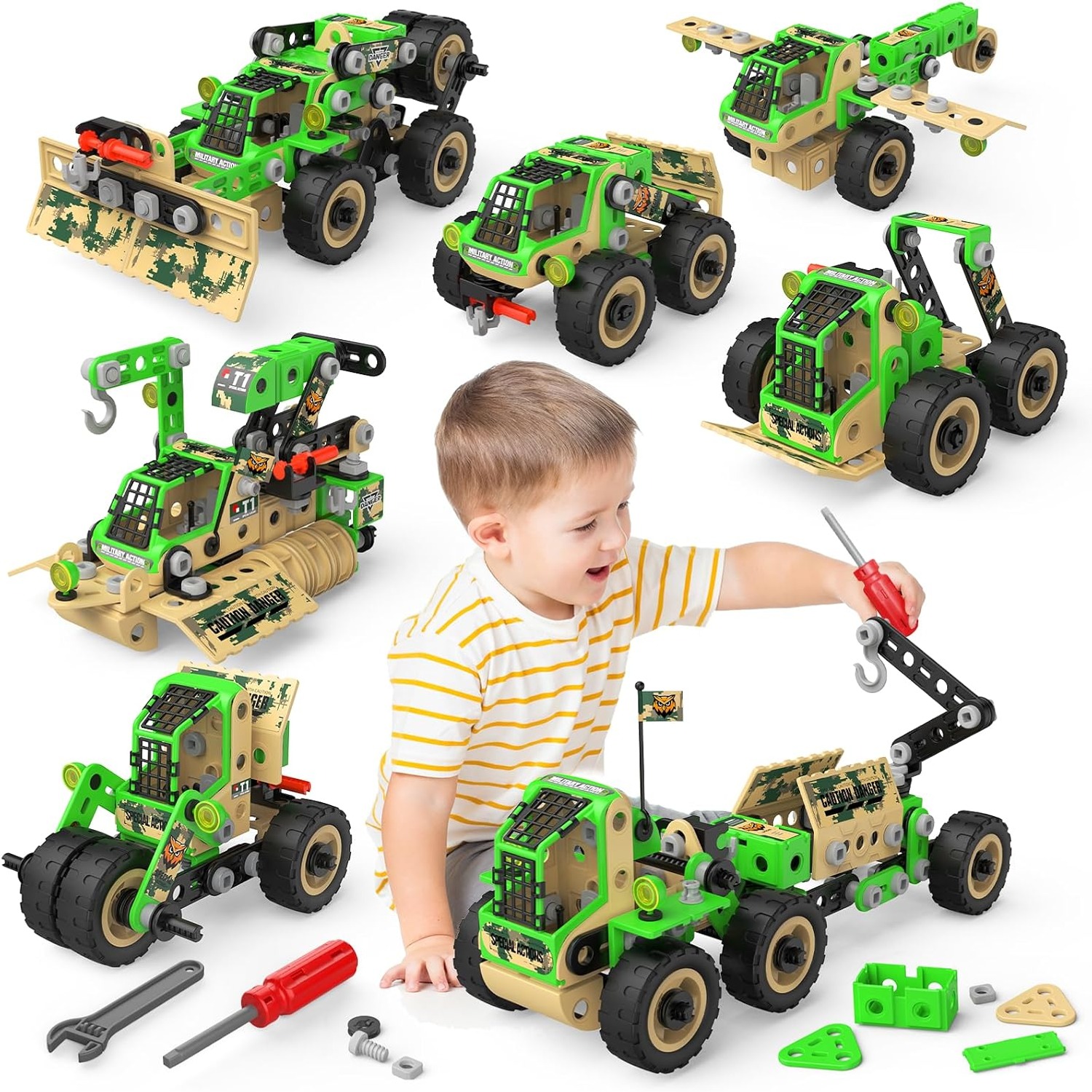
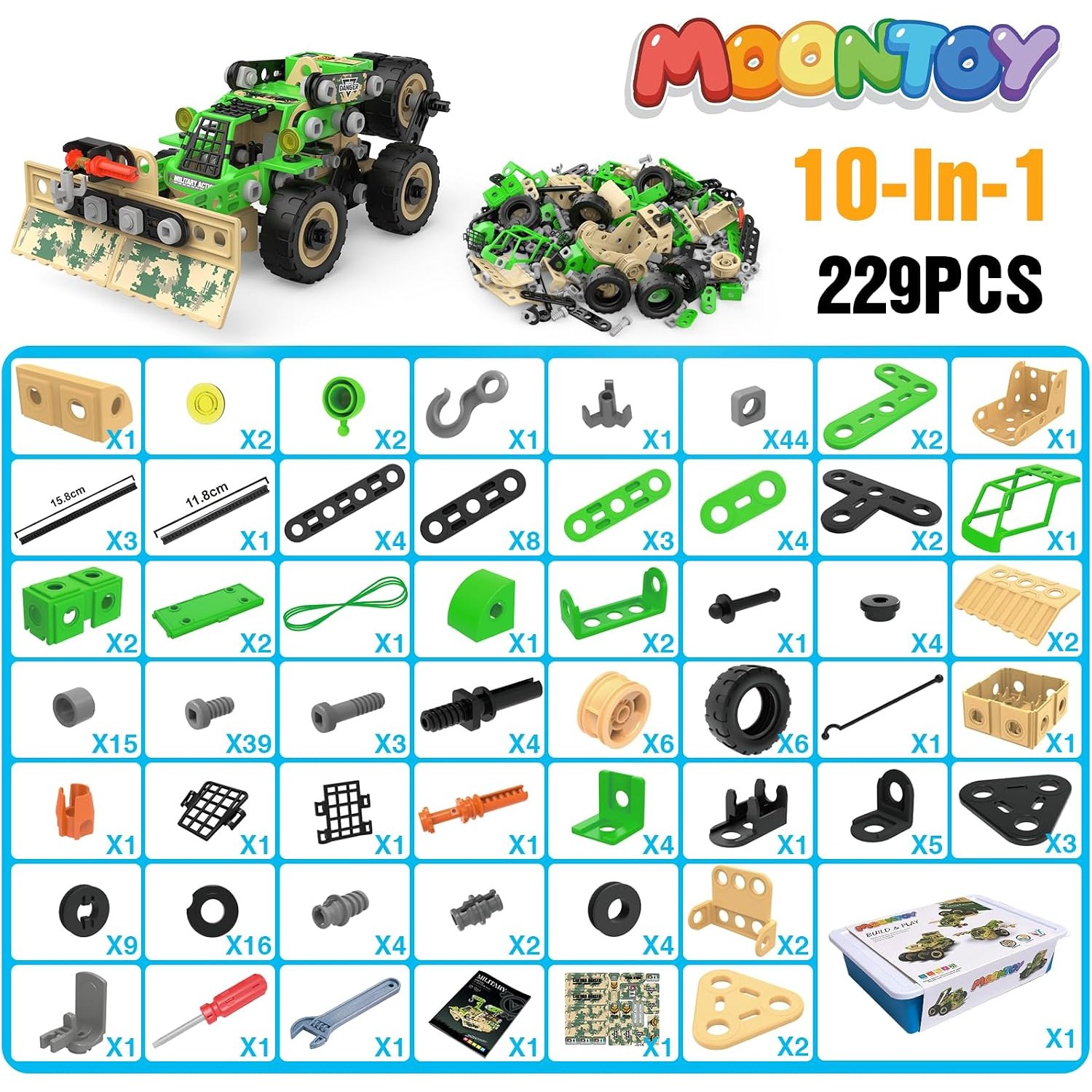
That happens because the toy was designed around one outcome. Once the outcome is reached, there is nowhere to go. A multi-model set works differently. The same 229 pieces in this kit become ten separate machines, which means the box has ten first attempts in it rather than one. When model three is finished, model four is waiting, and the pieces never stop being useful.
That is the honest case for a set like this. Not that it is more educational than anything else on the shelf, but that it gets opened again next weekend.
How the set works
The pieces interlock by hand. Operation and power source are both listed as manual, so there is nothing to charge, no app, and no battery compartment to lose the screw from. Your child joins parts, follows a sequence, and ends up with something that holds together and moves when pushed.
Parts are ABS plastic, and MOONTOY lists the set as non toxic. ABS is used widely in building blocks because it keeps a crisp edge and takes repeated joining and separating without going soft. The listed colour is green and the theme is technology.
Assembly is required, which is the entire point. Every model starts as a pile. The set is listed for children from 5 years, with a manufacturer minimum age of 36 months, and it is designed for indoor use.
A storage case is included, and that is worth more than it sounds. Product weight and country of origin are not given by the maker.
Who it suits
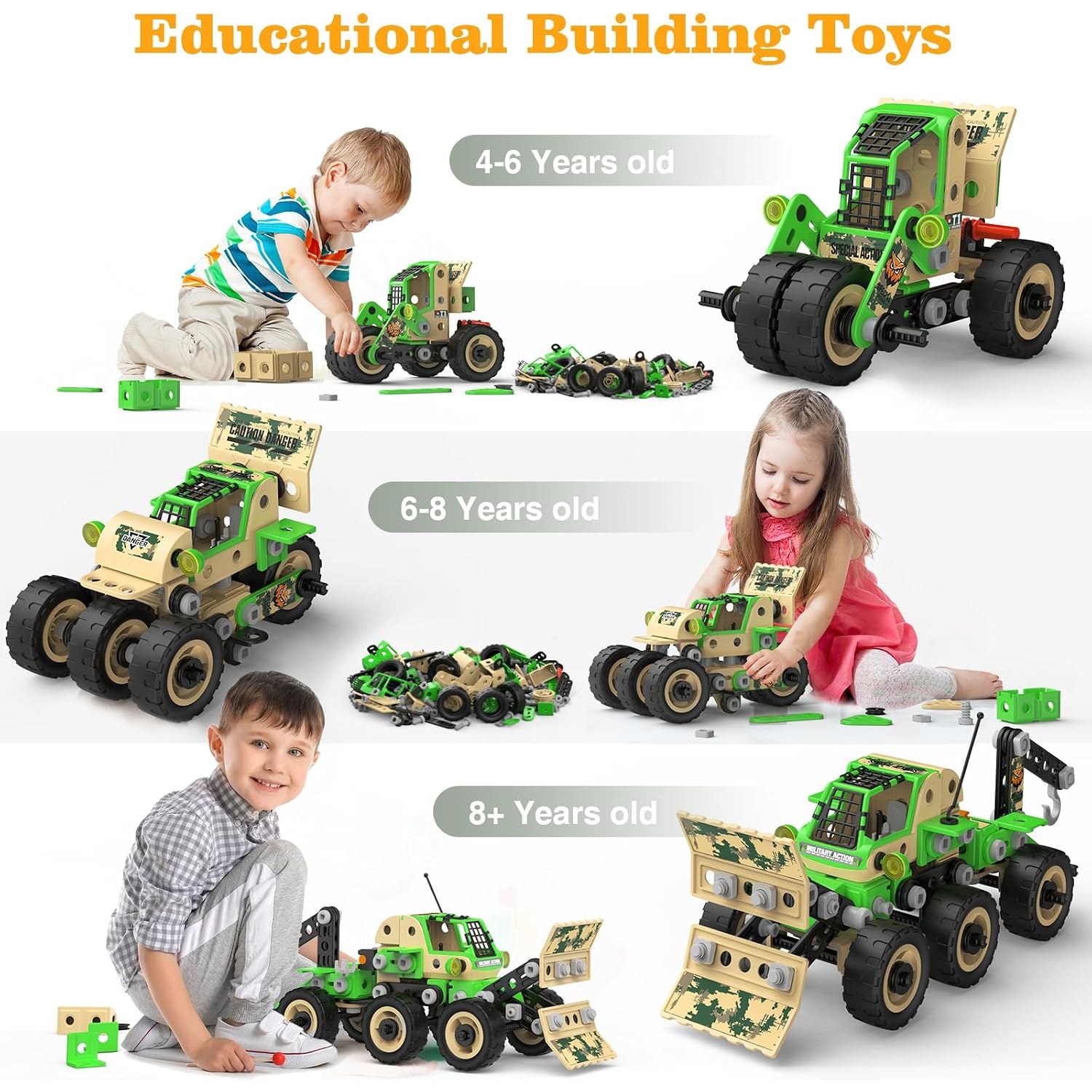
The clearest fit is a five to nine year old who already likes taking things apart. If your child dismantles pens, opens the back of remote controls, or asks how the washing machine works, this is their kind of present.
It also suits households where screen time has crept up and someone wants a quiet alternative that does not need a parent to run it. After the first couple of models, most children build alone.
It is less suited to a preschooler. A set with 229 small pieces is not appropriate for anyone who still mouths objects, whatever the stated minimum age says. And if your child has already worked through several large construction sets, the simpler models here may feel light, though free building usually picks up the slack.
For a classroom or an after-school club, one set covers one or two children at a time. If you want a group activity, plan on more than one box.
What to look at when comparing kits
Piece count against model count. More pieces is not automatically better. What matters is how many distinct builds come out of the pile. A 229 piece set that makes ten models gives you ten separate projects. A 400 piece set that makes one gives you an afternoon.
Whether parts go back in a box. This is the quiet dealbreaker. Sets that come in a flimsy cardboard sleeve lose parts within a month, and a construction kit missing fifteen pieces becomes unbuildable. A proper storage case is a practical feature, not a bonus.
Power or no power. Motorised kits look exciting in photos and then stop working when the batteries die on a Sunday. A manual set never has that failure mode. It also means the child, not the motor, is doing the work.
Difficulty spread. The best multi model building kit options include easy models and harder ones in the same box, so a child can start somewhere achievable and climb. Ten models give you that spread naturally.
Material. ABS plastic is the standard for a reason. It is rigid enough to hold a join and tough enough to survive being stepped on, which will happen.
Getting the first build right
The first model sets the tone, so do not pick the most impressive one on the box. Pick the simplest. A child who finishes something in thirty minutes comes back for more. A child who stalls halfway through a complicated build on day one often does not open the box again.
Sort the parts before you start. Spread them into rough groups on a tray or a towel so the next piece is findable. Hunting through a jumbled pile for a single part is the single biggest source of frustration in building kits, and five minutes of sorting prevents most of it.
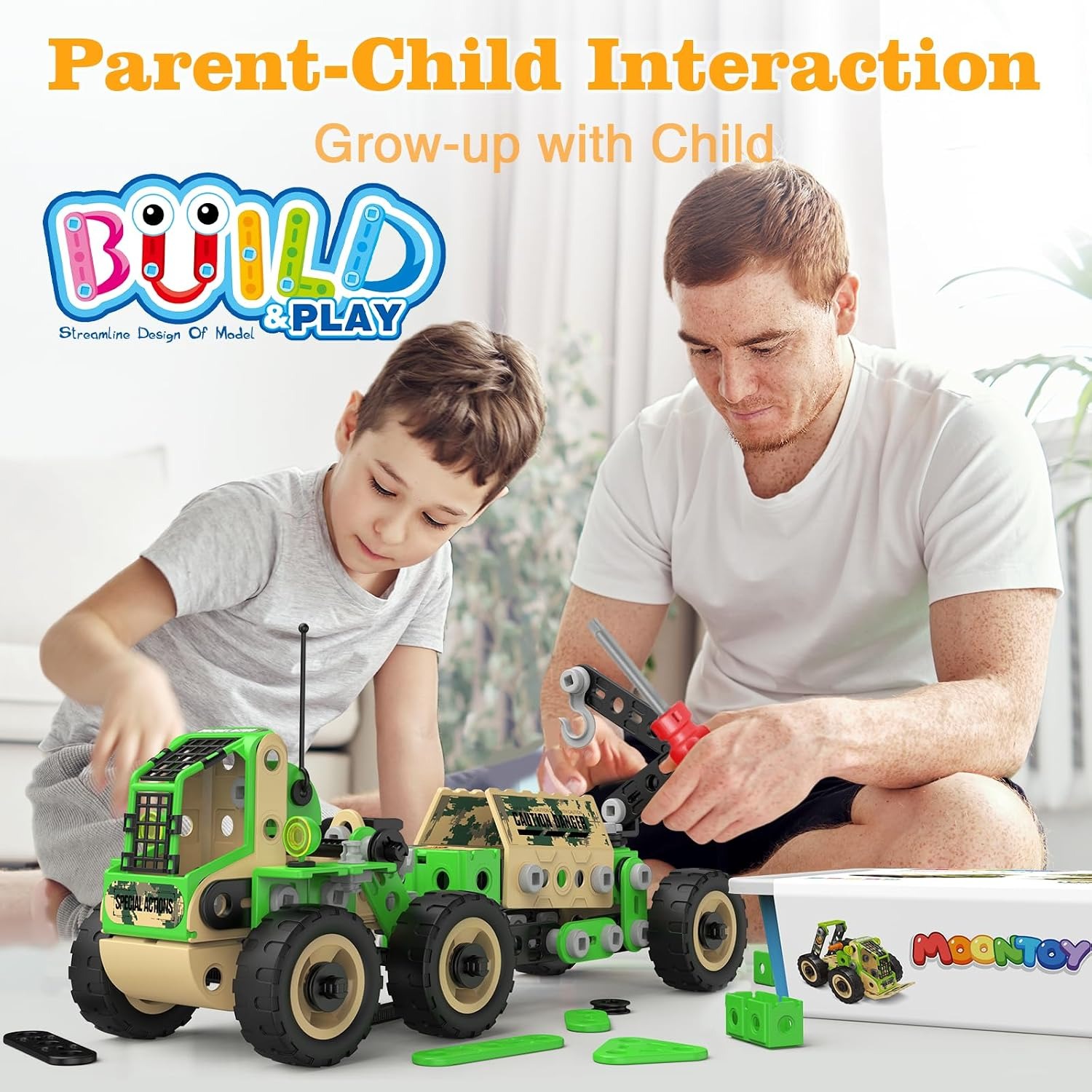
Sit nearby for the first one. You do not need to build it. Read the step aloud, point at the part, and let your child do the joining. The moment they say "I know, I know" and wave you off is the moment the set has done its job.
Expect mistakes. Something will be put on backwards and need taking off again. That is the learning, not an interruption to it.
Care and keeping the set alive
Wipe the pieces with a soft damp cloth and a little mild soapy water when they get grubby, then dry them fully before packing away. Skip the dishwasher, the microwave and the washing machine, all of which will warp plastic parts. Keep the set away from radiators and open flame.
The real maintenance job is part management. Make packing away part of the game rather than a chore that follows it. Count the set back into the case, or at least sweep the table carefully before anyone leaves. Build on a surface with edges where you can.
Every so often, check parts for cracks or stress marks and bin any that are damaged. A cracked connector will not hold, and a child trying to force it is how the piece next to it breaks too.
Store the case somewhere the child can reach it without asking. A set in a high cupboard gets built far less often than a set on a low shelf.
Getting more out of it after the ten models
Once all ten builds are done, the set is not finished. Free building is where children start designing instead of following, and it usually produces stranger and more interesting results than the printed models.
A few prompts that work well: ask for a vehicle that can carry an egg, or a structure taller than a cereal box that still stands when the table is nudged. Give a constraint rather than a target. Constraints produce more creative work than open instructions do.
Rebuilding an old model from memory is another good one. It is harder than it sounds and it is excellent practice.
The short version
This is a 229 piece interlocking construction toy set from MOONTOY, model J-6606, that builds ten different models from one box of ABS plastic parts. Assembly is manual, no batteries are needed, and it is listed for indoor use and for children from 5 years with a 36 month minimum.
It suits a child who likes making things and will be opened repeatedly rather than once. The included storage case is the feature that keeps it usable past the first few months. Box size is 30.5 x 24.1 x 7.6 cm, colour is green, and weight is not specified by the maker.
If your child is past the mouthing stage, has the patience for a thirty minute project, and asks how things work, this is a sensible buy. If you are still unsure, ask us.