

The complete guide
How to Choose a Metal Construction Vehicle Set That Lasts
The problem with most toy diggers
Walk down any toy aisle and you will find a wall of construction vehicles. Most of them have one thing in common. They are big, hollow and made of thin plastic, and they last about three months before a wheel snaps off or the bucket arm goes floppy. Then there is the other end of the aisle, where the trucks have lights, sirens, remote controls and a battery hatch that needs a screwdriver every fortnight.
Neither option serves a child particularly well. The flimsy ones break and teach nothing. The electronic ones do the playing for the child, which sounds helpful until you notice that the same toy gets ten minutes of attention before the novelty wears off.
A plain die-cast set sits in the middle, and it is the version that tends to survive. No batteries to die, no software to go wrong, nothing to flex and snap. Just six metal machines that do what the child decides they should do.
What you actually get in this set
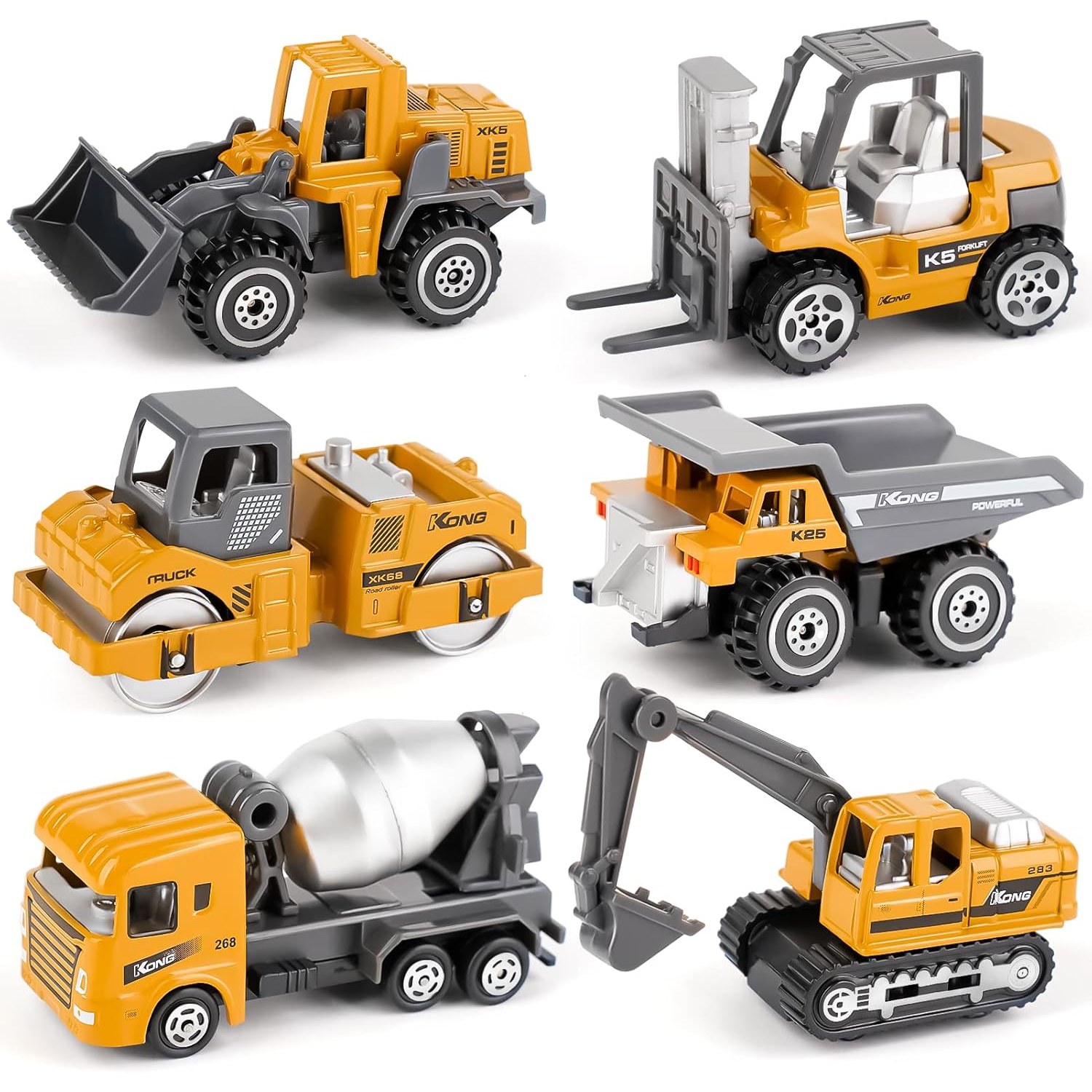
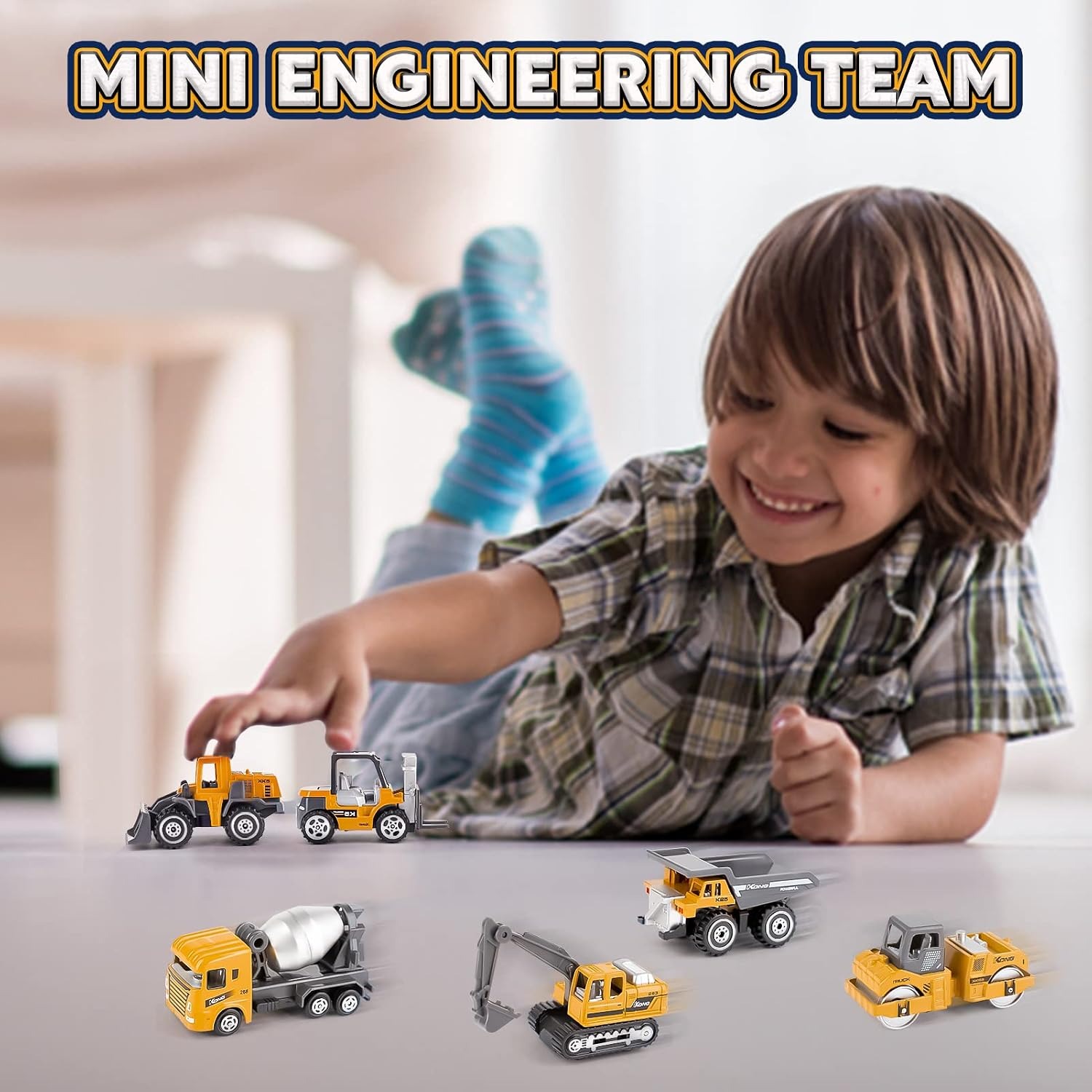
This pack contains six 1:64 scale die-cast vehicles. There is an excavator for digging, a dumper for hauling the spoil away, a road roller for flattening, a mixer, a bulldozer for pushing and a forklift for lifting and stacking.
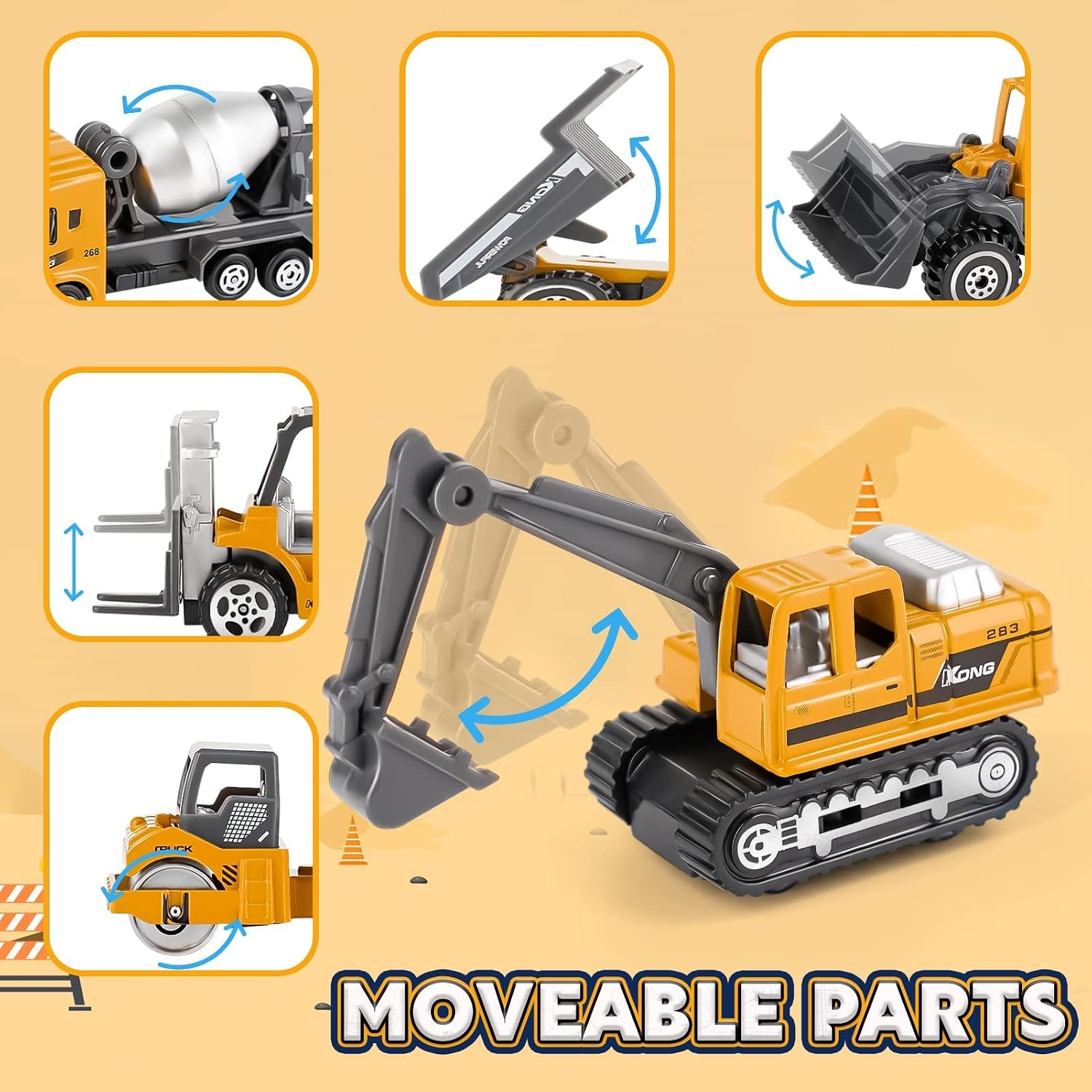
That spread matters more than the count. Six copies of the same truck would be far less interesting. Six different machines means a child can act out an entire sequence of work. Dig the hole. Load the dumper. Drive it off. Push the pile flat. Roll it smooth. That is a story, and stories are what keep a toy in use after the first week.
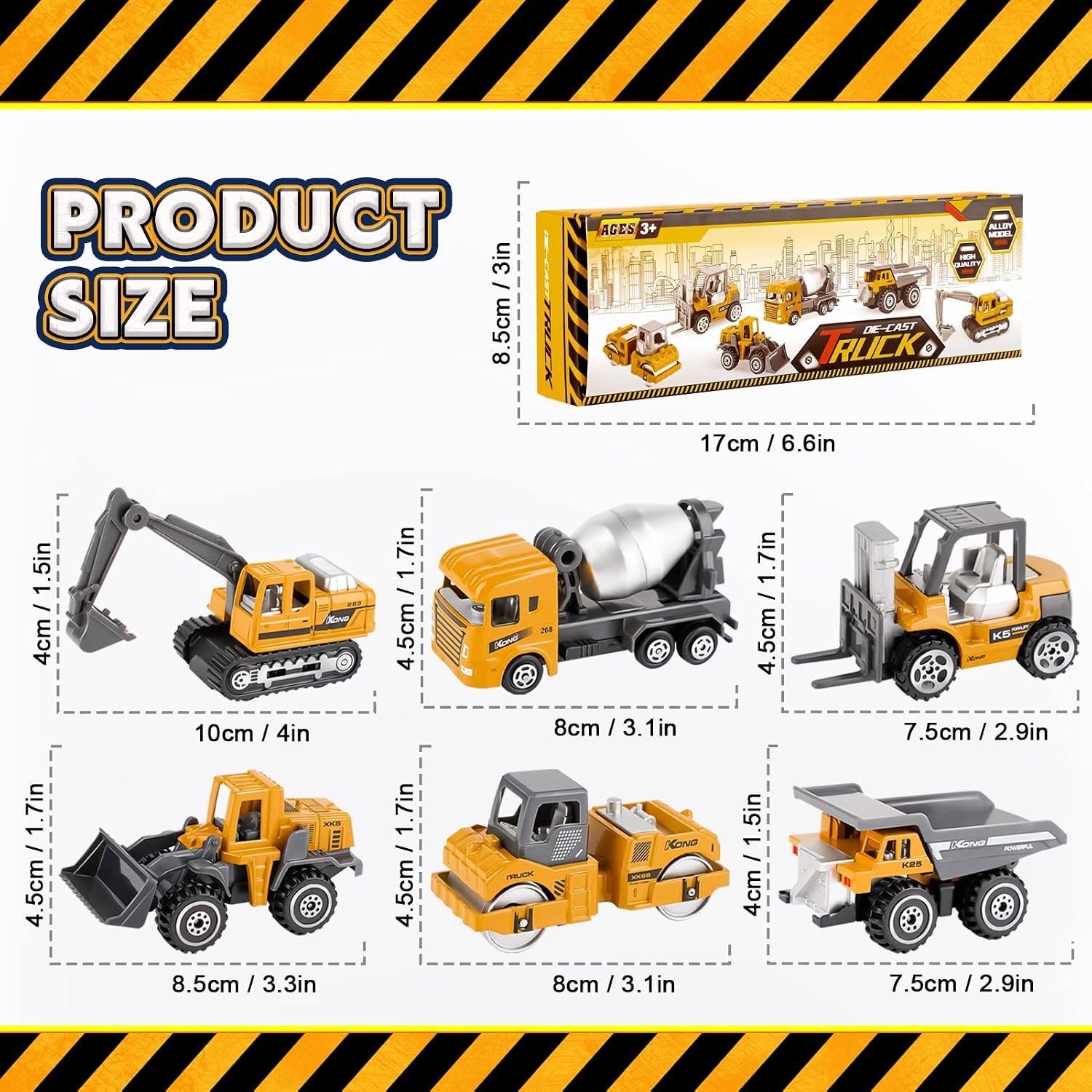
The bodies are die-cast metal, listed in yellow, and the whole set packs down to around 24 x 20 x 4 cm. Operation is manual, there are no batteries required, and there is no assembly. The manufacturer recommends the set for children aged 3 years and up.
Why metal makes a difference
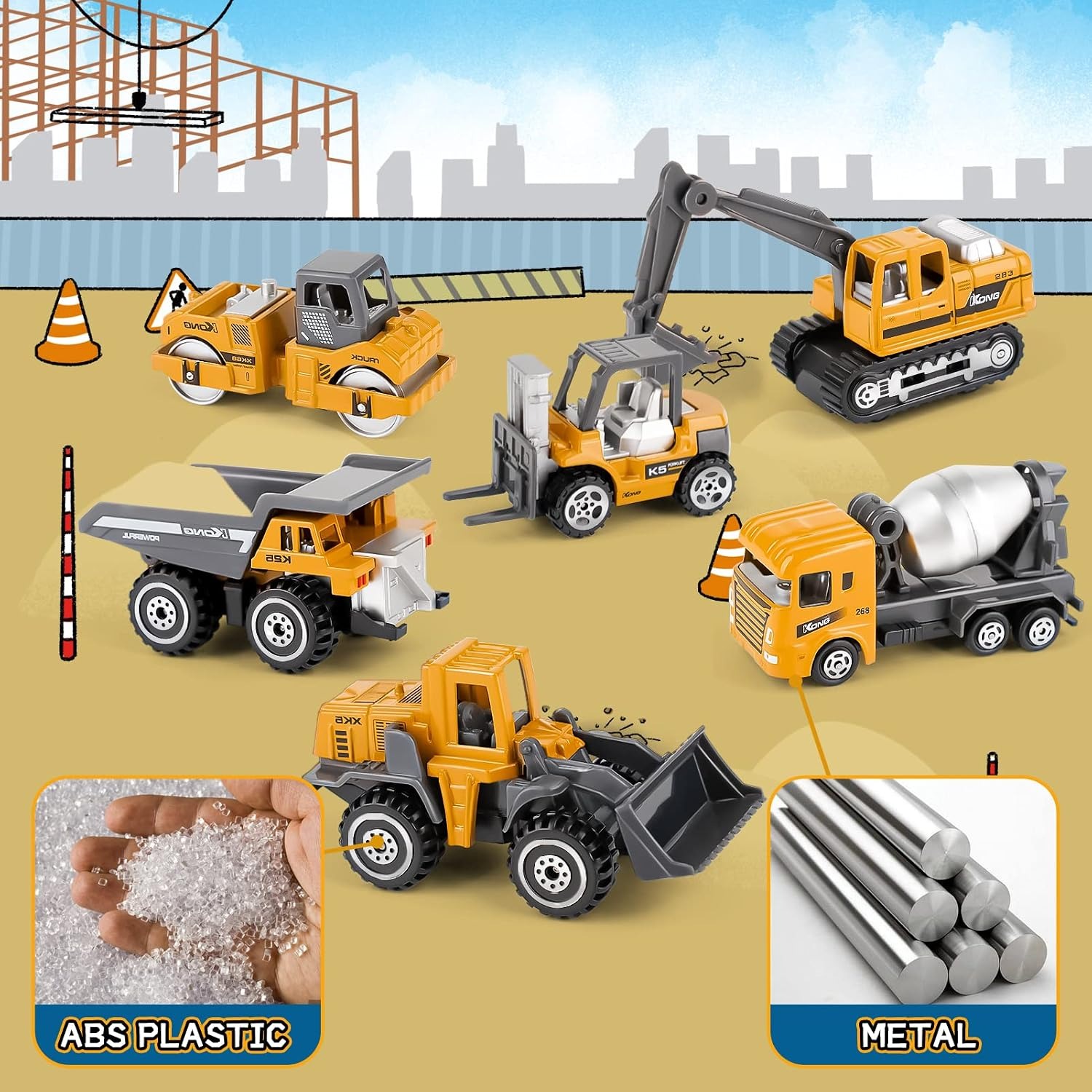
Pick up a die-cast vehicle and then pick up a plastic one of the same size. The difference is immediate. The metal one has weight, it feels cold for a second, and it does not give when you squeeze it.
Weight changes how a toy behaves. A heavy vehicle rolls further across a wooden floor and stays where it is put on a slope of sand. It does not skitter away when a child nudges it. There is a solidity that children recognise straight away, even if they could not explain it.
Durability is the other half. Thin plastic cracks along stress lines, especially around axles and arms. Die-cast does not fail in the same way. It can chip, and the paint will scuff over time, but scuffs on a metal toy digger look like honest wear rather than damage. Plenty of these sets get handed down.
The listing also describes the vehicles as weather resistant. For anyone whose child plays in an outdoor sandpit, that is not a minor detail. Sand, drizzle and a hose-down are all part of normal life for a toy excavator for kids.
Is 1:64 the right size?
Scale is worth a moment's thought. 1:64 means each vehicle is a sixty-fourth of the size of the real machine, which works out to a palm-sized toy.
That size has clear advantages. It fits in a preschooler's hand without being unwieldy. Six of them fit in a small bucket, a coat pocket or a corner of a suitcase. They do not dominate a bedroom or need their own storage box. And because 1:64 is such a common die-cast scale, they tend to look right next to other small cars a child already owns.
There is a trade-off. Very large ride-on or sit-in style diggers offer a different kind of play, with bigger buckets that genuinely shift sand. These small scale construction vehicles are about detail, variety and portability instead. If your child wants to move serious quantities of sand, add a big plastic scoop alongside the set and you have both bases covered.
Who this suits
The obvious fit is a child aged 3 to 7 who is interested in machines. That interest usually shows up on walks past building sites and never fully goes away.
It also works well for children who like sorting, lining up and categorising. Six distinct machines invite exactly that. Some children will spend as long arranging the fleet in order as they do pushing it around.
Two children can share the pack, which is part of why the educational objective is listed as exchange and share. Splitting six vehicles three and three is simple, and negotiating who gets the excavator is a useful lesson in itself.
Where it is less suitable is for children under 3. The manufacturer's age guidance is there for a reason, and small heavy items are not right for a preschooler who still mouths toys.
How to choose between sets
If you are comparing a few options, here is what actually separates them.
Look at the variety first. A set with six different machine types gives more play value than a set with six similar trucks. Check the included list rather than the picture.
Then check the construction. Die-cast construction toys cost a bit more than all-plastic ones and are worth it. Look for the words metal or die-cast in the specifications, not just in the product name.
Think about batteries. Anything battery powered will eventually need replacements, and the sound chip is usually the first thing to annoy an adult. A manual set never has that problem.
Finally, consider where play happens. Indoors on carpet, almost anything works. Outdoors in a sandpit, you want metal bodies and weather resistance. This set is built for both.
Keeping them in good shape
Care is simple. After outdoor play, knock off the loose sand and rinse the vehicles under a tap if they are properly dirty. Dry them with a cloth rather than leaving them to air dry, especially around the wheels and axles, where grit and moisture can collect.
Avoid the dishwasher. Hot water and strong detergent are rough on painted die-cast finishes and water can sit inside hollow sections.
Store them indoors. Weather resistant is not the same as weatherproof, and a set left on the lawn through a wet week will not thank you for it. A small tub or drawstring bag keeps the whole fleet together and makes tidying up a one-step job.
Every few months, check the wheels turn freely and that no moving parts have worked loose. Retire anything that becomes damaged, as you would with any toy.
The short version
Six die-cast construction vehicles, 1:64 scale, covering excavator, road roller, dumper, mixer, bulldozer and forklift. Metal bodies, yellow, weather resistant, no batteries, no assembly, recommended for ages 3 and up.
It is the kind of toy that gets played with for years rather than weeks, because nothing on it can run out of charge or stop working. If you want a construction vehicle gift set that will still be in use after the next two birthdays, this is a solid choice.