Toy Warehouse
Company
Shop By Category
T&Cs
Shop Online
  • Box contents listed
  • Free tracked delivery across Ireland over €90
  • 14-day returns

Kids Microscope and Telescope | Handheld digital microscope | Kids science kit

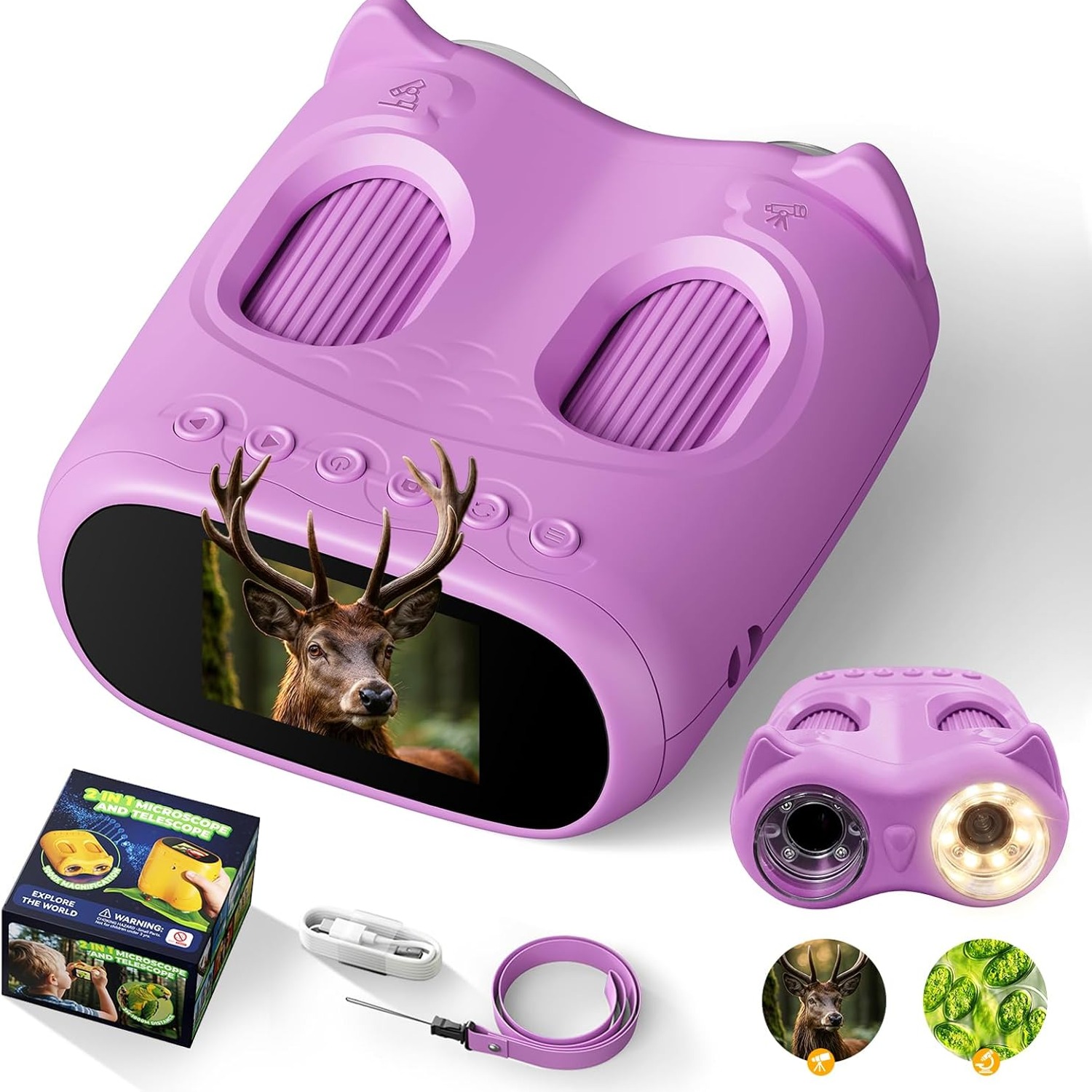
2-in-1 Kids Microscope and Telescope

€79.99
  • Two Lenses, One Tool
  • 8 LED Lights
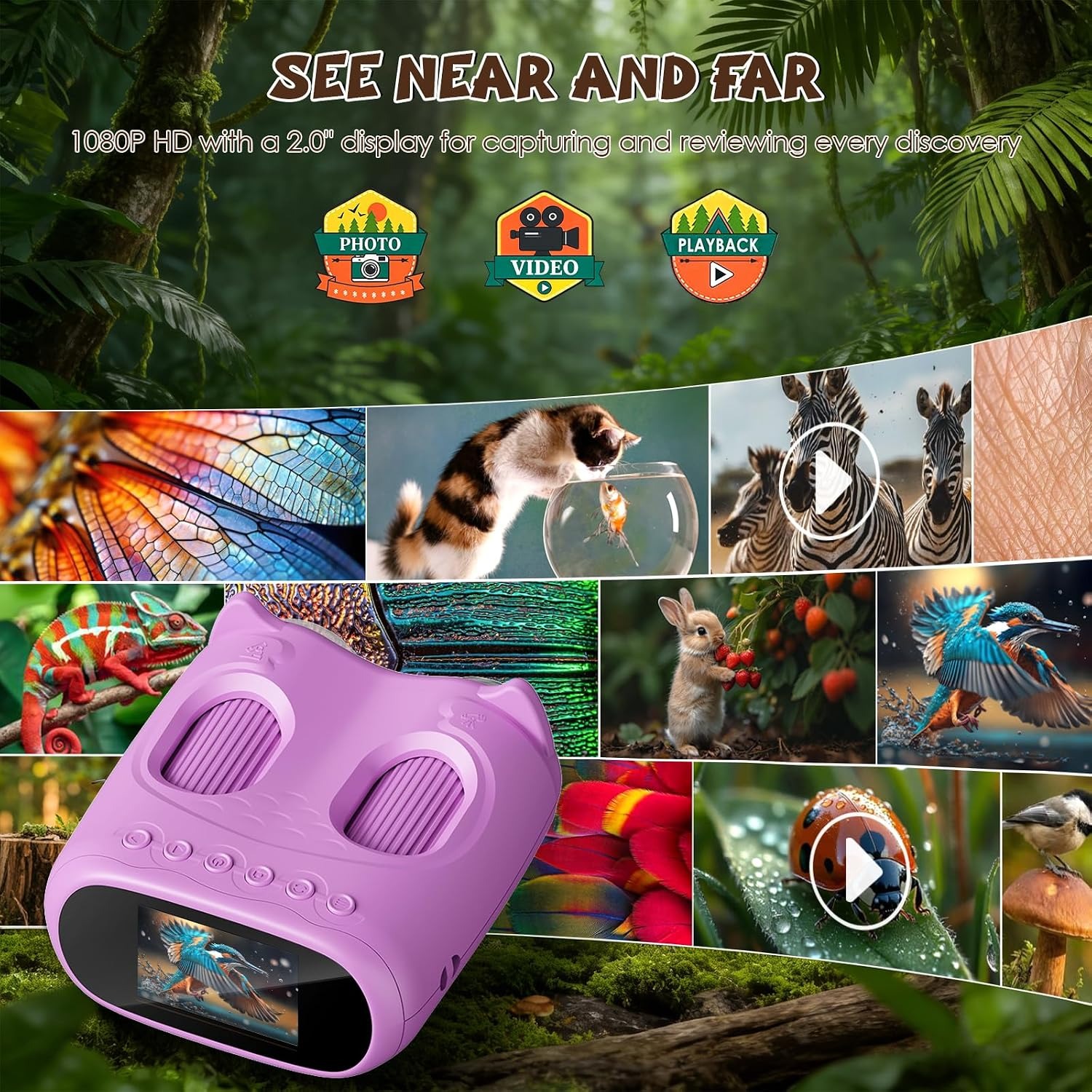
  • 1080P Photo and Video
  • USB Rechargeable

Price: €79.99

  • Free tracked delivery across Ireland on orders €90+, otherwise a flat €12
  • Pay by card or PayPal, handled by the payment provider
  • 14 days to change your mind, plus your statutory rights
Product specifications
BrandARNSSIEN
Model NameInskam387
Model Numberinskam387
Manufacturer Part Numberinskam387
ManufacturerShenzhen Nuotong Aesthetic Technology Co., Ltd.
Objective Lens DescriptionAchromatic, 1000x and 10x
Light SourceLED
Light Source TypeLED
Compatible DevicesPersonal Computer
ColourPurple
Item Weight150 g
Number of Items1
Country of OriginChina
Warranty Description30
Weight150 g
Shipping & returns

Tracked delivery anywhere in Ireland. It is free on orders of €90 or more, and a flat €12 below that.

Under the Consumer Rights Act 2022 you have 14 days from delivery to cancel for any reason, and a further 14 days to send it back in resaleable condition. We refund the price you paid, including standard delivery. You cover the cost of returning it unless the item is faulty.

If it arrives faulty, damaged or not as described, we put it right at no cost to you under the Consumer Rights Act 2022 and the EU Sale of Goods Directive 2019/771, return postage included.

Shipping details · Refunds and returns

Two Lenses, One ToolSwitch between close-up viewing and a 10x distance lens without carrying two devices.
8 LED LightsThree brightness levels help light small subjects so detail stays visible.
1080P Photo and VideoSave finds to a TF card and move them to a computer later.
USB RechargeableNo battery hunting, and it switches itself off after 15 minutes of inactivity.

A kids microscope and telescope that turns a back garden, a pond edge, or a kitchen table into a science lab.

Two lenses in one pocket-sized tool, with 8 LED lights, a focus wheel, 1080P photo and video capture, and a USB rechargeable battery so curious kids can explore on their own.

A 2-in-1 kids microscope and telescope built for small hands, with a simple button layout and a focus wheel a child can work alone.

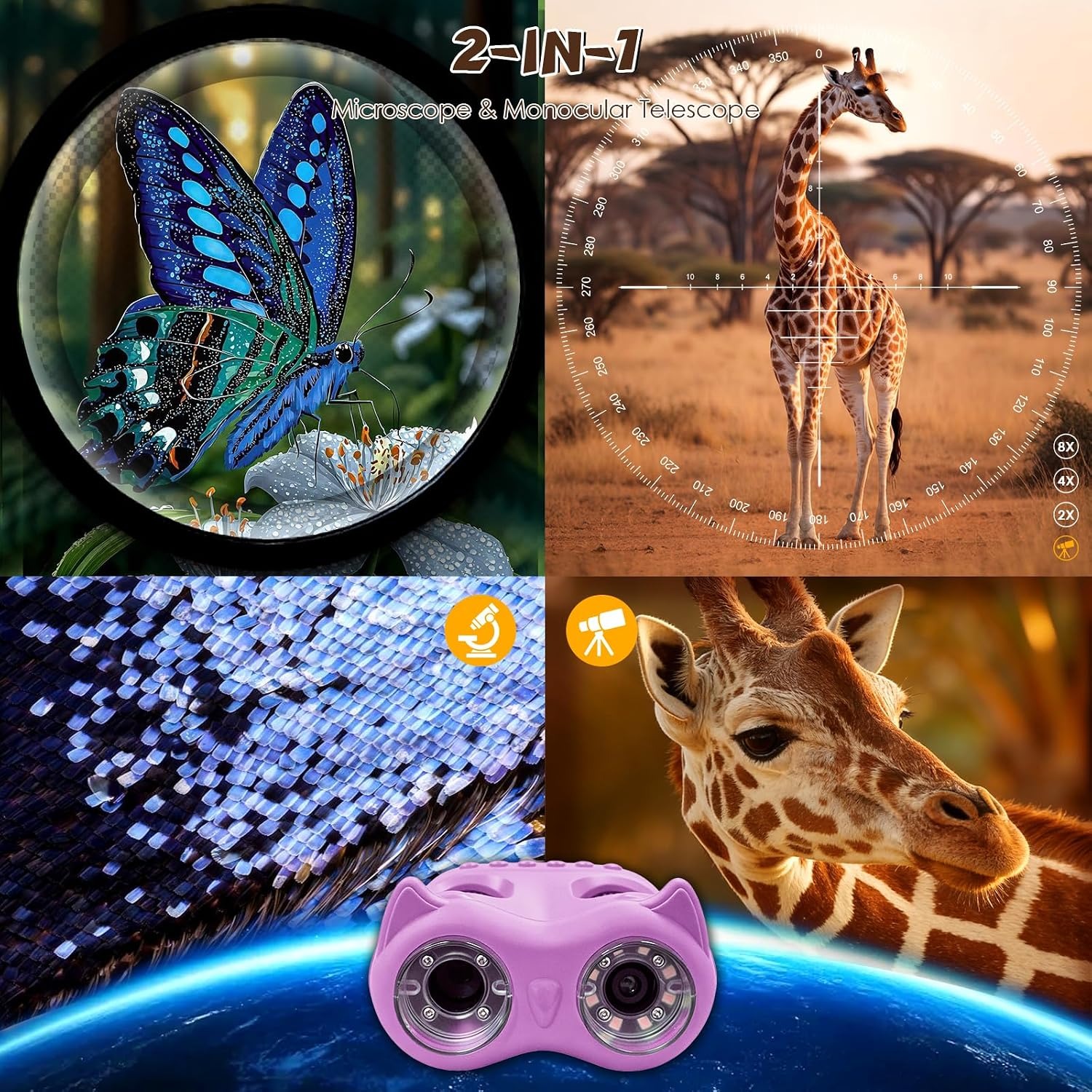
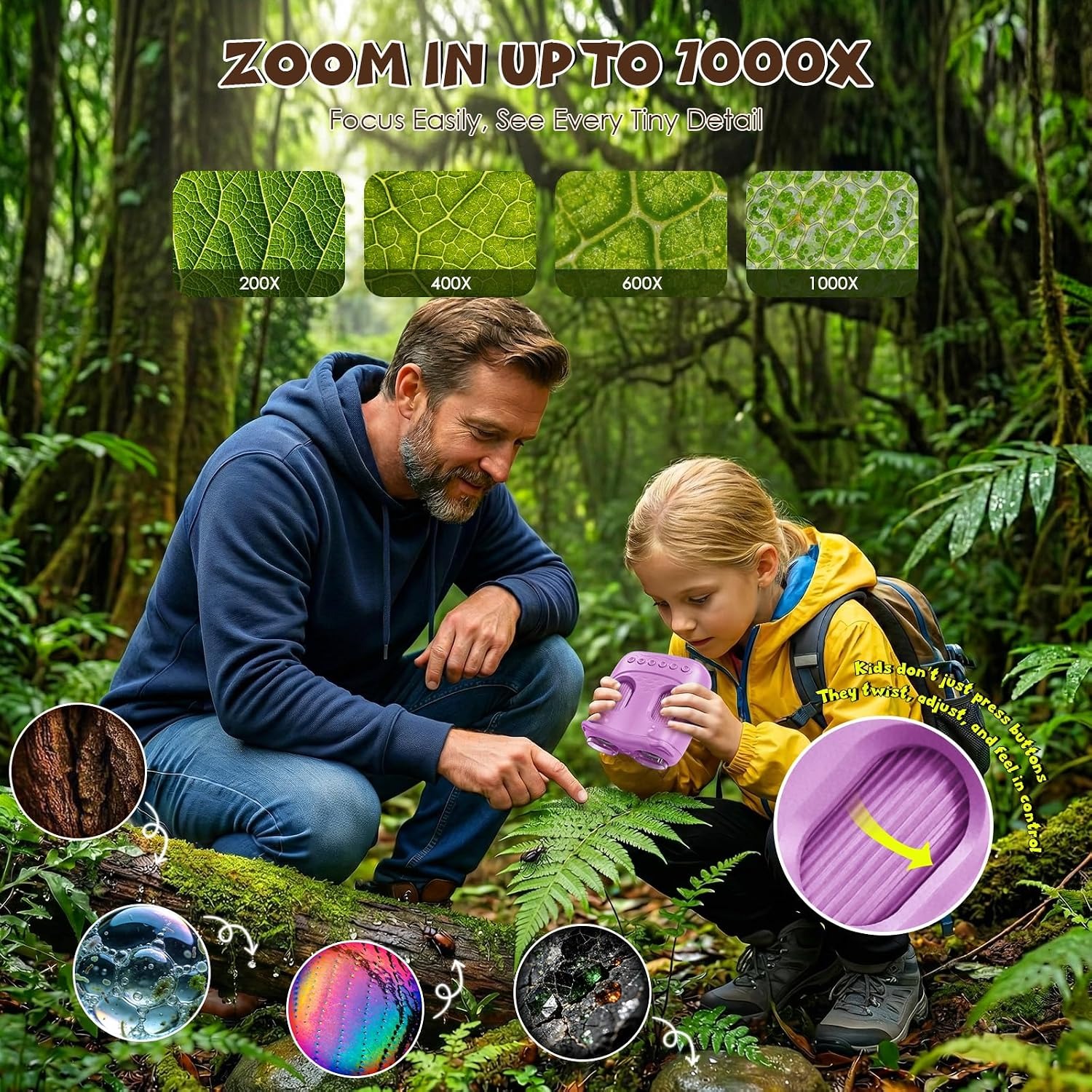
The microscope side is rated to 1000x and the distance lens is 10x, so one pocket tool covers leaf veins and garden birds.

Eight LED lights with three brightness settings make it easier to see fine detail on insects, fabric, coins, and sand.

Photos and video record at 1080P onto a TF card of up to 128GB (card not included), ready to transfer by USB-C.

At 150 grams with a lanyard, it travels easily to the park, the beach, a school science lesson, or a holiday.

2-in-1 Kids Microscope and Telescope

Most children do not need a lab to get interested in science. They need something that works the first time they press a button. This ARNSSIEN kids microscope and telescope is built around that idea. One hand holds the body, one finger turns the focus wheel, and within a few seconds a pond weed or a moth wing fills the screen. There is no slide prep, no mirror to angle, and no tripod to set up.

2-in-1 Kids Microscope and Telescope

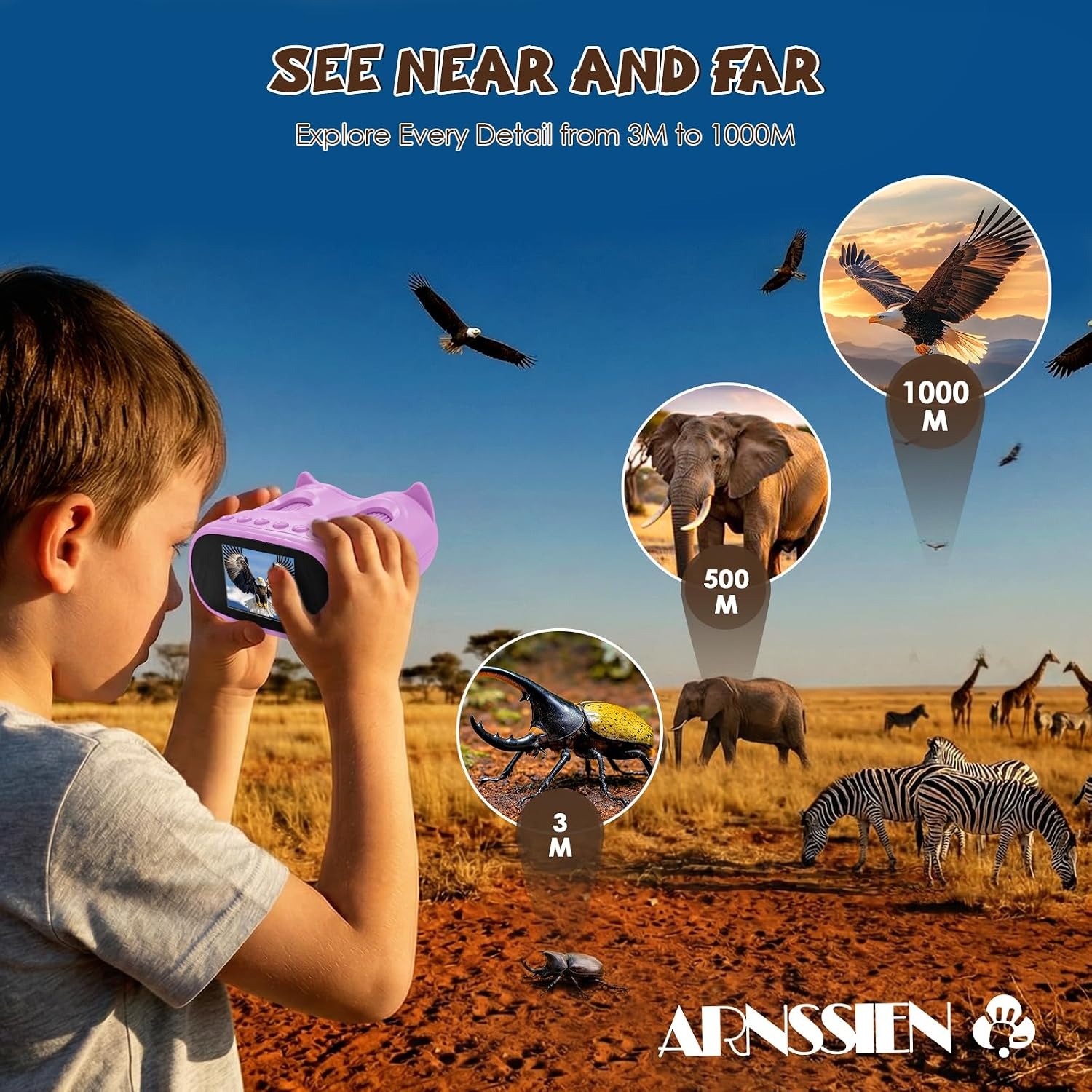
The design pairs two optical jobs in one unit. The microscope side is described by the manufacturer as a 1000x handheld microscope, suited to close work on insects, plant material, stones, fabric threads, and coins. The second lens is a 10x distance lens, useful for looking at birds, treetops, and anything roughly three metres away or further. That second lens is not a replacement for a full astronomy scope, but it does mean a child can go from a beetle on the path to the bird in the hedge without swapping tools.

2-in-1 Kids Microscope and Telescope

Lighting is often what separates a frustrating child's microscope from a good one. Here there are eight LED lights with three brightness levels, so a dark specimen can be lifted without blowing out a pale one. Paired with the adjustable focus wheel, that gives usable images across both close and wider views. The unit is also rated for 1080P photo and video, saving to a TF card of up to 128GB (the card is not supplied), which is handy when a child wants to show a teacher or a grandparent what they found.

2-in-1 Kids Microscope and Telescope

Practical details matter with anything handed to a six year old. The body weighs 150 grams and comes with a lanyard, so it hangs around a neck or clips into a backpack. The battery is USB rechargeable rather than coin-cell powered, and the unit switches itself off after 15 minutes of inactivity, which saves charge when it inevitably gets left on a windowsill. Files transfer to a computer over USB-C or by reading the TF card directly.

2-in-1 Kids Microscope and Telescope

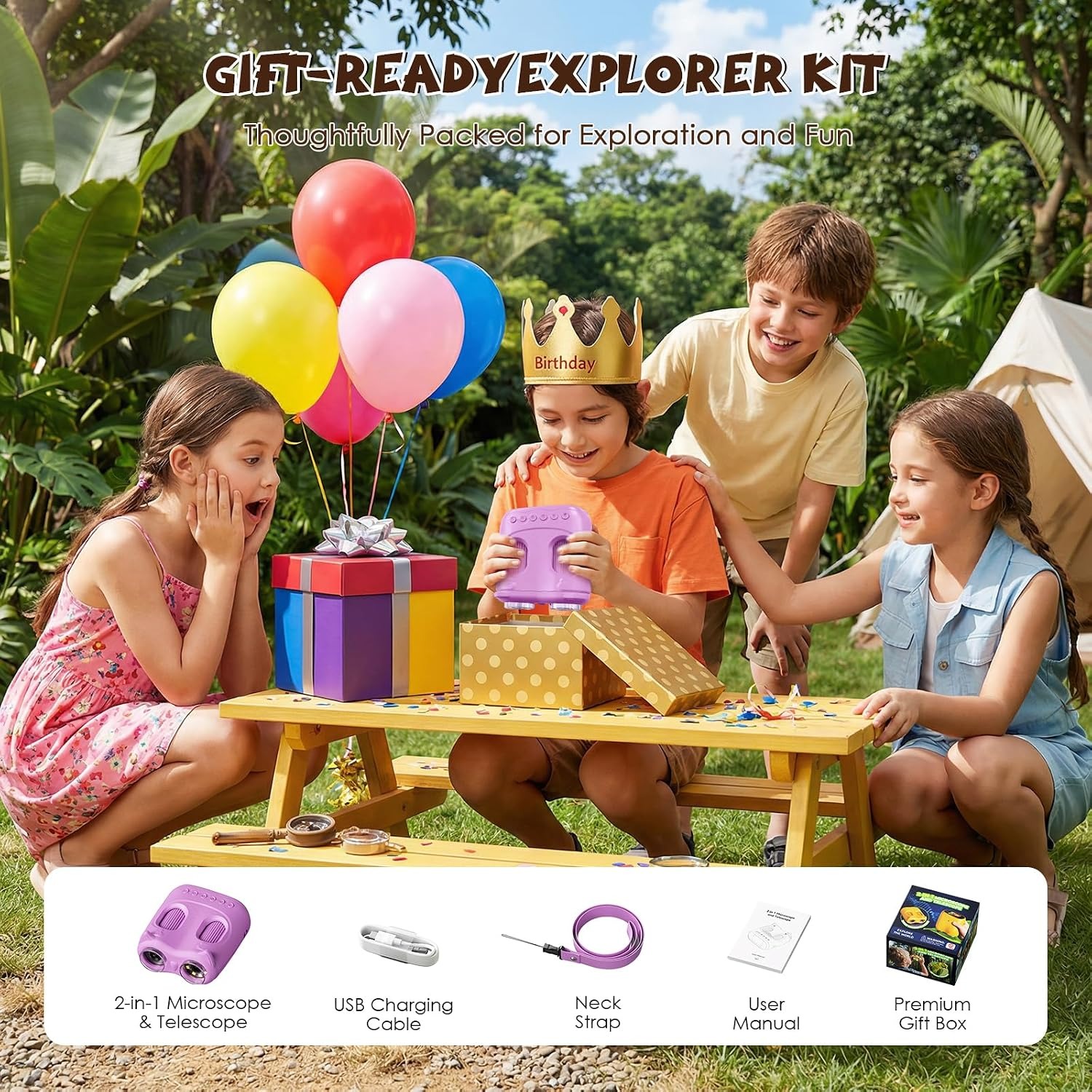
The manufacturer positions this as a STEM toy for ages 3 to 12, with younger children usually needing an adult alongside and older children happy to run it solo. It arrives in a presentation box, which makes it an easy birthday or Christmas gift without extra wrapping fuss. Two notes worth repeating from the maker: the telescope lens needs at least three metres of viewing distance to focus, and the lenses should never be touched with bare fingers.

Not sure yet? That is fine.

A toy has to suit the child it is for, and you cannot always judge that from a photograph. Under the Consumer Rights Act 2022 you have 14 days from delivery to cancel for any reason, and a further 14 days to send it back in resaleable condition. We refund the price you paid, including standard delivery.

If it turns up faulty, damaged or not as described, that is on us. The Consumer Rights Act 2022 and the EU Sale of Goods Directive 2019/771 covers you, and we pay the return postage. Read the full detail on our refunds and returns page, or ask us anything before you order.

Frequently Asked Questions

What exactly is this product?

It is a handheld 2-in-1 kids microscope and telescope from ARNSSIEN, model Inskam387. One lens handles close-up magnification and the other gives a 10x view of things further away. It records photos and video at 1080P.

What age is it suitable for?

The manufacturer lists it as a STEM toy for ages 3 to 12. Children around three to five will usually want an adult holding it with them, while most children from about six upward can operate the buttons and focus wheel alone.

How much does the microscope magnify?

The objective lens description given by the manufacturer is achromatic, 1000x and 10x. The 1000x figure applies to the microscope side, and the 10x lens is the distance lens. Real-world detail will also depend on lighting and how steady the hand is.

Is the telescope part powerful enough for stargazing?

No, this is not an astronomy telescope. The 10x lens is for terrestrial viewing like birds, trees, and distant objects, and it needs at least three metres of distance to focus. For planets and deep sky objects you would want a dedicated telescope.

Does it need a computer to work?

No. It works standalone for viewing and recording. A personal computer is listed as a compatible device for transferring files, which you can do over USB-C or by reading the TF card.

Is a memory card included?

No, the TF card is not included. The unit supports cards up to 128GB. Any standard TF (microSD) card within that limit should work for saving photos and video.

How is it powered?

It has a built-in USB rechargeable battery, so there are no disposable batteries to buy. It also powers itself off after 15 minutes of inactivity, which helps preserve charge between sessions.

How long does the battery last on a charge?

The manufacturer describes the battery as supporting extended use but does not publish a run-time figure, so that detail is not specified by the maker. In practice, LED brightness and video recording are the two things that drain any device like this fastest.

What are the LED lights for?

Small subjects sitting close to a lens are often in their own shadow. The eight LEDs light the subject from the front, and the three brightness levels let you dial the light down for pale or shiny things and up for dark ones.

What can my child actually look at with it?

Leaves, petals, insect wings, feathers, soil, sand grains, fabric weave, coins, skin, hair, paper fibres, and small stones all work well. It is a strong pick for anyone looking for the best portable microscope to take outdoors rather than keep on a desk.

Does it need slides or specimen preparation?

No. It is a handheld unit, so you point it at the object rather than mounting a slide. That is the main reason children stick with this style rather than losing interest in a traditional lab microscope.

How heavy is it?

The item weight is 150 grams. That is light enough for a young child to hold steady for a few minutes and light enough to wear on the included lanyard without it being a nuisance.

Does it come with a strap?

Yes, a lanyard is included so the unit can hang around the neck or be clipped to a bag. That cuts down on drops during outdoor use.

What colour is it?

It is purple. There is one colour listed for this model in the maker's details.

Can two children share it?

Yes, though they will need to take turns since there is one screen. Many families find it works best with an adult acting as timekeeper, especially for younger siblings.

Can the photos and videos be shared?

Yes. Files save to the TF card and can be moved to a computer using the USB-C connection or by reading the card directly. From there they can be emailed, printed, or added to a school project.

Is it suitable for school science work?

It suits primary and lower secondary school projects well, especially where a child needs to record what they observed. For formal lab work with prepared slides, a conventional compound microscope is still the right tool.

Is it suitable for young children?

The manufacturer states it is made from non-toxic materials and designed for independent use from age three with simple buttons and a focus wheel. As with any small electronic item, supervise younger children and keep the charging cable out of reach when unused.

Can it be used indoors only?

Not at all. It is built to travel, which is why the lanyard and the rechargeable battery matter. Just keep it away from rain, wet sand, and direct seawater, since it is not described as waterproof.

How do I clean the lenses?

Use a dry microfibre cloth and a light touch. Avoid household cleaners, alcohol wipes, and tissues, which can scratch coatings. The manufacturer specifically advises not touching the lenses with fingers.

How should it be stored?

Put it back in its box or a padded pocket between sessions. Storage away from heat, damp, and loose grit will keep the optics clear and the hinge and buttons working smoothly.

Can adults use it too?

Yes, plenty of adults use handheld units like this for checking stamp or coin detail, inspecting fabric, looking at splinters, or examining plant pests. It is sold as a kids science kit, but nothing about the optics is child-only.

Does it work as a gift without extra wrapping?

It arrives in a presentation box, so it is ready to hand over as it is. That makes it a reliable last-minute birthday or Christmas gift for a child who likes finding things out.

What is a good gift age range for it?

Six to ten tends to be the sweet spot, which is why it is often shortlisted as the best STEM toy for 8 year olds. Children at that age can work it alone and still find the novelty of 1000x detail genuinely exciting.

What is in the box?

The listing covers one unit and one pack, supplied in a gift box with a lanyard and a USB charging arrangement. A TF card is not included and would need to be bought separately.

Where is it made?

The country of origin is China. The manufacturer listed is Shenzhen Nuotong Aesthetic Technology Co., Ltd.

What are the product dimensions?

Overall body dimensions are not specified by the maker. The weight is given as 150 grams, which puts it firmly in the pocket-sized category.

Is there a warranty?

The listing carries a warranty description of 30. The maker does not state further warranty terms, so treat your order confirmation and our returns policy as the governing terms.

How long will delivery take?

Most orders arrive within 4 to 8 working days of the order date. Rural addresses and the islands can take a little longer. Delivery is free on orders of €90 or more and a flat €12 under that, and you get tracking by email once the parcel is on its way.

What if it is not right for us?

If the product arrives damaged, faulty, or simply is not the right fit for your child, contact us with your order number and we will sort out a return or replacement. Keep the gift box and the lanyard with it, since complete items are easier and faster to process.

How to Choose a Kids Microscope and Telescope That Actually Gets Used

6 min read Toy Warehouse

The problem with most children's microscopes

Plenty of households own a science toy that got used twice. It usually looks the part, with a metal arm and a little mirror underneath, and it usually ends up at the back of a cupboard. The reason is almost always the same. Traditional microscopes ask a child to do several fiddly things before anything interesting appears on screen. You have to prepare a slide, angle a mirror toward a light source, line up an eye to a small tube, and turn a knob slowly enough to find focus. Each of those steps is a chance for a seven year old to give up.

A handheld unit flips the order. You point it at something and look at the screen. There is no slide, no mirror, and no squinting. The first interesting image shows up in about five seconds, and that first hit of "look at this" is what decides whether the thing gets used again on Saturday.

That is the thinking behind this kids microscope and telescope. It is deliberately simple, deliberately portable, and deliberately rechargeable, because every bit of friction you remove is one more reason a child picks it up again.

How this one works

There are two optical paths in a single body. The microscope side is described by the manufacturer as achromatic with a 1000x rating, and it is the one you use for anything you can bring right up close. The second lens is 10x and works at distance, which the maker notes needs at least three metres between you and whatever you are looking at. Below that distance it simply will not focus, so it is worth explaining that to a child before the first attempt.

Lighting comes from eight LEDs with three brightness levels. This sounds like a small thing until you try to look at a black beetle shell or a shiny coin. Too much light and the detail washes out. Too little and you get a dark blur. Having three steps lets a child solve that themselves rather than asking an adult.

Focus is handled by a wheel rather than a precision screw. It is less exact than a lab instrument, but it is far more forgiving for small hands. You turn it until the picture looks sharp, and that is the whole technique.

Capture is 1080P for both stills and video, saved to a TF card of up to 128GB. The card is not included. Transfer happens over USB-C or by taking the card out and reading it directly on a computer. That recording ability changes how children use the device, because a find stops being a moment and becomes a file they can show someone.

Who it suits

The maker lists ages 3 to 12, which is a wide span, and the experience is different at each end of it.

At three to five, this works as a shared activity. An adult holds the unit or steadies the child's hand, and the fun is mostly in the reveal. Bark, a leaf, a woolly jumper, and a biscuit all get surprising reactions at that age.

From six to nine, children generally take it over completely. They can work the buttons, turn the focus wheel, and change the LED level without instruction. This is also where the photo function starts to matter, because kids this age love building a collection. Many families shopping for the best kids microscope land in exactly this bracket.

From ten to twelve, use tends to get more purposeful. Homework projects, pond dips, minibeast surveys, and rock collections all become easier to document. It is also around this age that the 10x distance lens gets more use, since bird watching requires the patience that younger children have not quite grown into.

Adults use it too. Checking a splinter, reading a tiny serial number, inspecting a fabric snag, or looking at a coin mark are all everyday jobs that benefit from a magnified screen view.

How to choose between types

If you are comparing options, it helps to know what each style is good at.

A compound lab microscope gives the best optical quality and is the right choice for a child who is already serious about biology and happy to prepare slides. It is also the one most likely to sit unused in a younger household.

A handheld digital microscope like this one trades some optical precision for speed and portability. You can take it to a rockpool. You can take it to a park. Nothing needs setting up. For most families, that is the trade that keeps the device in rotation.

A clip-on phone lens is cheap and pocketable but ties up a parent's phone and offers less control over lighting. A dedicated unit avoids that argument entirely.

A combined microscope and distance lens, which is what this is, covers the widest range of outdoor curiosity with one item to carry. If your child's interests swing between bugs on the ground and birds in the trees, this format makes sense. Anyone hunting for the best portable microscope for holidays usually ends up in this category.

Practical things worth knowing before you buy

Buy a TF card at the same time. The unit supports up to 128GB and the card is not supplied, so without one your child can view but not save. A modest 32GB card is plenty for thousands of photos and a good stack of video.

Check your charging setup. It charges over USB, so any standard phone charger or laptop port will do. Charge it fully before gifting, because nothing deflates a birthday morning faster than a flat battery.

Set expectations on the distance lens. Three metres minimum is a real limit, not a guideline. Children will instinctively try to look at something across the room, which is fine, and then at their own hand, which will not work.

Talk about the lenses early. The manufacturer is clear that the glass should not be touched. Teach the "hold the body, not the end" rule on day one and the optics will stay clear for years.

Consider where it will live. The lanyard helps, but a nominated drawer or shelf keeps it findable. A tool that cannot be found is a tool that does not get used.

Looking after it

Care is simple. Wipe the lenses with a dry microfibre cloth only, the kind that comes with glasses. Skip tissues, shirt sleeves, and any spray cleaner, since all three can mark coatings. Keep the body away from water, loose sand, and radiators.

Charge it every few months even during quiet spells. Rechargeable cells last longer when they are not left flat for long periods.

Store it in the gift box if you still have it. The box is sized for the unit and keeps grit off the lens ends, which is the single most common cause of a fuzzy picture later on.

If images ever look soft, work through three things in order. Clean the lens, change the LED brightness, then adjust the focus wheel more slowly than feels natural. Nine times out of ten, one of those fixes it.

The short version

This is a pocket-sized kids microscope and telescope built for curiosity rather than a classroom bench. The 1000x microscope lens handles insects, plants, fabric, and stones. The 10x distance lens covers birds and treetops from three metres or more. Eight LEDs with three brightness steps, a simple focus wheel, 1080P recording to a TF card of up to 128GB (card not included), USB-C transfer, a 150 gram body, a lanyard, and a USB rechargeable battery with 15 minute auto-off round it out.

It suits ages 3 to 12, with the strongest independent use from about six upward. It arrives in a presentation box, which makes gifting straightforward. And because it asks nothing more of a child than pointing and looking, it stands a much better chance of still being in use next summer than the one gathering dust in the cupboard.

Browse the shop

Ready to hand over a pocket science lab?

Order the 2-in-1 kids microscope and telescope today and let a curious child start finding things nobody else in the house has noticed.

Ask us a question

Page summary

The ARNSSIEN Inskam387 is a 2-in-1 handheld kids microscope and telescope aimed at ages 3 to 12. It pairs an achromatic 1000x microscope lens with a 10x distance lens, lit by 8 LEDs across three brightness levels and focused with an adjustable wheel. It records 1080P photos and video to a TF card of up to 128GB, which is not included, and transfers files to a computer by USB-C or card reader. The unit weighs 150 grams, is purple, comes with a lanyard, is USB rechargeable, and powers off automatically after 15 minutes idle. Country of origin is China. The telescope lens requires a viewing distance of at least three metres. Overall product dimensions and body material are not specified by the maker.