
The complete guide
How To Choose A First Sewing Kit For A Child
The problem with most first craft kits
A lot of children's craft sets look good in the box and fall apart in practice. Either the activity is over in ten minutes, or it needs an adult to do the hard half, or it leaves glue on the table and nothing worth keeping at the end. Sewing has an extra hurdle on top of all that. The traditional version involves sharp needles, fabric that has to be cut accurately and a line of stitches that a beginner cannot keep straight. Most adults abandon that project before the child does.
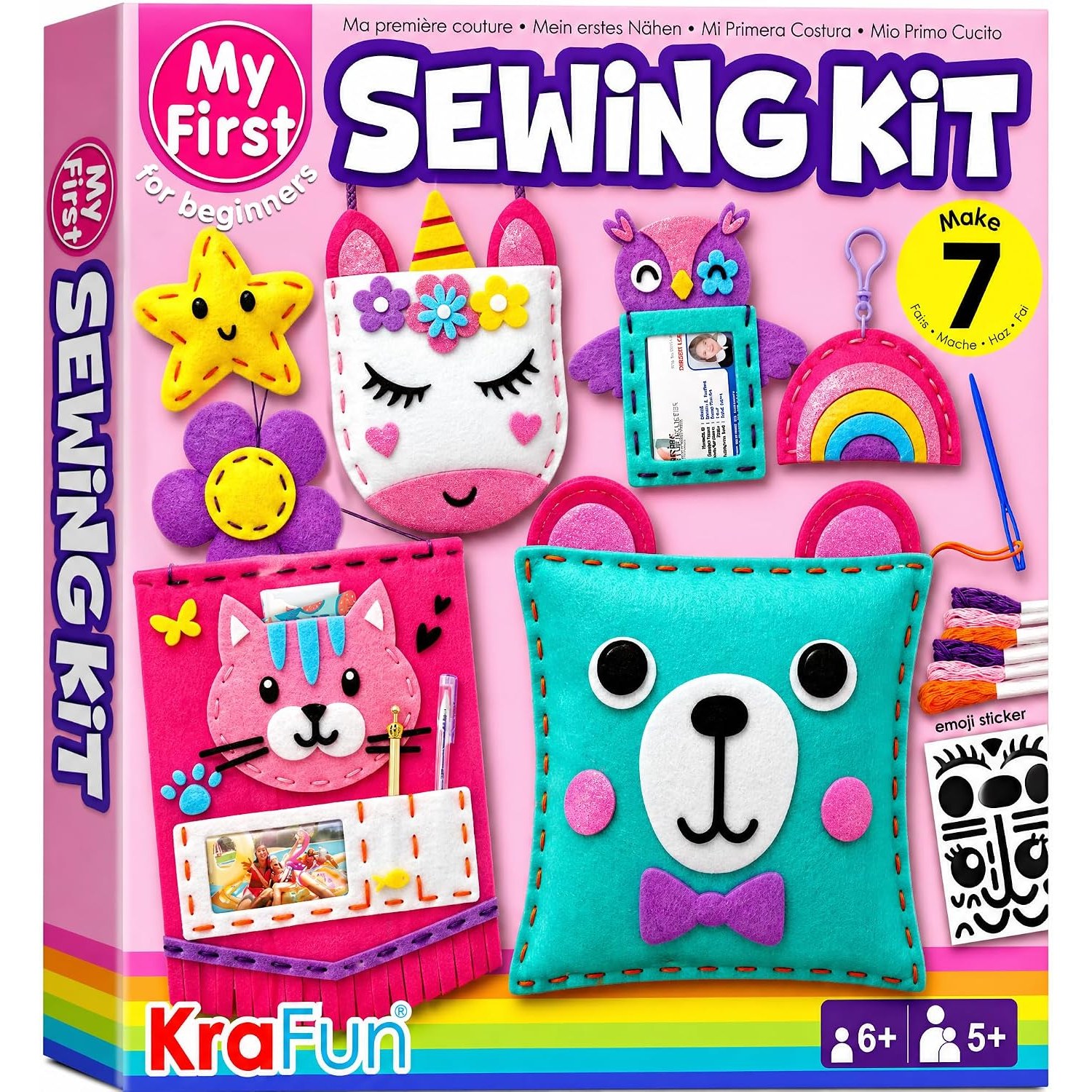
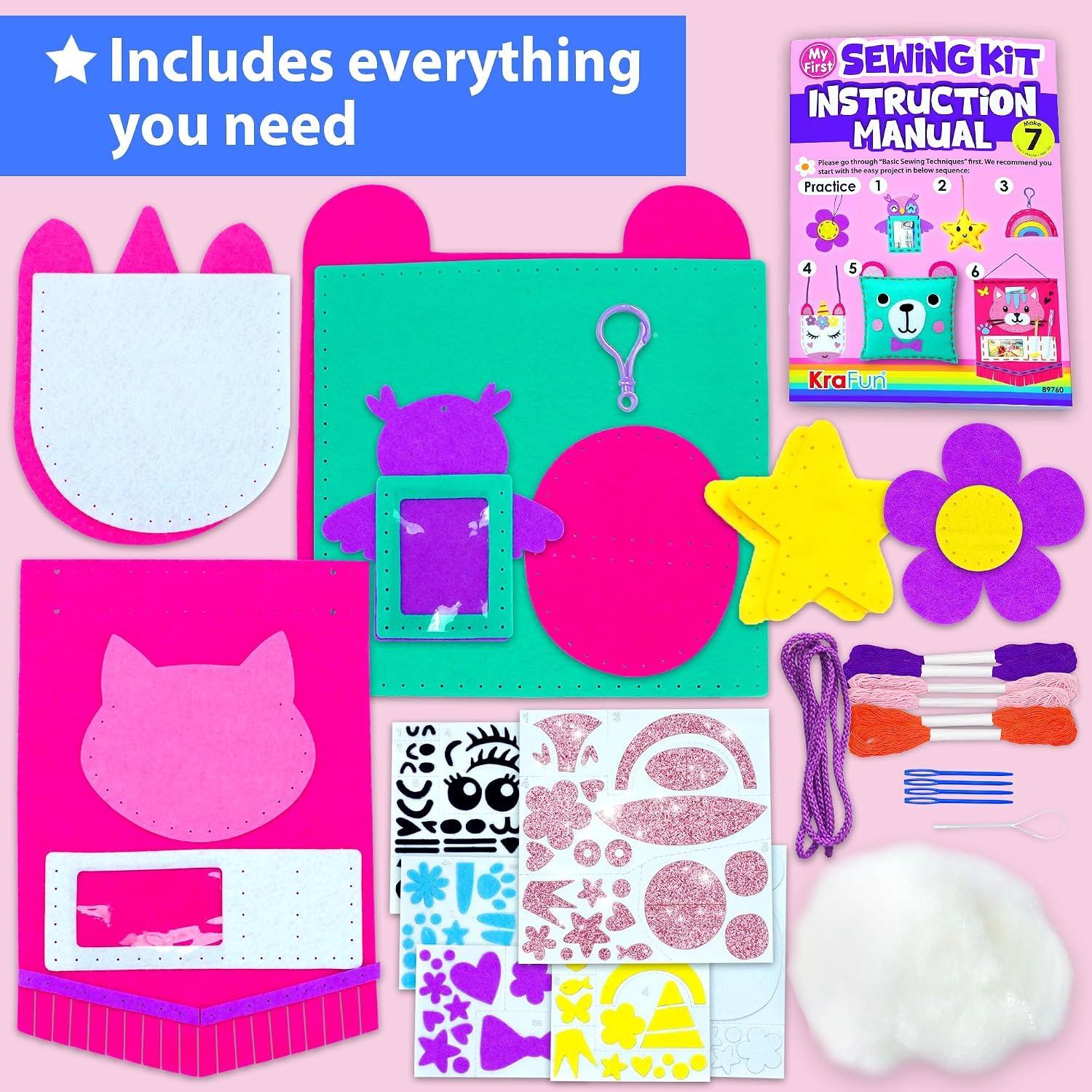
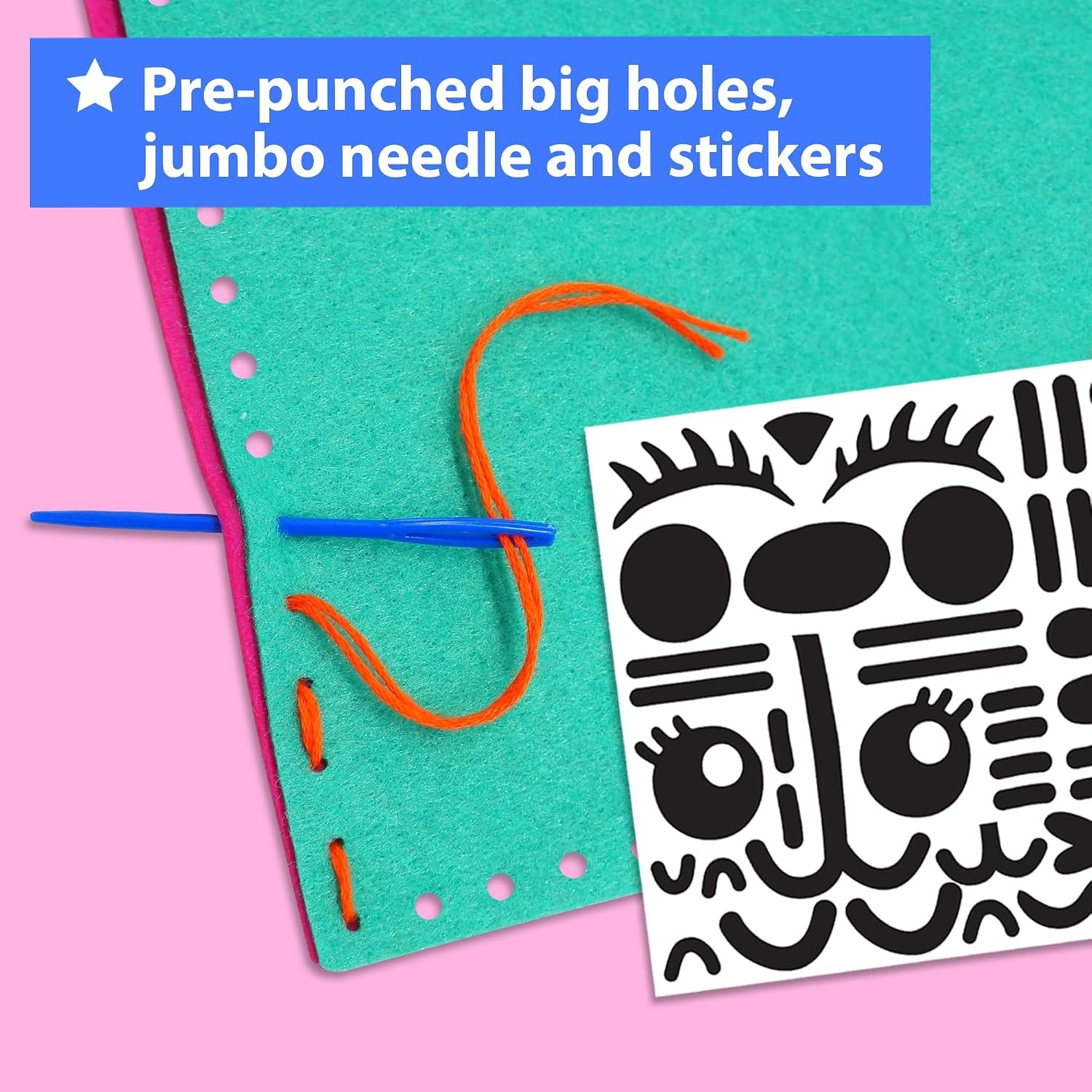
This first sewing kit with 7 projects is built to skip every one of those hurdles. The fabric arrives already cut to shape. The holes you stitch through are already punched in even rows. The needles are plastic and blunt. What is left is the part a child actually enjoys, which is watching loose pieces turn into a thing they can hold.
How a pre-punched felt kit works
The idea is simple. Instead of pushing a sharp needle through solid fabric wherever you guess it should go, the felt pieces come with a neat row of holes around the edge. The child threads the plastic needle and passes it up through one hole and down through the next, over and over. That is a running stitch, and it is the backbone of hand sewing.
Because the holes are already spaced, the stitching comes out even without any skill. That single detail does most of the work here. An even seam on the first attempt makes a child believe they can sew, and belief is the thing you are really buying with a beginner kit.
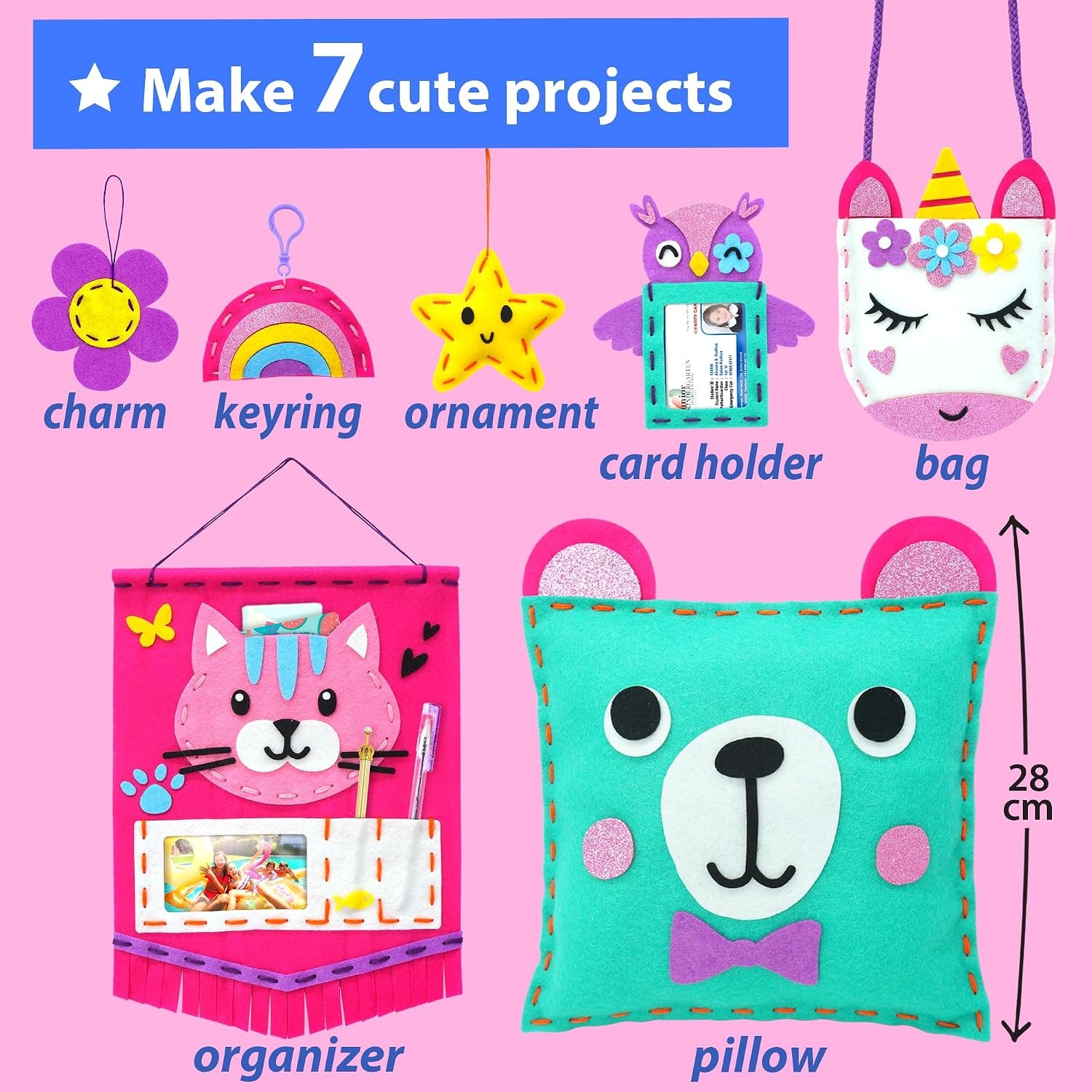
Some projects are flat, like the card holder and the ornament. Others, like the pillow and the mini rainbow, need stuffing before the last seam is closed. That teaches a second lesson, which is that you sew most of the way round, fill the shape, then finish the gap. It is the same logic used in every soft toy ever made.
No glue is involved anywhere. Nothing needs to dry, nothing needs to be weighed down overnight, and nothing ends up stuck to a sleeve. For families who have sworn off glue-based kits, that alone is reason enough to look at a felt craft kit instead.
Who this suits
This is aimed squarely at beginners. If your child has never held a needle, this is a good first step. If they already sew on a machine or do free-hand embroidery, they will find the punched holes limiting and you should look at something more open-ended.
It also suits a few specific situations well. Long journeys, because nothing spills and the box is only 4 cm deep. Hospital or waiting room time, because it is quiet and the pieces are small. Rainy school holidays, because seven projects spread across several days rather than being consumed in one go.
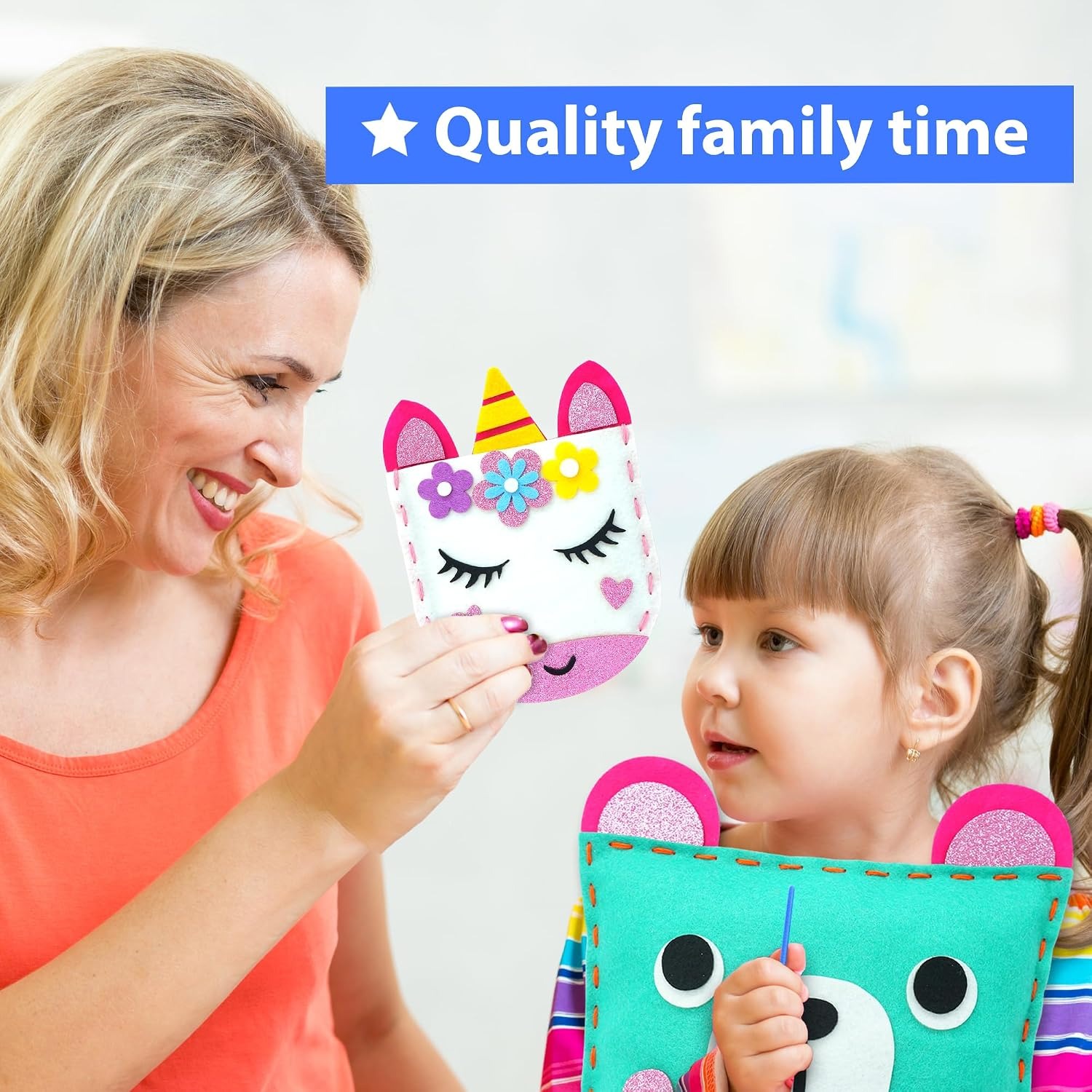
Grandparents often buy this type of set for visits, and it works because it gives two people something to do side by side. An adult can thread the needle and tie the knots while the child does the stitching. That division of labour keeps frustration low and keeps the child in the driving seat.
On the gifting side, it has the advantage of needing nothing extra. There is no trip to a craft shop for thread or stuffing, no printer required for a pattern. Everything is in the box, which matters when the gift is opened at eight in the morning on a birthday.
What to look for when comparing kits
A few things separate a kit a child finishes from one that gets shoved in a cupboard.
Check whether the holes are pre-punched. Kits that supply plain felt and expect a beginner to stitch freehand look cheaper and usually end in a tangled mess. Check the needle type too. Plastic needles are the safe option for young hands, metal ones are faster but belong with older children.
Then count the projects honestly. A box advertising "lots of fun" with two small makes inside runs dry in an afternoon. Seven builds, as here, is a reasonable number for a first kit. Vary matters as much as quantity, because repeating the same flat shape seven times teaches nothing new after the second one.
Finally, look at storage. A kit that arrives in a flimsy sleeve scatters within a week. A reusable box keeps the thread, needles and leftover felt together, which is the difference between a kit that gets picked up again and one that quietly disappears.
Setting up a first session
Clear a flat table with good light. Felt holes are easy to see but a dim corner makes threading harder than it needs to be. Sit next to your child rather than opposite, so you are both looking at the work the same way round.
Start with a flat project rather than a stuffed one. The card holder or ornament gets a child through a full circuit of stitches quickly, and finishing something builds momentum. Save the pillow and the rainbow for the second or third sitting.
Expect to thread the needle a few times. Most young children cannot thread reliably at first, and that is not a sign they are too young to sew. Tie a decent knot at the end of the thread yourself, because a knot that pulls through the first hole undoes the whole row and is deeply annoying for everyone.
If a line of stitches goes wrong, you can pull it out and start again. That is one of the quiet benefits of a no-glue build. Just go gently so the punched holes keep their shape.
Looking after the finished pieces
Treat the finished items as keepsakes rather than laundry. A light wipe with a barely damp cloth handles most marks, and they should be left flat to air dry. Machine washing, tumble drying and ironing will do more harm than good, especially on the stuffed pieces where the seam is hand stitched.
Between sessions, put everything back in the box and store it somewhere dry. Felt picks up damp easily and limp felt is harder to stitch neatly. Keep spare thread offcuts in the box too, because they come in handy when a seam needs a repair six months later.
Small parts and loose thread mean the box should live out of reach of babies, preschoolers and pets. That is standard sense with any craft kit, but worth saying.
What children take away from it
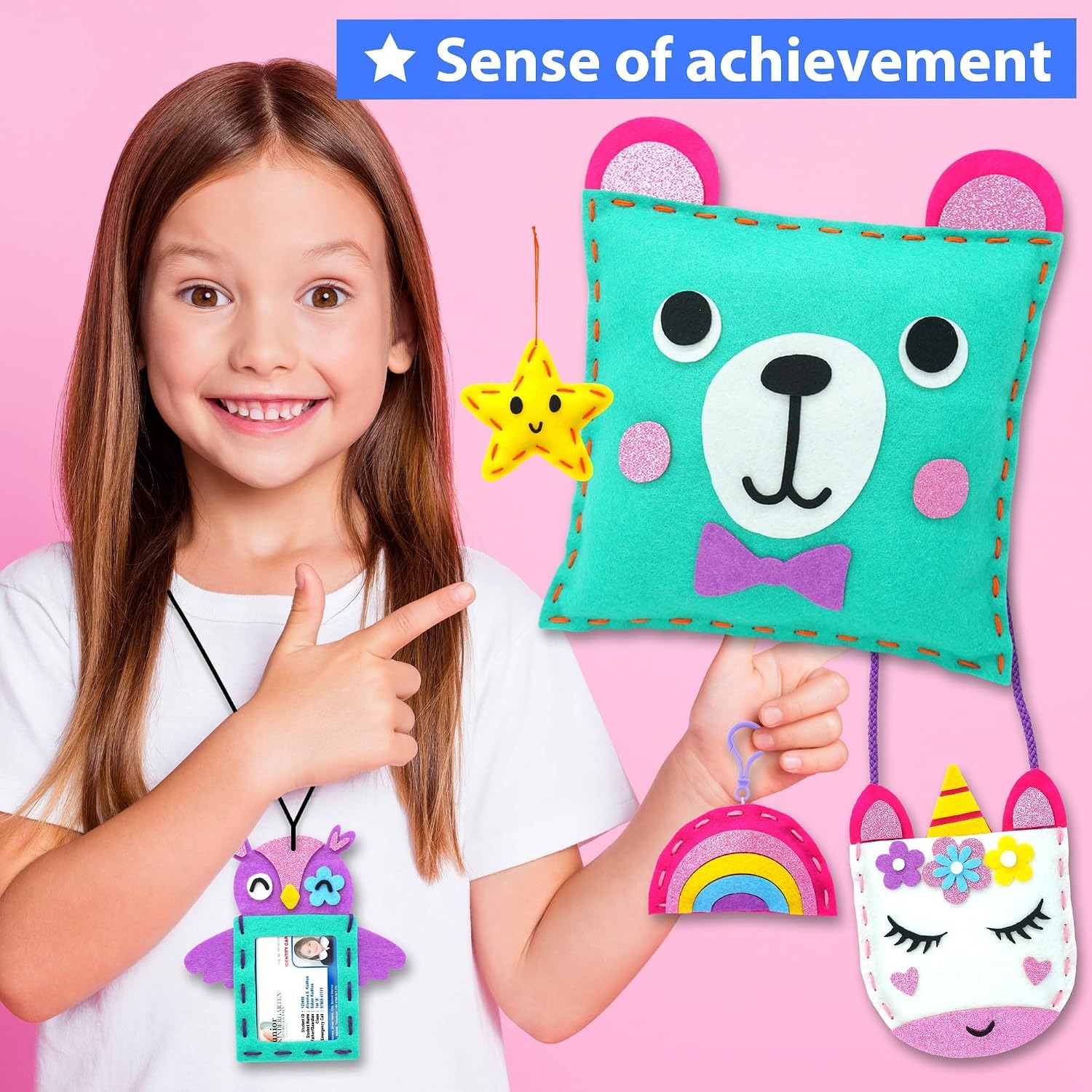
The obvious outcome is six or seven handmade objects. The less obvious one is that sewing stops being a mystery. Once a child has seen that a seam is just a repeating loop of thread, a torn pocket or a loose button looks fixable rather than final. That is a practical skill that sticks around long after the mini rainbow has been retired to a shelf.
There is also the hand control side. Pinching a needle, aiming at a small hole and pulling thread through uses the same fine muscles involved in writing. Plenty of teachers reach for a craft kit like this for exactly that reason, though we would not oversell it as anything more than useful practice.
The short version
If you want a child to try sewing and actually finish something, pick a kit that has already done the fiddly setup for you. Pre-cut felt, pre-punched stitch holes and blunt plastic needles are the three features that matter most, and this set has all three.
Seven varied projects give enough to keep going past the novelty stage. The reusable 26 x 26 x 4 cm box keeps it all together between sittings. At 115 g, it travels anywhere. For a first sewing kit, that is the right shape of product, and it leaves the child with things they made themselves rather than an empty packet.