

The complete guide
Choosing a First Ukulele, A Practical Buyer's Guide
The problem with most first instruments
A lot of musical ambition dies in week two. The instrument is too big, the strings hurt, it will not stay in tune, and nobody in the house knows how to fix any of that. The child drifts off, the adult feels guilty, and a hundred euro worth of wood ends up on top of a wardrobe.
Ukuleles sidestep most of that. Four strings instead of six. A neck short enough that small fingers can reach across it. Nylon strings that press down without much force. And a handful of chords that, between them, open an enormous amount of music. You can learn C, F and G7 in an afternoon and play along with songs you already know by the weekend.
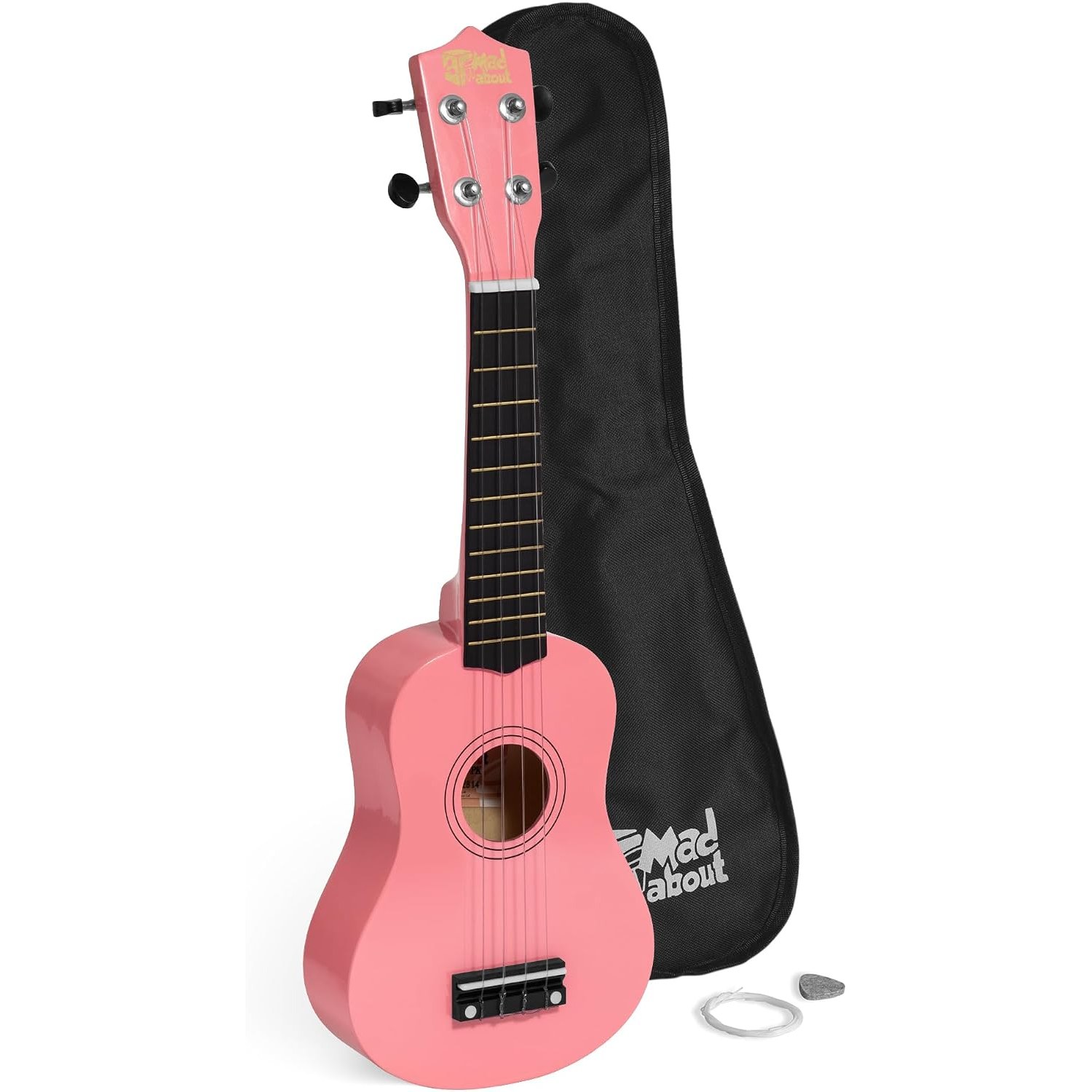
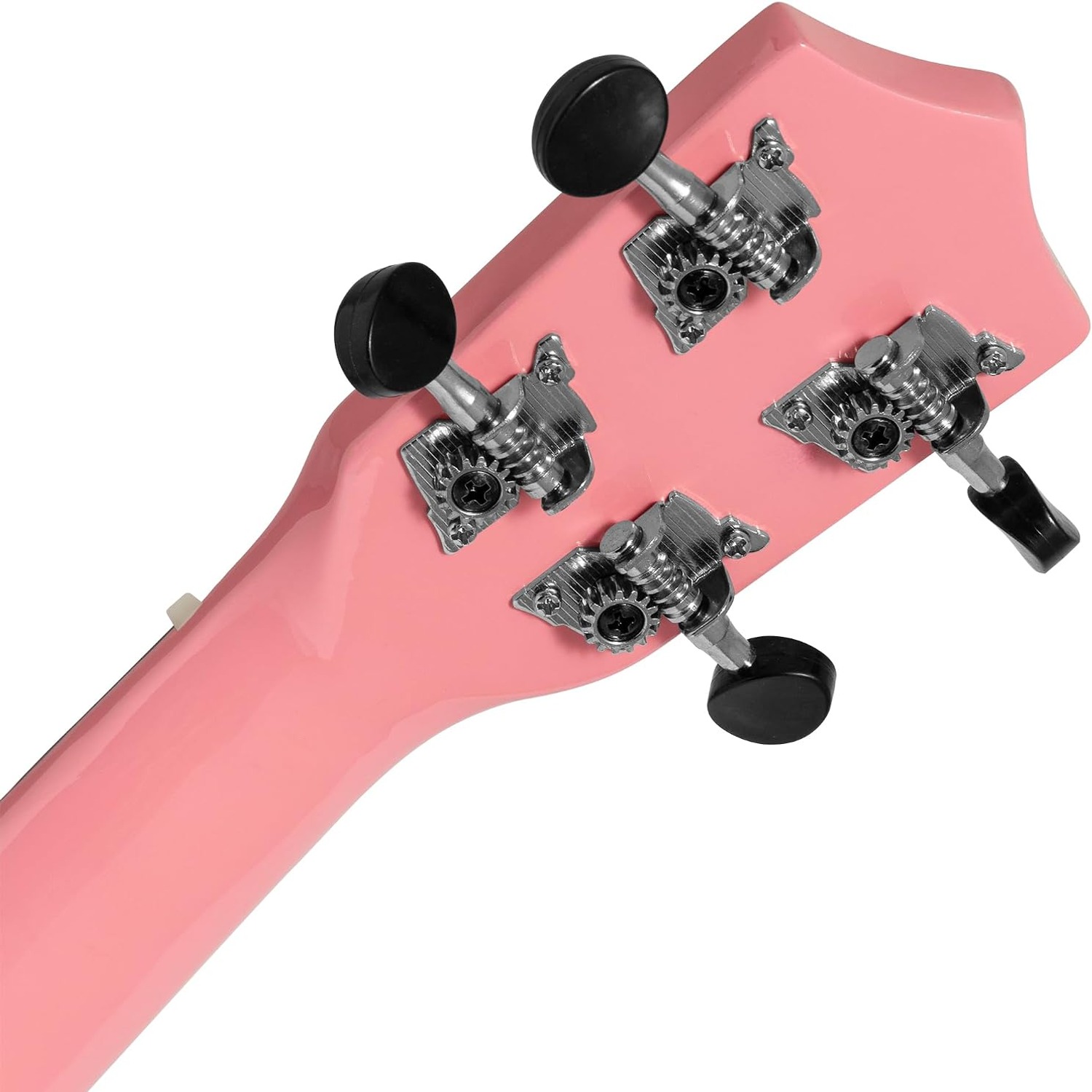
This particular model is a soprano, the smallest and most familiar ukulele size, in pink with a painted finish. The body is basswood, top, back and sides, strung with four nylon strings. It comes packed with a soft bag, a felt pick and a spare string set.
How a soprano ukulele actually works
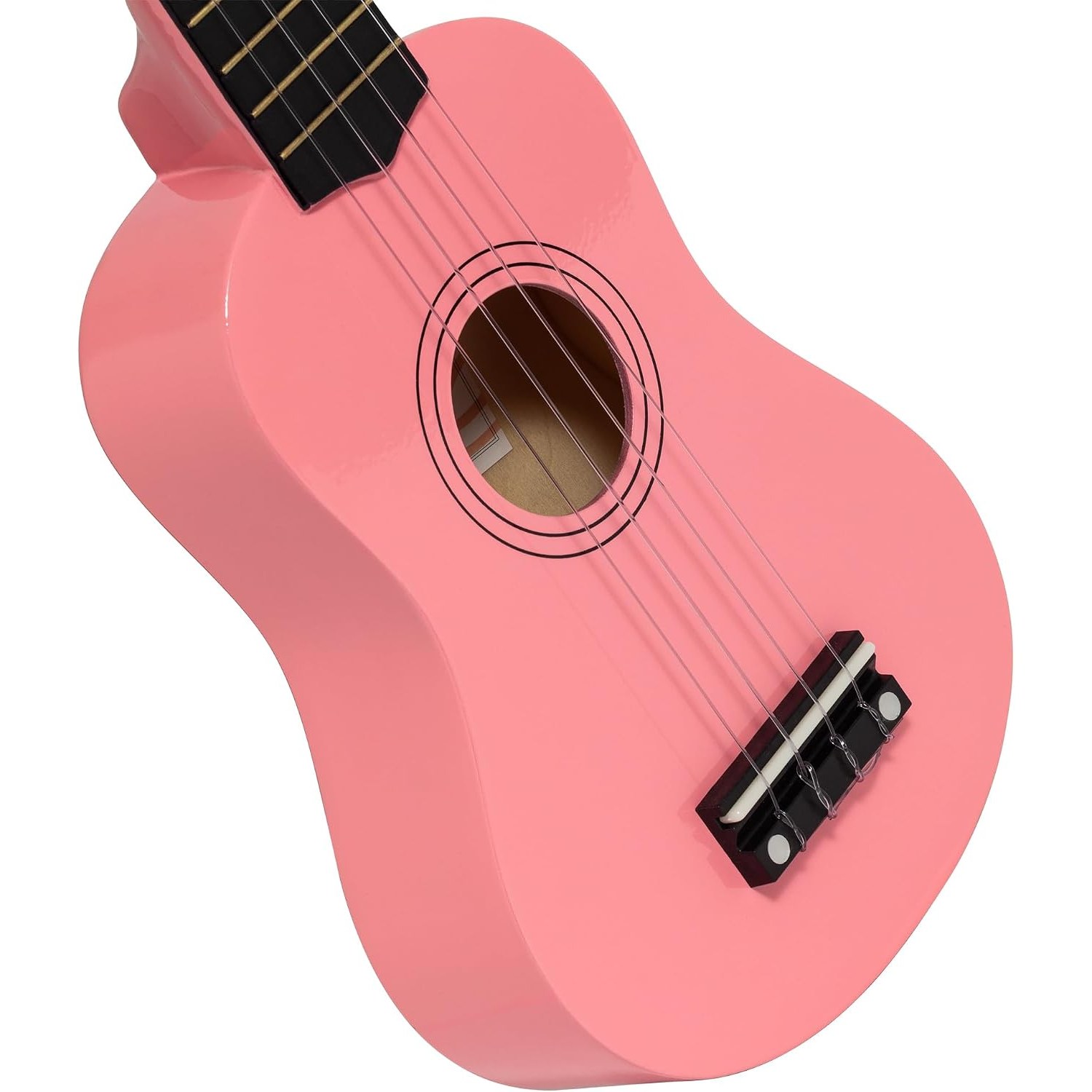
The body is a hollow wooden box. When you pluck or strum a string, the vibration travels through the bridge into the top of the instrument, and the box amplifies it. Basswood is a common choice for starter instruments because it is light, easy to work and produces a clear, bright tone without the cost of solid spruce or mahogany.
Scale length is the distance between the nut at the top of the neck and the bridge. Soprano is the shortest of the standard ukulele scales, which is exactly why it suits beginners and younger players. The frets sit close together, so a chord shape that would be a stretch on a guitar is a comfortable handspan here.
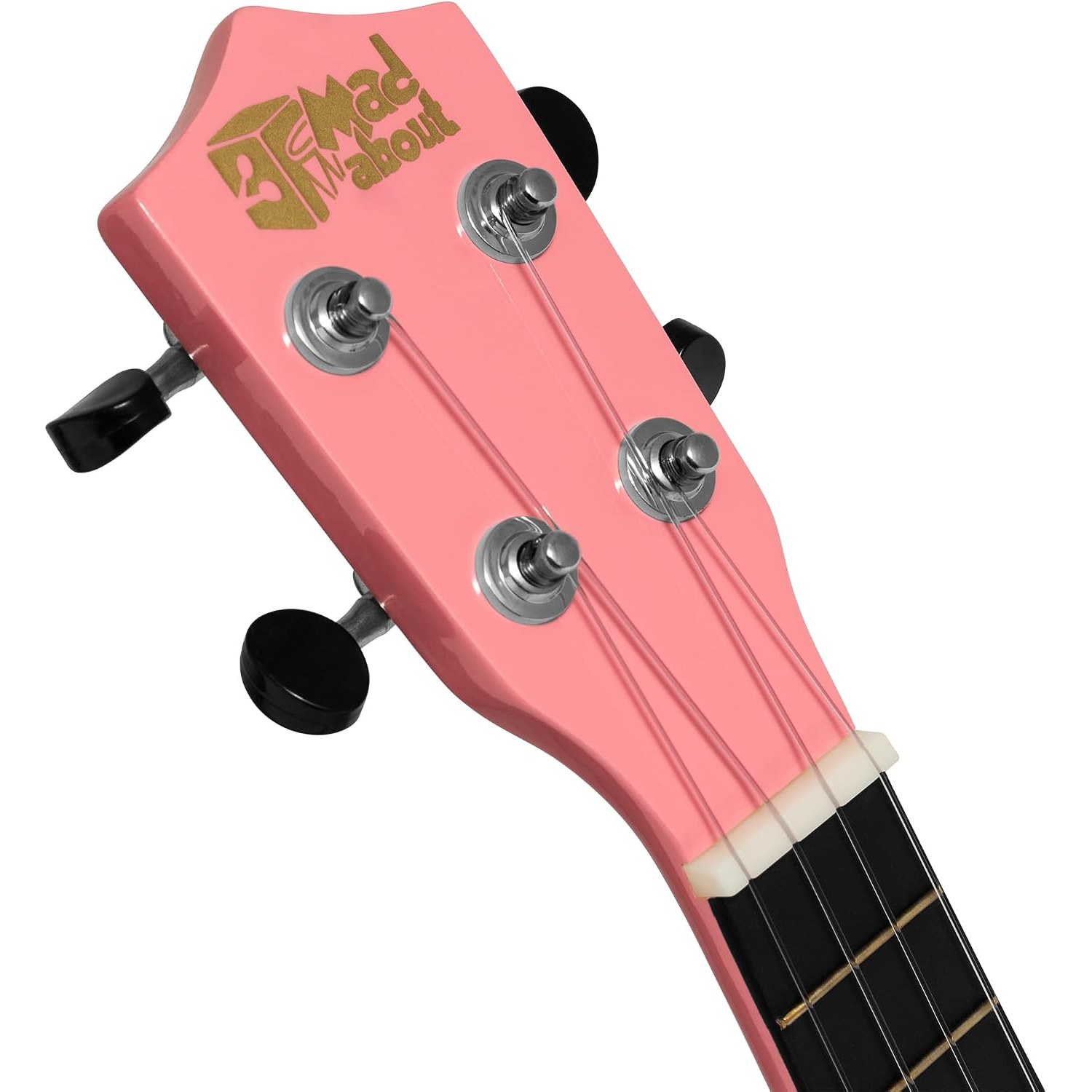
Tuning is where the geared machine heads earn their place. Older or cheaper ukuleles sometimes use friction pegs, which you push and twist and hope. Geared tuners use a worm gear inside the housing, so a full turn of the knob moves the string by a fraction. That means you can creep up on the right pitch instead of jumping past it. If you have ever watched a parent try and fail to tune a friction-peg ukulele before a school concert, you understand the value.
Standard tuning is G, C, E and A. Most people use a clip-on tuner or a free phone app. It takes under a minute once you have done it a few times.
Who it suits
Children starting music lessons are the obvious group. The size, the weight of 0.64 kg and the soft nylon strings all point the same way. A soprano is often the first stringed instrument a primary school child meets, and it is a sensible stepping stone toward guitar later.
Adults buy sopranos too. If you want something to take on holiday, leave by the sofa, or learn in evenings without committing to a full size guitar, the best travel ukulele is usually a soprano simply because it fits in a backpack. The short scale takes a little getting used to if you have big hands, but plenty of adult players stick with soprano for the tone alone.
It also works for group settings. Schools and community groups often buy sopranos in batches because they are affordable, light and durable enough for shared use. One instrument on its own is quiet. A dozen together fill a room nicely.
Who it suits less well: anyone chasing a deep, full sound for recording, or a left-handed player who wants a factory left-hand setup. This one is listed as right-hand orientation. Left-handed players do learn on right-handed ukuleles regularly, but if you want the strings reversed, factor in a restring.
How to choose between ukulele sizes
Ukuleles come in four main sizes. Soprano is the smallest, then concert, tenor and baritone. Each step up adds body volume and spreads the frets further apart.
Pick soprano if the player is a child, if hands are small, if you want the classic bright plinky tone, or if portability matters most. Pick concert or tenor if the player is an adult with larger hands who wants more volume and a fuller low end. Baritone is tuned differently again and is a different conversation entirely.
For most people buying a first instrument, especially for a child, soprano is the right call. It is also the most affordable size, which matters when you are not yet certain the interest will stick.
What to look for in a starter set
Three things make the difference between a ukulele that gets played and one that does not.
The first is tuners. Geared machine heads, as fitted here, make tuning manageable for someone who has never tuned anything. The second is what comes in the box. A bag means the instrument gets stored properly instead of knocked about. A pick gives an alternative to bare fingers while fingertips toughen up. Spare strings mean the first snapped string is a five minute job rather than a trip to a music shop.
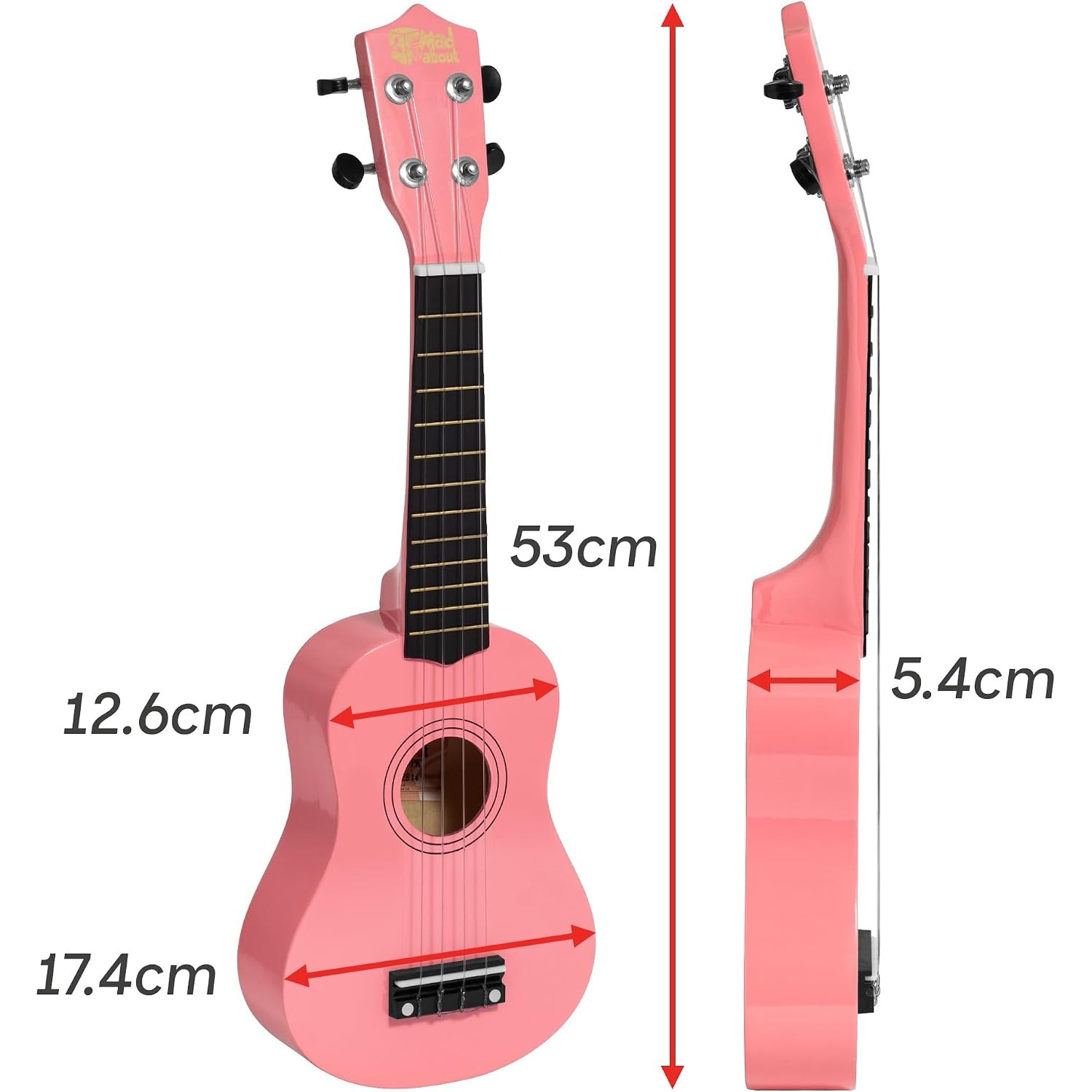
The third is weight and size, which sounds obvious until you watch a child try to hold something too big. At 0.64 kg and 55 x 16.5 x 8 cm, this one is genuinely manageable for a smaller player.
The first week, honestly
New nylon strings stretch. This catches everyone out. For the first few days the ukulele will drift out of tune within minutes of playing. That is not a fault, it is physics. Gently stretch each string by pulling it away from the fingerboard, retune, and repeat over a few sessions. Within a week it will hold pitch properly.
Fingertips also protest at first. Short practice sessions, ten or fifteen minutes, done often, beat one long session a week. Soreness fades after a fortnight or so.
Expect a snapped string at some point. Nearly everyone over-tightens once. That is exactly why the spare set is in the box.
Looking after it
Keep it in the bag when it is not being played. Wipe the strings and body with a soft dry cloth afterward, since finger oils dull strings faster than playing does. Keep it away from radiators, damp bathrooms and sunny windowsills, because wood responds to heat and humidity by moving, and moving wood means shifting tuning and, over time, glue stress.
Do not leave it in a car in summer or winter. That is the single fastest way to damage any wooden instrument. Beyond that, a ukulele is forgiving. It wants to be played, and regular use keeps the strings and the player in better shape than careful storage ever will.
The short version
This is a pink soprano ukulele sold as a complete beginner package. Basswood body, four nylon strings, geared tuners for sane tuning, and a soft bag, pick and spare string set in the box. It weighs 0.64 kg and measures 55 x 16.5 x 8 cm, so it is easy for a child to hold and easy to carry anywhere.
If you want a first instrument that someone will actually pick up tomorrow, and the day after, a soprano ukulele is about as good a bet as there is. Tune it, learn three chords, and you are playing songs by the weekend.