
The complete guide
How To Choose The Right 100 Piece Puzzle Set For Your Child
The gap nobody warns you about
There is an awkward stage in a child's puzzle life. The chunky 24 piece farm scene has been built so many times they can do it face down. The 500 piece box someone bought them for Christmas is still shrink wrapped, because the one time you opened it, the whole thing ended in tears and a scattered pile under the sofa.
That gap is where a 100 piece puzzle lives. It is enough pieces to feel like a real job, with a proper border, a middle section that needs thinking about, and a sense of progress you can actually see. It is also few enough that a child can finish it in one sitting, or two short ones, which is the part that matters most. Children do not learn patience from puzzles they abandon. They learn it from puzzles they complete.
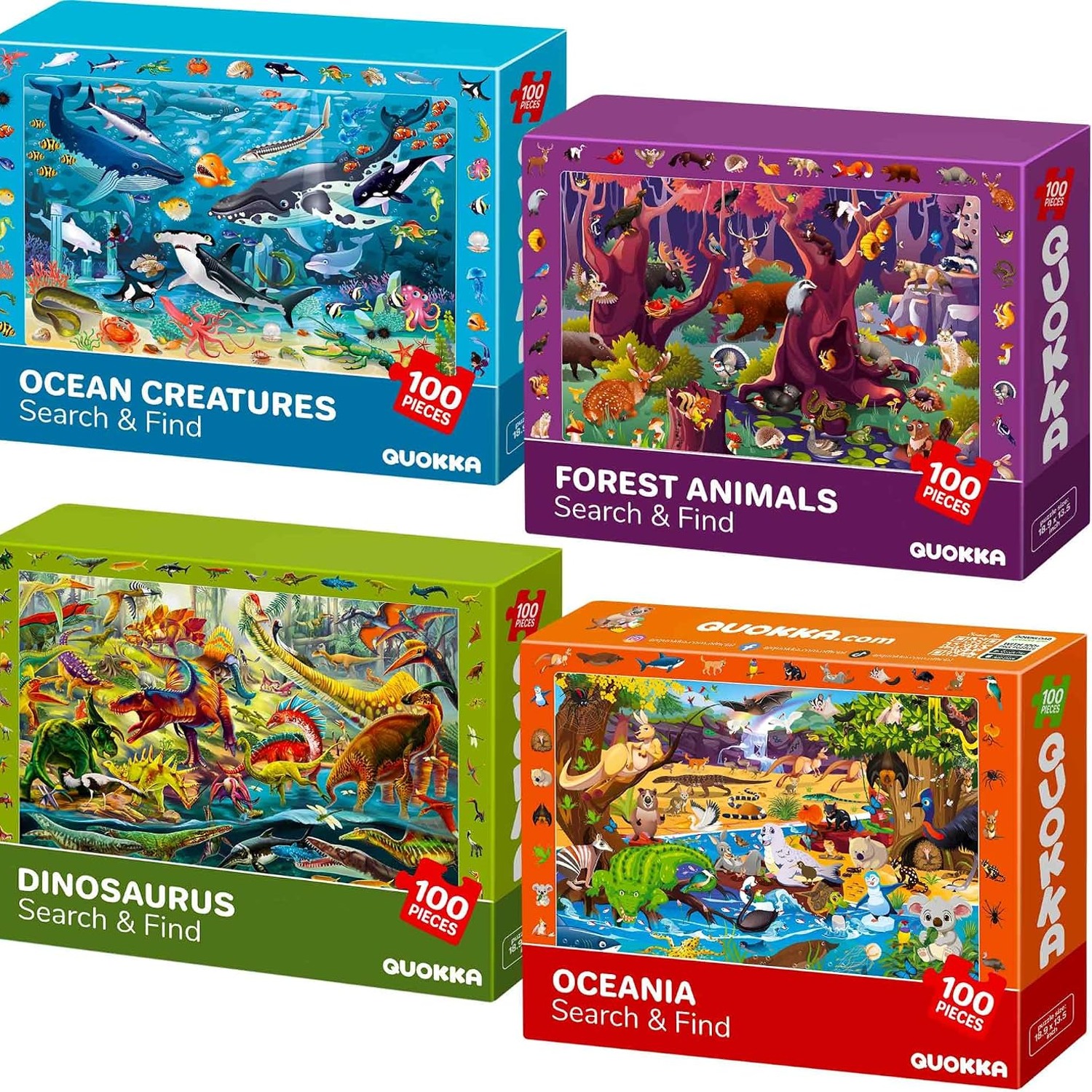
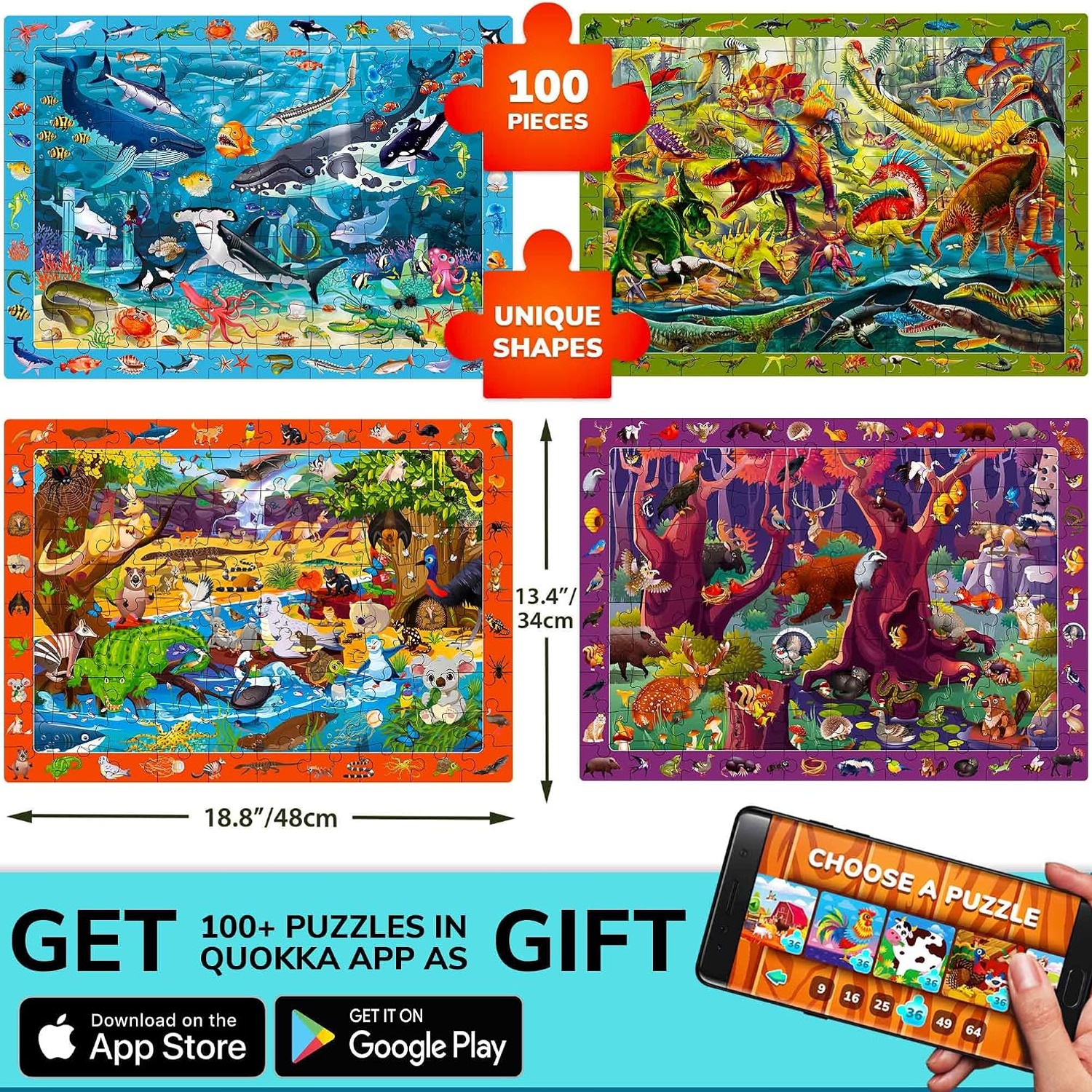
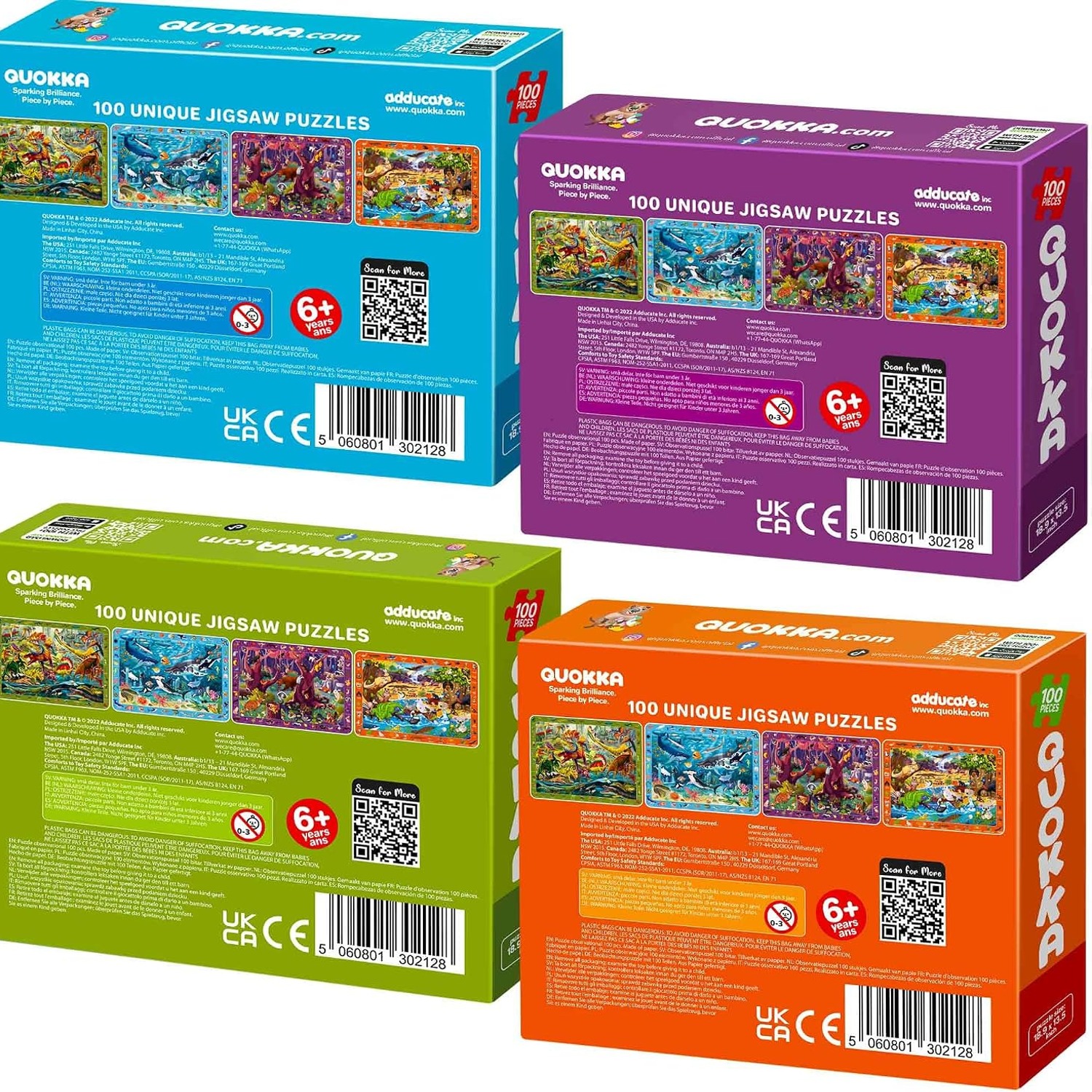
This set gives you four of them. Four different scenes, dinosaurs and sea creatures and forest animals, each building to 34 x 47.8 cm. Finishing one is not the end of the toy, it is the reason to open the next box.
How a jigsaw actually teaches
It looks like quiet play, and that is half the point, but a fair amount is happening while a child builds.
The first thing is visual scanning. To find a piece, a child has to hold a shape and a colour in their head while their eyes sweep a table full of near misses. That is working memory in action, and it gets better with practice. The second is planning. Most children work out, usually without being told, that edges come first and that sorting by colour beats grabbing at random. Nobody taught them a strategy, they built one.
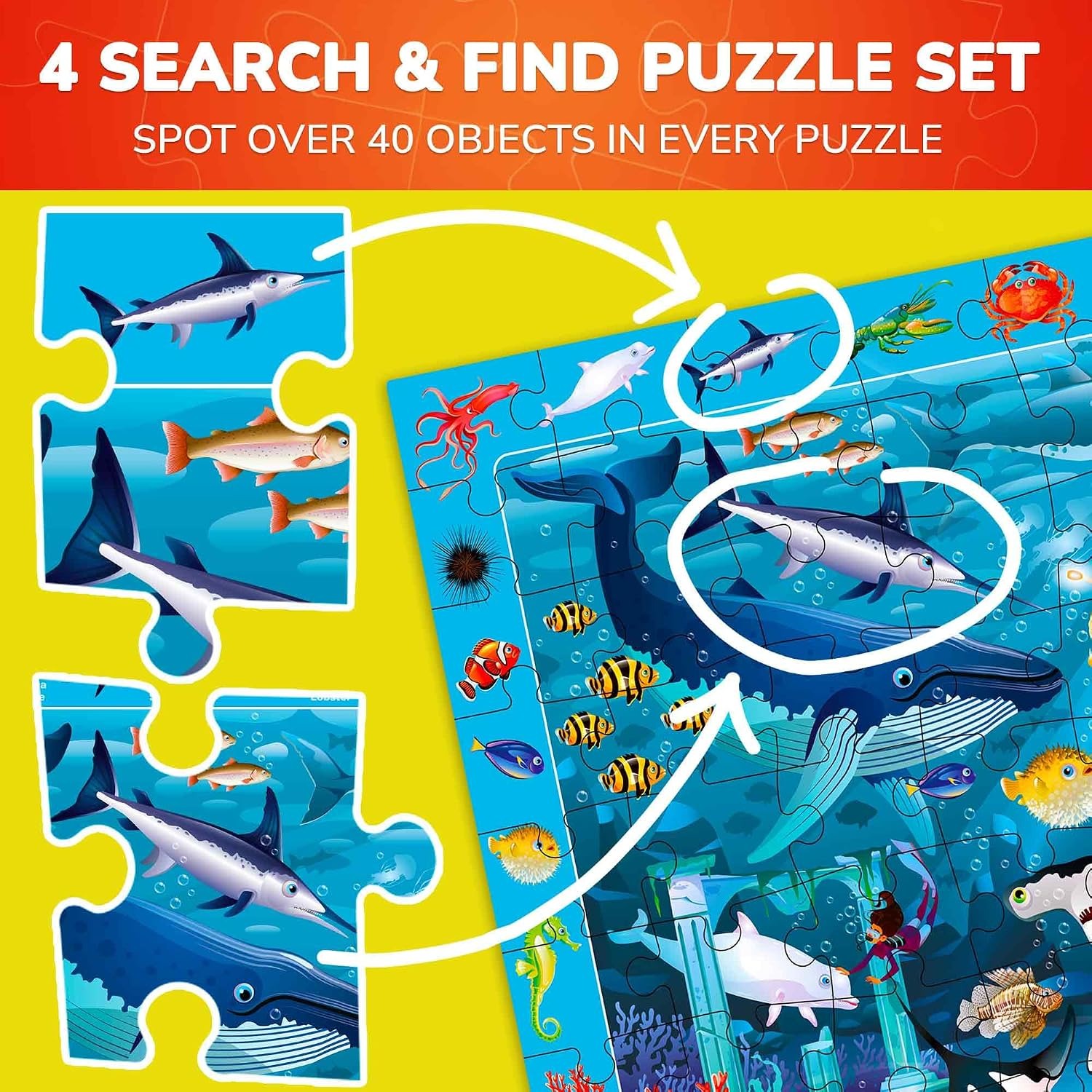
Then there is the hand work. Pinching a small cardboard piece, rotating it, and easing it into place is fiddly in a useful way. The listed educational objectives for this set cover exactly that ground: animal recognition, concentration, logical thinking, memory, motor skills and patience. They are not marketing words for this kind of toy, they are just a description of what happens over a half hour at the table.
Last, there is the thing that does not show up on any spec sheet. A puzzle gives a child a problem that is hard but solvable, with no timer and nobody else's score to beat. That is rarer than it sounds.
Who this set suits
The manufacturer recommends ages 36 months to 10 years and rates the skill level as beginner. That is a wide window, so it helps to think about it in three bands.
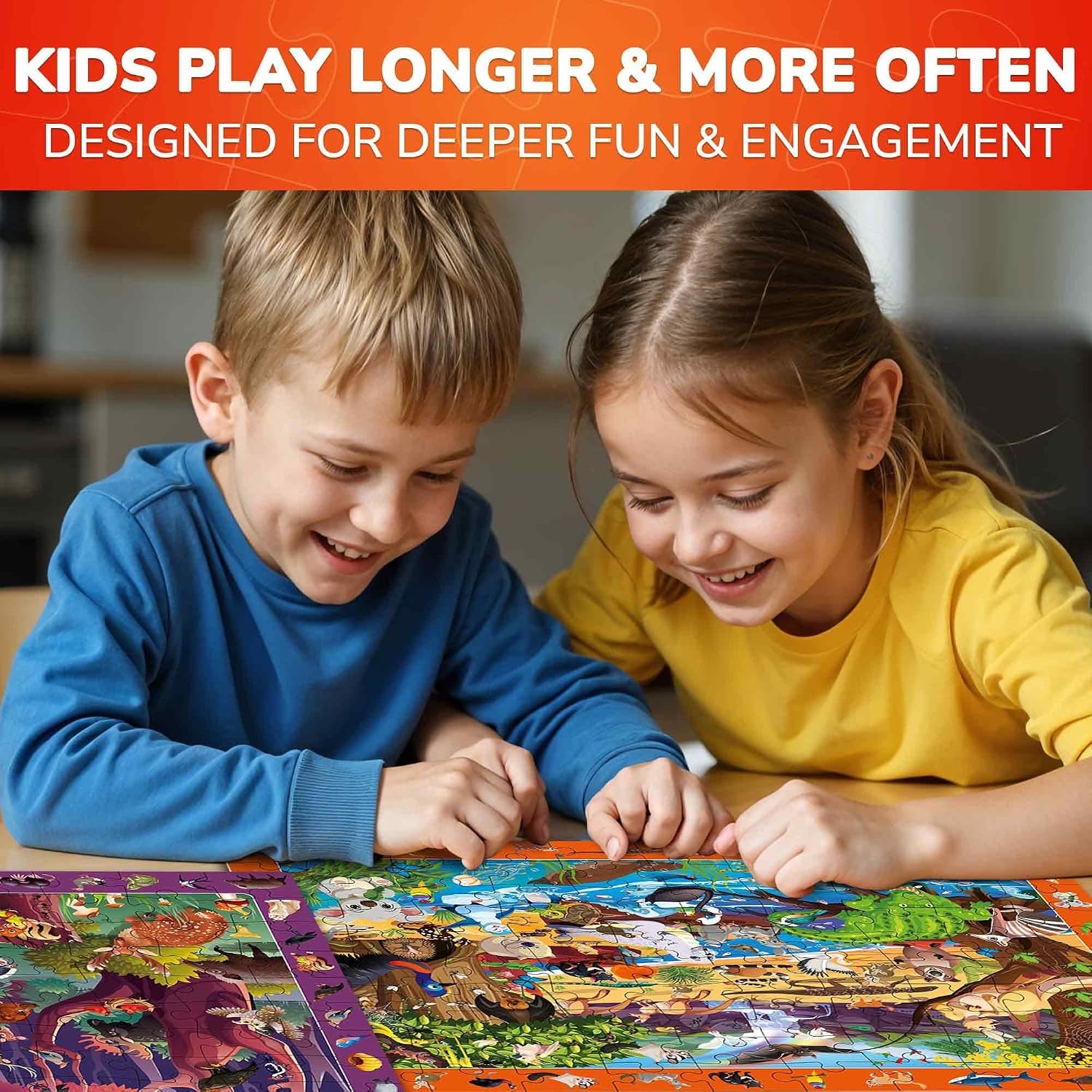
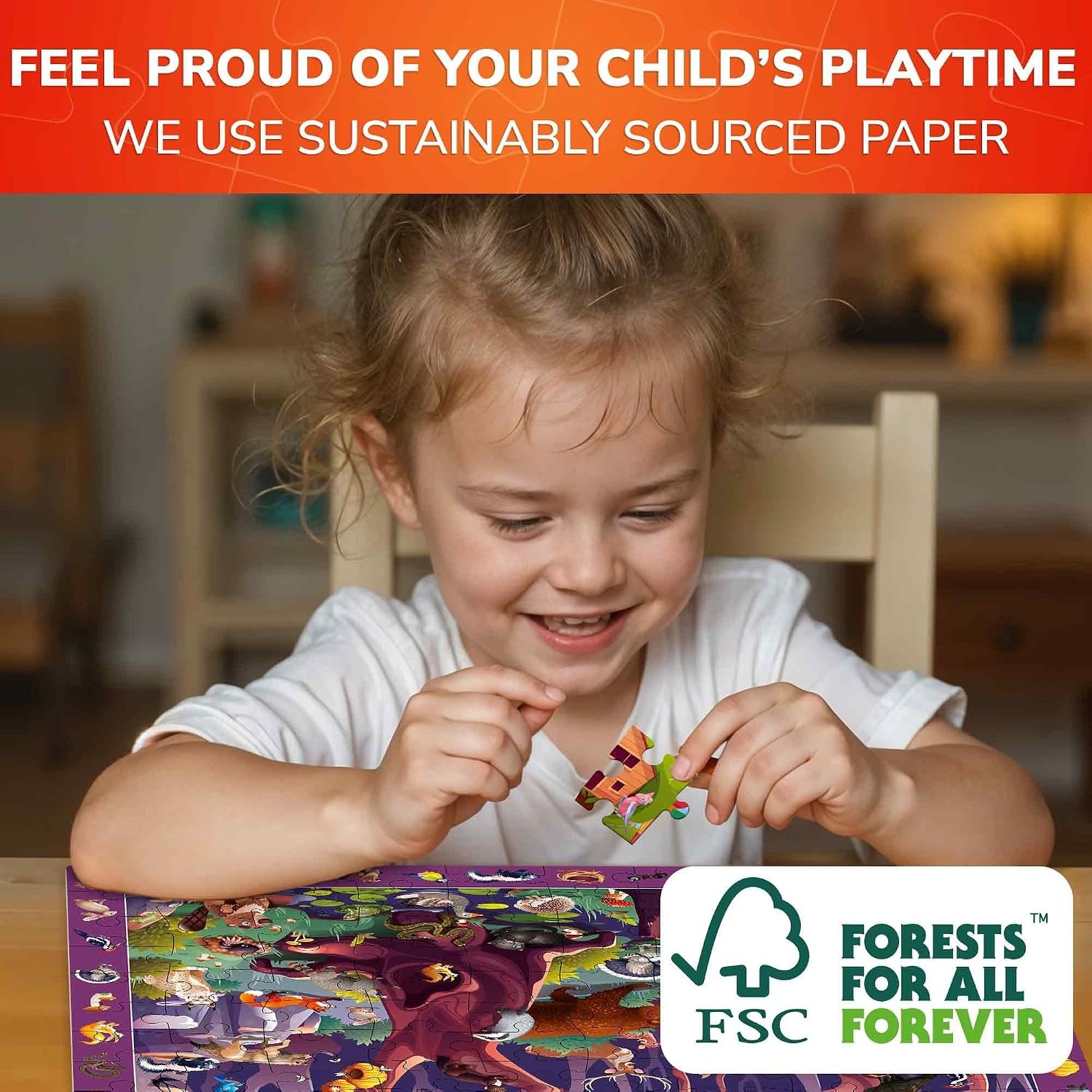
At three or four, treat it as a shared activity. Sit alongside, pull the edge pieces out together, and talk about what you can see in the picture on the box. Many children this age do better with one section at a time rather than the whole 100 at once. You are building habits more than puzzles.
At five to seven, most children manage with occasional help. This is the sweet spot. They will want to do the border themselves, they will ask for a hand with a tricky patch of sky or water, and they will want you to come and look when it is done. If you are hunting for the best jigsaw puzzles for 5 year olds, 100 pieces with a clear illustrated picture is the usual answer.
At eight to ten, a confident puzzler will finish a box fairly quickly. The appeal then shifts to variety and speed. Four different scenes keeps it interesting, and some children enjoy timing themselves across the set.
Reading the themes
Theme matters more than parents expect. A child who loves dinosaurs will sit with a dinosaur puzzle twice as long as a generic landscape, simply because they care what they are building.
This set covers a lot of ground. The listed themes are animals, birds, floral and ocean, with dinosaurs in the mix and a model number of 4x100 Dino. That spread means the set works for a dinosaur obsessed child and for a sibling who would rather have fish and birds. If you are buying for two children with different tastes, a mixed set like this solves a problem that a single themed box cannot.
The artwork style is listed as child friendly illustration rather than photography. That is a practical advantage, not just a look. Illustrated scenes use clearer shapes and stronger colour blocks, so a child can tell a piece of green leaf from a piece of green water. Photographic puzzles look beautiful and are much harder at this age.
Setting up for a good session
A few small choices make the difference between a finished puzzle and a half built one swept into a box.
Pick the surface first. A flat table is fine, but a tray or a large board is better if the table is needed for meals, because you can lift the whole thing out of the way without losing your progress. Avoid carpet. Pieces sink into the pile, get stood on and bend at the tabs.
Open one box, not four. Mixing all 400 pieces is a challenge some older children enjoy, but it turns a first session into a sorting exercise. Keep the other three boxes closed.
Do the border, then sort by colour into loose piles. Keep the box lid propped up where the child can see it, since the finished picture is printed there for exactly this reason. And stop before anyone is tired. A puzzle left half built on a tray is an invitation to come back, while a puzzle pushed past the point of frustration is one that goes in the cupboard.
Looking after cardboard
Cardboard puzzles last for years if you treat them reasonably, and fall apart in a month if you do not.
Keep food and drink off the table. A splash of juice on a cardboard piece swells the layers and the piece never sits flat again. Press pieces together gently rather than forcing them, because the tabs are the weak point. When a child jams a piece that does not fit, the tab creases and that piece is loose forever.
Store each puzzle in its own box, flat, in a dry cupboard. Damp bathrooms and sunny windowsills are the two worst spots, one softens the card and the other fades the print. If a piece picks up a mark, a barely damp cloth and an immediate dry works. Never soak it.
One more habit worth building: count the puzzle back into its box at the end. It takes a minute and it saves the frustration of finding out six months later that the last piece of the dinosaur's tail went missing.
When this set is the wrong call
It is worth being honest about fit. If your child is two, 100 pieces will be frustrating and the manufacturer's minimum is 36 months anyway. If your child has already finished several 300 or 500 piece puzzles without help, this will be a pleasant hour rather than a challenge, though the four scenes still give it value as a gift.
If you want a specific named dinosaur species or a particular sea creature, that detail is not listed by the maker. The themes are given, the individual subjects in each scene are not. And if you need certified recycled paper or a stated country of origin, neither is specified here.
The short version
Four puzzles, 100 pieces each, dinosaurs and ocean and forest animals, all built on beginner level cardboard with the finished picture on every box. Recommended for 36 months to 10 years, best enjoyed around five to seven. Finished size 34 x 47.8 cm, total weight 0.94 kg, flat packed and easy to wrap. One child can build alone, or two to four can share the table.
It is a quiet, screen free hour that a child can actually finish, repeated four times over. That is most of what you want from a puzzle set, and the rest is just picking the right afternoon to open the first box.