

The complete guide
Choosing a Kids Garden Tool Set That Actually Survives the Garden
The problem with most kids garden tools
Ask any parent who has bought a children's gardening kit and you will hear a version of the same story. The set looked bright and cheerful in the box. The first time the child tried to lift a shovel of wet soil, the plastic blade bent sideways. The second time, it snapped. The wheelbarrow, which was really a moulded tub on a wheel, cracked where the handles met the body.
That is frustrating for the adult and worse for the child. A kid who wants to help in the garden and keeps getting handed equipment that fails learns a quiet lesson, which is that gardening is pretend and the real work belongs to grown-ups. The point of a good kids garden tool set is the opposite. It should let a child do a real job, badly at first, and get better at it.
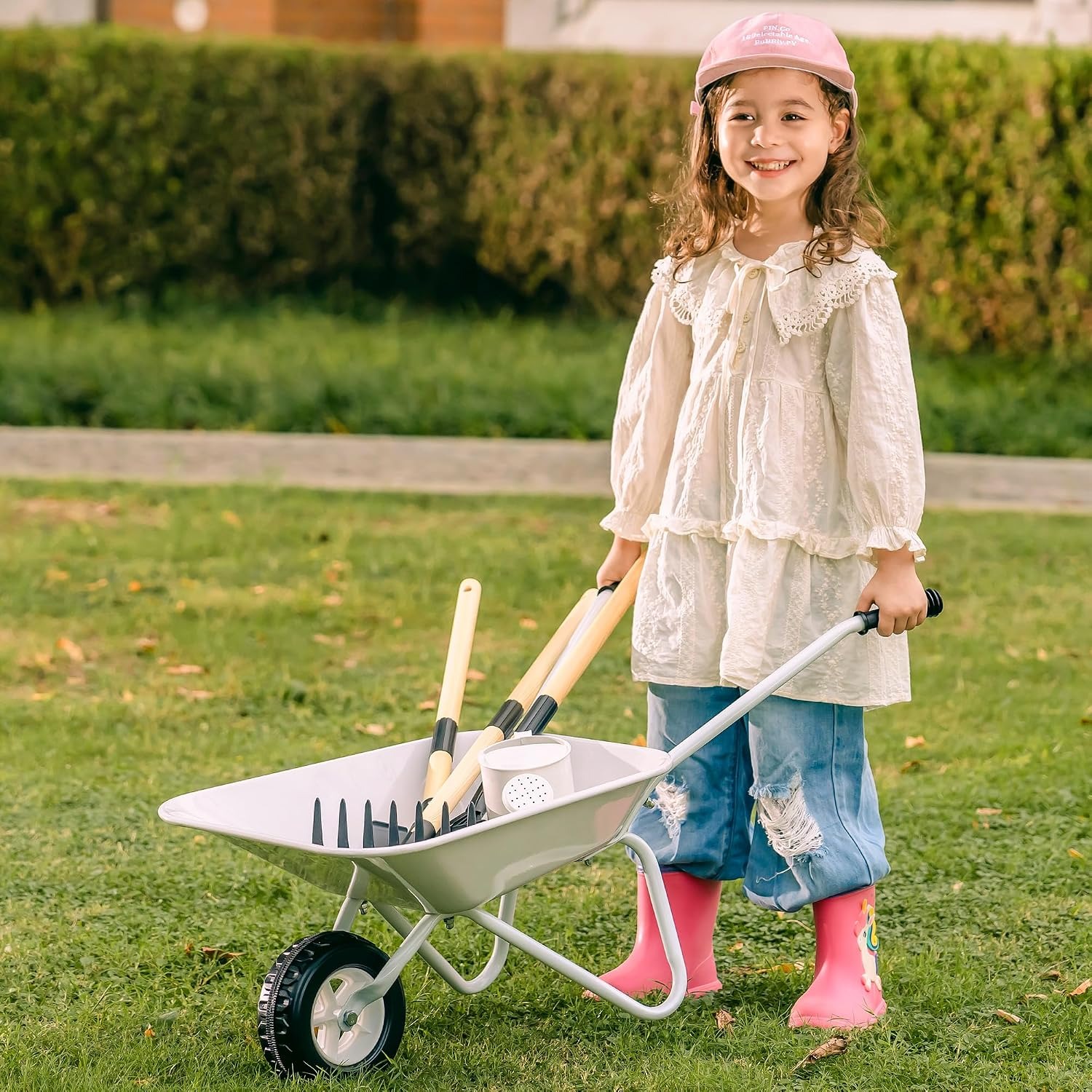
This is where metal matters. A metal barrow body and metal tool heads change what a child can attempt. Soil can be carried. Compost can be shifted. Leaves can be raked into a pile that stays raked. The tools are smaller and lighter than adult versions, but they work the same way.
How this set is put together
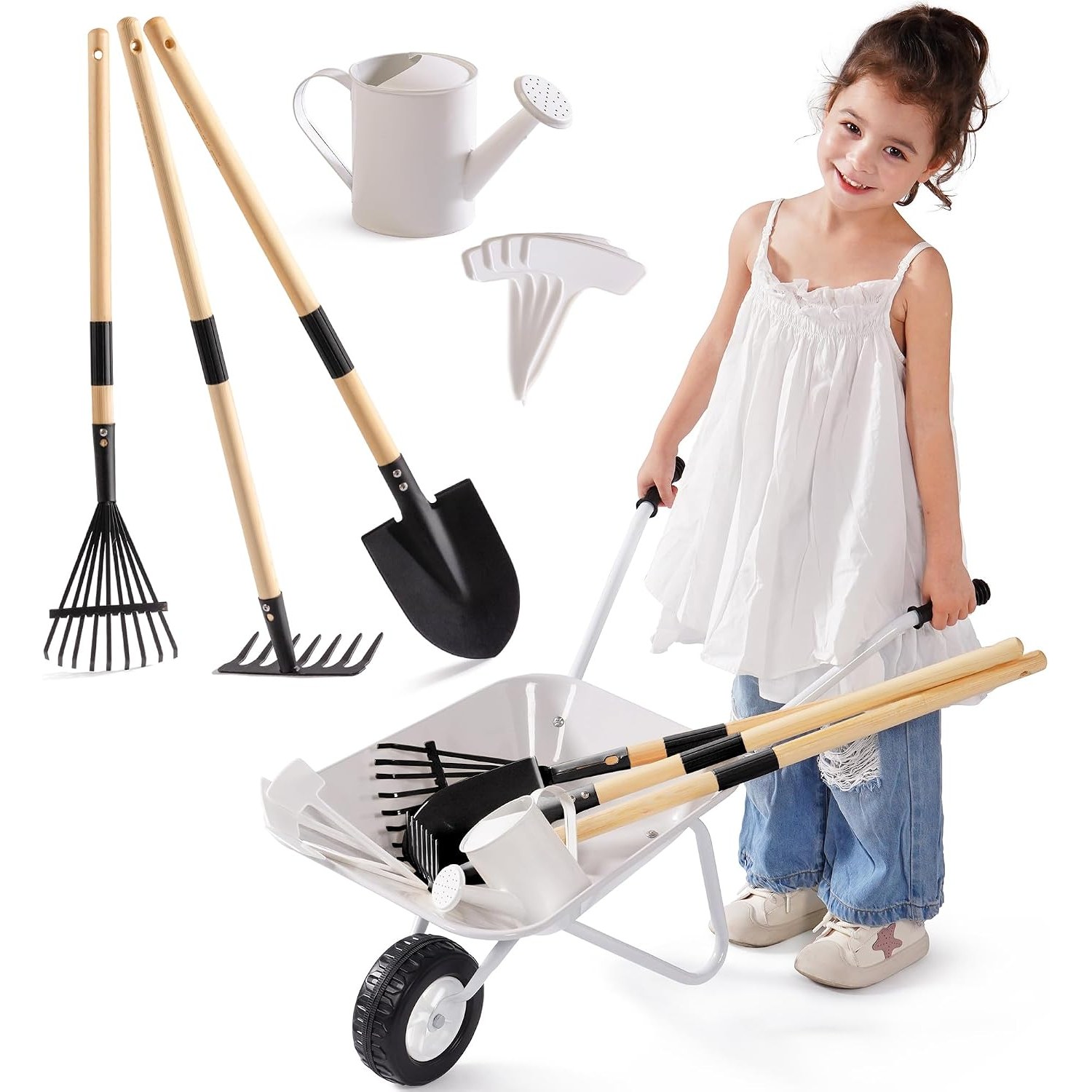
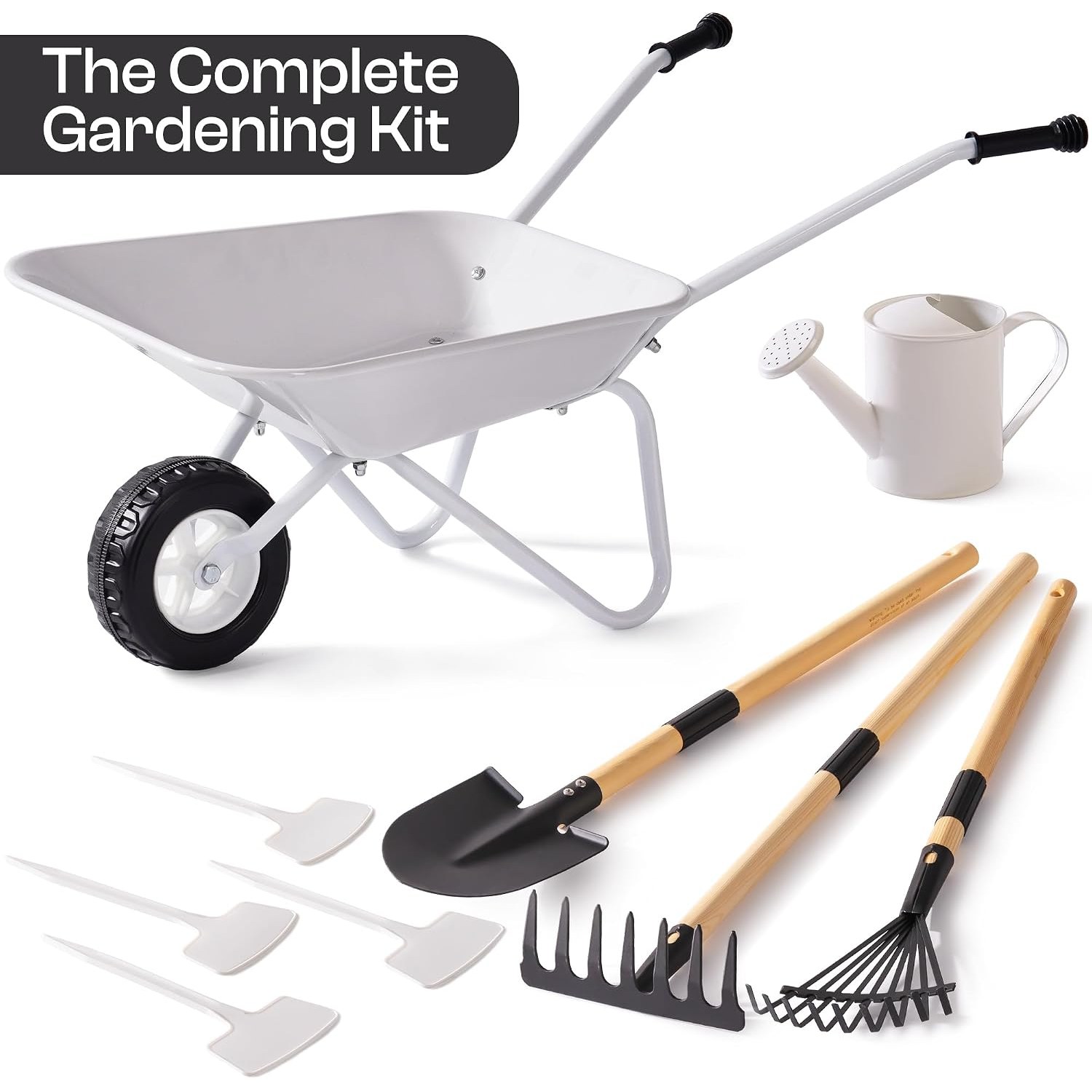
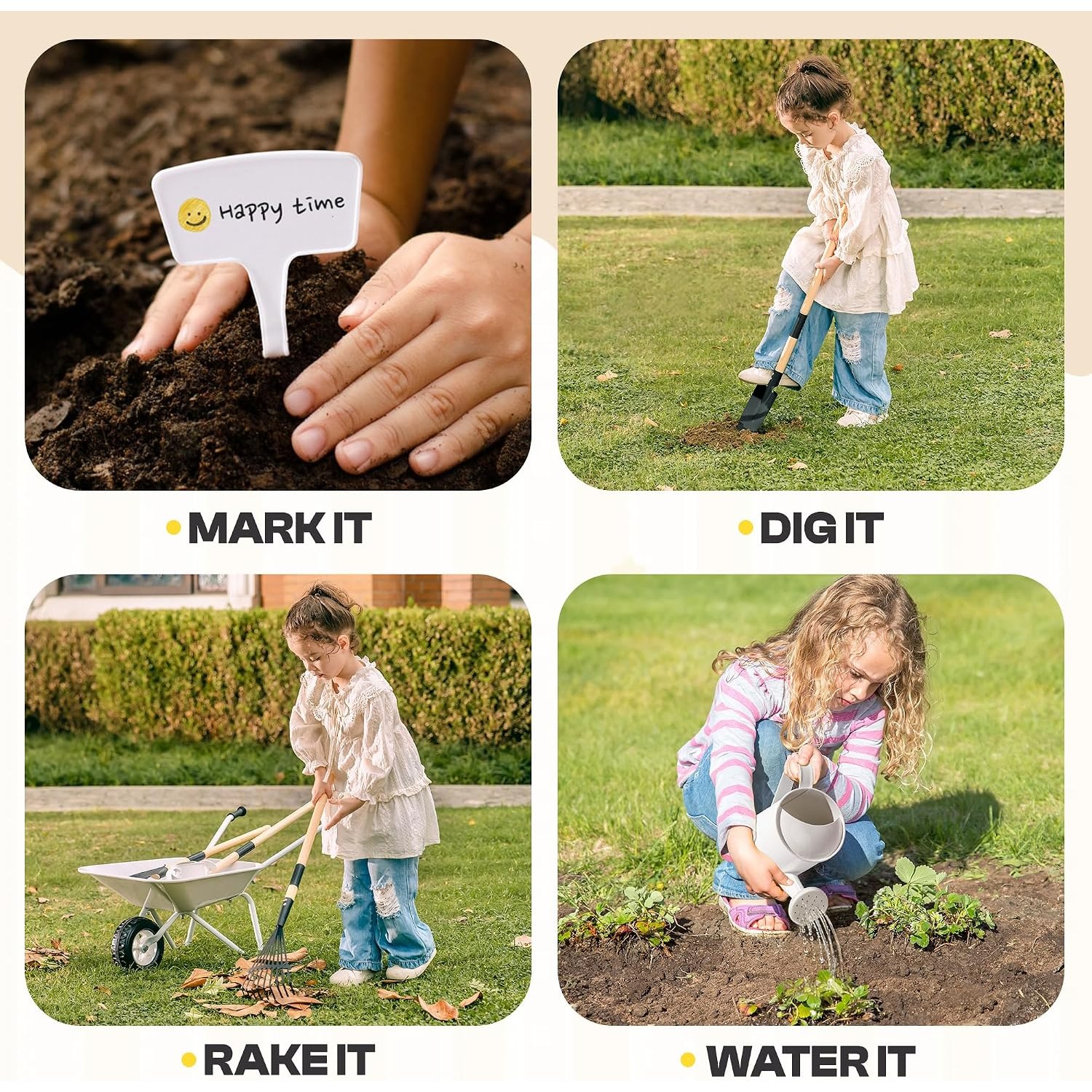
There are five pieces. One metal wheelbarrow with plastic grip handles. One watering can. Two kinds of adjustable rake. One adjustable shovel. On top of that, four plant labels for marking rows and pots.
The listed materials are metal and wood, with handles in plastic and wood. The tool handles are pine. The whole set weighs 3.05 kg and the item dimensions are 48 x 37 x 15.5 cm, so it is a compact thing to store rather than a bulky toy that takes over the shed.
The clever part is the handles. Each long-handled tool uses a detachable extension rod that twists on and off. With the rod removed you have a short hand tool, about the right length for a small child kneeling beside a pot or a raised bed. Twist the rod back on and the same tool reaches far enough for a bigger child standing upright and working a border.
That single feature is what stretches the useful life of the kit. A three year old uses the short version. A six or seven year old uses the long one. You are not buying a replacement set every eighteen months because the child outgrew the handle length.
Who this suits
The set is aimed at children from around three and up. At that age most kids can push an empty barrow in a straight line, pour from a watering can with some supervision, and poke a shovel into loose soil. The jobs are simple and repetitive, which is exactly what a three year old enjoys.
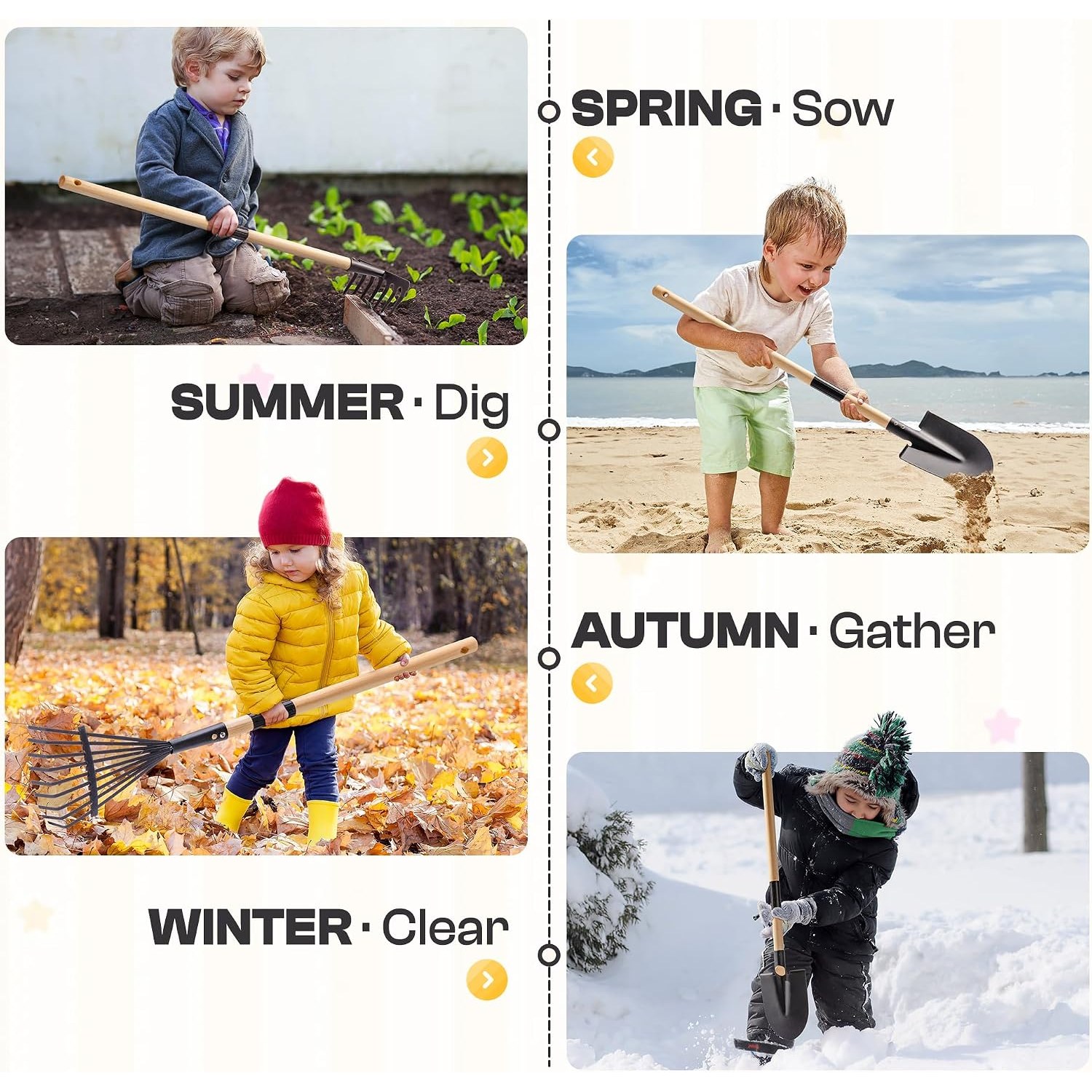
Older children get more out of it because they can take on actual tasks. Raking leaves off a lawn, moving a barrow of bark to a bed, watering a row of seedlings every evening. These are jobs with an outcome, and children notice when their work changes how something looks.
It also suits households with limited outdoor space. The tools work in pots, planters and window boxes just as well as in open ground. If you have a balcony or a courtyard, shorten the handles and the whole kit scales down with you.
Two children can share it, though you will want to agree who gets the barrow first. There is enough in the box for both to be busy, with one digging and one watering.
What to look for when you are comparing sets
If you are weighing this up against other options, a few things separate a kit that lasts from one that does not.
Look at the tool heads first. Metal heads cut into soil. Plastic heads skid off it and then break. This set uses metal heads on wooden handles, which is the standard build for adult hand tools scaled down.
Check the barrow body next. A metal body carries weight. A plastic tub flexes, and once it flexes enough it splits at the handle joint. The metal construction here is the reason this sits at a higher price point than supermarket plastic sets, and it is the reason it holds up.
Then think about handle length. Fixed-length tools are either too short for a growing child or too long for a small one. Adjustable handles solve that, and they also mean one set covers kneeling work and standing work.
Finally, consider whether the kit includes the small pieces that make gardening feel real. Plant labels seem minor until a child writes carrots on one and pushes it into the soil. From that moment they have a stake in a particular patch of ground, and they will go and check it.
Getting started in the garden
The easiest first project is something fast-growing in a pot. Radishes, salad leaves and sunflowers all show visible progress within days, which matters enormously to a young child. Give them the shovel with the extension off, a pot, some compost carried over in the barrow, and one plant label.
Keep sessions short at the start. Twenty minutes of digging and watering is plenty for a three year old. The aim is for them to want to come back tomorrow, not to finish the bed today.
Give the barrow a real job each time. Moving compost, collecting weeds, carrying tools from the shed to the bed. Children take the barrow more seriously when it is doing something rather than being pushed around in circles, though circles are fine too.
Let the watering can be their responsibility. A daily check on whether the pots need water is one of the simplest ways a child learns that living things depend on being looked after.
Looking after the set
Metal and wood both last a long time when they stay dry, and both suffer when they do not. The whole care routine is short.
Knock the soil off the metal heads after use. If they are properly muddy, rinse them, then dry them with a cloth rather than leaving them to air dry outside. Wipe the wooden handles instead of soaking them, since repeated wetting raises the grain and makes the wood rough.
Store the set in a shed, garage or under cover. Leaving it out through a wet week is the single fastest way to start rust and swell the wood. Empty the watering can before cold nights so it does not sit full in a frost.
Before each use, give the extension rods a quick twist to check they are tight. A loose joint makes a tool wobble, which is annoying and makes the work harder than it should be.
At the end of a season, a light wipe of oil on the metal heads is a small job that pays off the following spring.
The short version
This is a five-piece kids metal wheelbarrow garden set from ROBOTIME, built around a metal barrow with plastic handles, metal-headed tools on pine wood handles, a watering can and four plant labels. The adjustable extension rods mean the tools suit a three year old kneeling by a pot and a bigger child standing at a border.
It weighs 3.05 kg and measures 48 x 37 x 15.5 cm, so it stores easily. The manufacturer lists a 6 months limited warranty.
If you want a childrens gardening kit that holds up to actual soil rather than pretending, and you would rather buy once than replace broken plastic every year, this is the sensible choice. Keep it dry, check the joints, and hand it over to someone who wants to help.