
The complete guide
How To Choose A Floor Puzzle For A Preschooler
The problem with most kids' puzzles
Buy a jigsaw for a four year old and you usually end up in one of two places. Either the puzzle is so simple it is done in four minutes and never touched again, or the pieces are so small and so numerous that the child drifts off after ten minutes and you quietly finish it yourself.
Both outcomes teach the same lesson, which is that puzzles are a bit boring. That is a shame, because a well-matched jigsaw is one of the few activities a young child will sit with for half an hour without being asked.
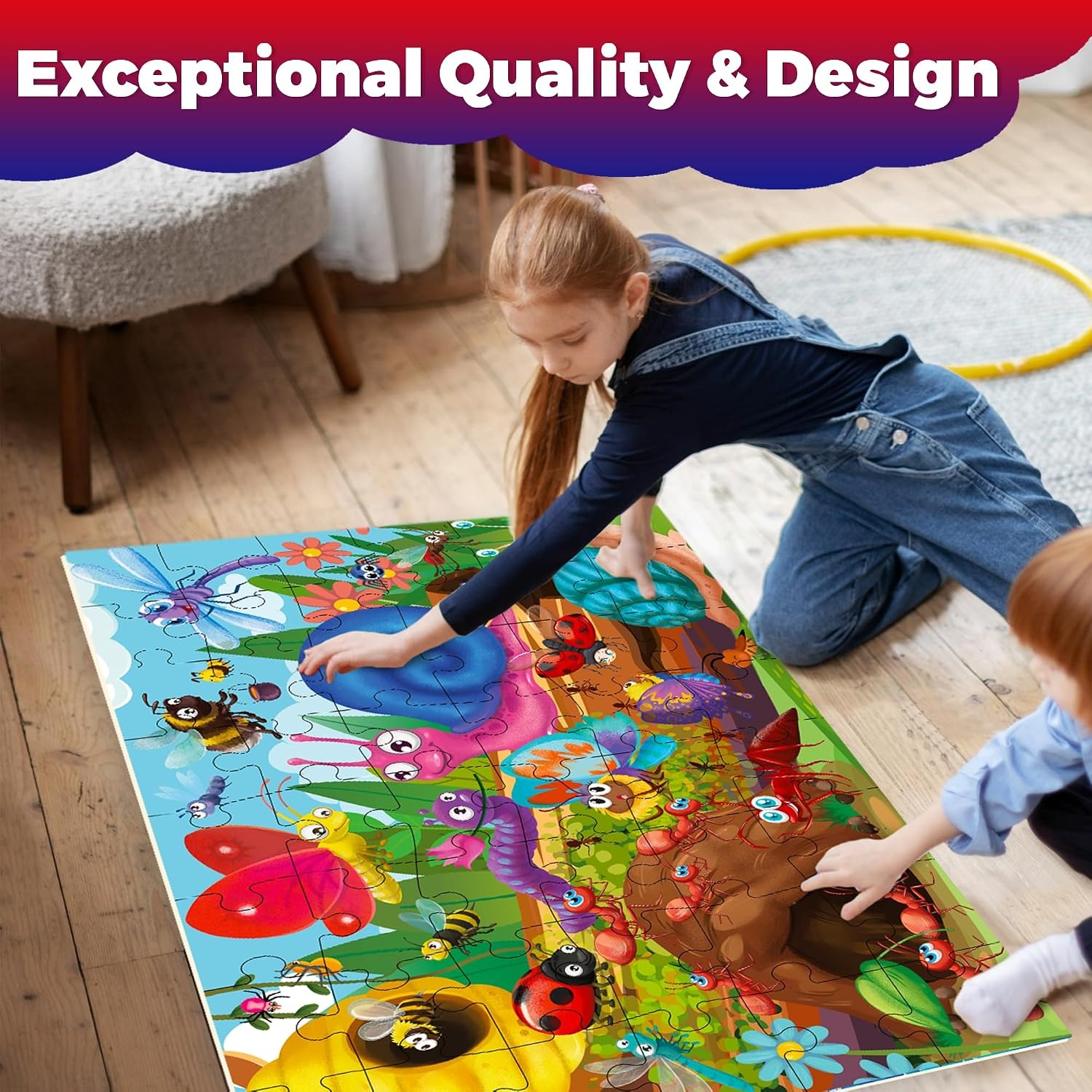
The fix is usually size, not difficulty. Bigger pieces and a bigger finished picture change the activity from a seated task into something physical. Children move around a floor puzzle. They crawl to the far corner, stand up to look at the whole thing, lean over and press a piece home. That movement is part of why they stay interested.
What a floor puzzle actually is
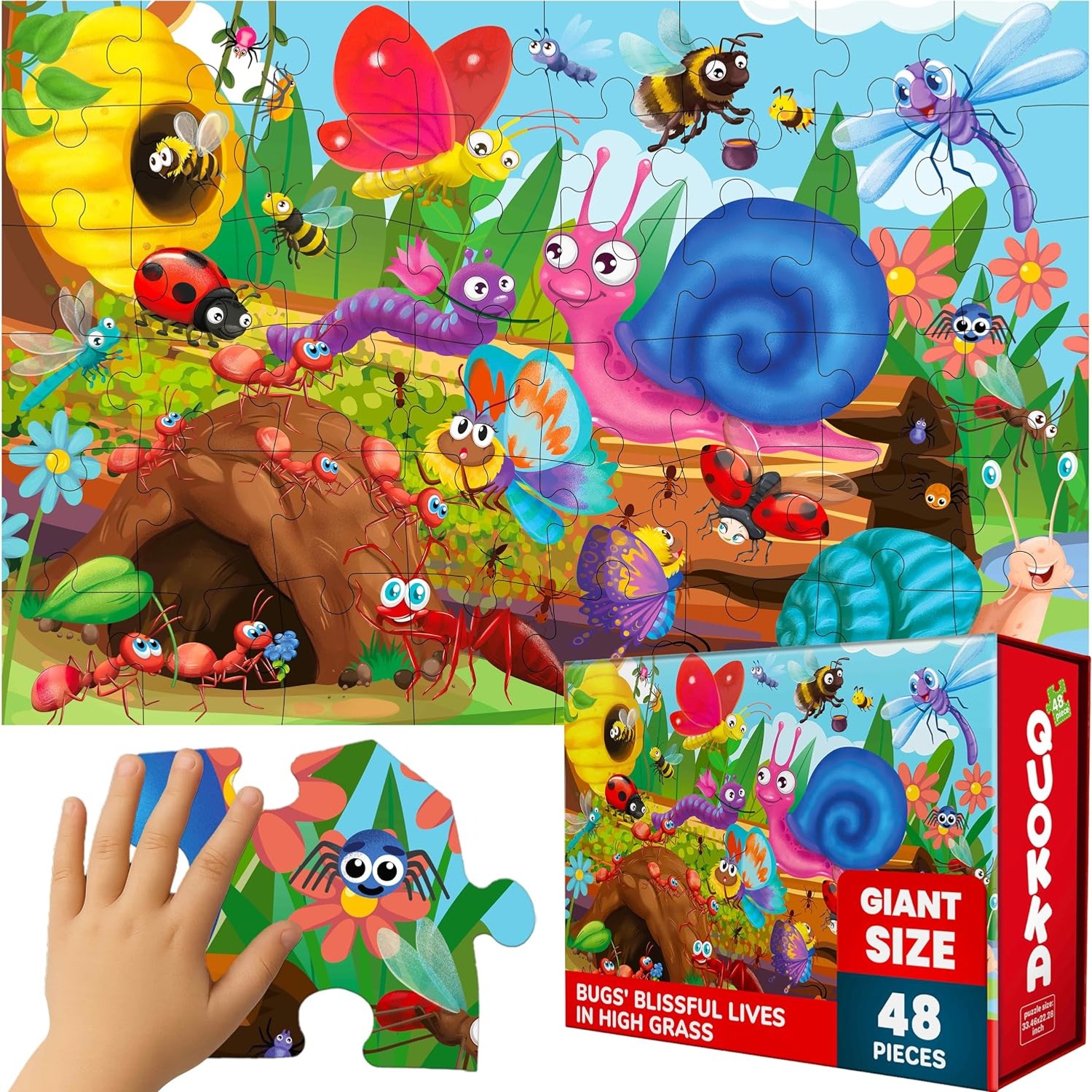
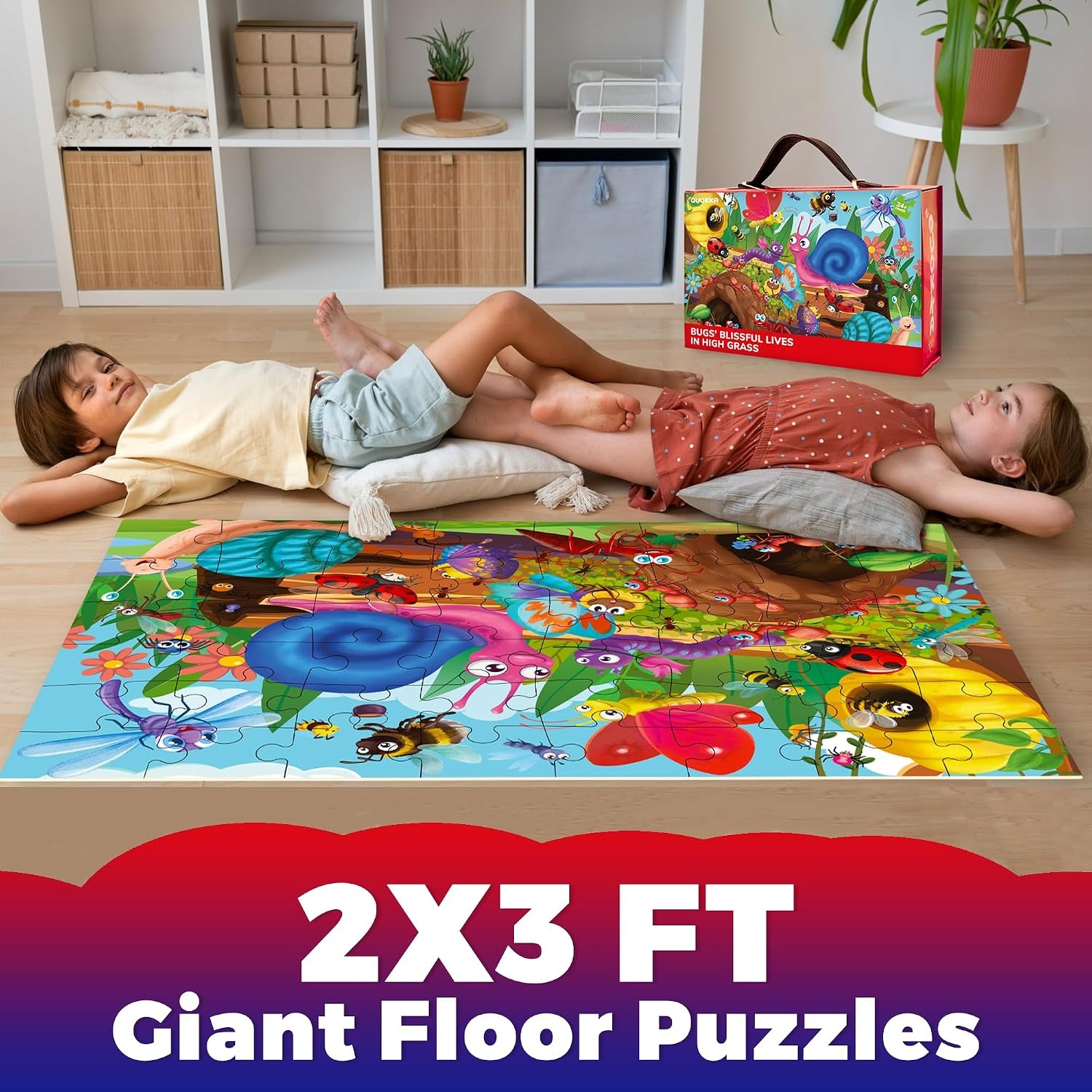
A floor puzzle is simply a jigsaw with oversized pieces, designed to be built on the ground rather than a table. This one has 48 pieces and builds to 90 x 60 cm. Spread a bath towel on the rug and you have a fair idea of the footprint.
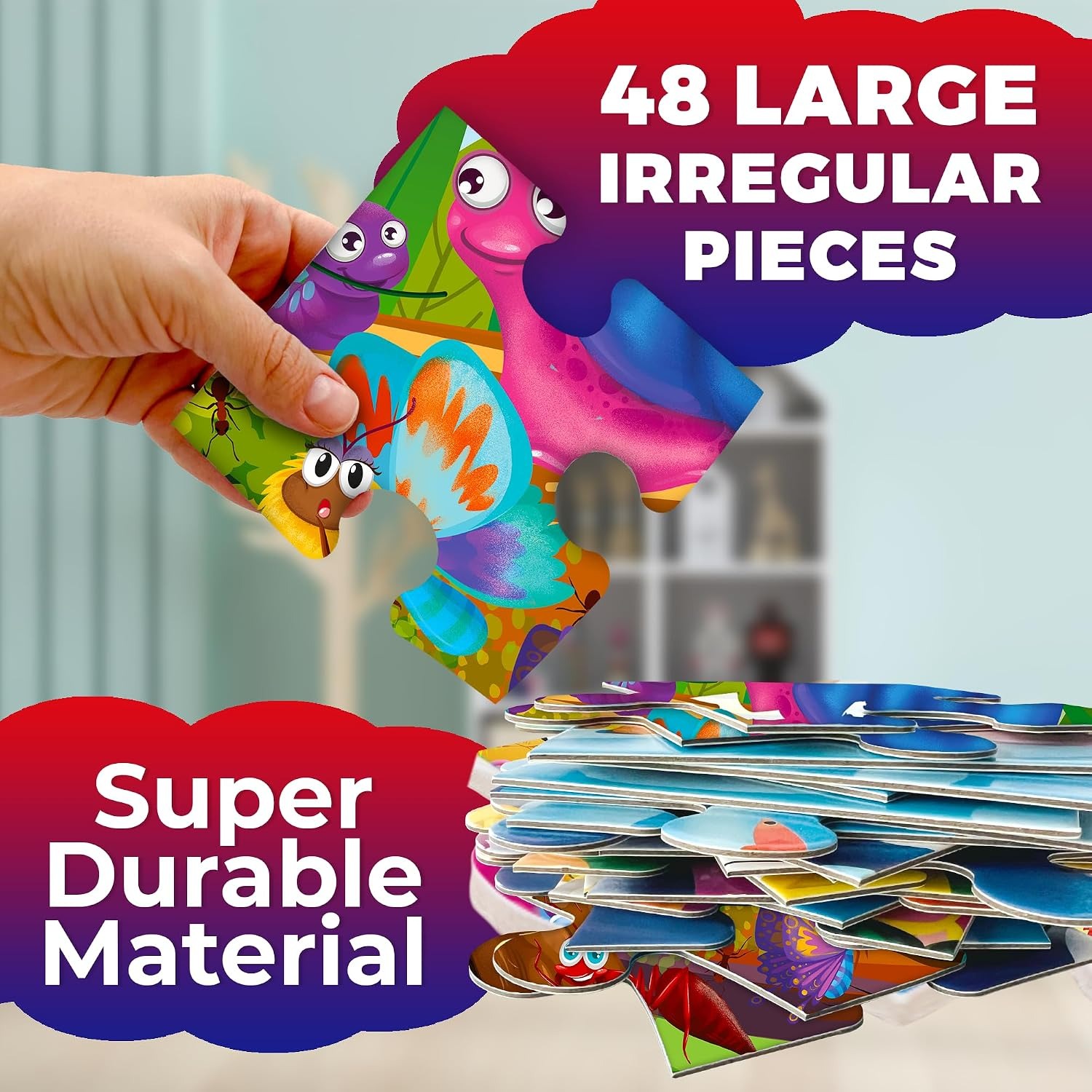
The pieces are cardboard, with no plastic in them. Cardboard at a decent thickness does something useful for a young builder. When a piece is wrong it will not sit flat, and when it is right it settles in with a small satisfying give. Children pick up on that feedback quickly, and it is how they stop forcing pieces and start reading shapes.
The theme here is bugs. Insect artwork is more helpful than it sounds, because it gives a child dozens of visual anchors. A wing, a stripe, a pair of antennae, a run of green. A child who cannot yet match a complicated edge shape can still say "that is the red one" and get themselves started.
Who this suits
The stated age is three years and up, with a minimum of 36 months. In practice the sweet spot runs from about three and a half to five and a half.
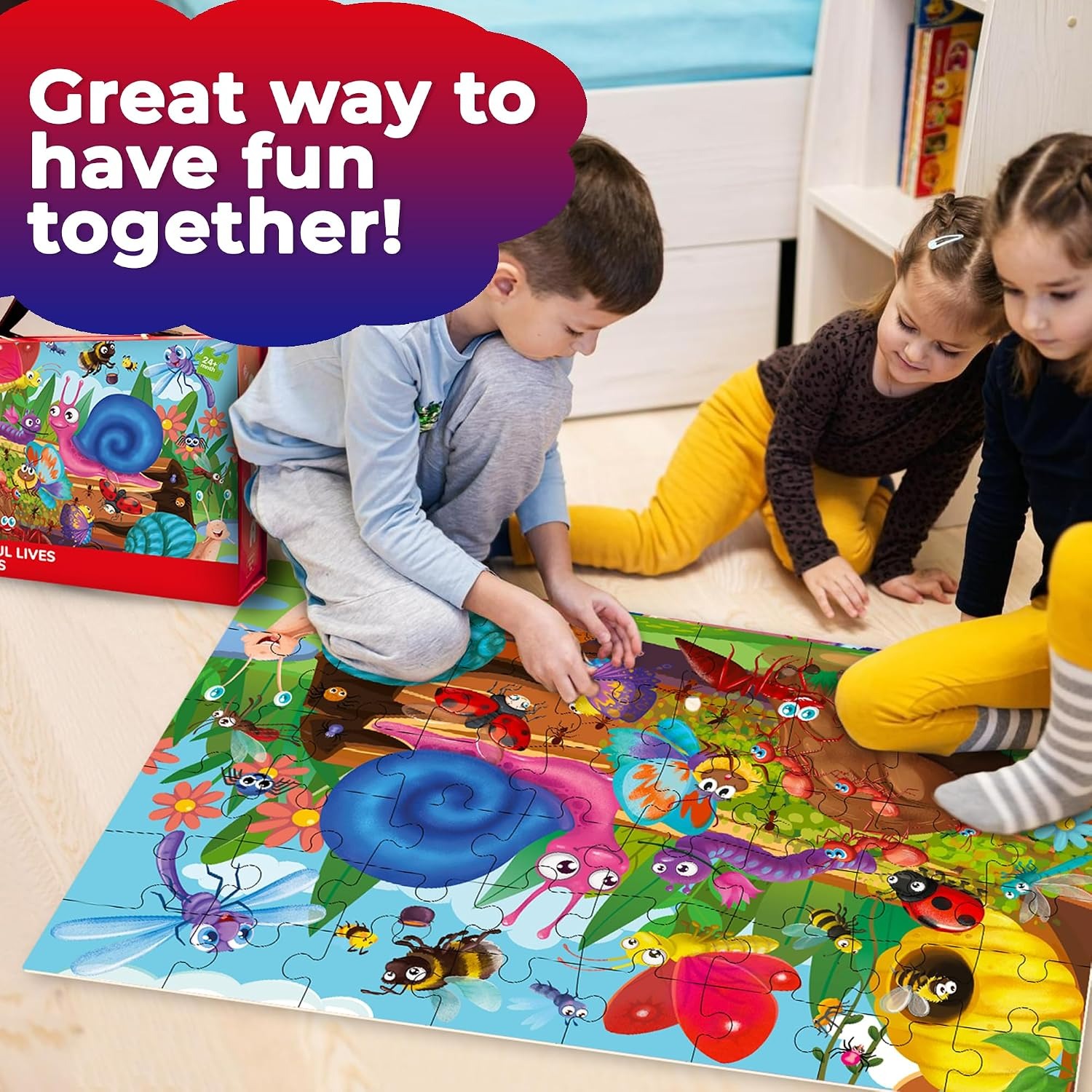
A child at the younger end will want company. Sit with them, sort the pieces into rough colour groups first, and let them do the placing. You are not doing the puzzle for them, you are reducing the number of decisions in front of them at any one moment.
A child at the older end will often take the box and disappear with it. That is when 48 pieces earns its keep. It is enough to require some real thinking, but short enough that the whole thing gets finished in one go. A puzzle abandoned half-built is a puzzle that does not get picked up again.
It is also a reasonable choice for two children of different ages. The older one handles the tricky middle section, the younger one does the edges and the obvious colour blocks. There is enough physical space at 90 x 60 cm that neither is in the other's way.
Under threes should not have it. The piece size makes it unsuitable, and that is a firm line rather than a cautious suggestion.
How to pick the right piece count
Most parents overshoot. A child who just nailed a 24 piece set looks ready for 100, and then the 100 piece puzzle sits in a cupboard for a year.
A better rule is to roughly double. Twelve to 24, 24 to 48, 48 to 100. Each jump feels big to the child but stays inside what they can finish. If your child currently does 24 pieces comfortably and alone, a 48 piece floor puzzle is the natural next step.
Watch what happens on the second build rather than the first. Almost every puzzle is slow the first time. If the second attempt is noticeably faster and the child seems pleased rather than relieved, the level is right. If the second attempt is just as much of a slog, drop back down a size for a while. There is no prize for difficulty.
Piece size matters separately from count. A 48 piece jigsaw with tiny pieces is a very different thing from a 48 piece jigsaw with jumbo puzzle pieces. For preschoolers, go large every time. Small hands drop small pieces, and dropped pieces end up under the sofa.
Setting up for a good session
Pick your surface carefully. A hard floor or a low-pile rug is ideal. Thick carpet is the enemy, because pieces sink and refuse to line up, and the child reads that as their own failure.
Give yourself more room than the puzzle needs. You want space around the 90 x 60 cm build area to spread unsorted pieces out face up. Pieces stacked in a pile might as well not exist, because a child cannot search a pile.
Keep the box lid or packaging picture propped up within sight. Children use the reference image far more than adults do, and taking it away makes the task much harder than intended.
Finally, sort the edge pieces out together at the start. It takes two minutes, it gives the child an immediate win, and it frames the rest of the build inside a visible boundary.
Looking after cardboard pieces
Cardboard lasts a long time if you keep it dry and flat.
Wipe grubby pieces with a cloth that is barely damp, then dry them flat straight away. Do not soak them and do not run them under a tap, because the layers separate and the printed surface lifts. A bent piece can usually be rescued by laying it under a heavy book overnight.
Store the set flat on a shelf rather than wedged upright between board games. Pressure on the edges over months is what eventually rounds off the cut tabs and makes pieces feel loose.
The habit that saves the most grief is counting pieces back into the box at the end of every session. Forty-eight is a quick count, and a child of four or five can do it themselves as a tidy-up ritual. A puzzle with 47 pieces is a puzzle nobody wants to build.
A few things worth knowing
The whole set weighs 0.97 kg, so a child can carry it around the house without help. It needs no assembly and no batteries, and it is designed for indoor use.
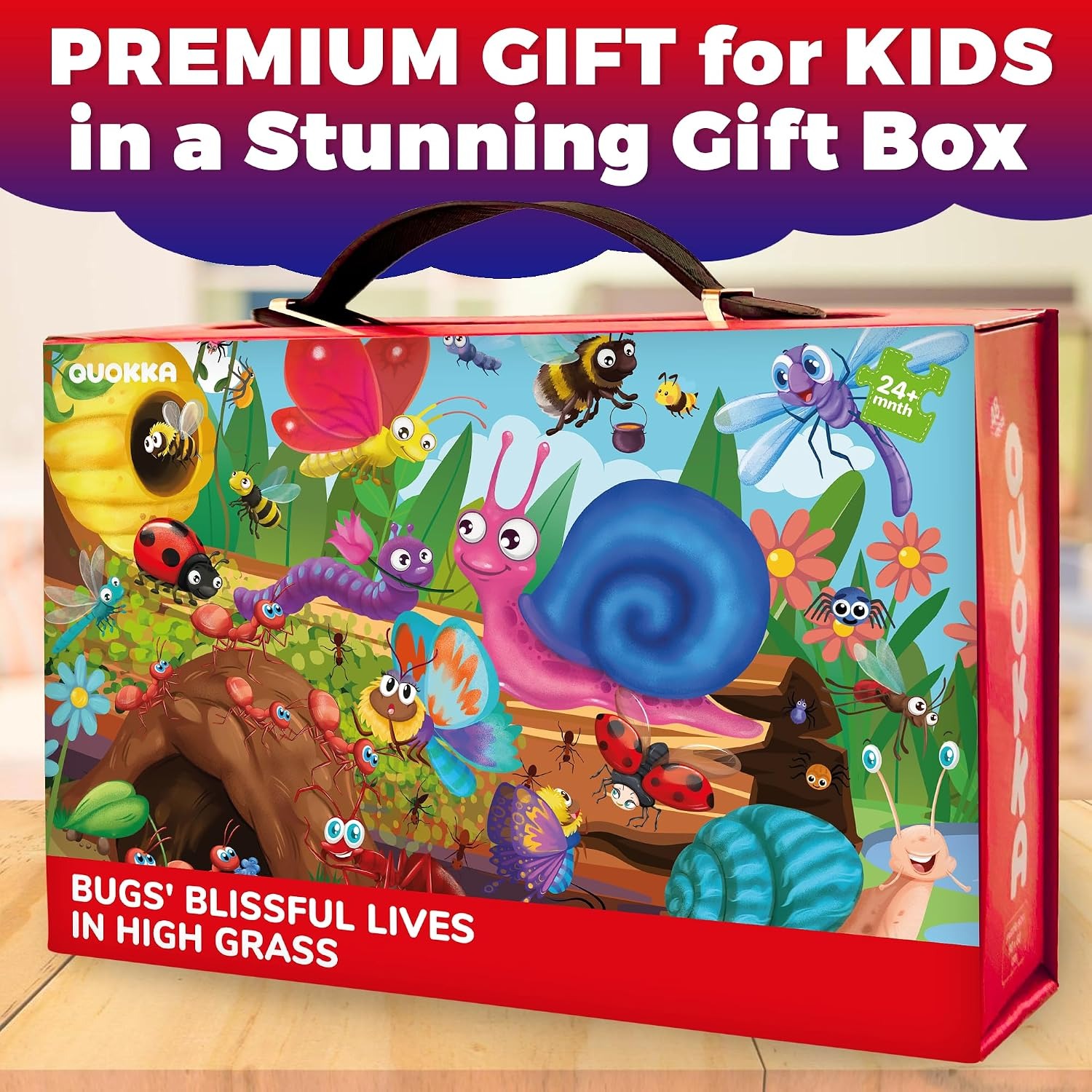
Brand is Quokka, model number QUA48GIANTB, and there is a 30 day warranty against manufacturer defects. Colour and country of origin are not specified by the maker, so we are not going to guess at them.
If you are buying as a gift and you do not know the child's puzzle history, 48 pieces is a safe bet for anyone in the three to six range. It is big enough to feel impressive out of the box and forgiving enough that it will not sit unopened.
The short version
A giant bugs floor puzzle 48 piece set is the right pick for a preschooler who has finished a few smaller jigsaws and is ready for something that takes real effort but still gets done in one sitting.
It builds to 90 x 60 cm from thick cardboard pieces with no plastic, it suits ages three and up, and it works for one child alone or two building together. Give it floor space, keep the picture in view, store it flat and count the pieces back in. Done that way, it will get rebuilt dozens of times.