
Toy Warehouse
Company
Shop By Category
T&Cs
Shop Online
  • Box contents listed
  • Free tracked delivery across Ireland over €90
  • 14-day returns

Engineering Kit 6 in 1 | STEM building kit | Model building craft kit

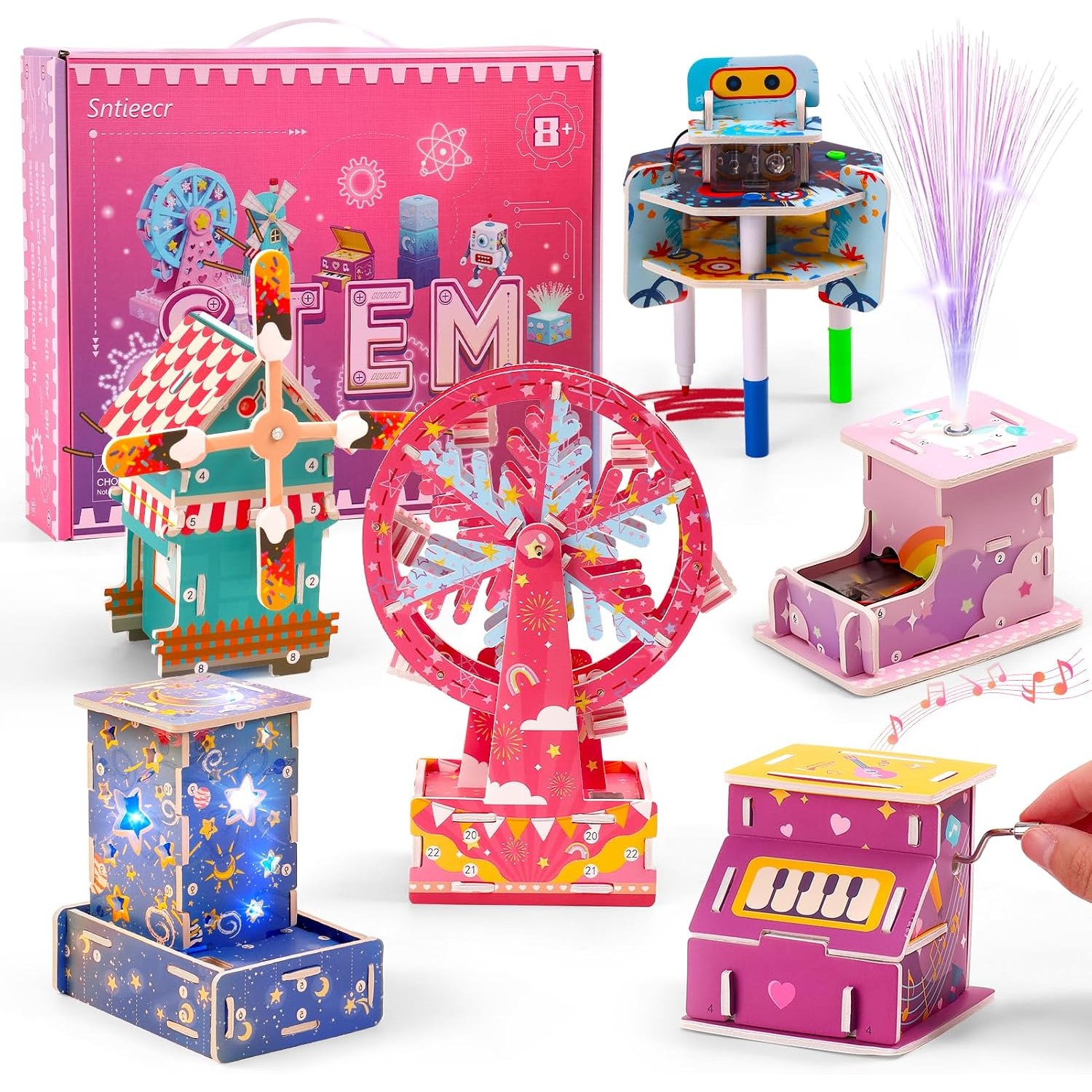
6-in-1 Engineering Kit for Kids

€67.99
  • Six Separate Projects
  • Graded Difficulty
  • Screws, Not Glue
  • Models That Work

Price: €67.99

  • Free tracked delivery across Ireland on orders €90+, otherwise a flat €12
  • Pay by card or PayPal, handled by the payment provider
  • 14 days to change your mind, plus your statutory rights
Product specifications
BrandSntieecr
Model NumberSC-006KI
Manufacturer Part NumberSC-006KI
ThemeEngineering
Number of Projects6
Number of Items6
Age RangeOver 8 years old
Recommended Age8 to 12 years
Maximum Age144 months
Material TypeFoam
Educational ObjectiveConstruction, science, mechanics, hand-eye coordination, colour recognition
Item HighlightIncludes a 3D KT board puzzle element
Included ComponentsInstructions
Assembly RequiredNo
Pack Size23.5 x 29.0 x 7.0 cm
Item Dimensions29 x 23.5 x 7 cm
Item Weight0.75 kg
Weight0.75 kg
Shipping & returns

Tracked delivery anywhere in Ireland. It is free on orders of €90 or more, and a flat €12 below that.

Under the Consumer Rights Act 2022 you have 14 days from delivery to cancel for any reason, and a further 14 days to send it back in resaleable condition. We refund the price you paid, including standard delivery. You cover the cost of returning it unless the item is faulty.

If it arrives faulty, damaged or not as described, we put it right at no cost to you under the Consumer Rights Act 2022 and the EU Sale of Goods Directive 2019/771, return postage included.

Shipping details · Refunds and returns

Six Separate ProjectsSix builds in one box, so the fun does not end after a single afternoon.
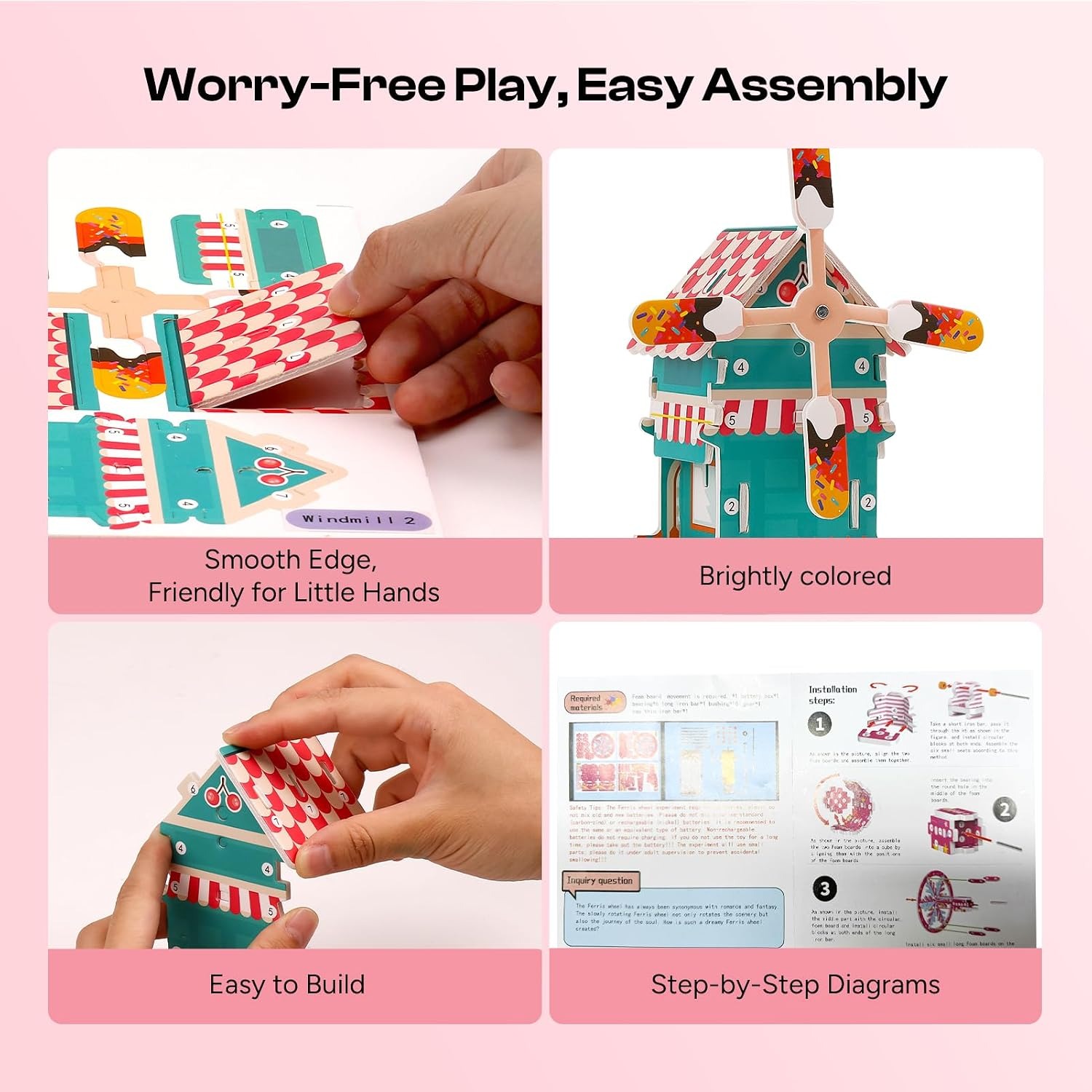
Graded DifficultyEach project has its own booklet with the difficulty level marked.
Screws, Not GlueParts fix together with screws, so there is no mess and no drying time.
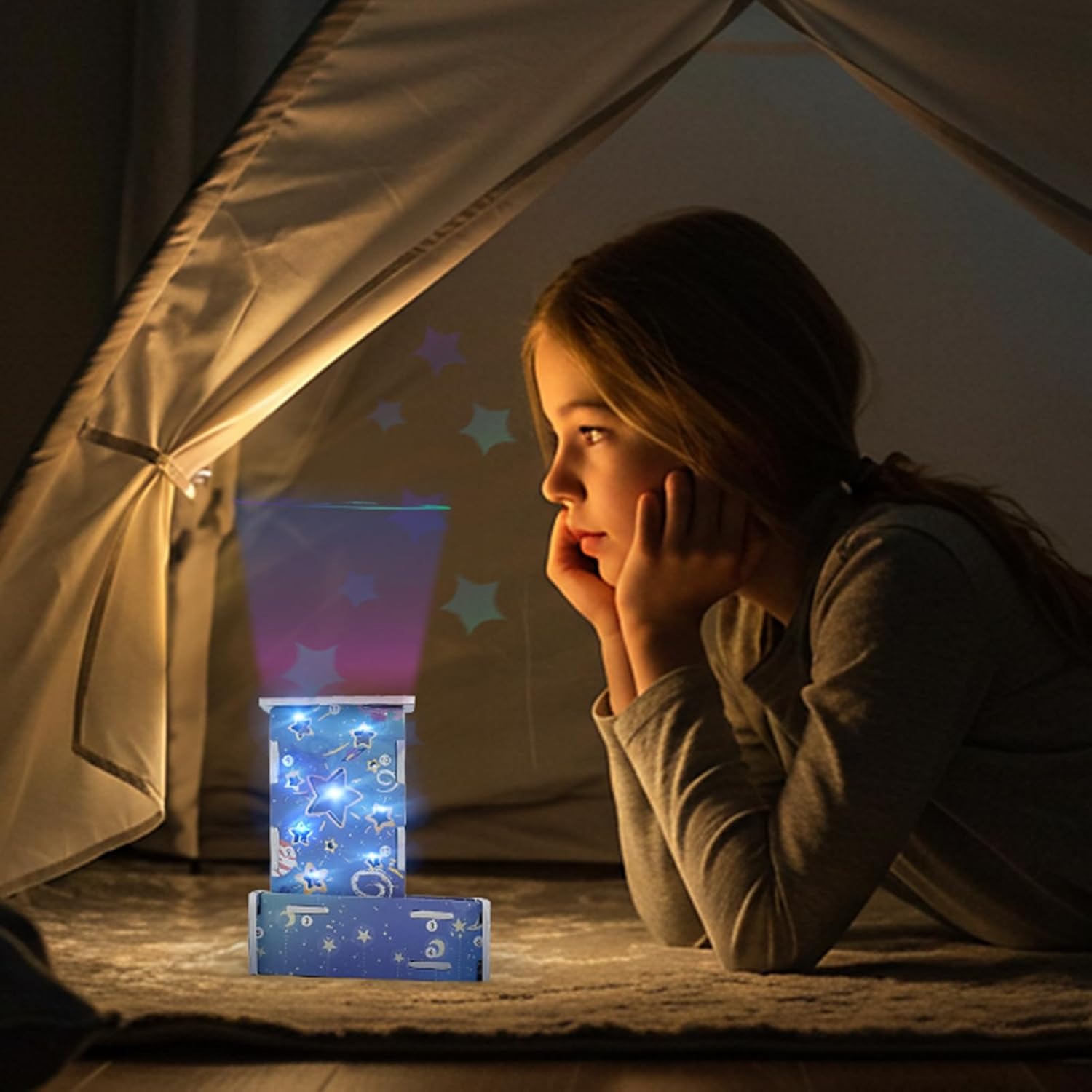
Models That WorkFinished builds double as desk decor, a night light or a music box.

One box, six builds, and a child who suddenly wants to know how things work, all from a single engineering kit 6 in 1.

Six separate foam-board projects with their own illustrated instruction booklets and marked difficulty levels, screwed together without glue, so kids can start simple and work their way up.

Six different engineering and science projects come in one gift box, each with its own illustrated instruction booklet.

Parts are pre-cut from foam KT board with smooth rounded edges, so pieces push out by hand without a knife or sharp tool.

Builds are fixed with screws rather than glue, which means no mess, no waiting and the chance to take a model apart and try again.

Difficulty is marked on each booklet, so a child can start with an easier build and work up as confidence grows.

The finished models are useful rather than disposable, from a music box to a star light to a Ferris wheel for a shelf.

6-in-1 Engineering Kit for Kids

Most science kits give a child one thing to build. They open the box, spend an hour on it, and then the box goes on a shelf. This engineering kit 6 in 1 takes a different route. There are six separate projects inside, each packed with its own parts and its own instruction booklet, so one gift stretches across six sittings instead of one rainy Saturday.

6-in-1 Engineering Kit for Kids

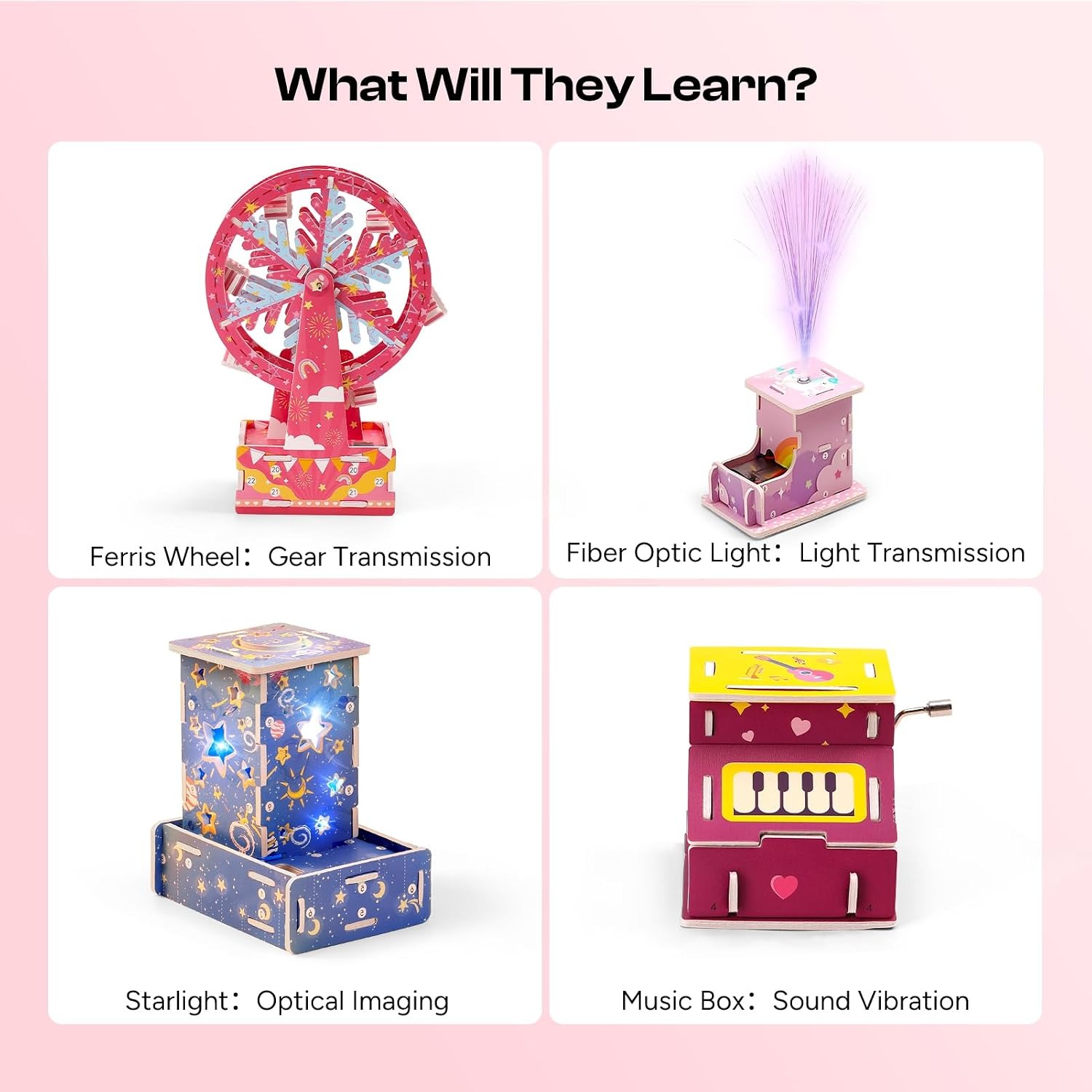
The projects cover a surprising range of ideas for a single box. There is a Ferris wheel and a windmill, which both introduce gears, rotation and the way a structure carries its own weight. There is a fibre optic light and a starlight, which are a gentle first look at how light travels and scatters. There is a music box with its own mechanism and a graffiti robot that moves. Each one is a different idea wearing the costume of a toy.

6-in-1 Engineering Kit for Kids

Build quality matters with kits like this, because a frustrated child stops halfway and never comes back. The parts here are cut from KT foam board with smooth, rounded edges and an expected cutting process, which means pieces lift out by hand. No craft knife, no parent hovering with scissors, no torn card. Assembly uses screws rather than glue, so there is nothing to wait on and nothing to spill, and a build that goes wrong can simply be unscrewed and tried again.

6-in-1 Engineering Kit for Kids

What sets this apart from a lot of craft sets is that the finished models keep earning their place. The star light can sit on a bedside table and actually be switched on. The music box plays. The Ferris wheel turns and looks good on a bookshelf or a desk. A child who built something that works tends to show it to people, and that is where the real confidence comes from.

6-in-1 Engineering Kit for Kids

The box itself is designed to be given. It arrives as a tidy gift package measuring roughly 29 x 23.5 x 7 cm and weighing about 0.75 kg, with bright colours and a presentation that suits a birthday or Christmas without needing much wrapping. The maker recommends it for ages 8 to 12. It contains small parts, so it is not suitable for younger children who still put things in their mouths.

Not sure yet? That is fine.

A toy has to suit the child it is for, and you cannot always judge that from a photograph. Under the Consumer Rights Act 2022 you have 14 days from delivery to cancel for any reason, and a further 14 days to send it back in resaleable condition. We refund the price you paid, including standard delivery.

If it turns up faulty, damaged or not as described, that is on us. The Consumer Rights Act 2022 and the EU Sale of Goods Directive 2019/771 covers you, and we pay the return postage. Read the full detail on our refunds and returns page, or ask us anything before you order.

Frequently Asked Questions

What exactly comes in the box?

The kit contains six separate projects, listed as a fibre optic light, a graffiti robot, a starlight, a music box, a windmill and a Ferris wheel. Each project has its own parts and its own instruction booklet. The box also includes the fixings needed to screw the models together.

What age is this engineering kit for?

The maker lists it for over 8 years old, with a recommended range of 8 to 12 years. That matches the fiddliness of the small screws and the reading level of the instruction booklets. Younger children can still enjoy it with an adult sitting alongside them.

Is it suitable for a child under 8?

It is not recommended, mainly because the kit contains small parts that are a choking hazard. A six or seven year old with good fine motor skills might manage the easier builds with close adult help. Use your own judgement about the individual child.

Do I need glue?

No. The projects are fixed together with screws, so there is nothing to glue, clamp or leave drying overnight. That also means a model can be taken apart and rebuilt if a step goes wrong.

Do I need any tools from home?

The kit is designed to go together with screws and the included instructions, with no cutting tools required because the parts are pre-cut. A small cross-head screwdriver is handy to have nearby if the child prefers one. Check the contents list on arrival for what is supplied.

Are the parts sharp or dangerous to remove?

No. The KT board pieces are cut so they can be pushed out by hand and the edges are smooth and rounded. That is a deliberate design choice, because card-based kits that need a craft knife do not suit this age group.

What is KT board?

KT board is a light foam board with a smooth printed surface, which is why the material type is listed simply as foam. It is firm enough to hold a structure but light enough for small hands to handle. It cuts cleanly in the factory, which is how the parts come pre-shaped.

Can the projects be done in any order?

Yes. Each project is self contained with its own booklet, and each booklet shows a difficulty level. Most children start with an easier one to get the hang of the screws, then move up. There is no requirement to work through them in a set sequence.

How long does one project take?

It depends on the project and on the child, but a single build is typically an afternoon rather than a whole weekend. The easier models go faster once a child understands how the screws and slots work. Six projects spread out over several sittings.

Do the finished models actually work?

Yes, that is the point of them. The music box plays, the star light lights up, and the Ferris wheel and windmill turn. They are meant to be kept and used rather than looked at once and thrown away.

Does it need batteries?

The lit and moving projects need a power source to work. Battery requirements are not specified by the maker, so check the instruction booklet inside the box before you plan the first build. It is worth having common small batteries in the house just in case.

Is this a good first stem building kit?

It is a reasonable first step for the age group, because the graded difficulty lets a child begin somewhere easy. Nothing requires soldering, cutting or chemicals. If you are shopping for the best stem kit for 8 year olds, the six-project format is the main reason to consider this one.

Is it only for girls?

No. The marketing leans into bright colours and a decorative finish, but the engineering content is the same regardless of who builds it. Gears, structures and light physics do not care about the colour of the box.

Will a child learn anything real from it?

The stated educational objectives are construction, science, mechanics, hand-eye coordination and colour recognition. In practice, a child meets gears and rotation through the Ferris wheel and windmill, and light behaviour through the fibre optic and star projects. It is hands-on learning rather than worksheets.

Can two children share one kit?

Yes, and it often works well. Because there are six separate project packs, siblings or friends can take one each and build side by side. Just keep the small screws for each build in separate dishes so the parts do not mix.

Is this suitable for a classroom or club?

Six independent projects with their own booklets suits a small group activity or an after-school club. One kit covers six children working on different builds, or a group working through them in turn. For a full class you would need several kits.

What are the box dimensions and weight?

The pack measures 29 x 23.5 x 7 cm and weighs 0.75 kg. That is small enough to wrap easily and light enough to post. It fits in a standard gift bag without folding.

Does the packaging need assembling?

No. The maker lists assembly as not required for the packaging itself, so the box arrives ready to give. The models inside are of course what the child builds.

Is the box nice enough to give as a gift?

Yes. It comes in a printed gift box with bright artwork, so most people hand it over as is. If you want, a ribbon is usually enough.

Is this a good Christmas or birthday present?

It is one of the better educational gifts for kids in that age range because it lasts past the first day. Six builds mean it can carry a child through the quiet week after a birthday or through the Christmas holidays. The gift packaging also saves you a job.

How do I look after the finished models?

Keep them dry and away from radiators or damp rooms, because foam board can warp. Dust them with a soft dry brush rather than a wet cloth. If a model is going into storage, take out any batteries first.

Can a model be taken apart and rebuilt?

Yes, which is one of the quiet advantages of screw assembly over glue. If a step was misread, you can unscrew it and go again without damaging the parts. It also makes the kit easier to pack away flat if space is tight.

What if a small screw goes missing?

Keep a small tub or saucer on the table during the build, which prevents most losses. If one does vanish into the carpet, a hardware shop can usually match a basic screw of that size. Storing each project's fixings in a labelled bag between sessions helps a lot.

Does it include a 3D puzzle?

The product highlights mention a 3D KT board puzzle element as part of the kit. The exact form of that is described in the instructions that come with the box. Treat the booklets as the authority on what each project involves.

Is any supervision needed?

An adult should be around for the first build and for anything involving batteries or a light. After that most children in the 8 to 12 range manage on their own. Supervision matters more if a younger sibling is in the room, because of the small parts.

What brand and model is this?

The brand is Sntieecr and the model number is SC-006KI, which is also the manufacturer part number. Quote that number if you ever need to ask about a specific part or booklet.

What colour is it?

The projects are brightly coloured, but a specific colour is not listed by the maker. The images on this page give the best indication. If a precise colour matters for a gift, go by the photographs.

Where is it made?

Country of origin is not specified by the maker. The manufacturer is listed as Sntieecr. We do not state an origin we cannot verify.

How does delivery work?

Most orders arrive within 4 to 8 working days of the order date. Rural addresses and the islands can take a little longer. Delivery is free on orders of €90 or more and a flat €12 under that, and you get tracking by email once the parcel is on its way.

What if it is not right when it arrives?

Contact us with your order number and tell us what went wrong, whether a part is missing, something is damaged or the kit simply is not what you expected. Keep the box and the packaging while we sort it out, because it makes a return or a replacement far quicker. We would rather fix it than leave you with a kit nobody wants to open.

How to Choose a STEM Building Kit Your Child Will Actually Finish

6 min read Toy Warehouse

The problem with most science kits

Buy a child a science kit and there is a decent chance it ends up half built in a drawer. It is rarely the child's fault. The kit asks them to cut thick card with scissors they cannot control, or to glue two pieces and hold them for five minutes, or it starts at a difficulty level that assumes an adult is sitting there the whole time. Twenty minutes in, the fun has turned into work, and the box quietly migrates to the shelf.

The other common failure is the one-and-done kit. One model, one afternoon, and then nothing. It gets built, admired for a day, and forgotten. For the money, that is a thin return.

An engineering kit 6 in 1 fixes both problems in a fairly blunt way. Six projects, six booklets, six separate sittings. Difficulty is marked, so a child can choose an easy one on a Tuesday evening and save the harder one for a wet Sunday. And because each build is a different idea, the kit does not get boring halfway through.

How this kit works

Inside the box are six project packs. A fibre optic light, a graffiti robot, a starlight, a music box, a windmill and a Ferris wheel. They sound like toys, and they are, but each one hides a different bit of science.

The Ferris wheel and the windmill are the structural builds. A child putting one together is learning, without being told, that a frame has to be rigid before it can carry a spinning part, and that gears change how fast something turns. The fibre optic light and the starlight are about how light behaves, how it travels down a strand and how it scatters when it leaves. The music box introduces a simple mechanism, where a turning part produces a repeated result. The robot moves, which brings in motion and balance.

The parts are cut from KT foam board. That is the flat, light board with a smooth printed face, and it is a sensible choice for this age group. It holds a shape, it is light enough for small hands, and the factory cutting means the pieces push out by hand. There is no craft knife involved. The edges come out smooth and rounded, so nobody gets a paper cut wrestling a piece free.

Assembly uses screws. No glue anywhere. This is a bigger deal than it sounds. Glue means waiting, mess, sticky fingers on a printed surface, and one shot at getting a joint in the right place. Screws mean a child can go back a step, undo a mistake, and carry on. That single difference is often what separates a finished model from an abandoned one.

Who it suits

The maker recommends ages 8 to 12, and that is about right. An eight year old can read the booklets and turn a small screw. A twelve year old will blow through the easy builds but still get something out of the harder ones, especially if they are the sort who likes seeing how a mechanism fits together.

It contains small parts, so it is not for children under 3 or for any child who still mouths objects. That is a hard line, not a suggestion.

It works well for a child who likes making things but has got tired of plastic brick sets where every piece is pre-shaped and the result is always the same. It also works for a child who does not think of themselves as "a science person", because nothing here looks like homework. They are building a lamp and a music box. The physics arrives sideways.

Parents hunting for the best educational gift for kids often get stuck between something fun and something worthwhile. This sits in the overlap, which is the whole reason kits like this exist.

What to look for when comparing kits

A few things separate a kit that gets finished from one that does not.

Check whether the difficulty is graded. A kit that throws its hardest build at a child first will lose them. Here each booklet carries its own level, so the child picks the entry point. That small bit of control matters more than you would think.

Check what holds it together. Screw-fixed and slot-fixed kits are far more forgiving than glue. If a listing is vague about this, assume glue and plan accordingly.

Check whether the parts need cutting. Pre-cut is safer and faster. Anything that requires a blade needs an adult at the table for the entire build.

Check what happens after the build. A model that just sits there has a short life. A model that lights up, plays or turns tends to stay on the desk. Among model building craft kits, the ones with a working end result are the ones children show to visitors.

Check the number of projects against the price. One build for a given price is poor value next to six. If you are weighing up the best stem building kit for a birthday, the arithmetic usually favours the multi-project box.

Getting the most out of it

A few habits make the whole thing go smoother.

Clear a proper surface. A kitchen table with a cloth on it beats a bedroom carpet, mainly because dropped screws are findable on a hard floor.

Put the fixings in a saucer before you start. Loose screws on a table top roll, and a rolled screw is a lost screw.

Do one project per sitting. The temptation after a successful build is to crack straight into the next one, and that is when concentration drops and a step gets skipped. Spacing them out is also how one box lasts a month instead of a weekend.

Let the child read the booklet. The instinct for an adult is to take over and translate, but reading a diagram and turning it into an object is half the skill being learned here. Hover, do not grab.

Keep the leftover packaging for a week or two. If a part turns out to be missing, you will want the box.

Looking after the finished models

Foam board is sturdy but it does not love moisture. Keep the finished pieces out of bathrooms, away from windows that stream with condensation, and off the top of a radiator. A warped Ferris wheel does not spin properly.

Dust them with a dry brush. A damp cloth will lift print off a board surface.

If a model has batteries and it is going into storage, take them out. Leaked cells ruin a build that took a child two hours.

And if something breaks, it is screwed together, so it can usually be unscrewed and reseated rather than binned.

The short version

This is six projects in one box, aimed at children roughly 8 to 12, cut from smooth-edged foam board and screwed together without glue. Each project has its own booklet with the difficulty marked, so a child starts where they are comfortable and works up. The finished models do something, whether that is lighting a bedside table, playing music or turning on a shelf.

The box measures 29 x 23.5 x 7 cm and weighs 0.75 kg, arriving in gift packaging that needs little more than a ribbon. It contains small parts, so keep it away from very young children.

If you want a present that lasts longer than the day it is opened and leaves a child slightly more curious about how things are put together, this is a sensible pick.

Browse the shop

Not sure if it suits your child?

Tell us their age and what they already like building, and we will say honestly whether this kit is a good fit.

Ask us a question

Page summary

The Sntieecr 6-in-1 Engineering Kit (model SC-006KI) is a STEM building kit containing six separate projects: a fibre optic light, a graffiti robot, a starlight, a music box, a windmill and a Ferris wheel. Parts are cut from KT foam board with smooth rounded edges and assemble with screws rather than glue. Each project includes its own instruction booklet with a marked difficulty level. The maker recommends ages 8 to 12 (stated as over 8 years). Educational focus covers construction, science, mechanics, hand-eye coordination and colour recognition. The pack measures 29 x 23.5 x 7 cm and weighs 0.75 kg, and no assembly of the packaging is required. Colour, material finish and country of origin are not specified by the maker. Contains small parts.