
The complete guide
How to Choose a Kids Tool Set That Actually Gets Played With
The toy that gets bought a lot and played with a little
Walk through any toy aisle and you will find a wall of plastic tool kits. Most of them get opened on a birthday, played with hard for a week, and then slowly disappear under a sofa one screwdriver at a time. By March there are three pieces left and nobody knows where the box went.
That is not usually the child's fault. It is a design problem. A set with nothing to build becomes boring once the novelty of holding a hammer wears off. A set with no storage scatters. A set with tools too big for small hands gets abandoned because the child cannot actually make anything happen.
A good kids tool belt set 50 piece kit solves those three things at once. It gives the child something to assemble, somewhere to put everything, and tools that fit the hands using them. This KidBloom set does all three, which is why it tends to stay in rotation longer than the cheap blister-pack kits.
What is actually in it
Fifty pieces sounds like a lot until you realise how the count breaks down, so here is the honest list.
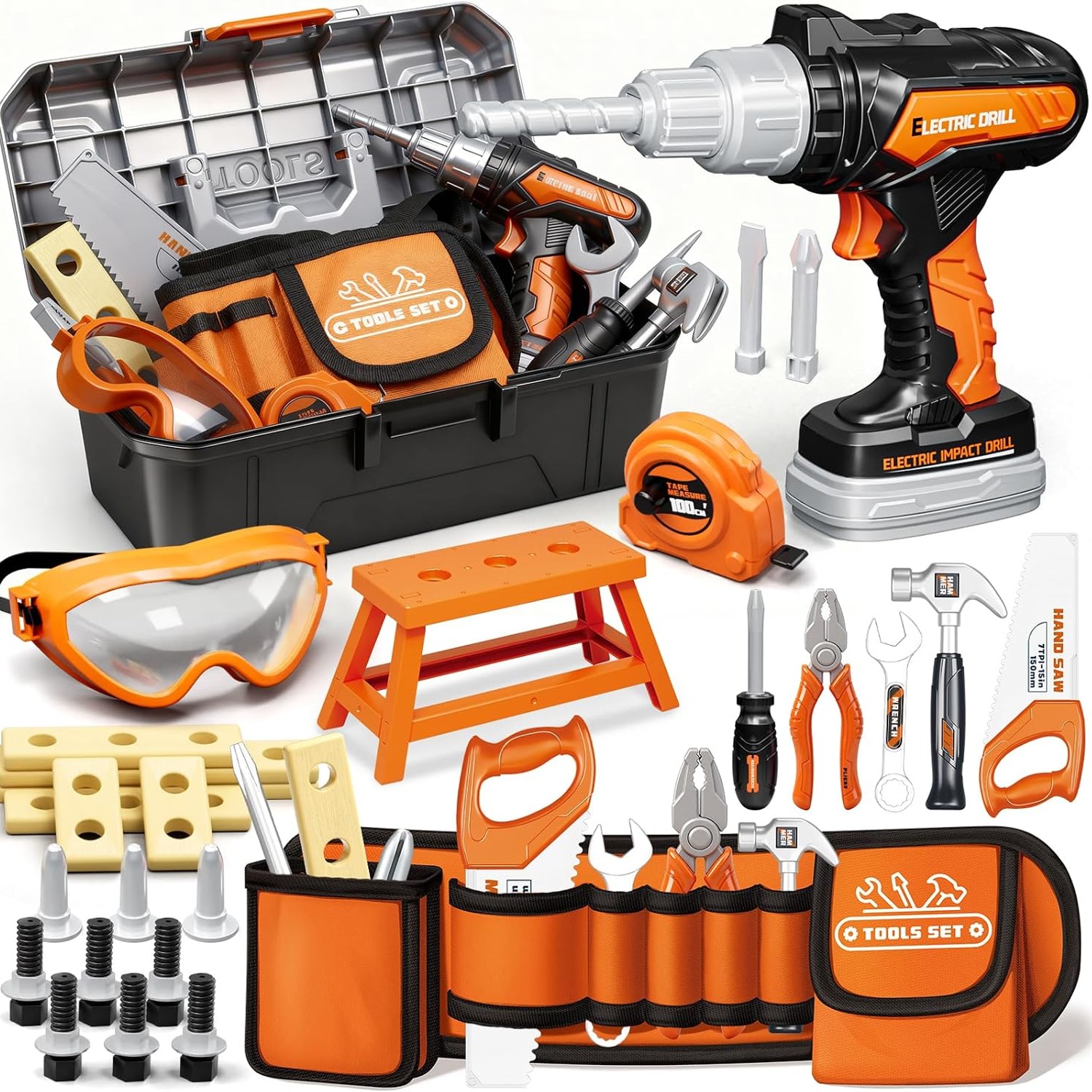
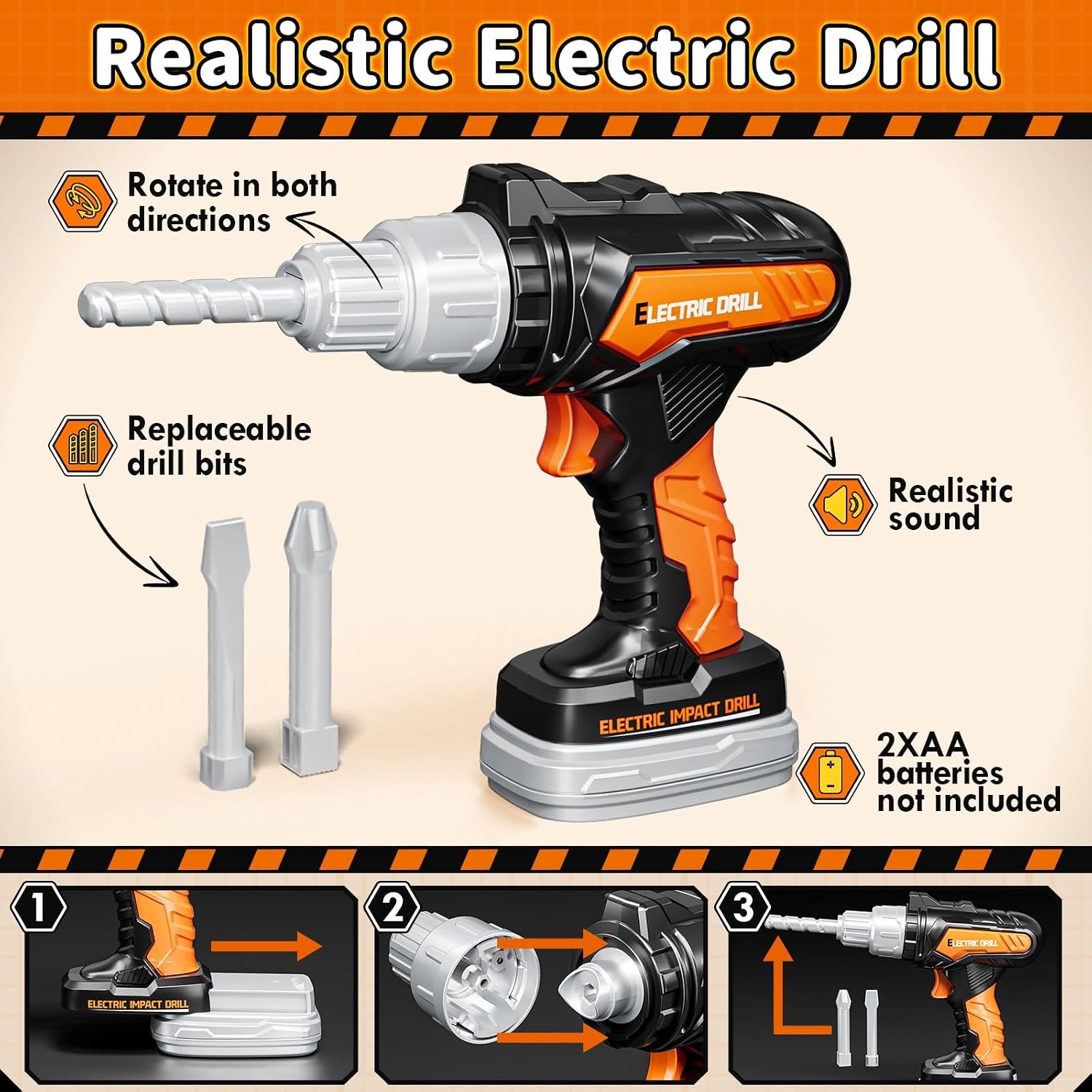
The hand tools are a hammer, a hand saw, pliers, a wrench, a tape measure and a screwdriver with two removable attachments. There is a pair of safety glasses, which children take surprisingly seriously. The toy drill comes with three bits and a removable base.
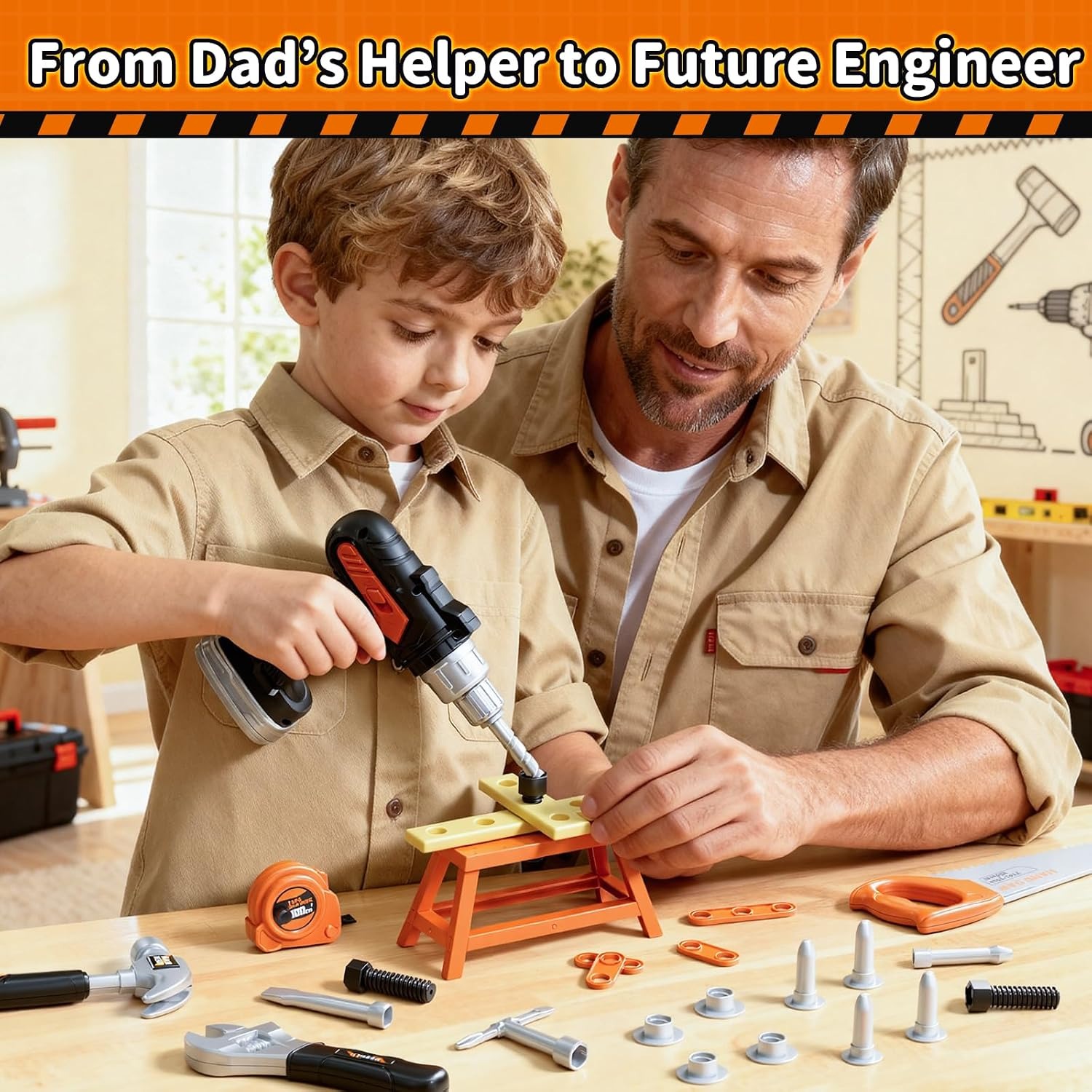
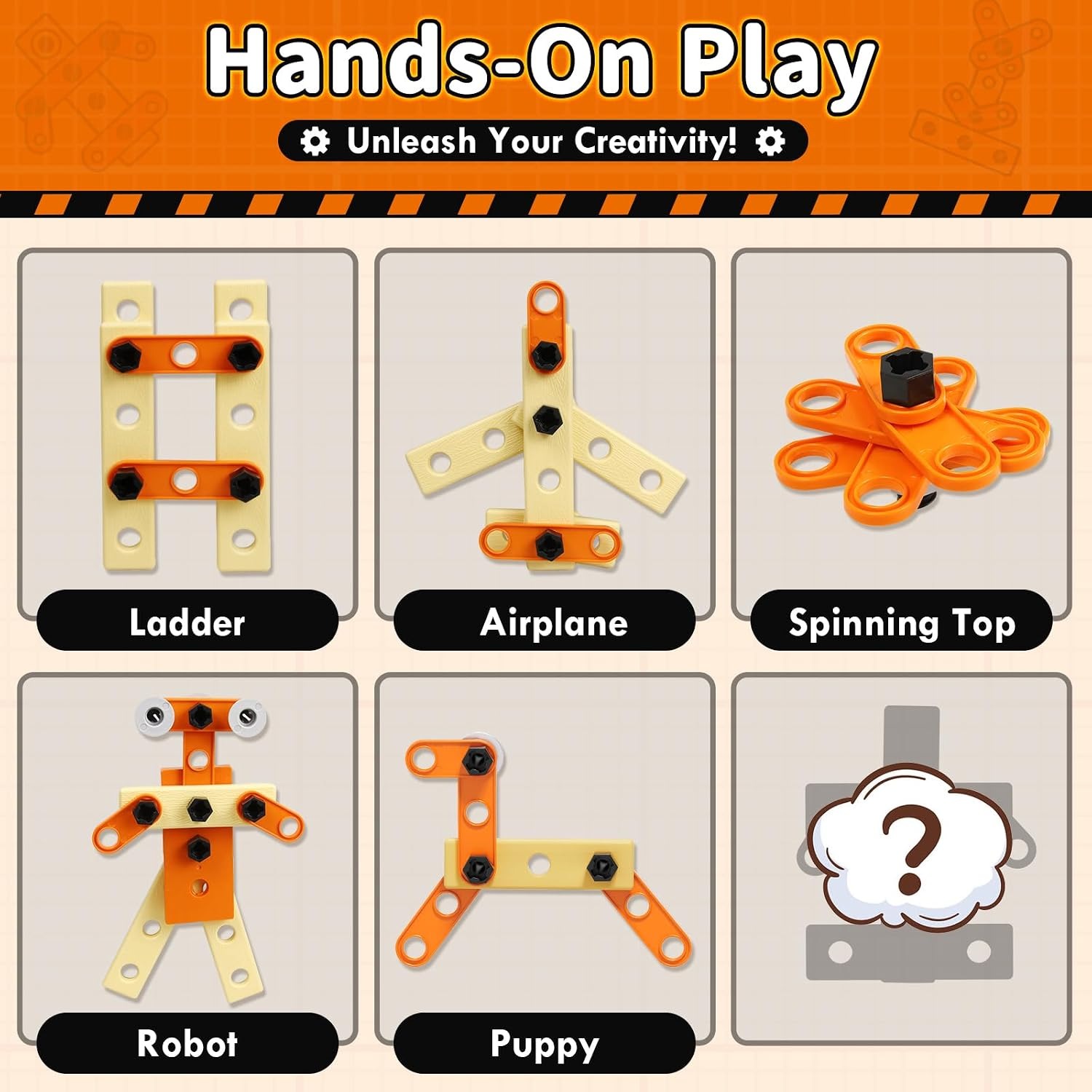
Then there are the building parts, and this is the bit that keeps the set alive. Six screws, six nuts, three nails, six plastic wooden strips and six perforated plastic pieces. Those join together, which means the child is not just miming work, they are producing something. The set includes a small dismountable stool as a project, so there is a target to aim at rather than a vague pile of parts.
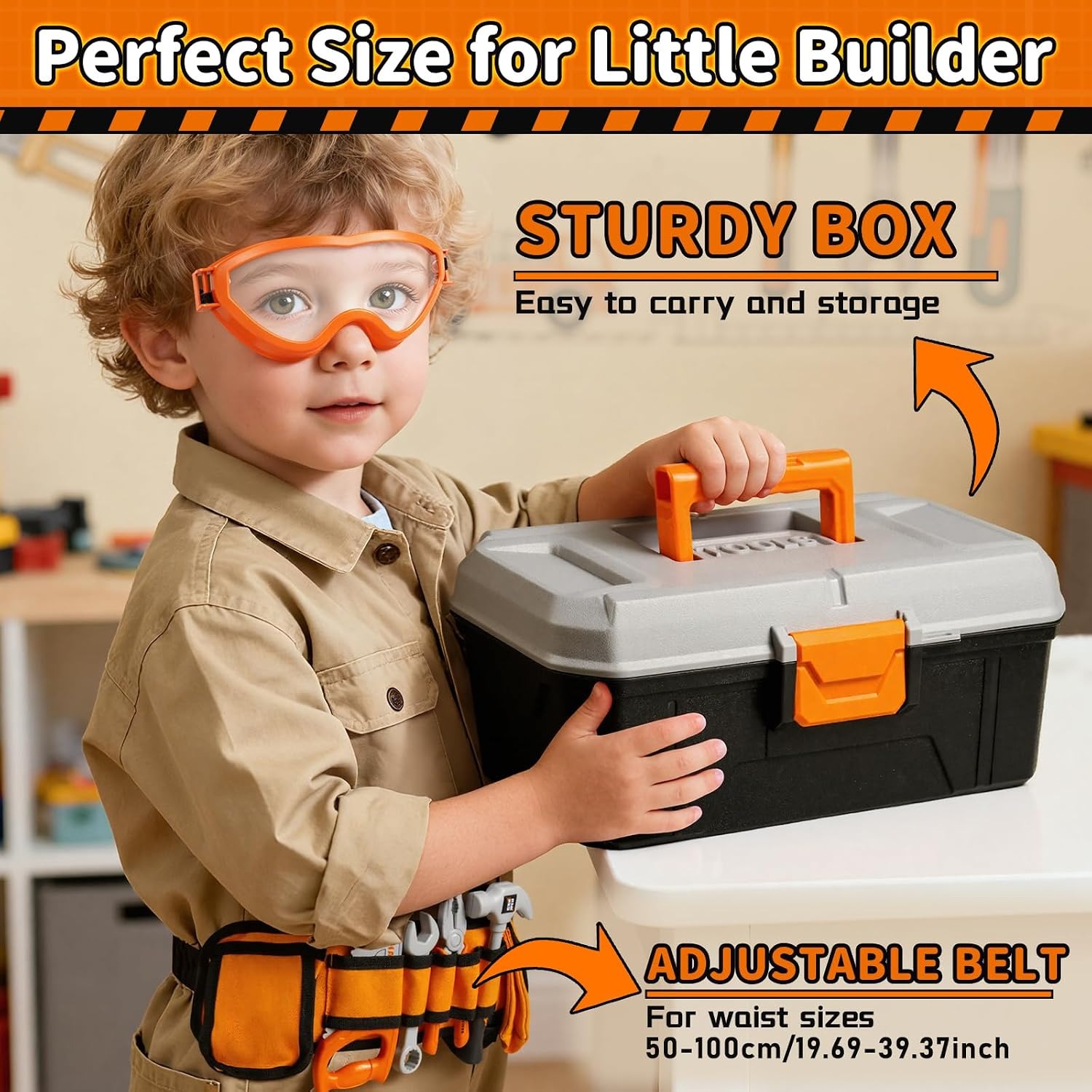
Holding it all together is an elastic tool belt with two large pockets and several slots, plus a tool box with a carry handle. The whole thing weighs about 0.9 kg and packs down to 30 x 15 x 12 cm.
Why the drill is the hook
Ask any parent which piece gets grabbed first and it will be the drill. It has a head that rotates in both directions and makes a working sound, so it behaves enough like the real thing to feel important.
Two-way rotation matters more than it sounds. It means a child can drive a plastic screw into a perforated panel and then reverse it back out. That loop of build, undo, rebuild is what keeps a toy in play for months. A one-direction drill is a noise maker. A two-direction one is a tool.
Note that the drill ships without a battery, so check the compartment when it arrives if you are wrapping it for a birthday. Nothing takes the air out of a morning faster than a gift that needs a shop trip.
Who it suits
The age range given by the manufacturer is 36 months to 12 years, which is wide. In practice it plays out roughly like this.
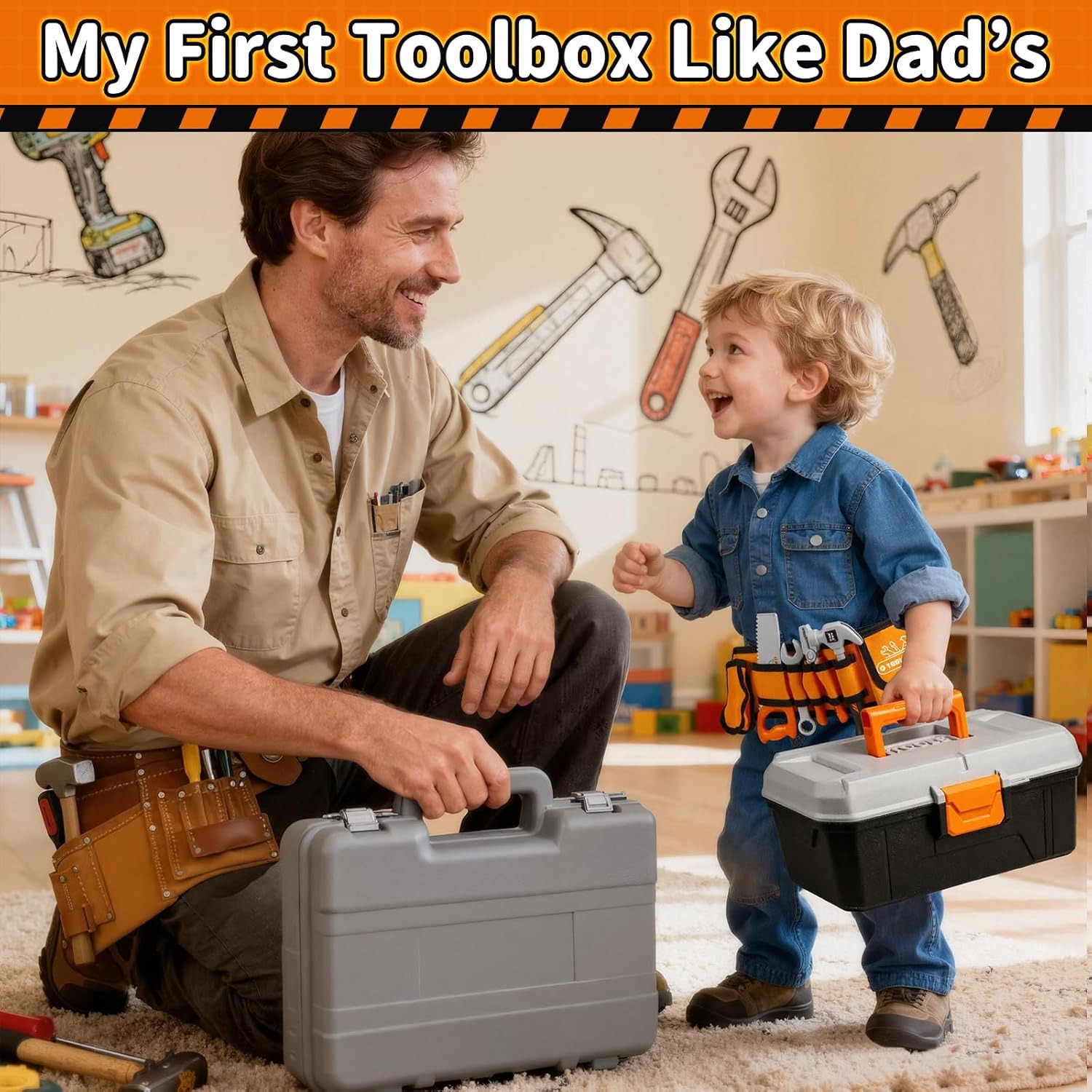
At three, children mostly name tools, sort them, put them in the belt, take them out, and bang things. That is real learning even though it looks like chaos. At four and five, they start properly assembling, which is where the screws and panels earn their keep. This is the age where a construction play set gets the most use, and where you will hear running commentary about what is being fixed. From six upward, the kit becomes a prop. The child builds the stool, then invents a job that requires the stool, then takes it apart to build something else.
If you already own a toy workbench, this slots straight in as extra kit. If you do not, the tool box works fine as the base of operations on a rug.
How to judge a set before you buy
A few things separate the ones that last from the ones that do not.
Check whether there is anything to assemble. Tools alone are a short game. Screws, nuts and panels turn it into an open-ended one, and a set with assembly parts is usually the best pretend play tool kit for the money.
Look at storage. If the set comes in a cardboard window box, it will be shredded within a fortnight and the pieces will migrate. A rigid case with a handle gets used because children like carrying their own things.
Think about grip size. Tools scaled down for small hands are not just a safety feature, they are what lets a four year old succeed at something. Adult-proportioned plastic tools are awkward and get dropped.
Finally, consider the belt. It sounds like a gimmick. It is not. Wearing the kit turns a toy into a role, and a role keeps play going well past the point where a loose hammer would have been forgotten.
Keeping it in one piece
Plastic toys fail in predictable ways, so a bit of care goes a long way.
Wipe pieces down with a damp cloth and mild soap when they get grubby, then dry them properly before they go back in the box. Skip the dishwasher entirely, because heat warps thin plastic and can loosen moving parts like the drill head. Spot clean the belt rather than machine washing it, since the reinforced panels and stitching do not enjoy a spin cycle.
Keep the box out of a hot car and off a sunny windowsill. Long exposure to strong sun makes plastic brittle, and brittle plastic cracks instead of bending.
The most useful habit is a quick count at the end of play. Six screws, six nuts, three nails. Thirty seconds of tidying saves the slow leak that kills most sets. If the child does the counting, even better, because that is a sorting exercise dressed up as a game.
Retire any piece that cracks. A split plastic edge can be sharp, and it is not worth keeping one screw in circulation.
Making it last longer
Two small tricks stretch the life of a set like this.
The first is giving the play a job. Instead of leaving the box out, ask the child to fix a specific thing. The wobbly chair, the door that squeaks, the teddy with a loose arm. Pretend work with a goal runs much longer than pretend work without one.
The second is building alongside them sometimes. You do not need to do it every day, but a shared project, assembling the stool together, for example, lifts the whole set in the child's estimation. It also gives you a natural way to teach tool names and basic safety ideas, which quietly carries over to the real tools in the house later.
The short version
This is a 50-piece plastic construction kit for ages three and up, built around a toy drill with a rotating head, an adjustable elastic belt with two pockets, and a tool box with a carry handle. The screws, nuts, strips and panels mean there is genuinely something to build rather than just tools to wave around.
It weighs 0.9 kg, measures 30 x 15 x 12 cm packed, and the drill arrives without a battery. The model number is 778-50 from KidBloom.
If you want a gift that holds a preschooler's attention past the first weekend and still gets used at six, this is a sensible pick. Just do the thirty-second count at pack-away time, and it will see out several years.