
The complete guide
The Honest Guide to Buying a Mud Kitchen Pots and Pans Set
The problem with most mud kitchens
Mud kitchens have a predictable life cycle. Someone builds or buys a lovely wooden unit, the children are thrilled for a fortnight, and then it slowly becomes a shelf for dead leaves. Nine times out of ten the reason is not the kitchen. It is the gear.
Children raid the house for a saucepan, an old wooden spoon and a yoghurt pot. Those things wander back indoors, or get left out and ruined, or they are just too big and awkward for a four year old to actually use. Within a month there is nothing to cook with, so there is no cooking.
Giving the mud kitchen its own permanent set of tools fixes this quietly and completely. When the pots live outside and belong to the kitchen, play starts the moment a child walks past.
What this set actually gives you
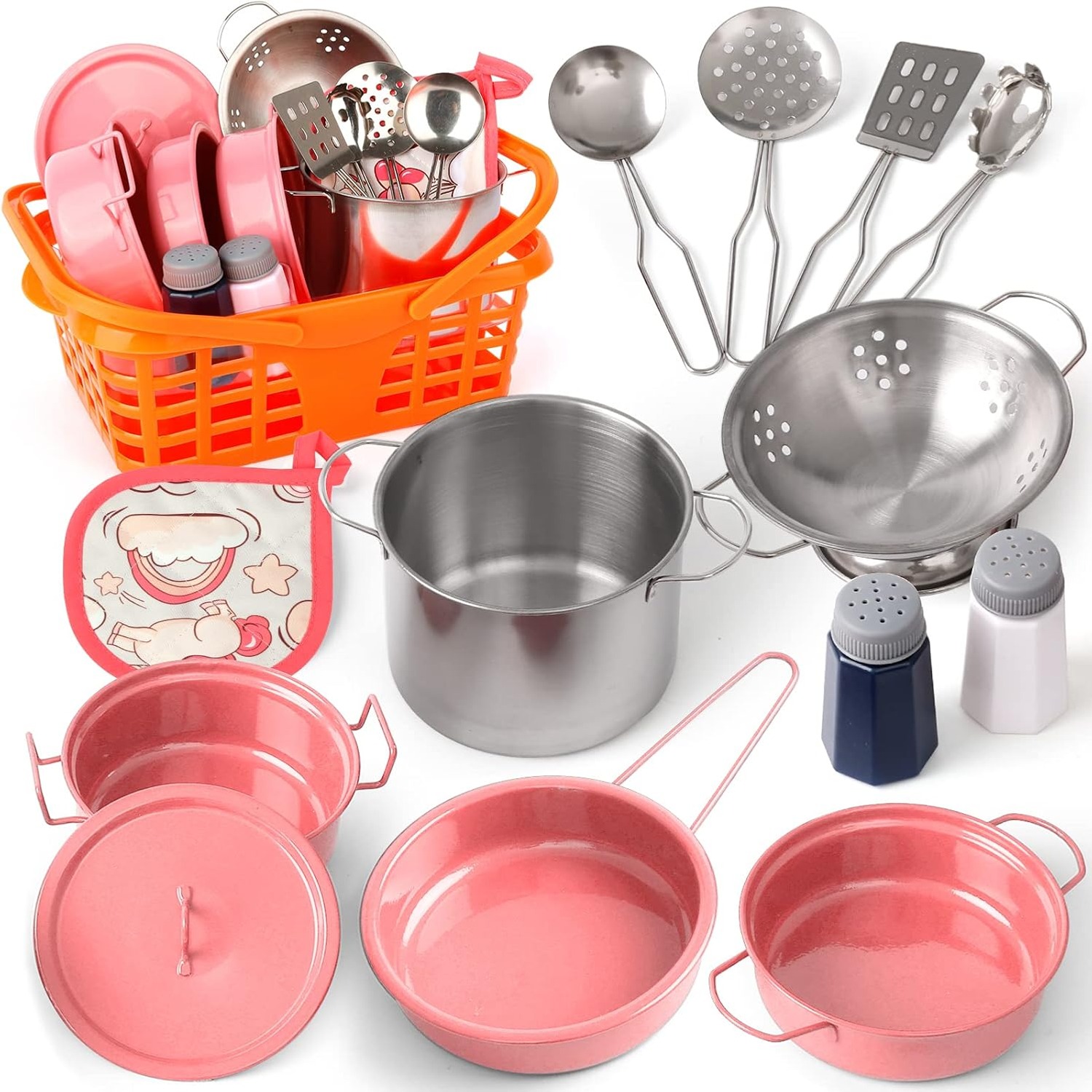
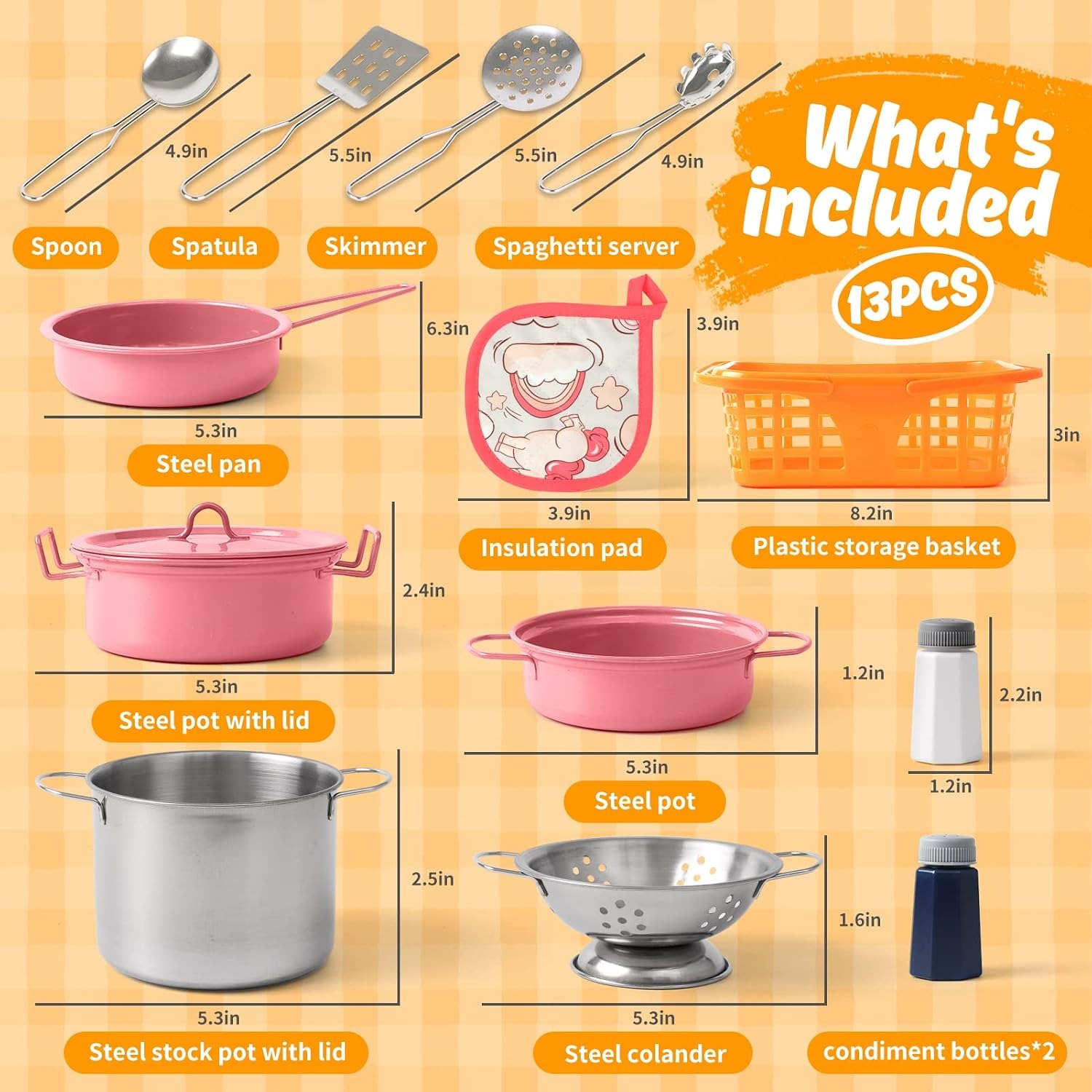
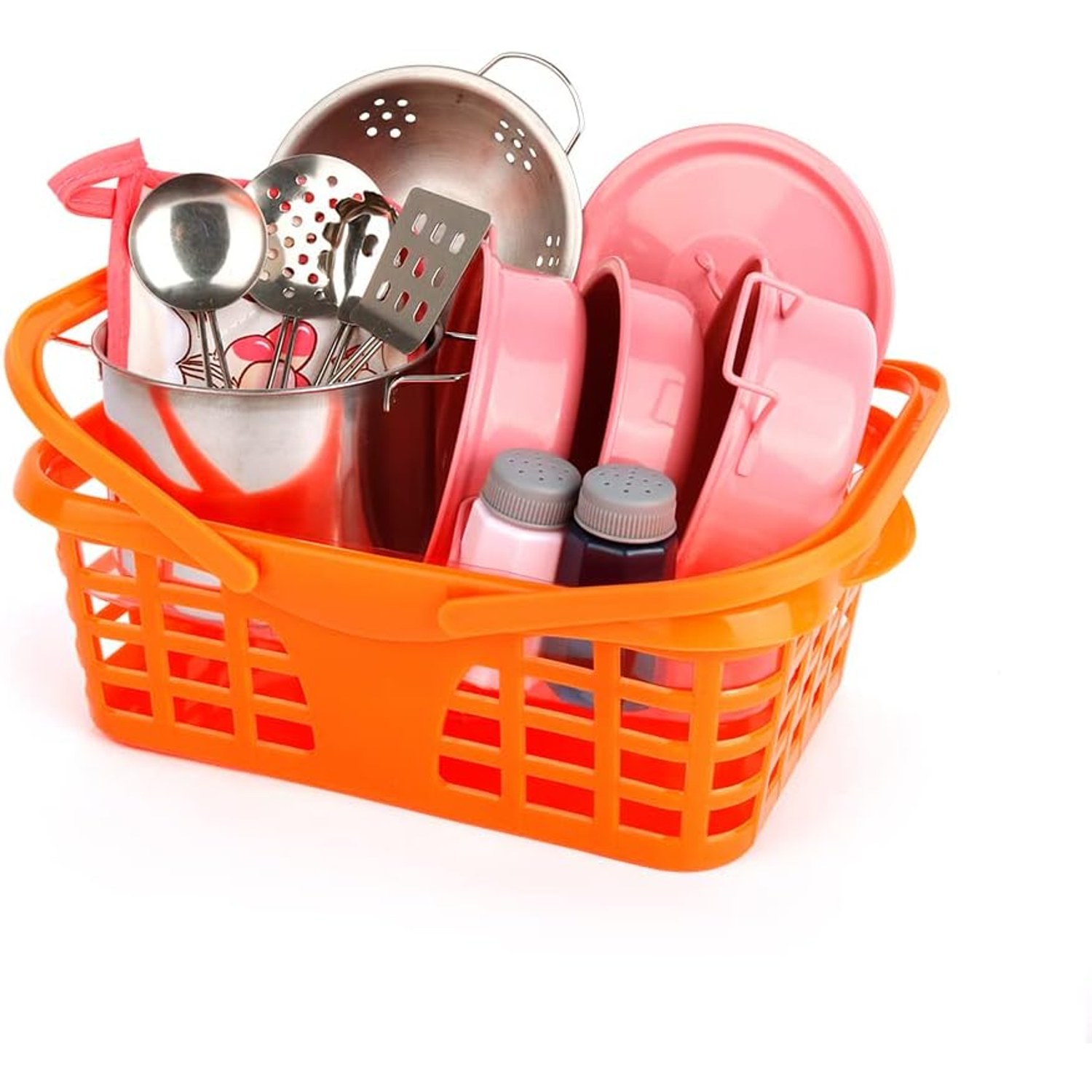
This is a stainless steel cookware bundle sized for children, with utensils, spatulas, spoons and pretend food included. The maker recommends it for ages 36 months to 12 years, and the stated purpose is role play and cooking skills. The pack measures 24.9 x 16.5 x 8.9 cm, so it is compact enough to sit on a shelf or inside a crate.
The important word is steel. Metal does something plastic never manages. It makes noise. A spoon rattling in a pot, a lid being clapped on, a pan set down on a wooden counter, these sounds make the game feel real to a child. They are also sturdier in practical ways. Metal does not go brittle in frost, it does not fade to grey after a summer in the sun, and it does not snap when someone stands on it.
Why outdoor cooking play matters
Watch a child at a mud kitchen for ten minutes and you will see a lot happening under the surface. They are measuring by eye, pouring without spilling, working out that too much water makes soup instead of cake, and narrating the whole thing out loud.
That narration is the hidden benefit. Pretend cooking generates an enormous amount of language. Children name ingredients, explain steps, take orders and describe what they are making. You cannot get that from a toy with a button and a sound chip.
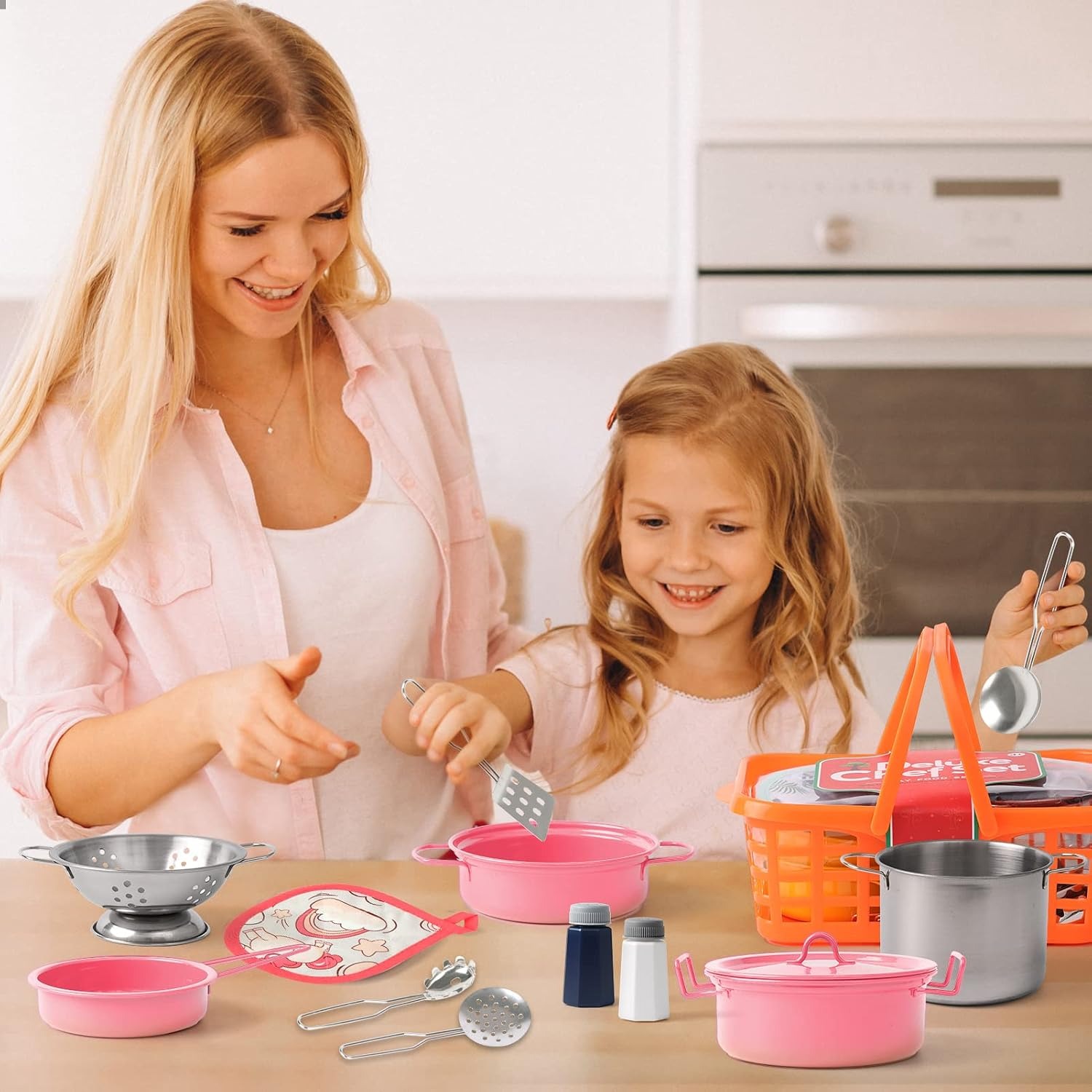
There is also a social side. One child cooks, another eats, a third delivers. Roles swap constantly. Garden mud kitchen toys are some of the few things that reliably pull a mixed-age group of children into the same game without an adult organising it.
Who it suits
A three year old will mostly fill, empty, stir and carry. That is the right level for that age and it keeps them busy for a long time. Expect mud everywhere and a lot of pride.
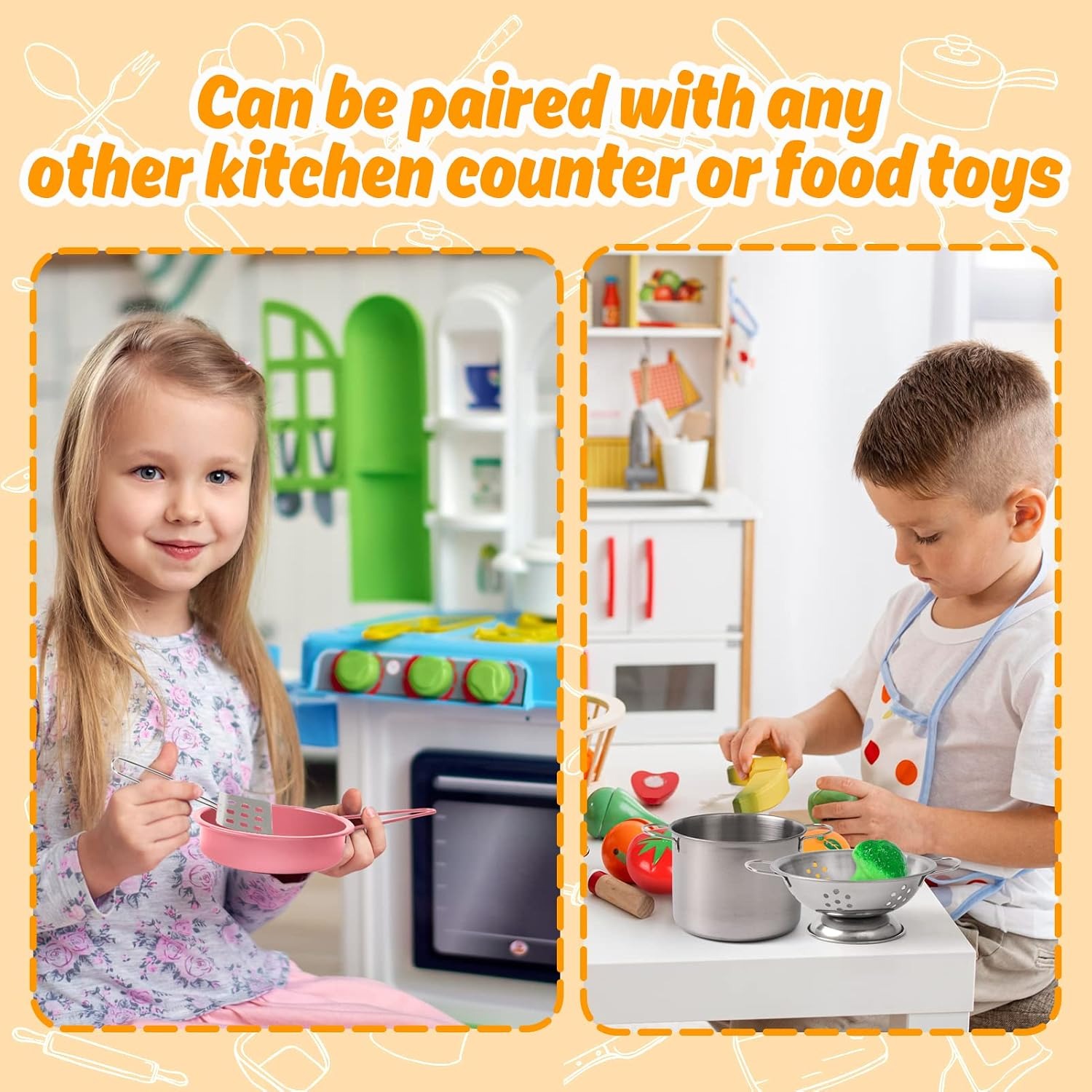
From about five, recipes appear. Children start naming dishes, setting prices, writing menus on a chalkboard and insisting you eat the result. This is the sweet spot for a mud kitchen pots and pans set, because the props support the story instead of limiting it.
Older children, up to the stated twelve years, usually turn to experiments. What happens if you mix sand, water and crushed chalk? How long does it take grass to go slimy in a sealed pot? The same metal pans handle all of it, which is a big part of the value.
Nurseries and preschools get on well with this type of kit for the same reason. Shared outdoor equipment takes a beating, and metal survives it better than most alternatives.
How to choose a set that lasts
A few things separate kit that stays in use from kit that ends up in the bin.
Material is the first. Steel over plastic, every time, for anything that will live outdoors. Thin plastic cracks, warps and goes chalky, and once it cracks it has sharp edges.
Size is the second. Child-sized matters more than people expect. An adult saucepan is heavy, wide and hard to control, so a small child tips it and gives up. Pieces scaled down to little hands mean independent play rather than constant help.
Variety is the third. A pot on its own is not much of a game. Pots plus pans plus spoons plus spatulas plus pretend food means a child can run a full cooking sequence, and that is what keeps them there for an hour instead of five minutes.
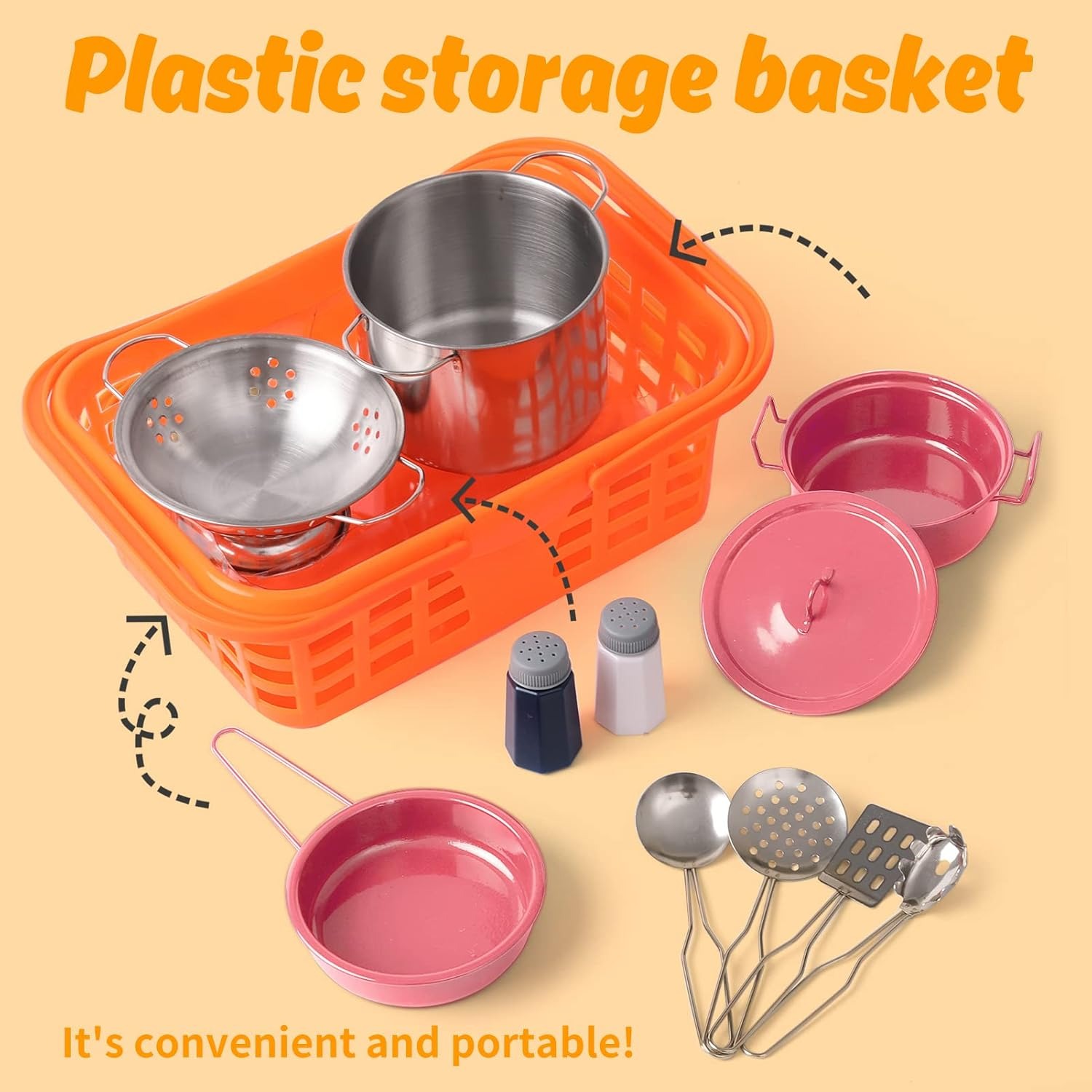
Storage is the quiet fourth. A set that fits in one basket gets tidied away. A sprawling collection does not, and then half of it disappears into the lawn.
Setting it up well
You do not need an expensive wooden kitchen. A plank across two crates, an old bedside table, a tree stump or a plastic storage box all work fine. What children actually want is a surface at their height and a supply of materials.
Keep a few things nearby. A bucket of soil, a watering can, a pile of leaves and some petals or grass clippings cover most menus. A small bowl of water for rinsing hands saves a certain amount of carpet trauma later.
Try putting the set in a basket or a hanging rack so the pieces are visible. Children play with what they can see. Gear hidden in a closed box tends to stay in the box.
Looking after it
Care is genuinely simple. Hand wash in warm soapy water after muddy sessions, rinse out the grit, and dry everything properly before putting it away. Drying is the step people skip and the one that matters most, because trapped water is what causes trouble over time.
Over winter, bring the set indoors or into a dry shed. Do not seal damp pieces inside a plastic tub. Give everything a quick look over each season and retire anything that has become bent or damaged.
Dishwasher use is not specified for this product, so hand washing is the sensible default. It takes two minutes anyway.
A word of caution worth repeating. These are pretend play items. They are not for use on a stove, a fire pit or a barbecue, and they are not for cooking real food.
Common questions before buying
People usually ask whether one set is enough for two children. Normally yes, and the sharing is part of the point, though siblings who want identical everything may be happier with two.
The other common question is whether it works indoors. It does. Plenty of families run it as an indoor play kitchen accessory set during winter and move it outside when the weather turns. It also pairs well with a toy shop or café setup.
Finally, people ask about weight and origin. Neither is specified in the maker's details. What we can tell you is the stated material, stainless steel, the stated age range, 36 months to 12 years, and the pack size of 24.9 x 16.5 x 8.9 cm.
The short version
If you already have a mud kitchen that has gone quiet, missing cookware is probably why. If you are building one, buying the tools at the same time as the counter is the single best thing you can do to make sure it gets used.
Metal over plastic. Child-sized over adult hand-me-downs. Enough variety to run a whole pretend meal from start to finish. That is what this set offers, in a box small enough to tidy away in one go.
Buy it, put it in a basket where your child can see it, and then let the garden get properly messy. That part takes care of itself.