
The complete guide
Choosing a Dinosaur Track Set, A Practical Buyer's Guide
The toy that gets played with twice and then forgotten
Every parent knows the pattern. A boxed toy arrives, it is assembled in its one intended shape, the child races it for a weekend, and by the following month it is wedged behind the wardrobe. The problem is rarely the quality. It is that the toy only does one thing, and children work out what that one thing is faster than we expect.
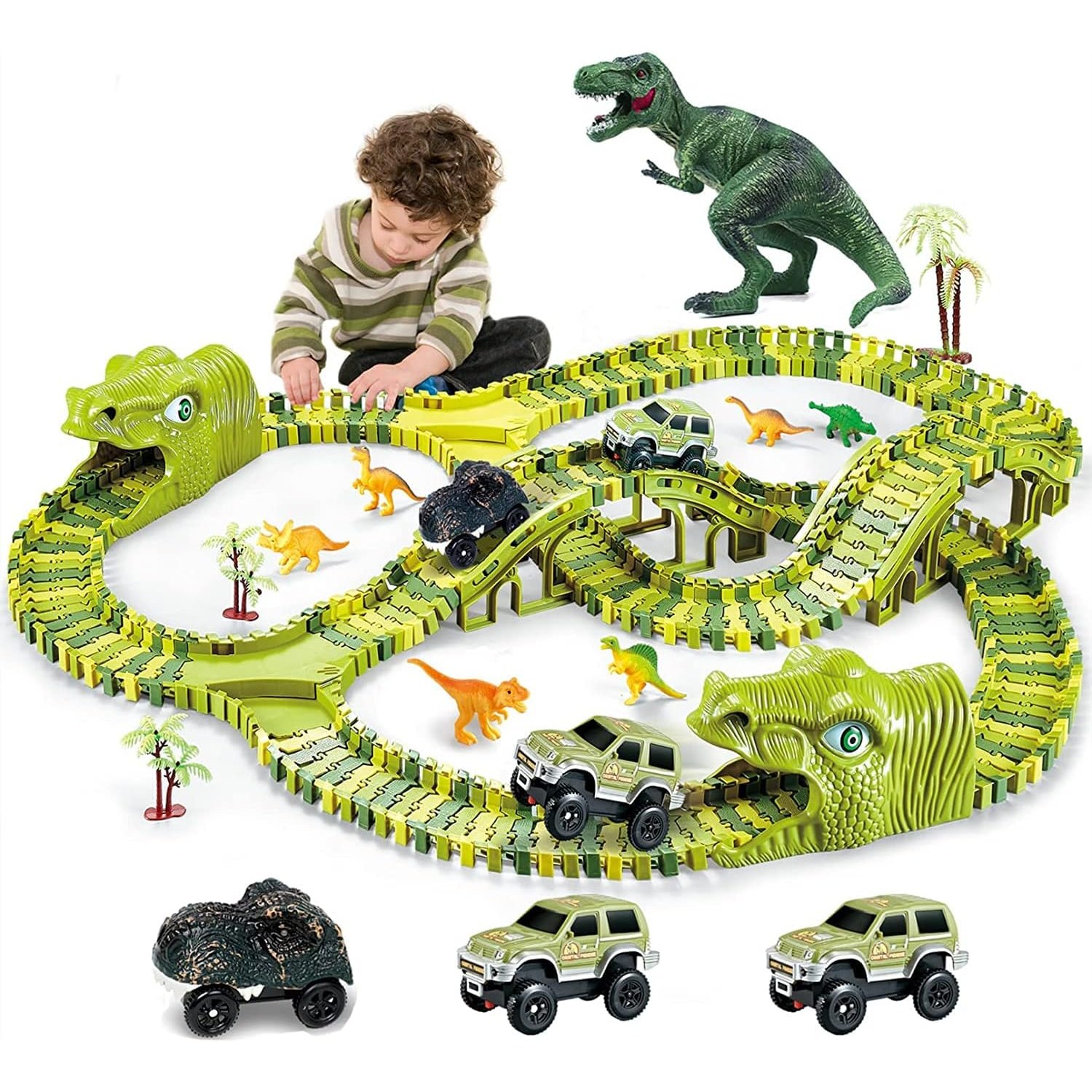
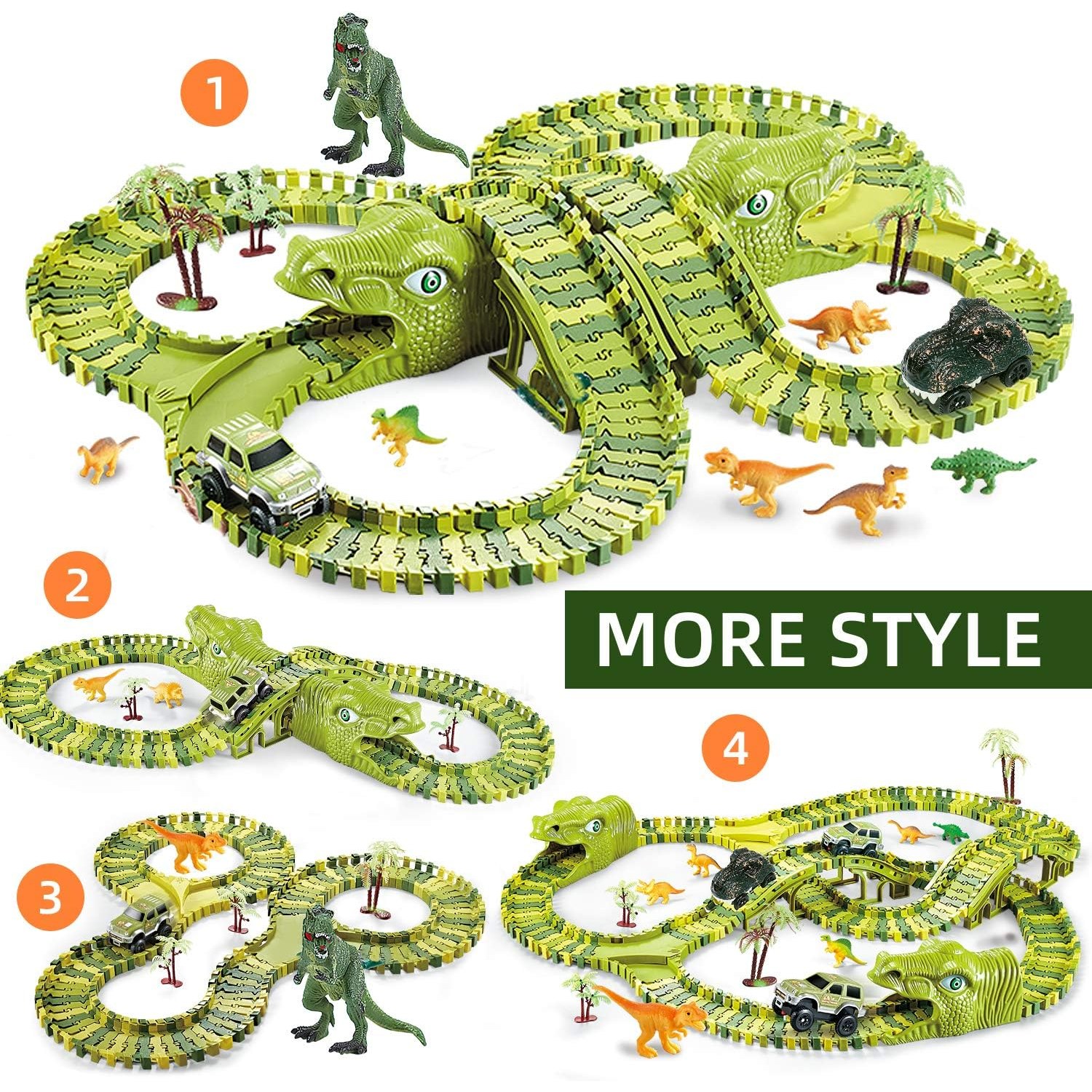
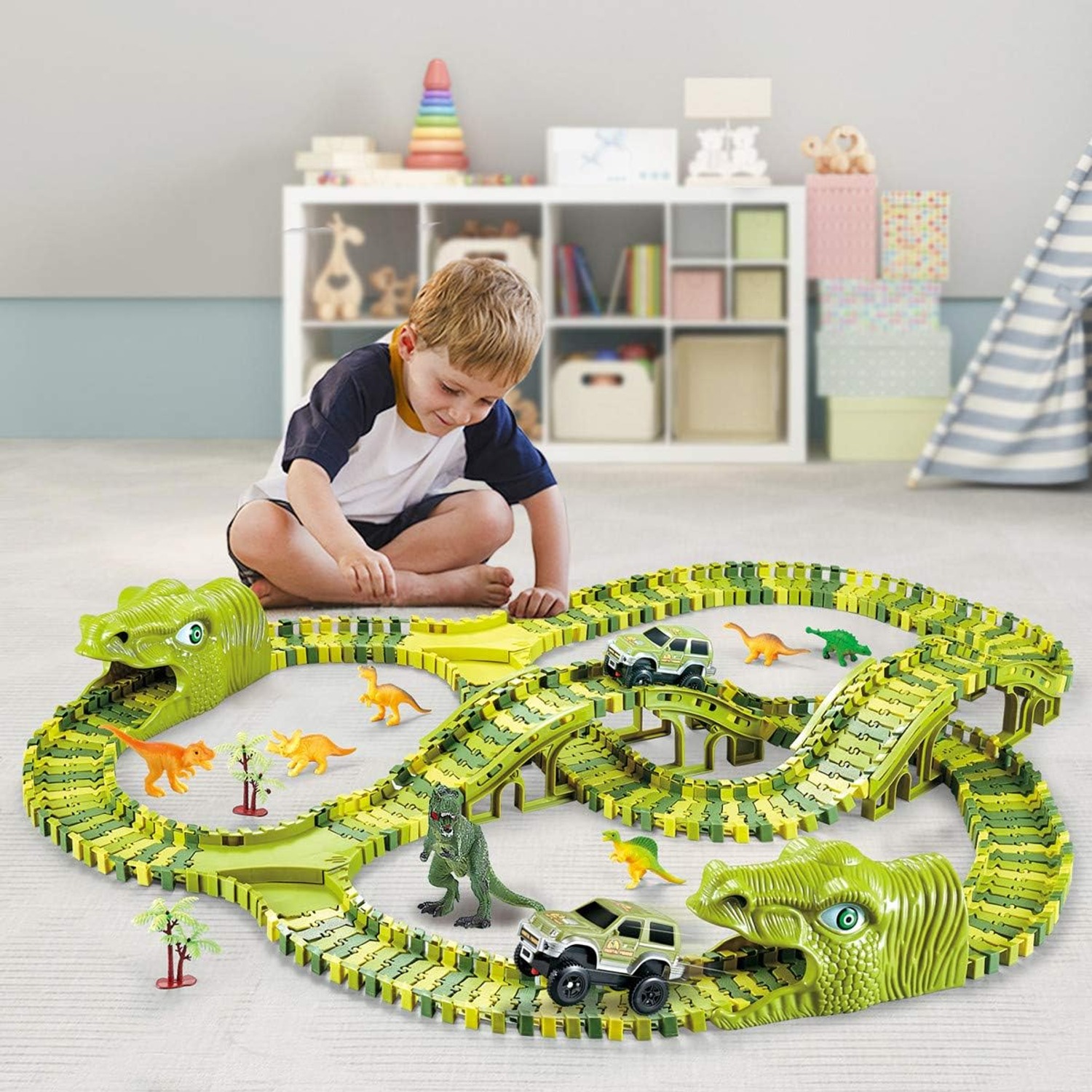
A dinosaur track set 260 piece build sidesteps that problem because the shape is never fixed. The child decides where the track goes. That decision can change tomorrow, and the day after. The pieces are the same, but the toy is different every time it comes out of the box, which is exactly why this style of set tends to survive longer than a moulded plastic racetrack that only clicks together one way.
What is actually in the set
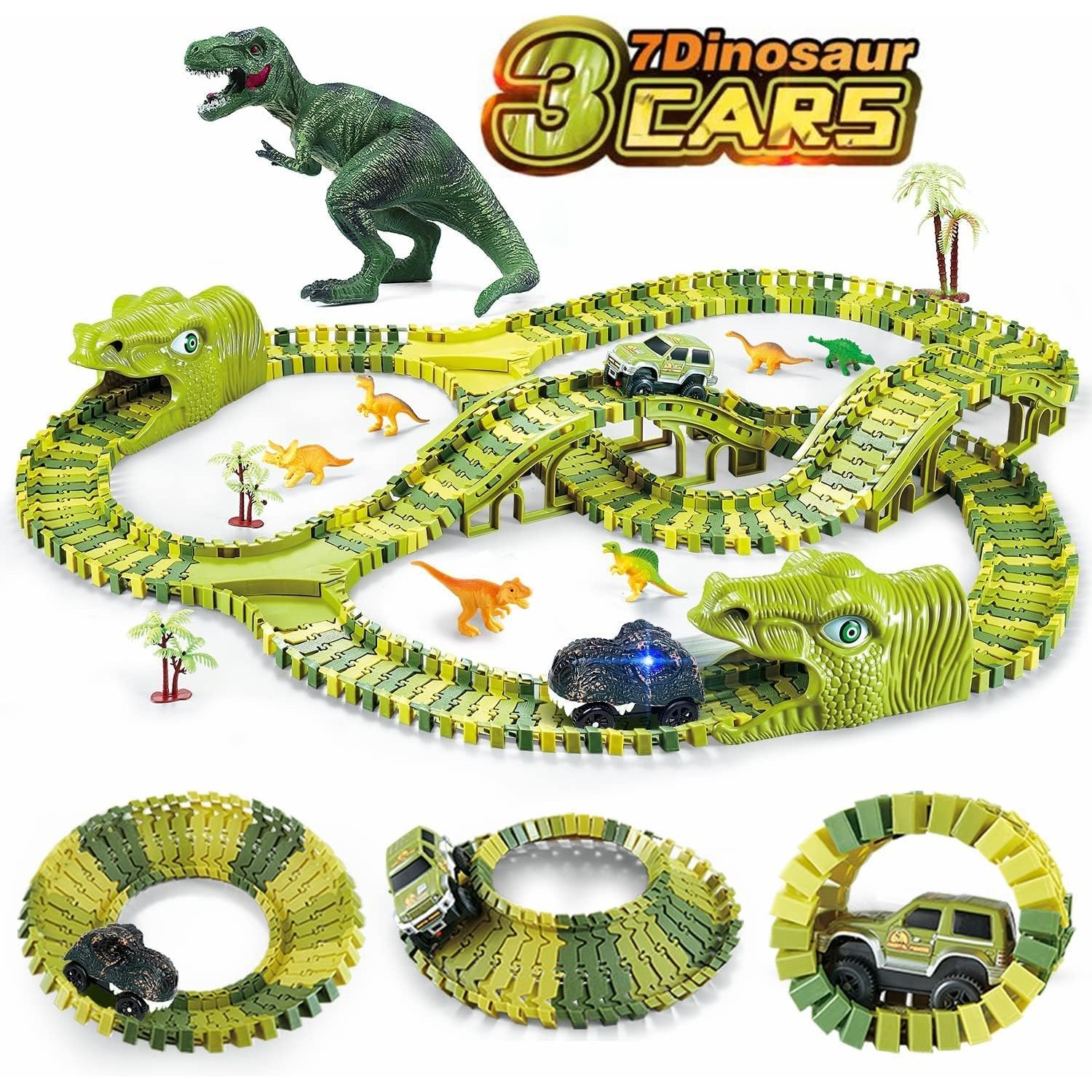
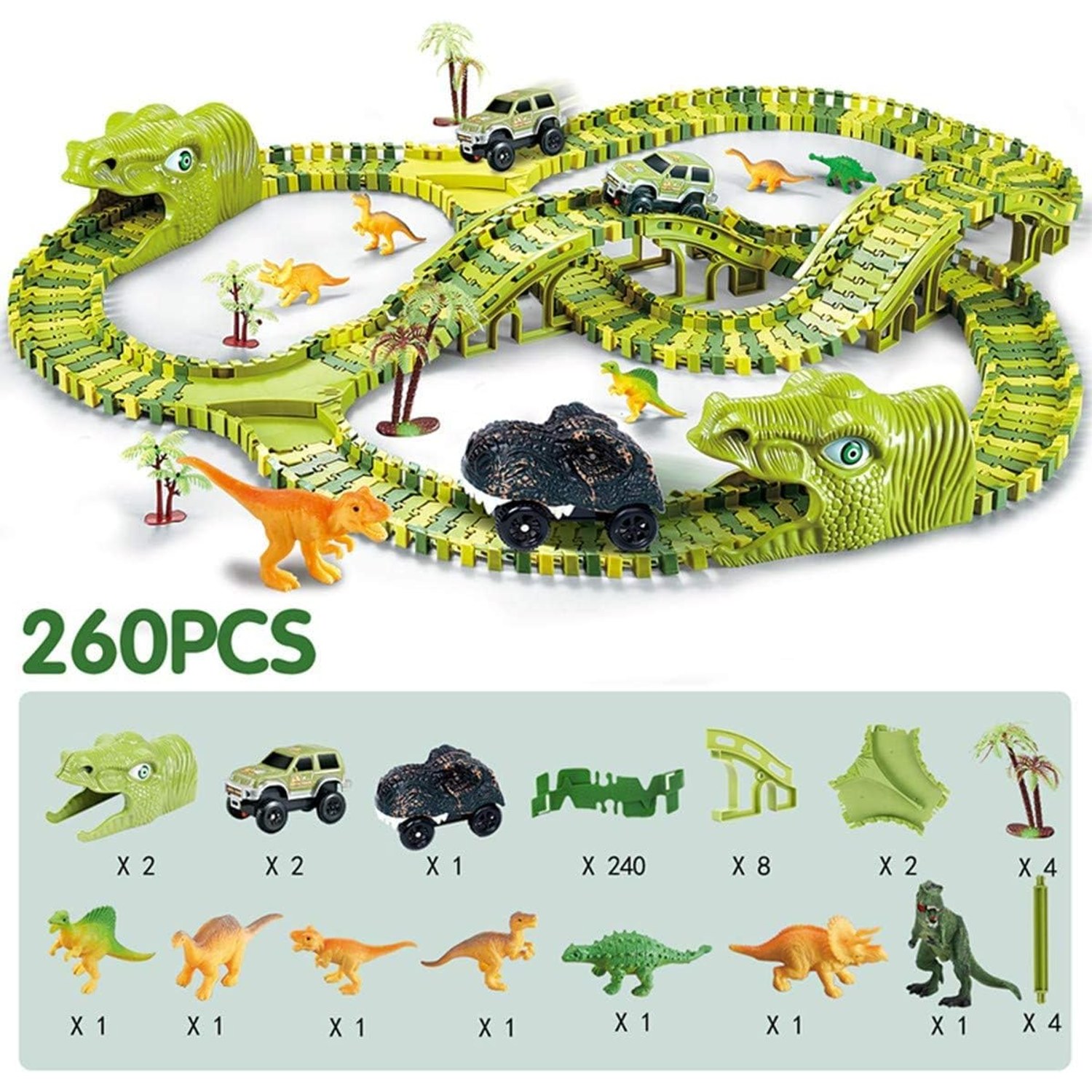
The headline number is 260 pieces. That breaks down into a large run of army green track sections plus a set of accessory parts: trees, dinosaur head pieces, Y-turns that let the track split in two directions, bridges, and slopes for building height into a layout.
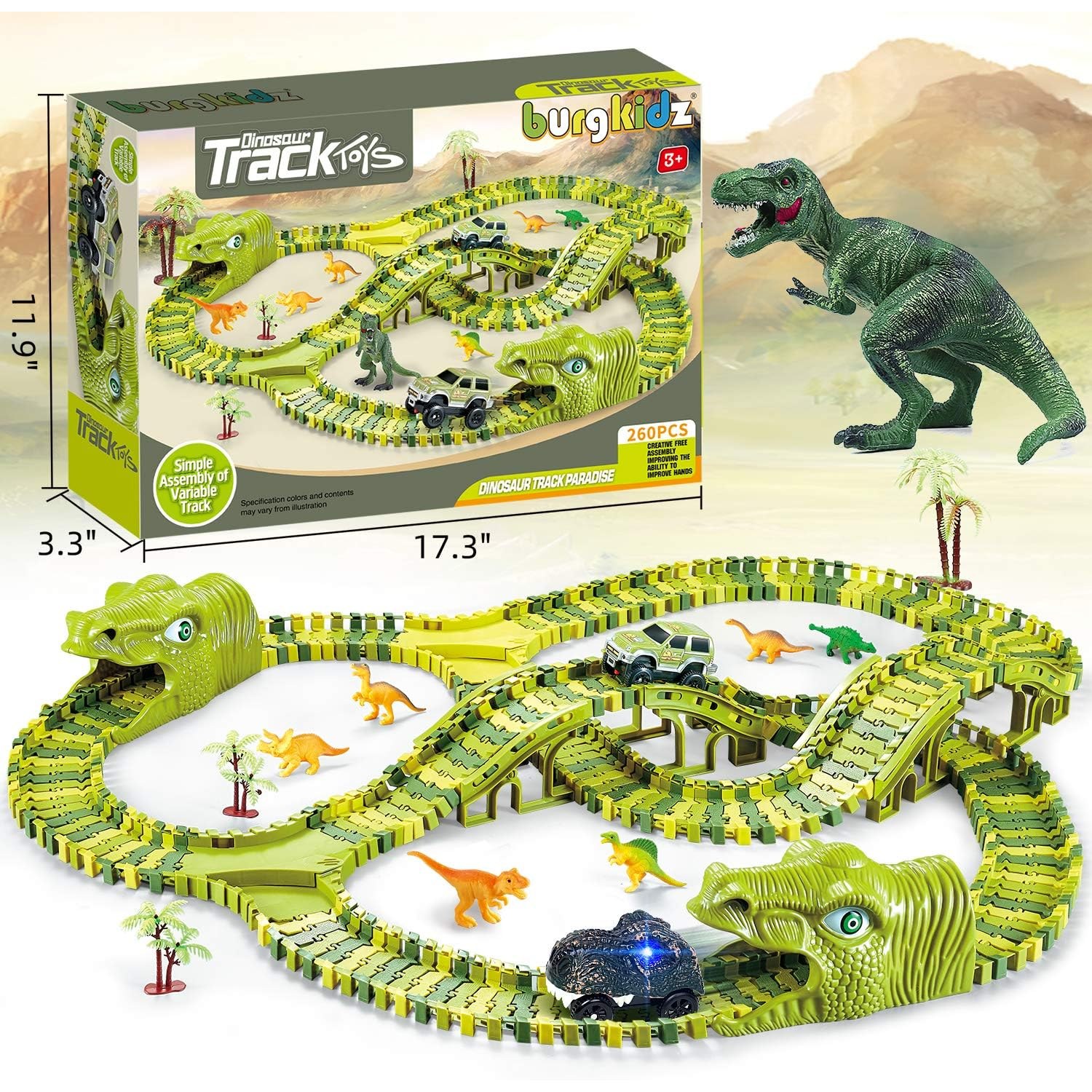
On top of the track you get three vehicles, described as one dinosaur car and two off-road military vehicles, and seven dinosaur figures. The figures matter more than people expect. Without them you have a car track. With them you have a prehistoric landscape, and a child who is suddenly telling a story instead of just pushing a car in a circle.
The whole thing arrives in a printed colour box, which is handy if you are buying it as a present and do not want to wrap something that looks like plain cardboard.
How a flexible race track works
Each track section locks into the next with an interlocking fit. No glue, no screws, no tools. What makes it a flexible race track rather than a rigid one is that the pieces can be turned and swivelled, so you choose the angle of every joint as you build.
In practice that means a child discovers a few rules very quickly. Turn too sharply and the vehicle leaves the rails. Build a slope that is too steep and the car stalls halfway up. Place a bridge where there is no room for the approach and the whole section has to be rebuilt. These are small engineering lessons that nobody has to explain, because the track itself gives the feedback.
The Y-turns are worth singling out. Once a layout has a split, children start thinking about routes rather than loops. Which path is faster? What happens if a dinosaur blocks one side? This is where a dinosaur car track stops being a race toy and becomes something closer to a world.
Who it suits
The recommended age runs from 36 months to 12 years. That is a wide band, and it holds up reasonably well in practice because the set is open-ended.
A three year old will mostly need a grown-up for the first build. They will push cars by hand, knock pieces apart, and be delighted by a simple oval. That is fine. The dexterity practice of pushing two track pieces together is genuinely useful at that stage, and it is why so many people searching for the best dinosaur track set for preschoolers end up with a bendable system rather than a fixed one.
By five or six, children build without help and start experimenting with bridges and height. By eight or nine, they are designing deliberately, measuring runs against the furniture, and arguing about which layout is fastest. The toy has not changed. The child has.
It also works for households with more than one kid. Three vehicles means two children can play and still have one spare, which heads off a good deal of trouble.
How to choose a track set
A few things are worth checking before you buy any kids race track playset.
Piece count against space. More pieces is not automatically better if you have no floor. 260 pieces gives you room for a serious circuit, but it also means you need somewhere to spread out. A rug around two metres across is comfortable. A small bedroom with a bed and a desk in it will limit what gets built.
Fixed or bendable. A fixed track is quicker to set up and holds its shape. A bendable set takes longer to build but can be redesigned forever. If your child likes the building as much as the racing, bendable wins easily.
Powered or hand-pushed. This set lists manual, hand control as the control type, with no remote included. That keeps things simple and quiet. If you specifically want a motorised, remote-controlled toy, this is not that product.
Storage. Anything with hundreds of pieces needs a home. A lidded tub is enough, and it is worth buying one at the same time rather than discovering the problem on day three.
Who else is playing. Sets like this are often bought as a solo toy and then turn into shared floor time. If you like the idea of sitting down with your child rather than handing them a device, interlocking track pieces are a good investment of your evening.
Building and assembly
Assembly is required, and instructions are included. That is not the same as a flat-pack chore. The building is the toy.
Start on a flat, firm surface. Carpet with a deep pile makes joints sit unevenly and slows the vehicles down. Hard floor or a short-pile rug is better. Lay out the straight sections first to establish the shape, then add the curves, then put bridges and slopes in last once you can see where the height will fit.
If a joint will not stay closed, it is almost always because the two pieces are not fully pushed home. A gentle firm press usually fixes it. If a bridge wobbles, check the sections feeding into it are flat on the floor, not resting on a cushion or a book.
Sorting before you start saves time. Straights in one pile, curves in another, accessories in a third. Children of four and up can do the sorting themselves, and it is quietly useful practice in grouping and counting.
Looking after it
Plastic track is forgiving but not indestructible. Wipe pieces with a slightly damp cloth when they get grubby and dry them before storing. Avoid soaking the vehicles, especially anywhere a battery compartment might sit.
Keep the set out of direct sunlight and away from radiators. Heat warps thin plastic over time, and a warped track section never sits quite right again.
Pack everything into one container at the end of a session. Loose pieces under furniture are how a 260 piece set becomes a 230 piece set. Because the layout is open-ended, a few missing straights will not ruin the toy, but there is no reason to lose them.
Check the pieces occasionally for cracks or rough edges, particularly if the set has been stepped on. Anything damaged should come out of circulation.
Using it as a gift
The set is listed with birthday and Christmas as suggested occasions, and it does make an easy present. The wide recommended age range means you do not have to guess the child's exact stage, and the box presents well without extra wrapping effort.
If you are giving it to a child you do not see often, it is worth saying this out loud to the parents: it needs floor space and a storage tub. Those two things decide whether a set like this gets used weekly or shoved in a cupboard.
The short version
This is a 260 piece dinosaur track set with three vehicles and seven dinosaur figures, built around track pieces that bend and interlock so the layout is never the same twice. It is aimed at children from 36 months to 12 years, needs no batteries for the track, requires hands-on building, and comes with instructions.
If you want a toy that is ready in ten seconds and then does one trick, look elsewhere. If you want something a child builds, rebuilds, tells stories around, and still digs out two years later, a flexible race track like this one earns its place in the toy box.