
The complete guide
How to Choose a Flexible Car Track That Actually Gets Played With
The problem with most toy tracks
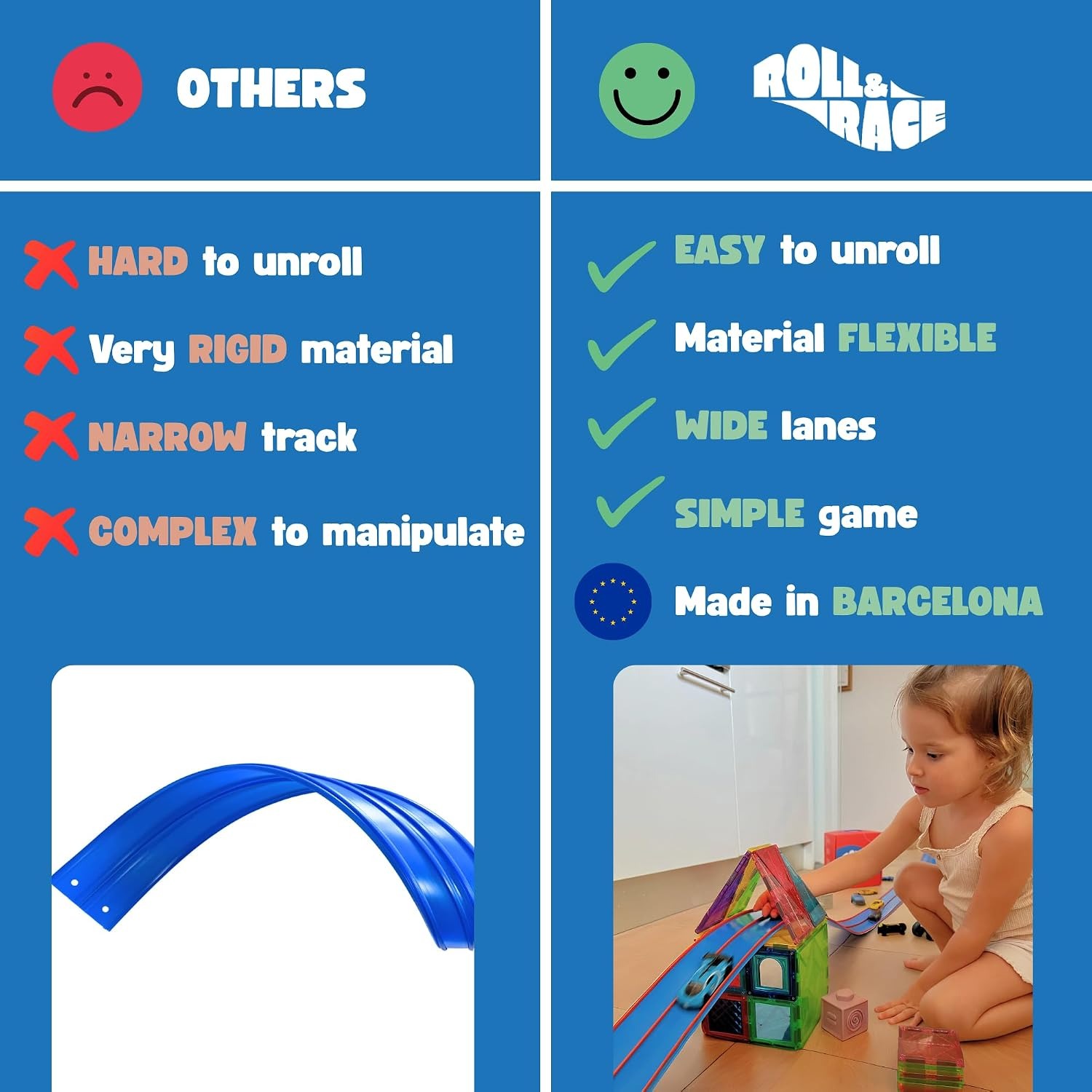
Ask any parent who has bought a car track set. The box looks fantastic. Inside there are forty pieces, a sheet of stickers, and a diagram that assumes you have a free afternoon. You build it on the living room floor, everyone admires it for ten minutes, and then someone walks past and half of it detaches.
Worse, the finished shape is the only shape. The pieces only connect one way. Once a child has built the layout on the box, there is not much left to discover, and the set gets pushed under a bed.
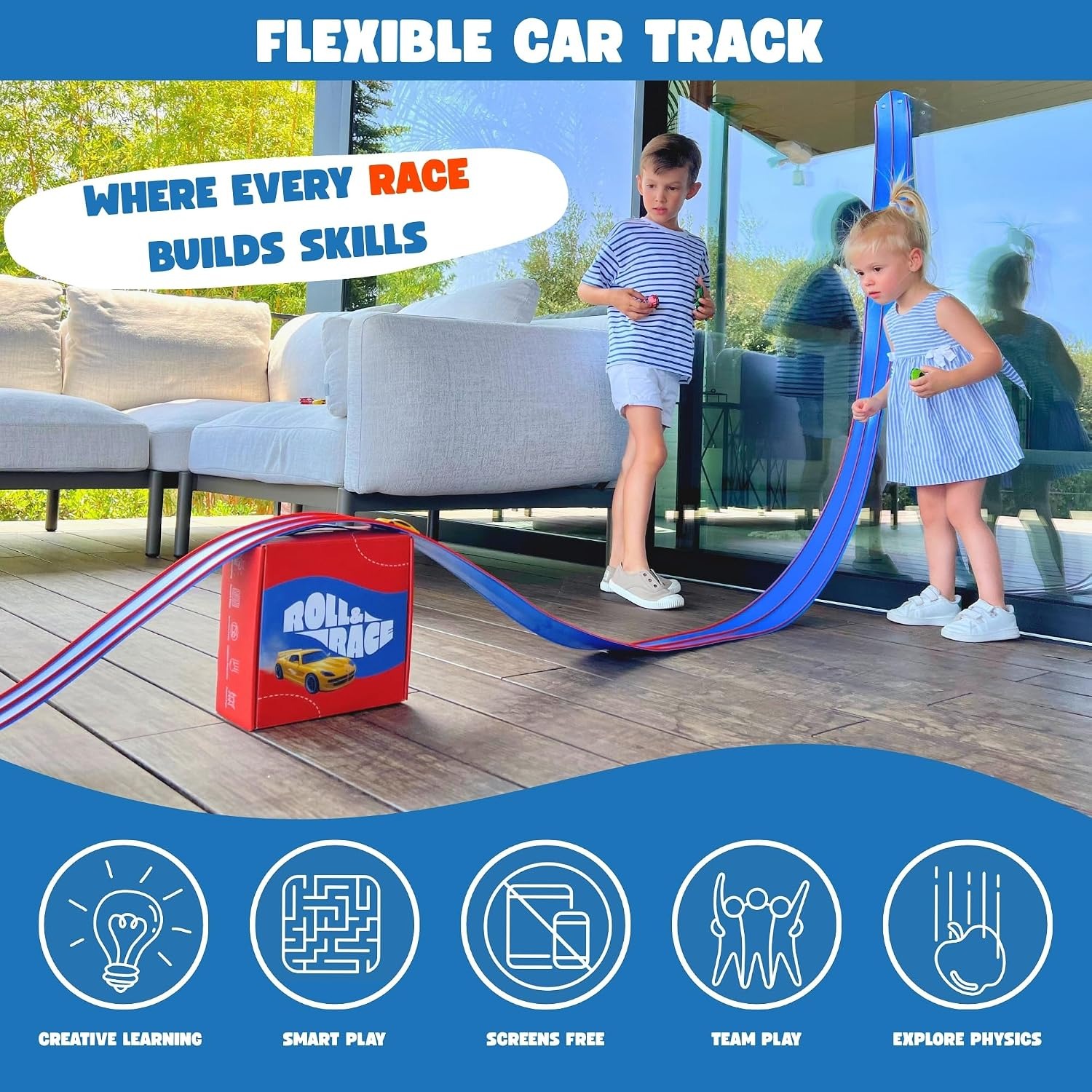
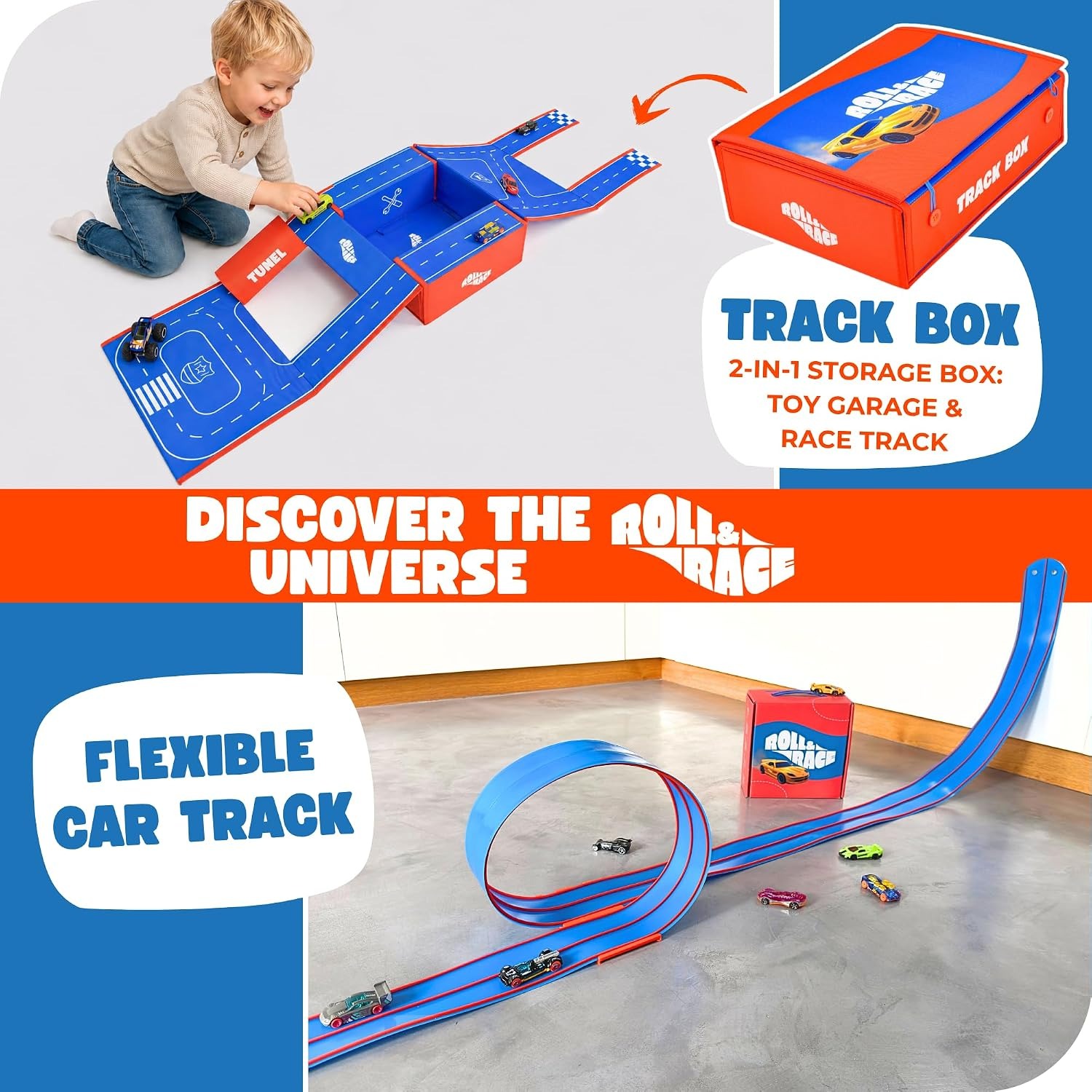
A flexible car track solves this by removing the pieces altogether. You have one long strip. It bends. That is the whole design. What a child builds depends entirely on the furniture in the room and how brave they are feeling, which is why the same track gets used in a different shape every day.
How a flexible track works
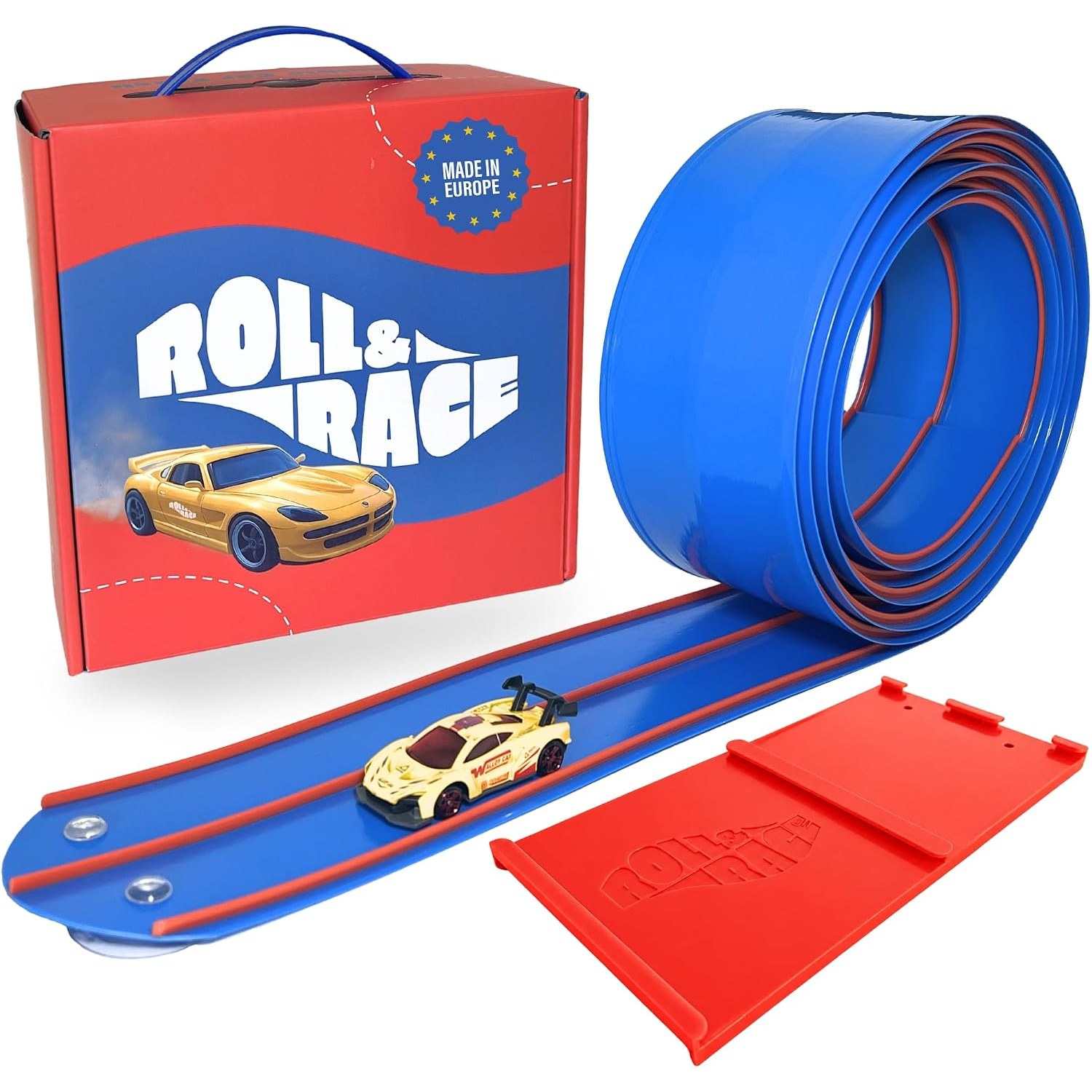
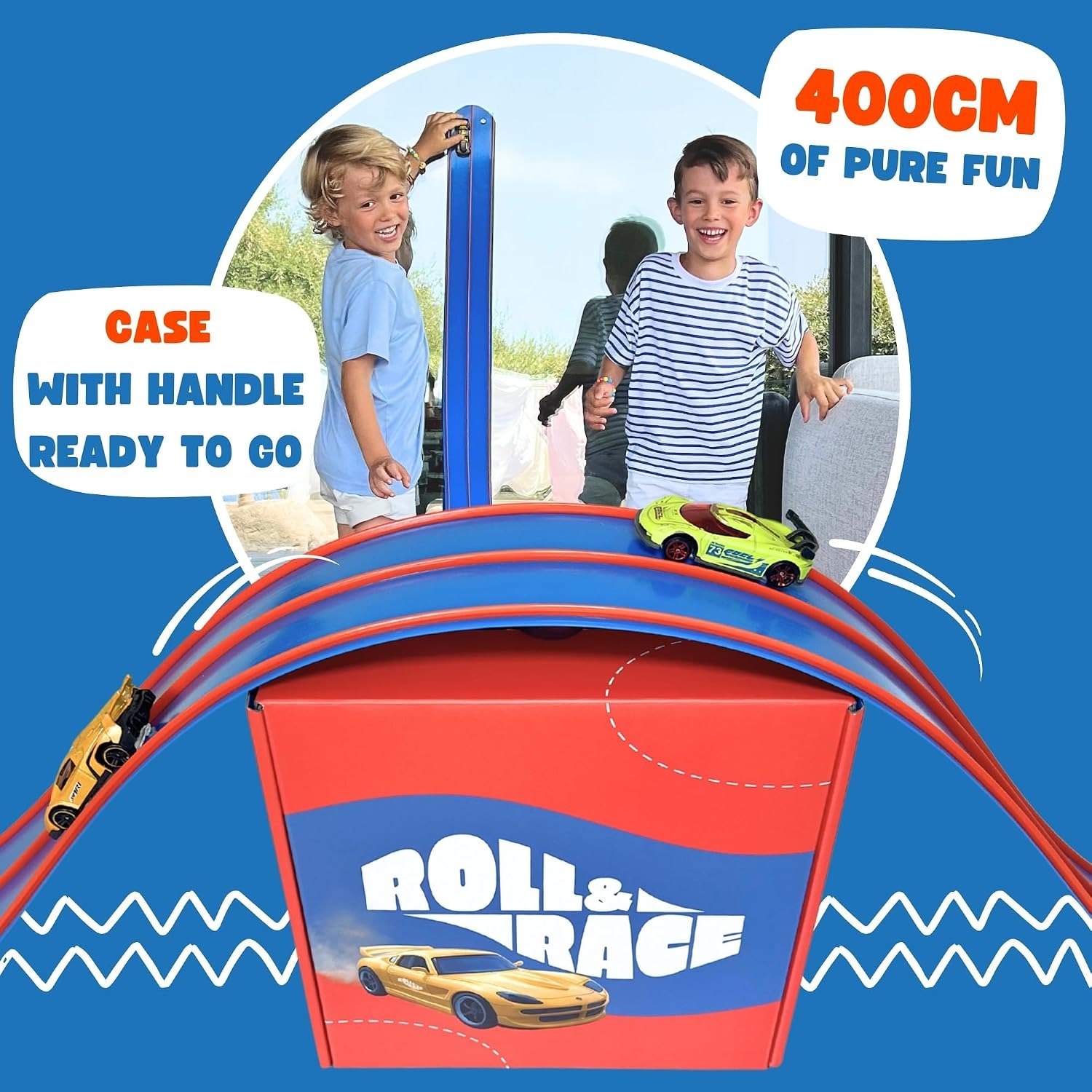
Think of it as a ribbon with raised edges. The 400 cm length unrolls in one motion, and the lip on each side keeps a 1:64 car on the running surface rather than skidding off at the first bend.
Height creates the energy. Rest one end on a chair, a bottom stair or a cushion, and a car released at the top will run the full length and keep going across the floor. Raise it higher and the car goes faster. Children work this out in about four attempts, then start asking for the sofa.
Bends are where the thinking starts. A gentle curve holds a car fine. A tight one at high speed throws it over the edge. That instant feedback is more useful than any instruction leaflet, because they can adjust the shape and test the result straight away.
The included Link&Race part exists for the trickier shapes. Its job is to hold the end of the track so it cannot lift when a car hits it, to help form a loop, and to join this track to other tracks or launchers you may already own. The suction cups do a similar job on smooth surfaces, pinning a section of track down on tile, glass or sealed wood so it stays put.
There are no batteries anywhere in this set. The power source is listed as manual, and that is worth more than it sounds. No charging, no dead cells on a birthday morning, no mystery beeping from the toy box at eleven at night.
Who it suits
The recommended age is 36 months to 10 years, which is a wide band, and the play looks different at each end of it.
A three or four year old mostly wants a ramp. They will lay the track down a cushion, send a car, cheer, and do it again a hundred times. That is fine. Running the same slope repeatedly is how small children build hand-eye coordination and a feel for cause and effect.
Six to eight is where it gets interesting. This is the age where children start stacking books to change the gradient, measuring which car travels furthest, and arguing about whether a jump counts if the car lands on its roof. They will involve furniture you did not expect.
Older children, up to around ten, tend to treat it as an engineering problem. They want the loop to work. They want a jump with a landing. This is the group that benefits most from connecting a second track, since eight metres opens up layouts a single length cannot manage.
It also suits households that are short on space. Rolled up, the whole thing is 820 g and sits in its own handled case. It does not need a dedicated corner of a bedroom like a fixed plastic set does.
Choosing the right track for your home
A few practical things are worth thinking about before you buy any roll up car track.
Check the car scale. This one is built for 1:64 cars, the standard small die-cast size. Go and look at the cars your child already plays with. If they are the little metal ones about 7 cm long, you are set. Larger toy cars or ride-on scale vehicles will not sit properly between the walls of a track this width.
Think about your floors. Suction cups need a smooth surface to grip. If your home is mostly carpet, they will not do much, and you will anchor the track with books, a heavy toy or a willing adult instead. The track still works perfectly well on carpet, it just needs a different kind of hold.
Consider the run-out space. Four metres is longer than many hallways. You do not have to lay it straight, but it is worth knowing you will probably bend it around a corner or run it along a wall rather than setting up in the middle of a small room.
Decide whether it travels. If the main appeal is taking it places, the carry case matters more than the length. A rolled track in a bag goes in a car boot without thought. A boxed set of forty plastic pieces does not.
Look at battery count. For some families, a manual toy is a deliberate choice. Nothing in this set needs power, which also means nothing in it can break electronically.
Getting the most out of it
Start simple on day one. Lay it flat, send a few cars, let them see how far a car travels on a level run. Then raise one end and let them notice the difference. Building up like this gives them a reason to keep changing the layout rather than demanding the most dramatic setup immediately and then losing interest.
Use what is already in the room. Stairs are the best natural ramp in most houses. A stack of hardbacks gives you adjustable height. A sofa arm is a good launch point. A doorway makes a natural finish line because you can see exactly which car crosses first.
If a loop is the goal, expect to fail a few times. The car needs enough entry speed to carry through, which means a higher start, and the loop needs the Link&Race part holding its shape. Getting it right is half the fun, and that first successful loop is a genuinely memorable moment in a child's week.
For outdoor use, the maker describes the track as weather resistant. A dry patio or a set of garden steps works well. Brush off grit before you roll it up, because sand on the surface drags on the wheels and will annoy everyone the next time they play.
Looking after it
Care is simple. Wipe the track with a damp cloth when it gets dusty and dry it before storage. Keep solvents and scouring pads away from the running surface.
Always store it rolled rather than folded. The plastic relaxes back into shape when it is coiled, but a hard fold left in place for weeks can leave a mark that a car notices. The carry case is the easiest way to enforce this, because rolling is the only way it fits.
If the suction cups stop gripping, rinse them in warm water and let them dry. Most of the time it is dust, not wear.
Keep it out of extended direct sunlight and away from radiators. Heat is the usual enemy of flexible plastic, and avoiding it costs you nothing.
The short version
This is a 400 cm flexible plastic track in Extreme Blue, built for 1:64 cars, weighing 820 g, with a Link&Race part and suction cups included. There is nothing to assemble and nothing to charge. It rolls into a carry case with a handle and travels easily.
The reason it holds attention longer than a sectional set is that it never settles into one shape. Every setup is a new decision about slope, curve and landing, and children keep making those decisions because the results change every time.
If you have a child aged roughly three to ten with a box of small cars and no track worth using, this is an easy call. Cars sold separately, which is as it should be, because they almost certainly have favourites already.