
The complete guide
Choosing a Flexible Construction Race Track Set, A Parent's Buying Guide
The problem with most toy car tracks
You know the pattern. A box arrives, the track clicks together into one fixed shape, the car goes round it eleven times, and by Thursday the whole thing is under the sofa. The toy was never really a toy. It was a shape, and once the child had seen the shape, there was nothing left to find out.
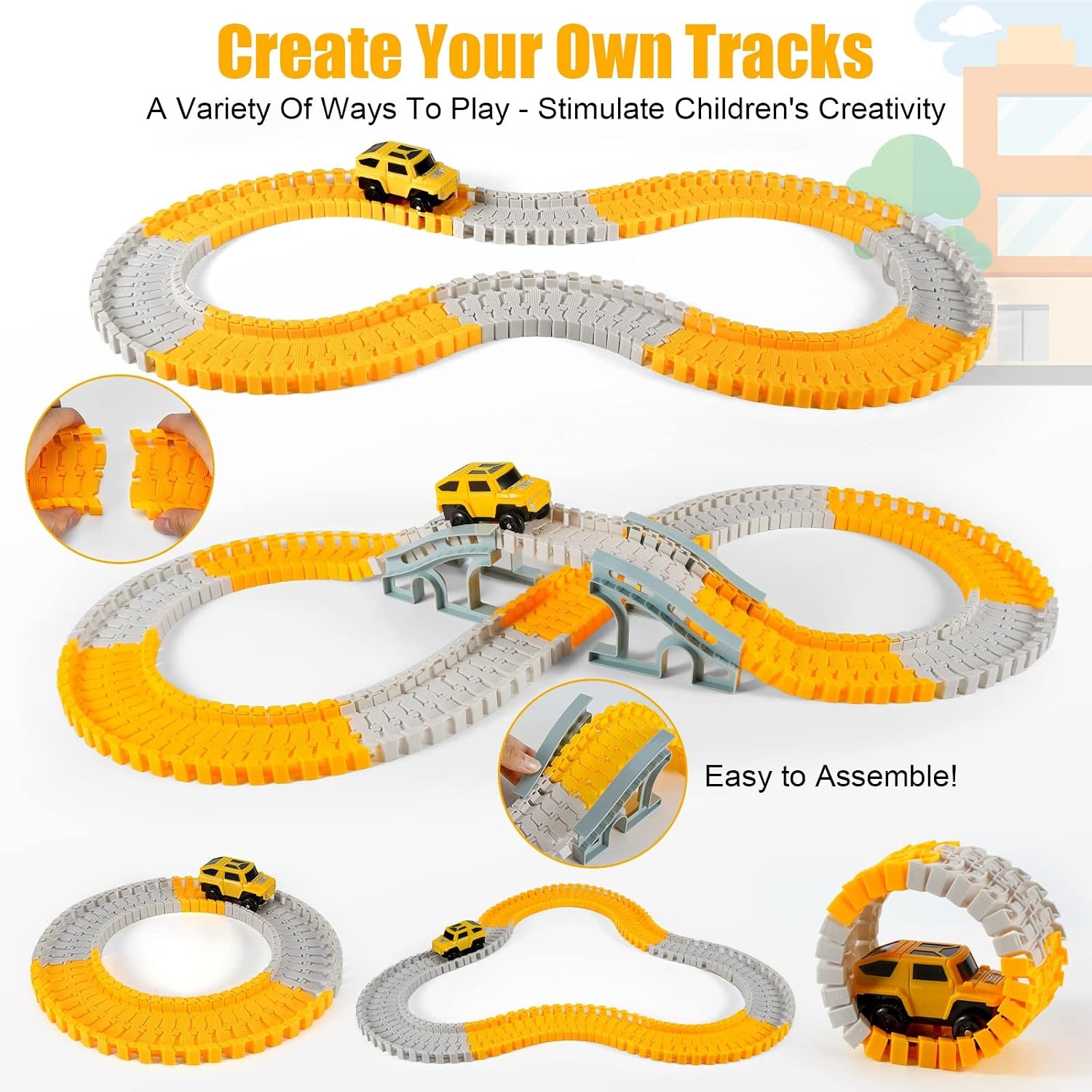
A flexible track set works differently because the building is the game. When 234 of the 260 pieces are track components that bend and lock, the child is not handed a finished road. They are handed the materials for one. That changes what happens on the floor. Instead of driving in a circle, a four year old spends twenty minutes deciding whether the road should go around the chair or under it, then another ten finding out that the bridge needs a flatter approach or the car stalls halfway up.
That trial-and-error loop is the thing parents are actually buying. It is also why these sets tend to survive longer than a sealed plastic circuit.
How a flexible construction track actually works
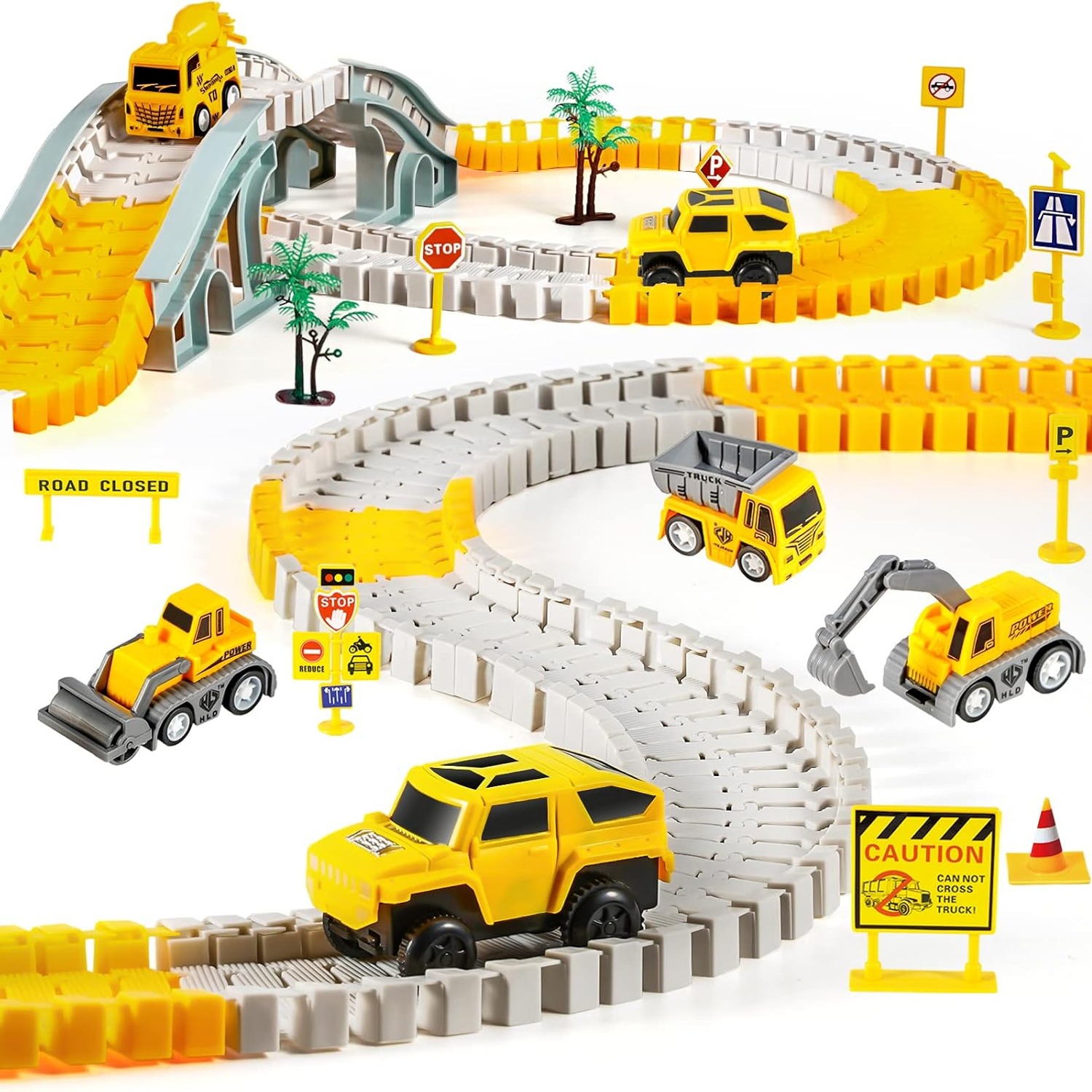
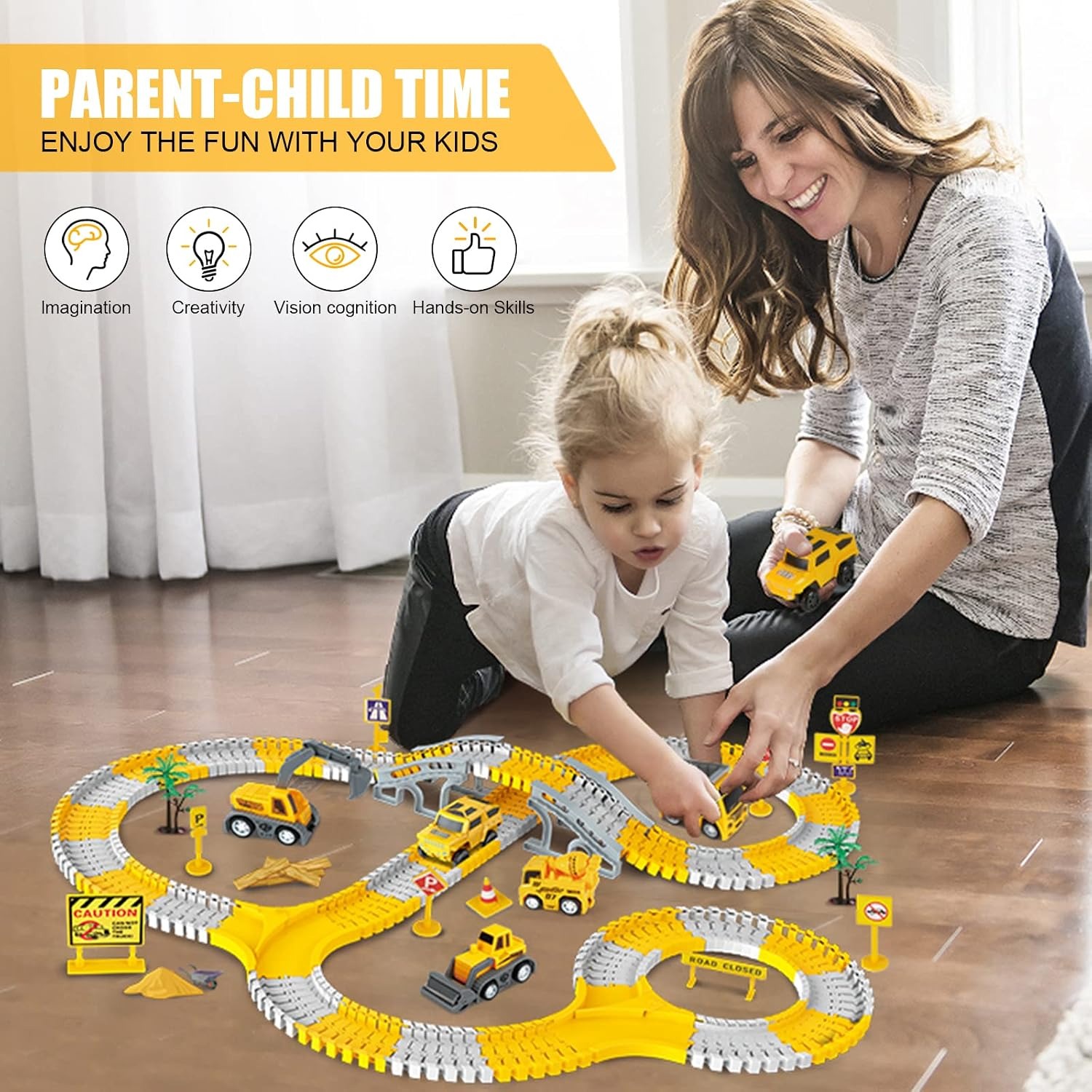
The track pieces interlock. Each one connects to the next at a joint that allows some bend, so a run of twenty pieces can curve gently or turn sharply depending on how it is laid. The rail gauge here is 4-5 cm, and the scale is described as HO, which is what the supplied cars and trucks are sized for.
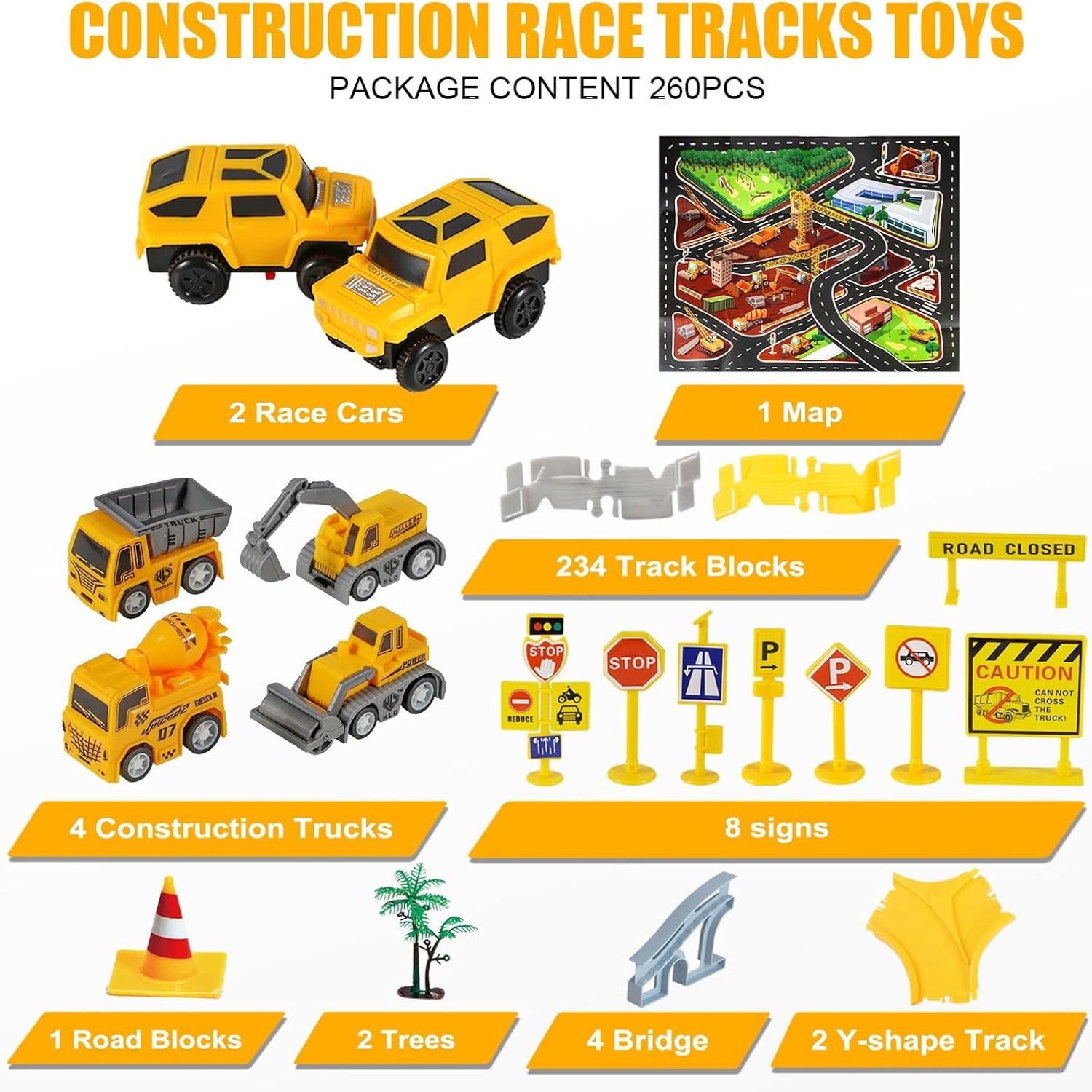
On top of the plain track, the set adds pieces that give a layout structure. Two Y-shaped tracks split the road into two routes, which is the single most requested feature by children who have more than one car. Four bridges let the road climb and cross. One road block and a handful of traffic signs add a reason to stop and a reason to go, which sounds minor until you watch a child start narrating a traffic jam.
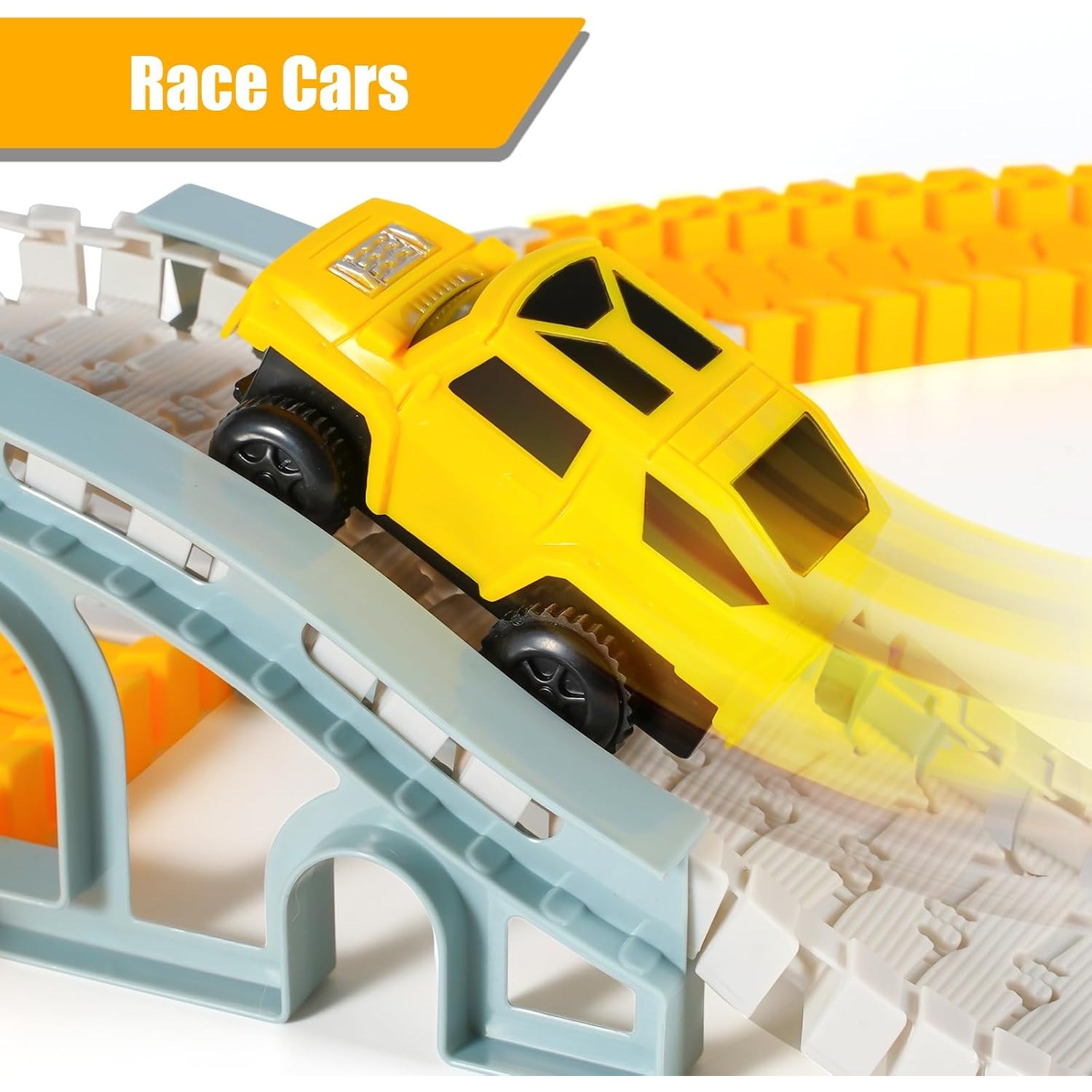
The vehicles complete the picture. Two racing cars handle the speed side of things. Four mini construction trucks, each with a movable working arm, handle the building side. A child who has just laid fresh track will often park a truck at the end of it and act out finishing the job. That is exactly the behaviour the set is designed to prompt.
Assembly is listed at around two hours for a full layout. Treat that as a feature, not a chore. It is a Saturday morning activity, not a barrier.
Who this set suits
The manufacturer recommends 36 months to 5 years. That range is honest, and it is worth paying attention to.
At three, a child will build short straight runs and need help with joints and bridges. The play is mostly about pushing a car along a road they helped make, which is plenty. At four, they start planning. Routes get longer, the Y-junction gets used on purpose, and the trucks begin to have jobs. At five, you often get full layouts designed without adult input, complete with rules about which car is allowed on which branch.
Below three, this is not the right toy. The set carries a choking hazard warning for small parts and the minimum age is 36 months for good reason. If there is a younger sibling in the house, think about where the set lives and when it comes out.
It suits children who like diggers and trucks as much as children who like racing, because it covers both. If your child has only ever shown interest in speed, the construction trucks may sit in the box for a while. If they are the type who lines up vehicles and gives each one a task, this is a strong match and arguably one of the best construction truck toy set options at this price.
What to look at when comparing sets
Piece count versus useful pieces. A big number on the box is only meaningful if the pieces do something. Here, 234 of the 260 are track, which is the right ratio. Sets that pad their count with dozens of identical tiny signs look impressive and build short roads.
Does the track bend? This is the dividing line. Rigid track limits you to the shapes the manufacturer imagined. Bendy, interlocking track lets a child route around real furniture in a real room, which is far more satisfying.
Vehicle count and type. Six vehicles across two categories means a child can play alone or with a friend without negotiating. The movable arms on the trucks matter more than you would think, because they turn a rolling object into a character with a job.
Power and control. The vehicles here are battery powered, and the specification lists 2 AAA, 2 AA and 2 lithium-ion batteries. No remote is included and control is manual, which keeps the play hands-on. Buy a spare pack of batteries at the same time. Nothing dampens a gift morning like a flat cell.
Size and storage. Packed, the box is 10 x 6 x 30 cm and weighs 0.82 kg. That is small enough to put in a cupboard and light enough to take to a grandparent's house. A set this portable is genuinely usable, which is not true of every track toy.
Setting it up well the first time
Clear a real area before you open the box. A rug or a smooth floor both work, though very deep pile carpet can make the joints sit unevenly.
Start with a simple shape. A long oval or a figure of eight teaches a child how the joints work without frustration. Once they can connect pieces confidently, introduce a bridge, then a Y-junction. Adding complexity in stages keeps the first session a success rather than a collapsed mess.
Leave the signs and trees until the road is finished. Scenery is the reward and it is the part children personalise, so saving it gives the build a clear ending.
Keep all the pieces in one container from day one. The single biggest reason track sets stop being played with is that the pieces end up in four rooms. A shallow tub with a lid, kept somewhere a child can reach, solves most of it.
Care and keeping it going
Plastic track asks very little. Wipe it with a slightly damp cloth when it gets grubby and dry it before storing. Skip the dishwasher and the washing machine entirely, since heat and tumbling will warp or crack the joints. Keep the set out of direct sun and away from radiators for the same reason.
If the set is going into storage for a season, take the batteries out of the vehicles. Leaking cells ruin toys that would otherwise have lasted years.
Every few months, do a quick count of the scenery pieces and the vehicles. Track is forgiving, losing one piece from 234 changes nothing, but losing a truck is noticeable. A five minute sweep under the furniture usually finds them.
The short version
This is a 260 piece flexible track playset built around 234 bendy, interlocking track components, with four bridges, two Y-junctions, scenery pieces, two racing cars and four mini construction trucks with movable arms. It is plastic, multicoloured, weighs 0.82 kg packed, and is recommended for ages 36 months to 5 years. Assembly takes around two hours for a full layout, and the vehicles need batteries, which are specified as 2 AAA, 2 AA and 2 lithium-ion.
Buy it if you want a toy where the child does the designing, not just the driving. Skip it if your child is under three, or if you are after something that works straight from the box with no building. For the right age and the right kind of kid, it is one of the best flexible car track for kids sets you can put on the floor, and it keeps earning its place because it is never the same road twice.