


The complete guide
Choosing And Flying A Butterfly Kite, A Practical Buyer's Guide
The problem with most kites
Most people's memory of kite flying is a bit disappointing. Someone buys a cheap kite on the way to the beach, it goes up for about four seconds, then it nosedives into the sand and a rod snaps. Everyone agrees it was fun and goes to get chips.
That failure is almost never the wind's fault. It is the kite. Thin plastic sails do not hold shape, rigid plastic spars snap on the first hard landing, and a kite with no tail will roll and dive the moment the breeze shifts. The result is a toy that only works on a perfect day, and perfect days are rare.
A kite built the way this one is built changes the odds. Polyester instead of film, fibreglass instead of brittle plastic, and a long tail that does the stabilising work for you. None of that is exotic. It is just the difference between a kite designed to be sold and a kite designed to be flown.
How a kite actually stays up
Worth understanding, because it makes everything else easier.
A kite flies for the same reason a wing does. Air hits the angled sail, gets deflected down, and the sail gets pushed up and back. The line stops it being pushed away, so the force turns into lift. The kite settles at the point where lift, drag and line tension balance out.
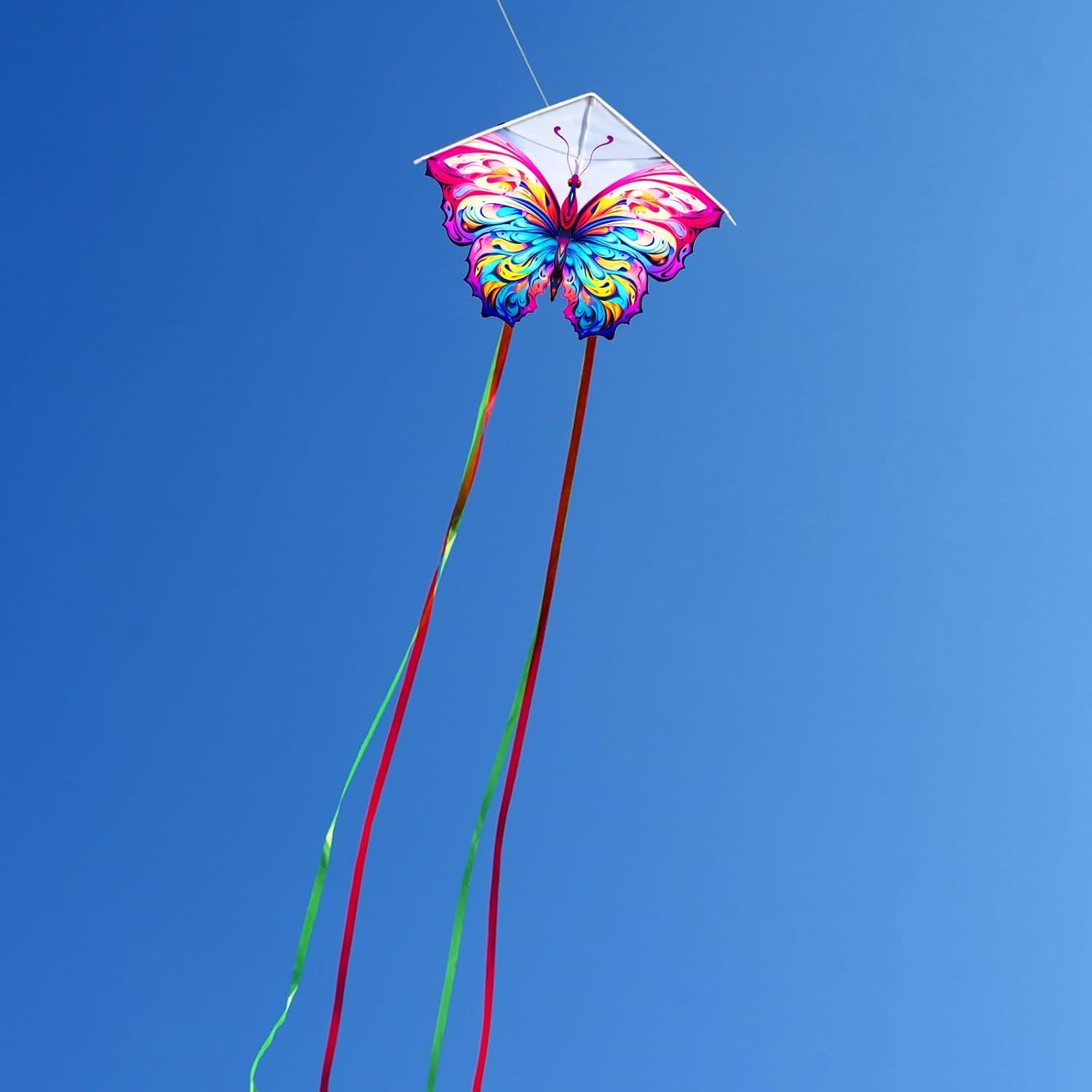
The tail is the part people underestimate. Without one, a kite is unstable in the same way a dart without flights is unstable. It wants to tumble. Hang 100 inches of tail off the back and you add drag behind the centre of the kite, which keeps the nose pointed into the wind. That is why a tailed kite feels calm in the air while an untailed one of the same size feels twitchy.
Sail weight matters for the other end of the scale. A heavy sail needs strong wind to get going. A light polyester sail lifts in the sort of breeze that barely moves your hair, which means more usable days per year. If you are looking for the best kite for light wind, weight is the first thing to check.
Who this set suits
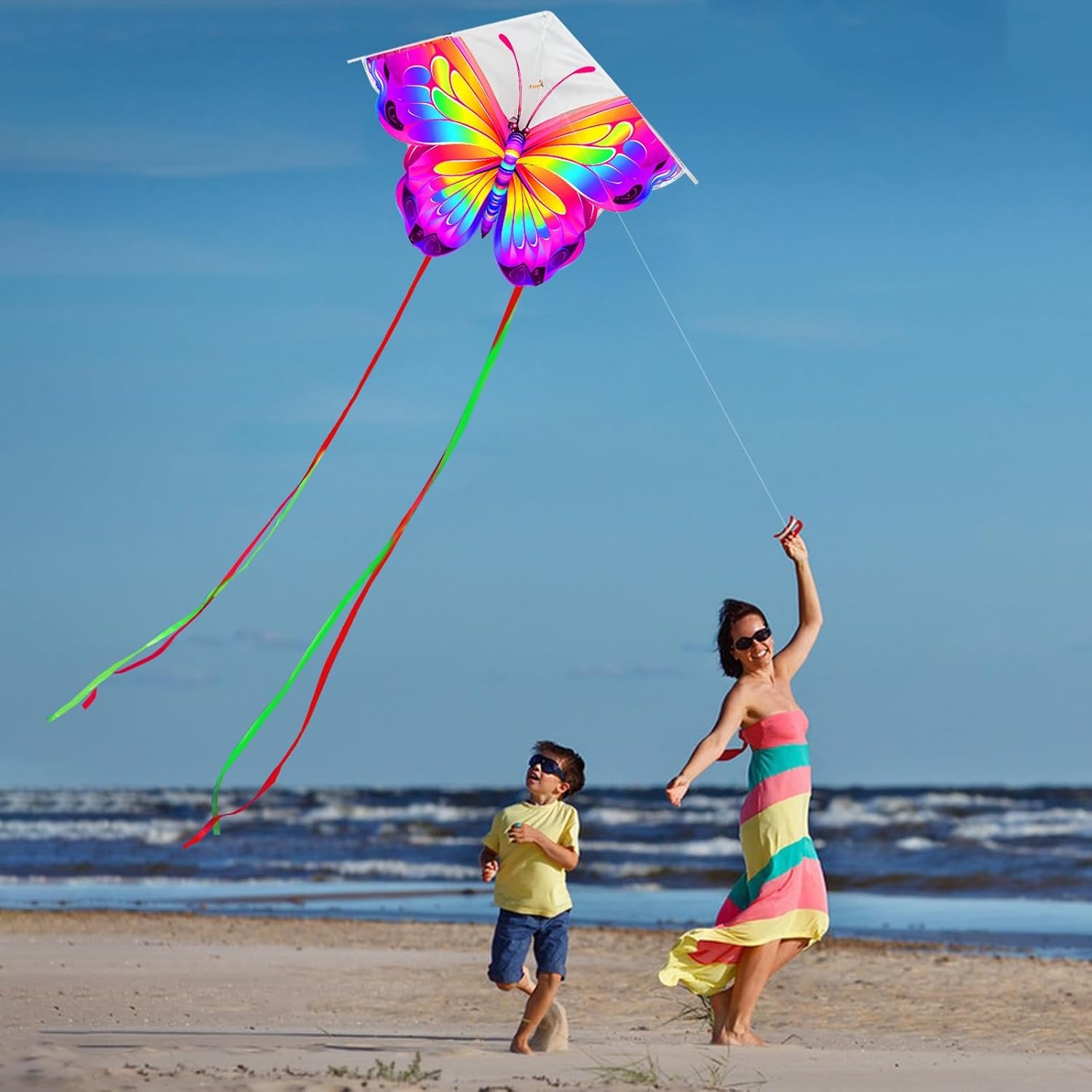
Families, mainly. The two pack exists because one kite and two children is a maths problem nobody wants to solve on a cold beach. Two handles, two lines, two kites in the sky, and the afternoon stays peaceful.
It also suits adult beginners. There is no technique to learn here beyond facing the right way and letting line out slowly. Single-line kites like this one do not do tricks, which sounds like a limitation until you realise that nobody wants to learn tricks on their first outing. You want it to go up and stay up.
Campers and travellers do well with it too. The whole set packs into a bag roughly 17 inches long and an inch and a half thick. It lives in a car boot or a backpack without anyone noticing it is there, which is the single biggest factor in whether a kite ever gets used.
Where it is less suitable is competition flying or stunt work. A small single-line butterfly kite is a relaxed, watch-it-sit-in-the-sky kind of kite. If you want to carve figures of eight at speed, you need a dual-line delta instead.
What to look for when you choose
Four things decide whether a kite is any good.
The sail material comes first. Polyester or ripstop nylon will outlast anything made from plastic sheeting, and they handle damp without going limp. This one uses tear-resistant polyester, which means a scrape over grass or gravel is unlikely to open into a tear.
The frame comes second. Fibreglass rod is the sensible middle ground. It is light, it bends under impact and springs back, and it does not shatter like brittle plastic. Carbon is lighter again but costs more and is less forgiving of being stood on. For a family kite, fibreglass is the right call.
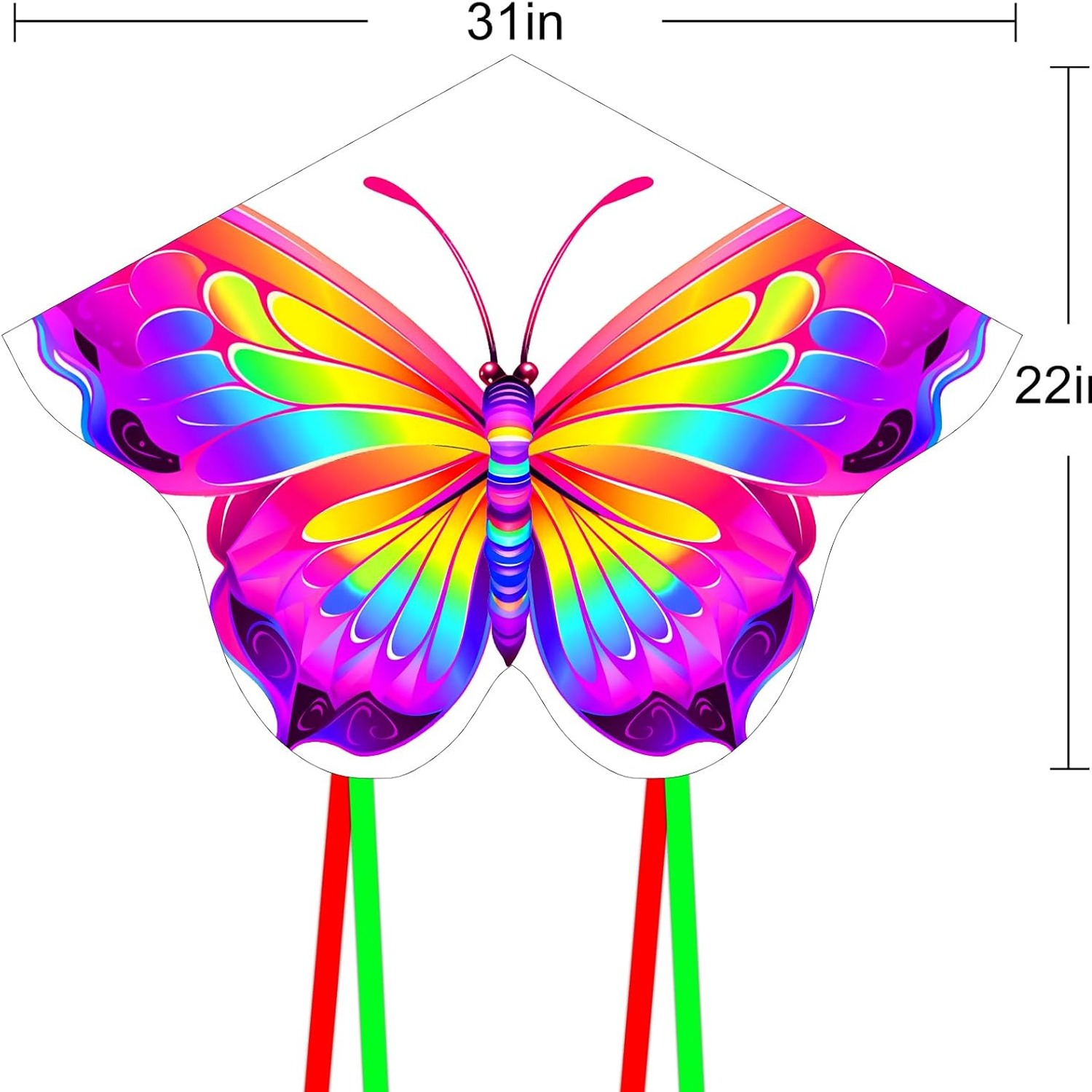
Third is the tail. Look at the length relative to the kite. A 31 inch kite with a 100 inch tail is well proportioned, and that ratio is a decent rule of thumb when comparing any beginner kite.
Fourth is the line and handle. Thirty metres is a sensible length for a park or beach. Long enough that the kite looks high, short enough that you can bring it down quickly when the wind turns or a dog decides to investigate. A proper handle beats a loose spool every time, because you can wind in with one hand while keeping tension with the other.
Getting it in the air
Check the wind first. Face into it so it is blowing straight at you, then look behind you and make sure there is clear ground. Trees, buildings and fences upwind create turbulence that will drop a kite out of the sky for no obvious reason, which is the usual explanation when a kite "won't fly" on a windy day.
Unroll the tail and make sure it hangs free. Twisted tails cause most beginner spins.
Hold the kite up by its spine with maybe five or six metres of line out, let it go, and give the line a few firm tugs as it climbs. As it lifts, feed line out in short releases rather than one long run. If it starts to dip, pull in a little to add tension. If it is straining hard and climbing fast, let more out.
Bringing it down is simply the reverse. Wind in steadily and walk towards it if the pull is strong. Try not to let the line go slack and pile up on the ground, because that is how tangles start.
Looking after it
Kite care is mostly about drying and tidy winding.
Let the sail dry in shade before it goes in the bag. Sun fades colour over time and heat is hard on any fabric, so shade is better than a windowsill. Shake sand out of the rod sleeves after a beach day, because grit wears at the fabric from inside.
Wind the line back on evenly, moving side to side across the handle rather than piling it in one spot. Thirty metres of string takes about a minute to wind properly and considerably longer to untangle if you rush it.
Store the kites rolled loosely rather than folded along the same crease each time. Repeated hard folds in one line are where fabric eventually gives up.
If a rod ever works loose, slide it back into its sleeve and check the end cap. Most kite failures are small and fixable, which is one of the quiet pleasures of a well-built kite.
The short version
Two butterfly kites, each 31 inches by 22 inches, built from tear-resistant polyester on fibreglass rods, each with a 100 inch tail and a handle holding 30 metres of line. The whole set packs into one bag small enough to keep in the car.
It takes under a minute to assemble, it lifts in a modest breeze, and the long tails keep it steady rather than spinning. Two kites means two flyers, which is usually the difference between a nice afternoon and a negotiation.
If you want a straightforward outdoor toy that works on ordinary days and survives ordinary landings, this is a sensible place to start.