
The complete guide
Pipe Building Sets, A Parent's Buying Guide
The toy problem this solves
Most toy cupboards have the same issue. There is a shelf of things that did one trick, got figured out in a week, and then sat there. The battery toy that sang a song. The puzzle with exactly one correct answer. The playset that only works as the scene it was designed to be.
Open-ended building toys are the usual fix, and they mostly work. The catch is that classic bricks build solid things that sit still. A child stacks a wall, admires it, and then wants it to do something. That is where a pipe building set earns its place. Tubes make frames, arms, axles and loops. Add wheels and the build moves. Add a joint that turns and the build does something the child did not plan on when they started.
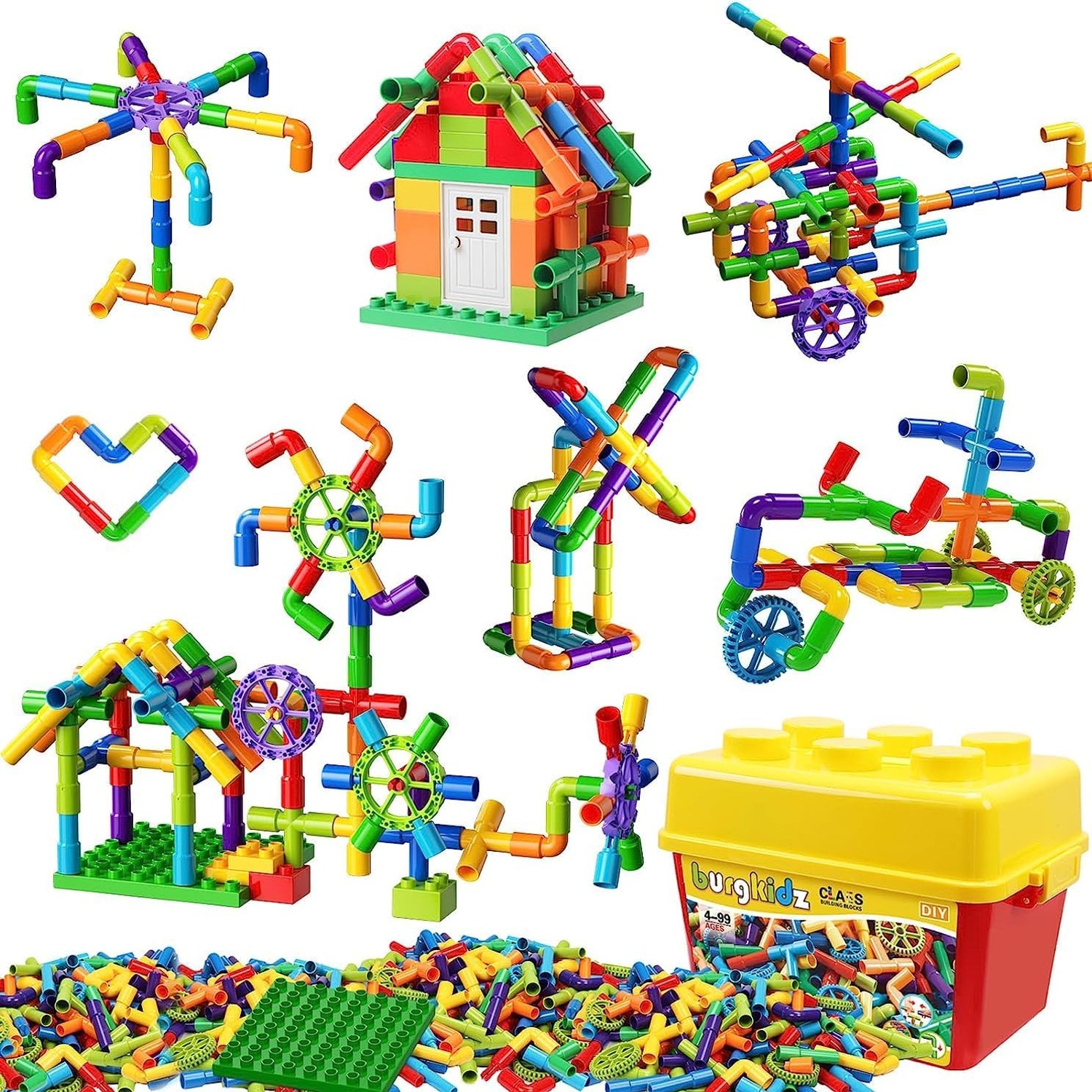
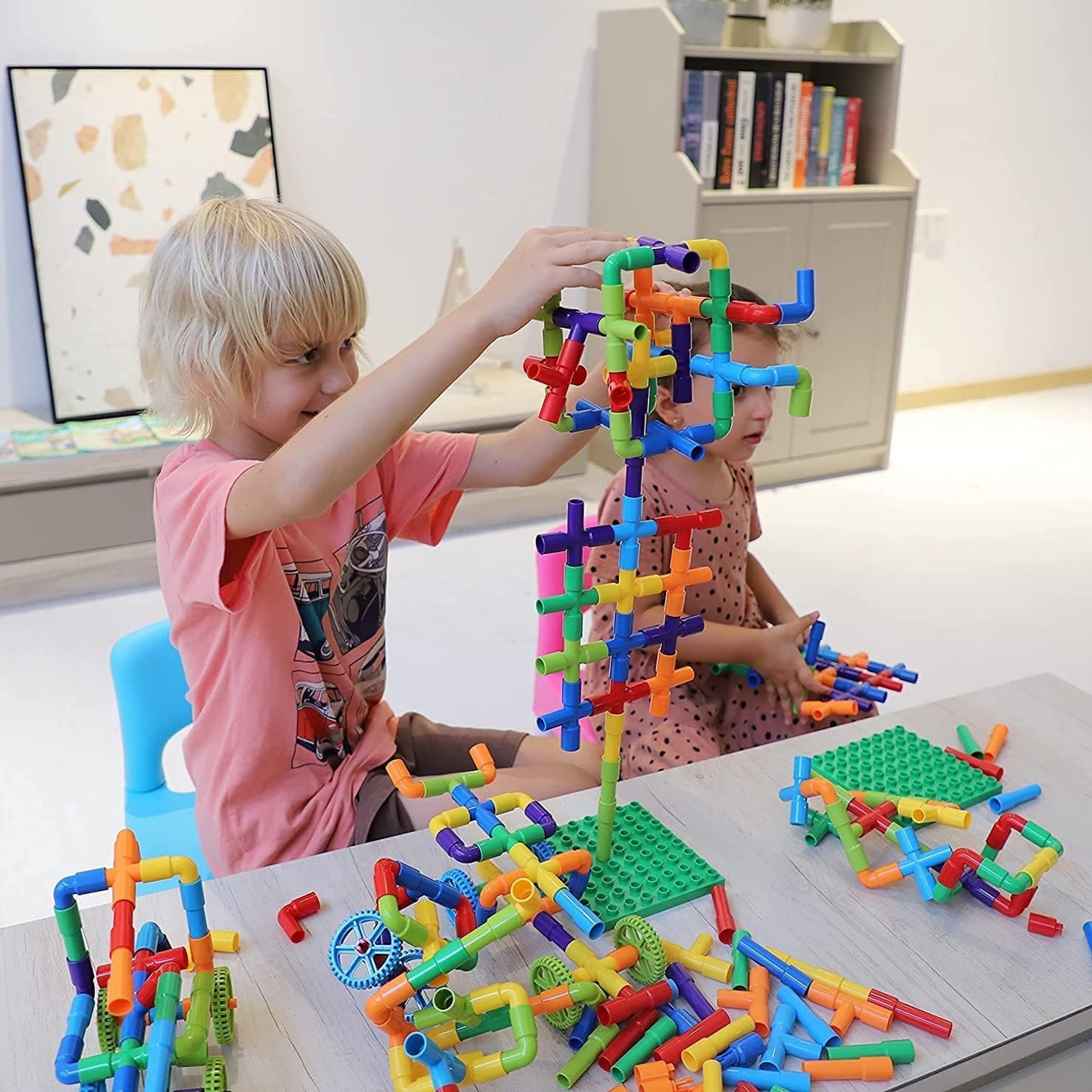
This 188 piece set is built around that idea. Eight styles of connecting tube, base plates, and 24 wheels split between 12 car wheels and 12 wind wheels. The connectors lock together and still rotate a full 360 degrees.
How the pieces work together
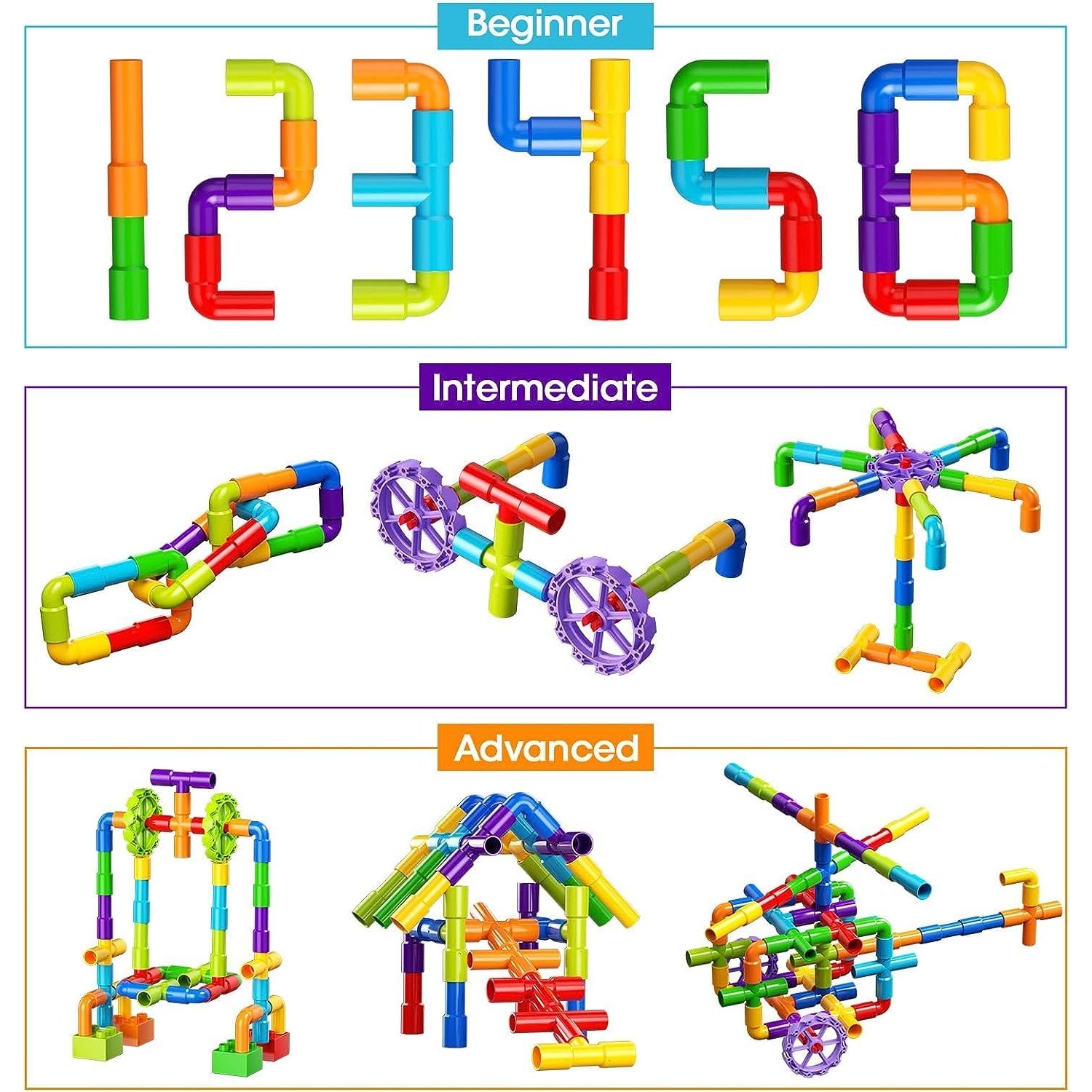
The tubes are the body of the build. Straight sections add length. Elbows turn a corner. T-pieces split a run in two directions, which is how a single tower becomes a tree, a robot, or a machine with arms. The mix of eight tube types is what stops the builds from all looking the same.
The connectors do the real work. Each one grips the next piece firmly enough that a finished model can be lifted off the carpet and carried across the room without shedding parts. At the same time, the joint turns through a full circle. A child can build a car and then turn the front section to steer. They can build a crane and swing the arm. That combination of hold and movement is the difference between a model and a toy.
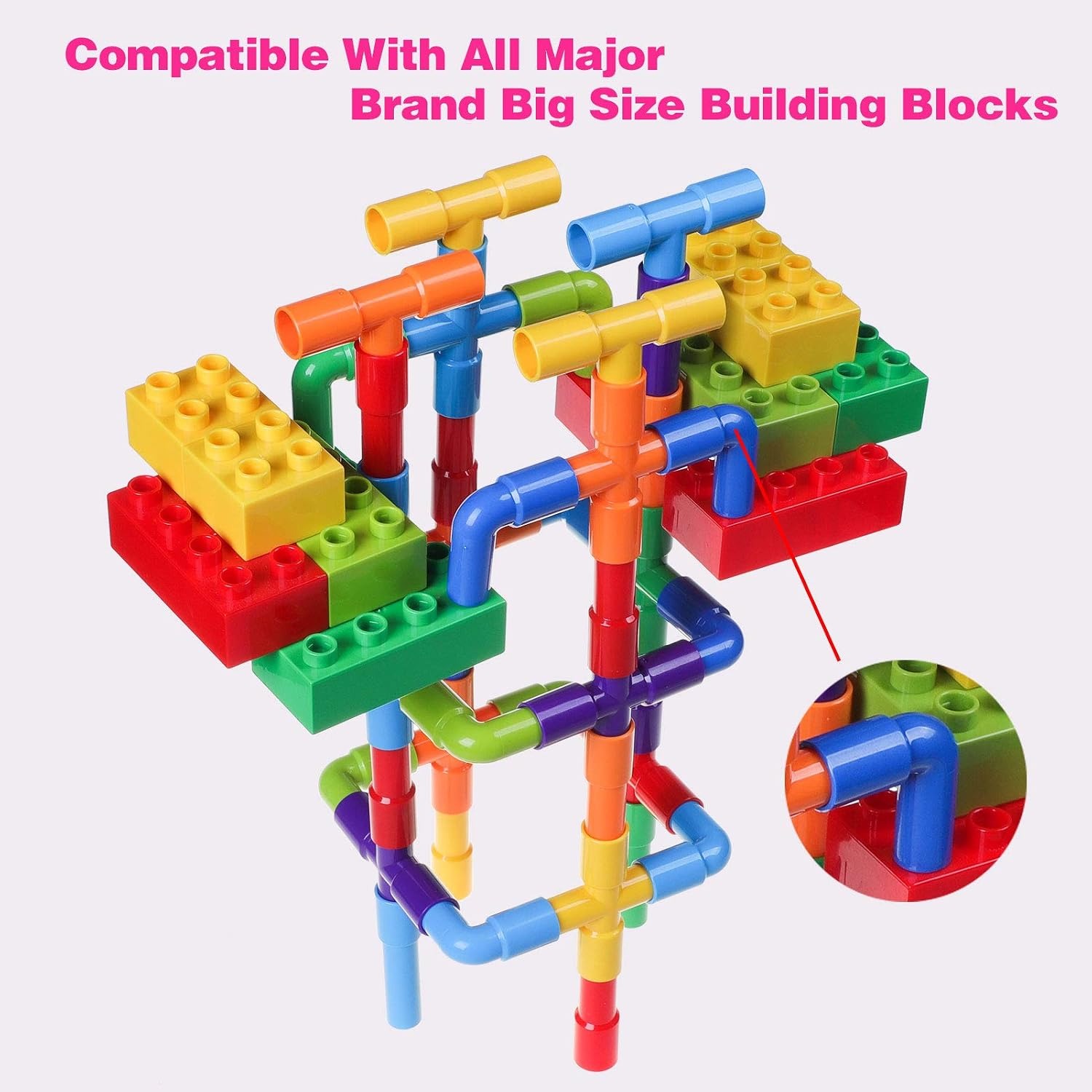
Base plates give the whole thing a floor. The plates use an 8 by 8 stud layout, which is also how they connect to classic large building blocks and other compatible base plates. If there is already a box of large bricks in the house, these pipes become an add-on rather than a separate collection. A brick house gets a pipe chimney, a pipe fence, a pipe car in the driveway.
The wheels are where young children light up. Car wheels roll, so a flat tube chassis becomes something that races down the hallway. Wind wheels spin in place, so a tower becomes a windmill and a frame becomes a fan. Twelve of each means several moving builds can exist at the same time rather than one child hogging the only set of wheels.
Who it suits
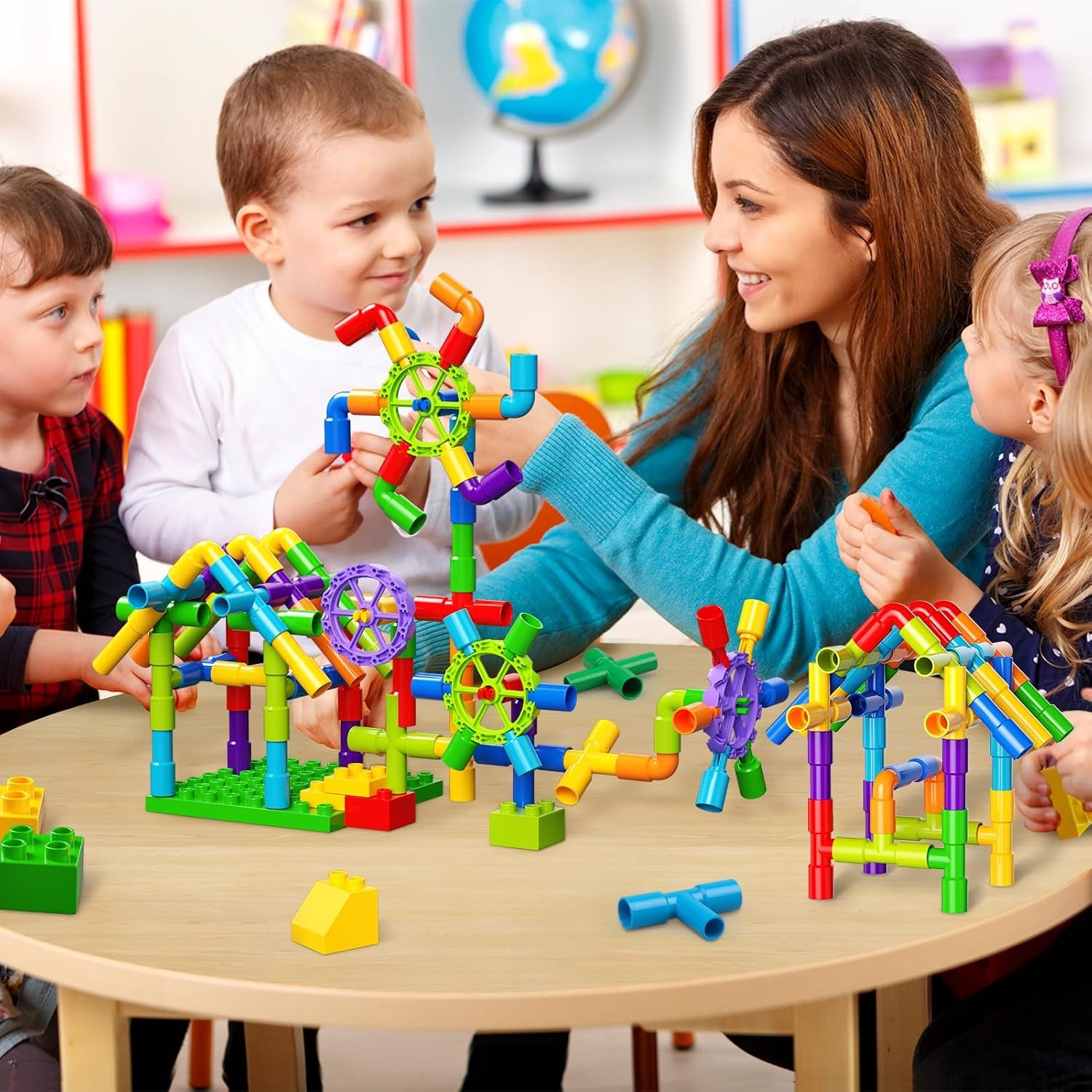
The manufacturer recommends ages 36 months to 5 years, and the target audience is listed as preschoolers. That is the sweet spot. A three year old can push two pieces together and get a result immediately, which is the thing that hooks them. A five year old has the planning ability to build a specific thing and work out why the first attempt fell over.
Older children do keep using sets like this, usually because they combine it with bricks and build bigger. But if you are shopping for a seven or eight year old who already handles detailed kits, this may feel simple on its own.
It is a reasonable pick for children who find small bricks frustrating. The pieces are sized for small hands and are designed to be easy to assemble and take apart, with no sharp edges or burrs. A child who gives up on fiddly components will often stick with chunky tubes.
Two or three children can play together without arguing over parts, since 188 pieces goes a long way. Siblings with a couple of years between them tend to do well here, because the younger one can push pieces together while the older one plans the structure.
How to choose a pipe building set
A few things actually matter when comparing sets.
Piece count is the obvious one, but look at what makes up the count. A set that reaches its number with 150 identical straight tubes will bore a child quickly. Variety of connector types is more useful than raw volume. Eight tube styles plus plates and wheels is a good spread for this size.
Joint quality is the second thing. If the connectors are loose, builds collapse and the child gets annoyed. If they are too tight, an adult ends up doing the assembly. You want a firm click that a small hand can manage, which is the standard this set is built to.
Movement is worth paying for. Wheels and rotating joints are what separate a construction toy from a shape puzzle. Anyone shopping for the best construction toy with wheels is really shopping for the moment the model rolls or spins for the first time.
Compatibility stretches the value. A set that connects to blocks you already own doubles its useful life, because the child can keep combining collections as they grow.
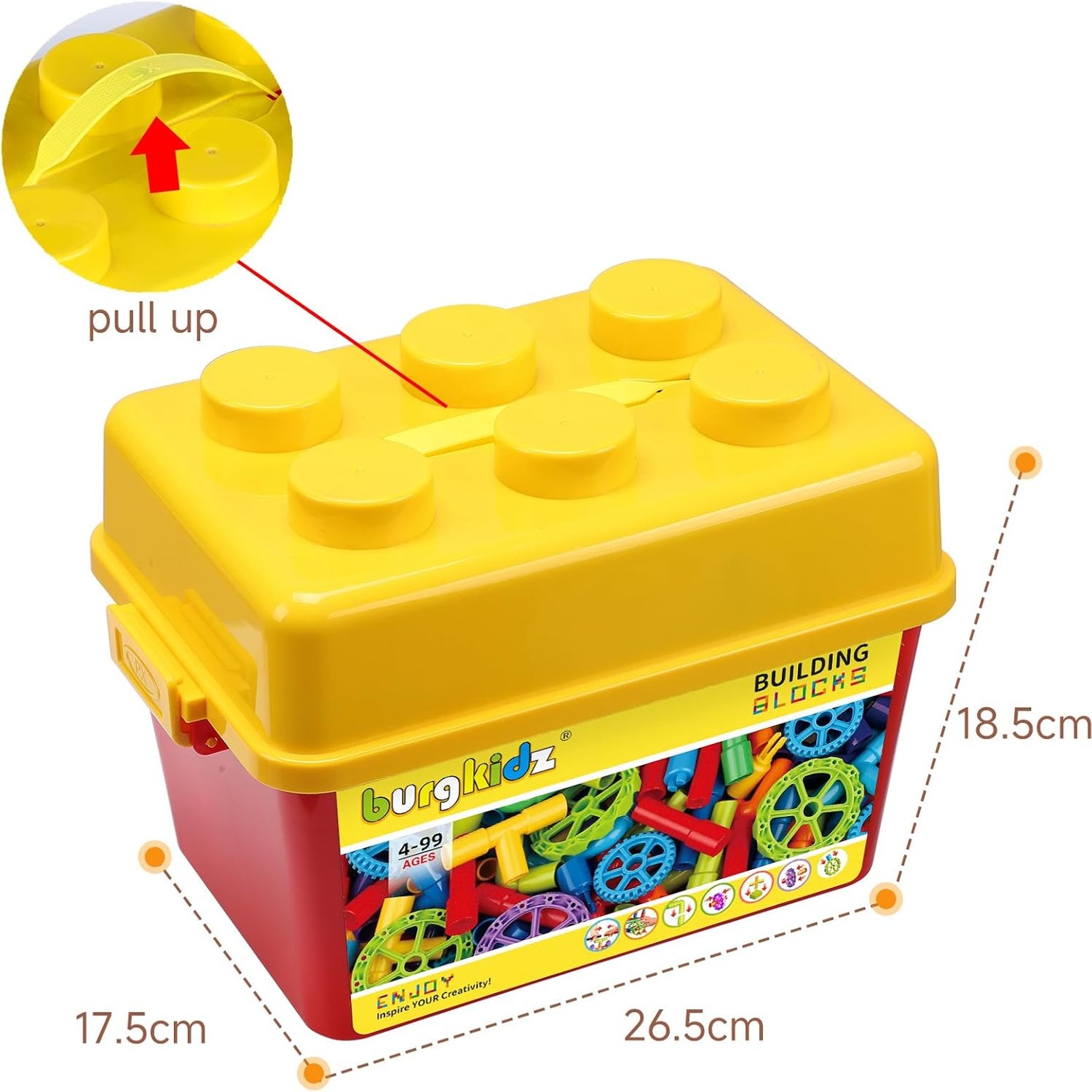
Storage sounds boring and turns out to be the thing you appreciate most. A hinged box with a carry handle means tidy up is thirty seconds, not a treasure hunt. It also means the set can travel. A box that fits in a suitcase is the difference between the best travel building toy and a bag of loose parts rolling around the car.
Keeping it in good shape
Plastic building pieces are low maintenance, but a little care keeps them looking right.
Wipe pieces with a damp cloth and mild soap when they get grubby, and let them dry fully before putting the lid on. Skip the dishwasher and the washing machine, and keep them away from radiators and direct sun, since heat can warp plastic over time.
Every few months, tip the box out and have a quick look through. Pull out anything cracked or chipped, because a broken edge is the one real hazard with a toy like this. With 188 pieces, removing a couple will not affect play at all.
The best habit is simply using the box every time. Make the sweep-up part of the game, maybe a race to see who can fill the lid fastest. Sets that live in their own container survive for years. Sets that live under the sofa do not.
Setting it up for success
A new building toy sometimes lands with a thud because a child does not know where to start. A couple of minutes of adult input fixes that.
Sit down and build one thing together. A simple car with four wheels is ideal, because it moves and gives an instant payoff. Then take it apart and let them rebuild it their way. Once a child understands that any two pieces can join, they stop asking what to make.
Giving loose challenges works well too. Build something taller than the box. Build something with four wheels and an arm. Build a letter from your name. Open prompts like these keep a creative building toy in rotation far longer than a step by step instruction sheet would.
Clearing a defined play area also helps. A rug or a low table gives the build a home and keeps pieces from scattering across three rooms.
The short version
This is a 188 piece plastic pipe set aimed at children from three to five, with eight kinds of connecting tube, base plates and 24 wheels, 12 for rolling and 12 for spinning. The connectors lock firmly and rotate 360 degrees, so the builds hold together and still move. There are no batteries, no assembly and no instructions to follow.
It suits a child who likes making things rather than following a plan, and it suits a household that already has large building blocks, since the plates connect to them. It stores in its own box with a handle, which makes both clean up and travel easy.
If you want a building toy that does something once it is built, this is a sensible buy at this age.