
The complete guide
Choosing Forest Animal Figures, A Practical Buyer's Guide
The problem with most animal toys
Walk down a toy aisle and you will see two extremes. There are the big plastic animals, chunky and bright, fine for a two year old but too clumsy for building a scene. Then there are the expensive collector models, beautifully made and sold one at a time, where filling a forest would cost a small fortune.
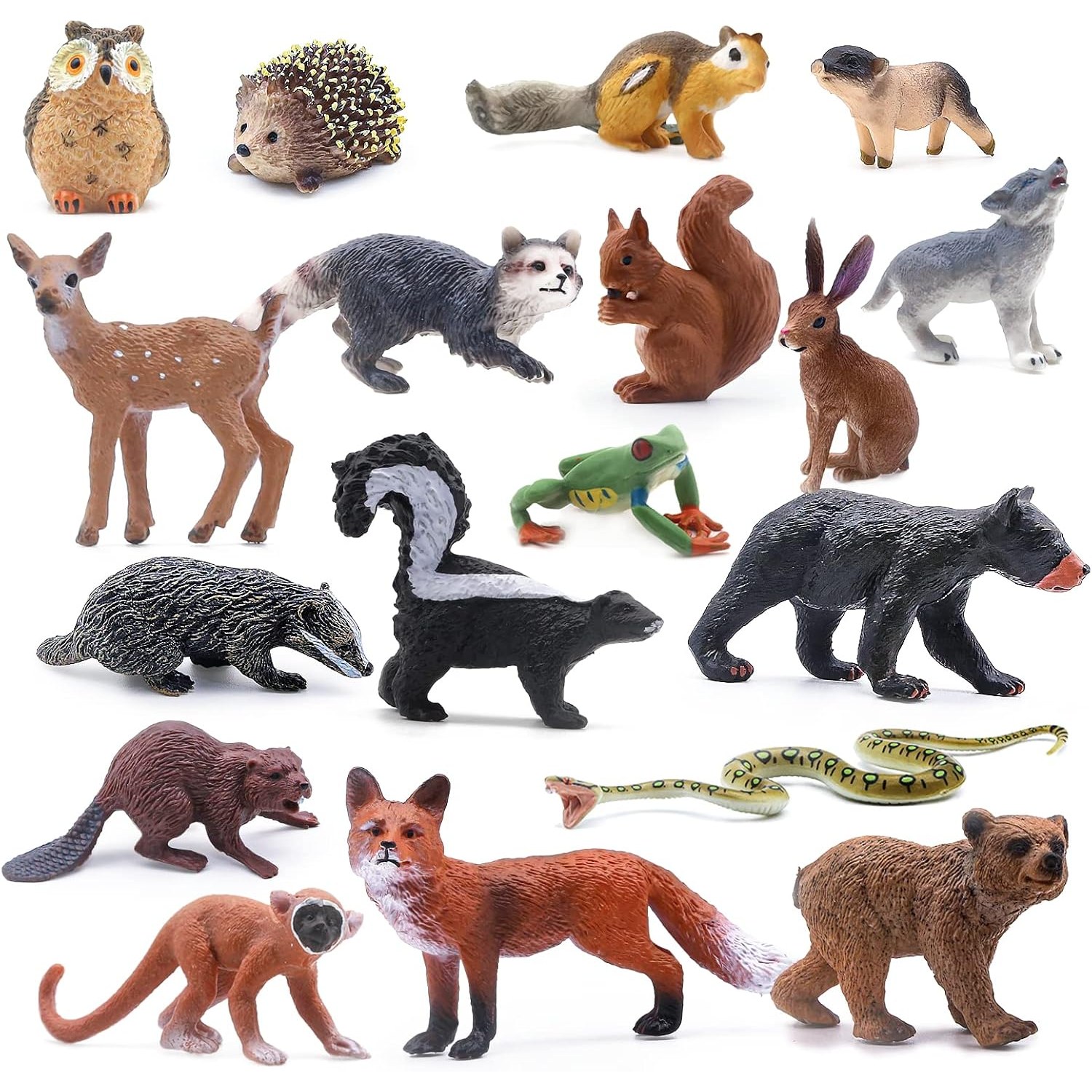
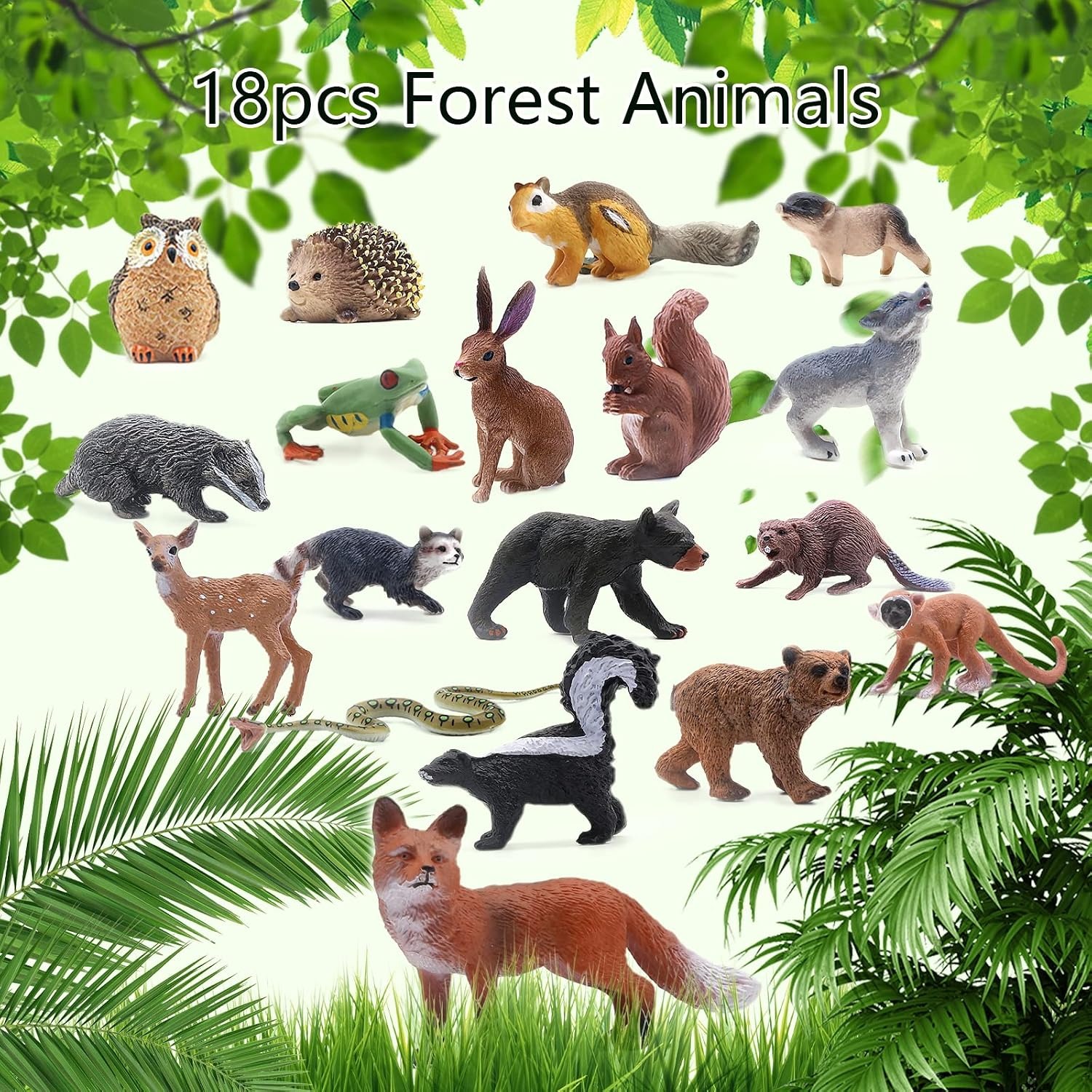
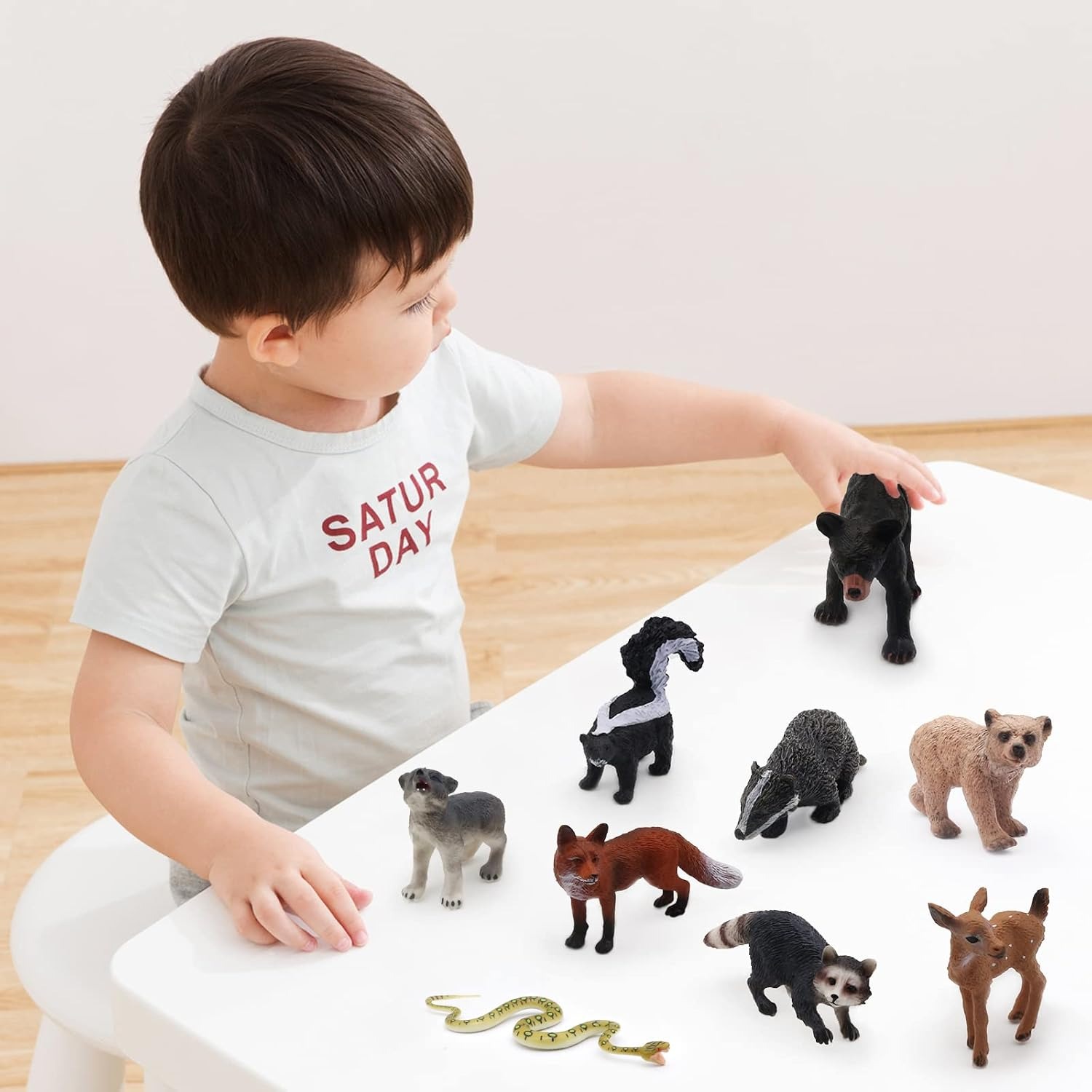
What most families actually want sits in the middle. A handful of animals, varied enough to tell a story, small enough to fit on a table or a shelf, and priced so that losing one under the sofa is annoying rather than heartbreaking. That is the gap a set like this fills. Eighteen different woodland creatures, all in one box, sized between roughly 1.1 and 2.8 inches.
The other problem is repetition. Plenty of bulk animal packs pad out the count with three identical rabbits and four of the same bear. Children notice. A set where every figure is different holds attention longer, because there is always one more creature to name.
How small-world play actually works
Small-world play is the name teachers give to what children have always done naturally. They build a tiny version of a place, populate it with characters, and run a story through it. A tray of soil becomes a forest floor. A folded towel becomes a hillside. A cereal bowl turned upside down becomes a burrow.
The figures are the cast. They do not need to do anything clever. In fact, the less a toy does, the more a child has to do, and that is where the thinking happens. A figure with a fixed pose and no buttons leaves all the movement and all the dialogue to the player.
What research on early learning keeps pointing to is the language side of this. Children playing with animal figures use more words, and more specific words, than children watching a screen. They learn names, they learn comparisons (bigger, faster, shyer), and they practise sequencing when the story has a beginning and an end. None of that needs an adult directing it, though joining in for ten minutes usually makes the story twice as long.
Sorting is the other obvious use. Line the 18 figures up and a child can group them by size, by colour, by whether they have fur, by whether they climb or dig. For a teacher looking for the best classroom animal toys that work across several subjects, a varied set does more work than a themed one.
What this particular set gives you
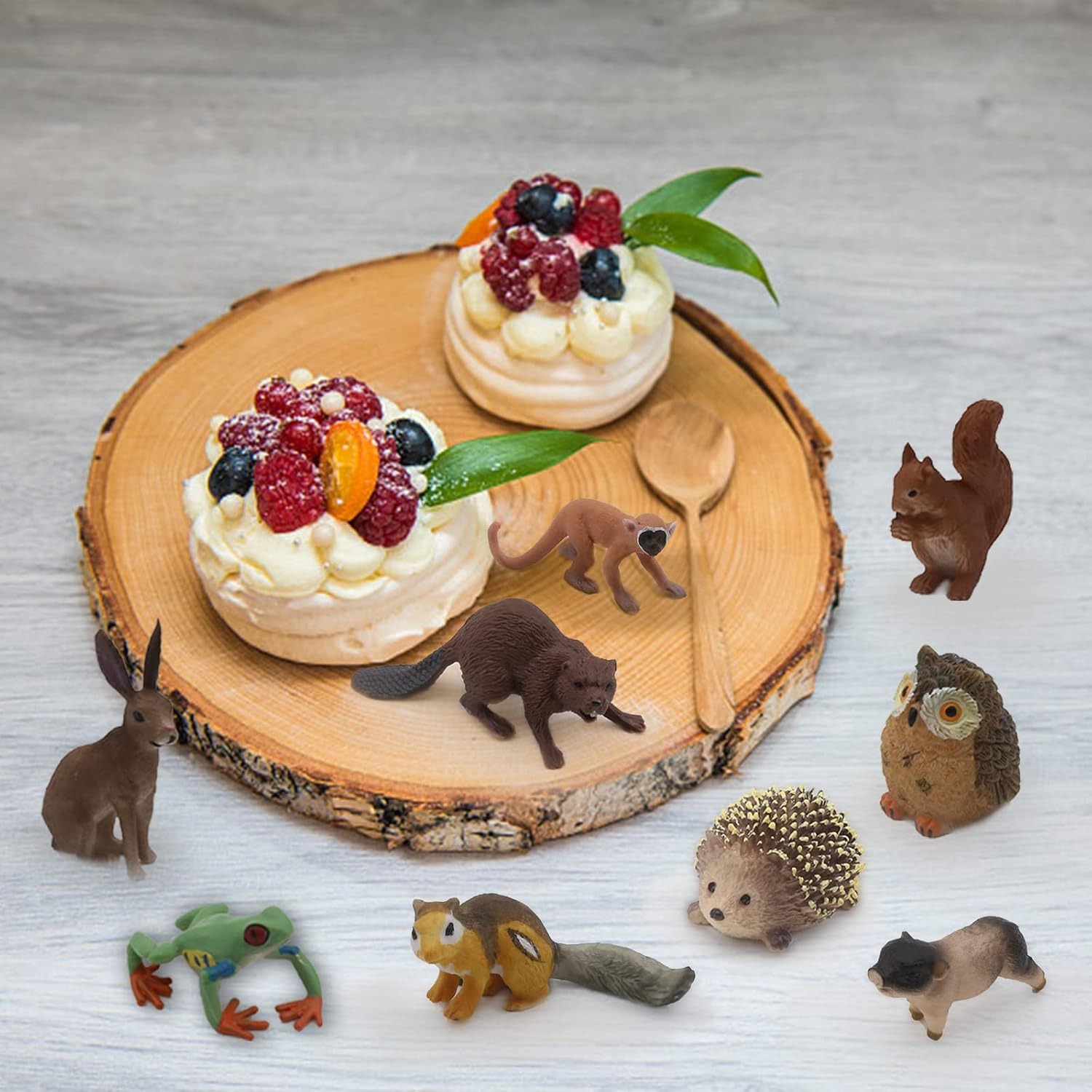
The material here is resin with a glossy finish. Resin takes moulded detail well, which is why it is a common choice for miniature figures. The gloss keeps colours looking saturated and makes the surface easy to wipe, which matters if the figures are going into sand, dough or a cake.
Sizes run from about 1.1 to 2.8 inches across the 18 pieces. That spread is deliberate. A forest where every animal is the same height looks wrong, and children pick up on that immediately. The variation lets a child place a larger animal and a smaller one in the same scene and have it read correctly.
Weight for the whole set is 0.27 kg. In practical terms that means it fits in a handbag, a lunch bag or a glove box. Families who travel often end up with a small container of figures as the standard distraction kit, because they take up almost no room and need no power.
There is no assembly and there are no batteries.
Who this suits
Children aged three and up are the main audience, and that age guidance comes from the manufacturer. The pieces are small enough to be a choking risk for babies and younger preschoolers, so this is not the right set for a household where the youngest is still putting everything in their mouth. If that describes your house, pick larger figures now and come back to miniatures in a year or two.
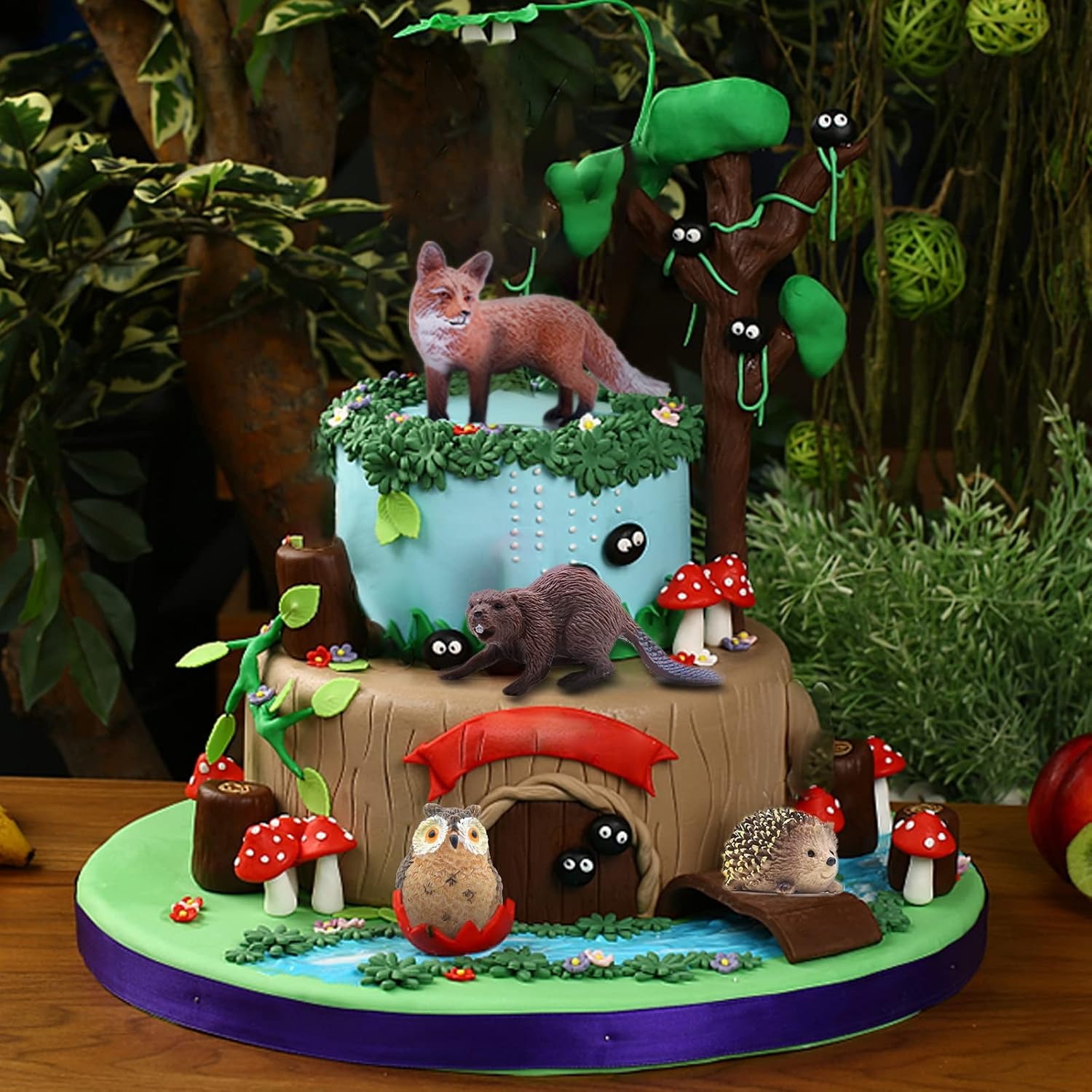
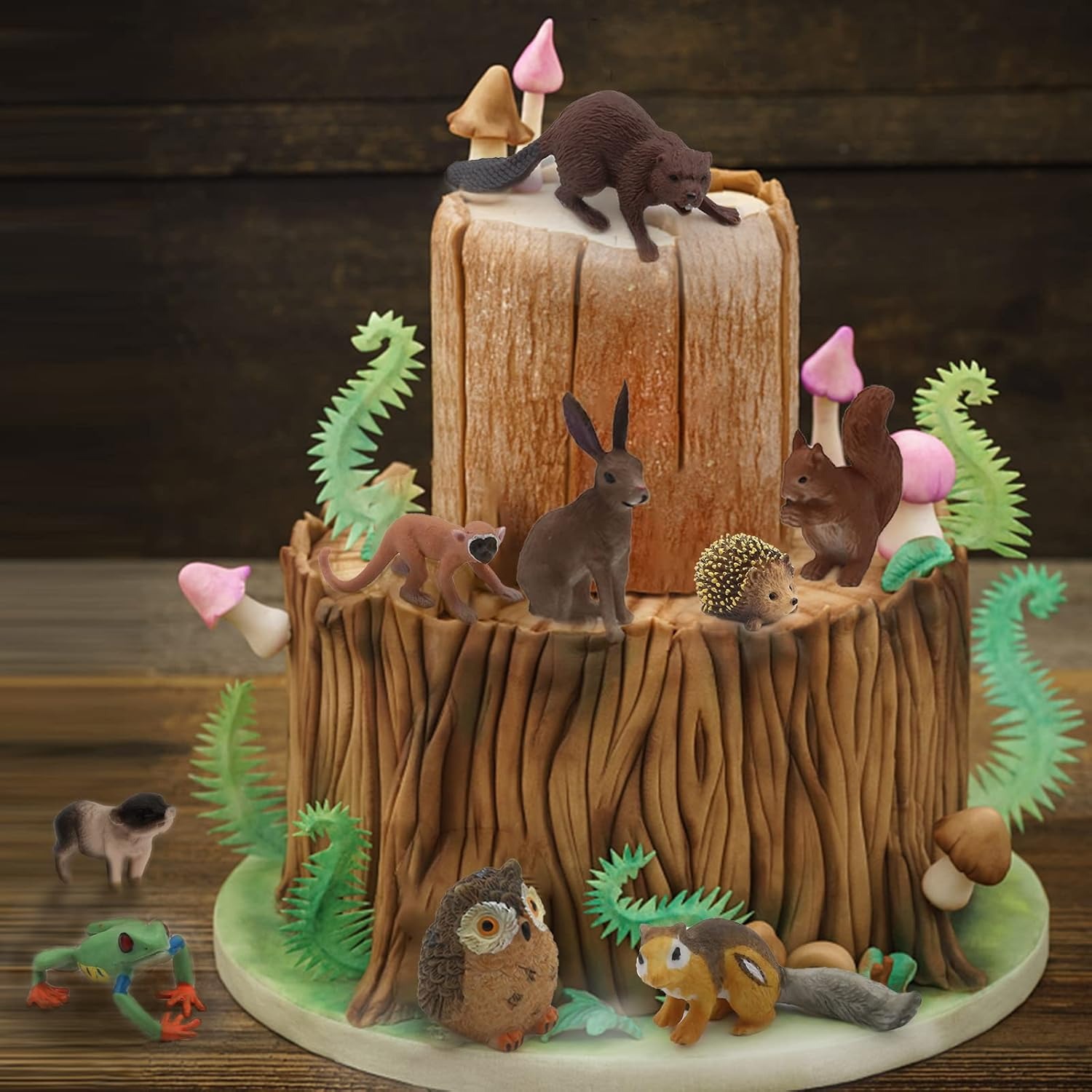
Beyond children, three other groups buy sets like this regularly. Teachers and childminders use them as a shared resource for counting, naming and story work. Hobbyists use them in dioramas, terrariums and model scenes, where the miniature scale is the whole point. Bakers and party planners use them as cake toppers and table decoration, especially for woodland and camping themed events, and then wash them and keep them for next time.
Collectors of miniature animal figures also pick up sets like this to fill out a display quickly. Eighteen different species in one go is hard to beat for that.
How to choose between sets like this
Start with count versus variety. A pack of 50 figures sounds better than a pack of 18 until you open it and find twelve duplicates. Read the description carefully and look for a statement that every piece is different.
Next, check the size range. Figures under an inch look great on a shelf but are fiddly for a five year old and easy to vacuum up. Figures over four inches do not fit a tabletop scene. The 1.1 to 2.8 inch band is about the sweet spot for mixed use.
Then think about finish. Glossy surfaces clean easily and photograph well, which matters if the figures are going on a cake or into a party display. Matte finishes look more naturalistic in a diorama but show fingerprints and dust more readily. Neither is wrong, it depends what you are doing.
Finally, consider storage before you buy. A set with no container will end up scattered within a week unless you supply one. A small tin, a tackle box with compartments or a drawstring bag all work. Children are far more likely to tidy up when there is an obvious place for things to go.
Looking after them
Cleaning is simple. Wipe each figure with a damp cloth and a little mild soap, then dry properly before putting it away. For figures that have been in dough or sand, a soft old toothbrush gets grit out of the detail without scratching the surface.
Avoid the dishwasher, boiling water and anything with bleach or solvents in it. Heat can soften or warp resin, and harsh cleaners strip the gloss. Long soaking is not a good idea either, since water can sit in any hollow and take days to dry out.
If the figures are going on food, wash them first, place them on the surface rather than pushing them in, and lift them off before cutting. Treat them as decoration, not as something that belongs in the cake.
Keep the set out of direct sunlight when it is stored. Prolonged sun fades painted detail on any figure, regardless of price. A lidded box in a cupboard is all the protection needed.
Check the figures occasionally for chips or cracks. Any piece with a sharp edge or a broken-off part should come out of circulation, especially where younger children are around.
The short version
This is a box of 18 different miniature woodland animals in resin, sized between 1.1 and 2.8 inches, with a glossy finish and a listed weight of 0.27 kg. Nothing to build, nothing to charge, recommended for ages three and up.
It earns its place because it does several jobs. It is a story kit for a child, a teaching resource for a classroom, a decorating set for a party table and a quick way to fill a diorama. The variety is what makes it work. Eighteen distinct animals gives a child more to think about than a bigger bag of the same three creatures ever could.
If your youngest is still at the mouthing stage, wait. If not, this is a straightforward, long-lasting set that tends to still be in use years after it arrived.