
The complete guide
How to Choose a Large Building Block Set for a Young Builder
The problem with most toys bought for three year olds
Walk into a toy aisle with a preschooler's birthday coming up and you hit the same wall. Half the shelf needs batteries. A good chunk of it plays one sound on a loop. Plenty of it does something impressive for about four days and then sits in a cupboard because the child has seen everything it does.
Building blocks dodge that problem by doing nothing on their own. The toy does not perform. The child does. That sounds like a drawback until you watch it play out over a few months, at which point the same box of bricks has been a castle, a car park, a wall for knocking down, a colour sorting game and a set of stepping stones for a toy dinosaur.
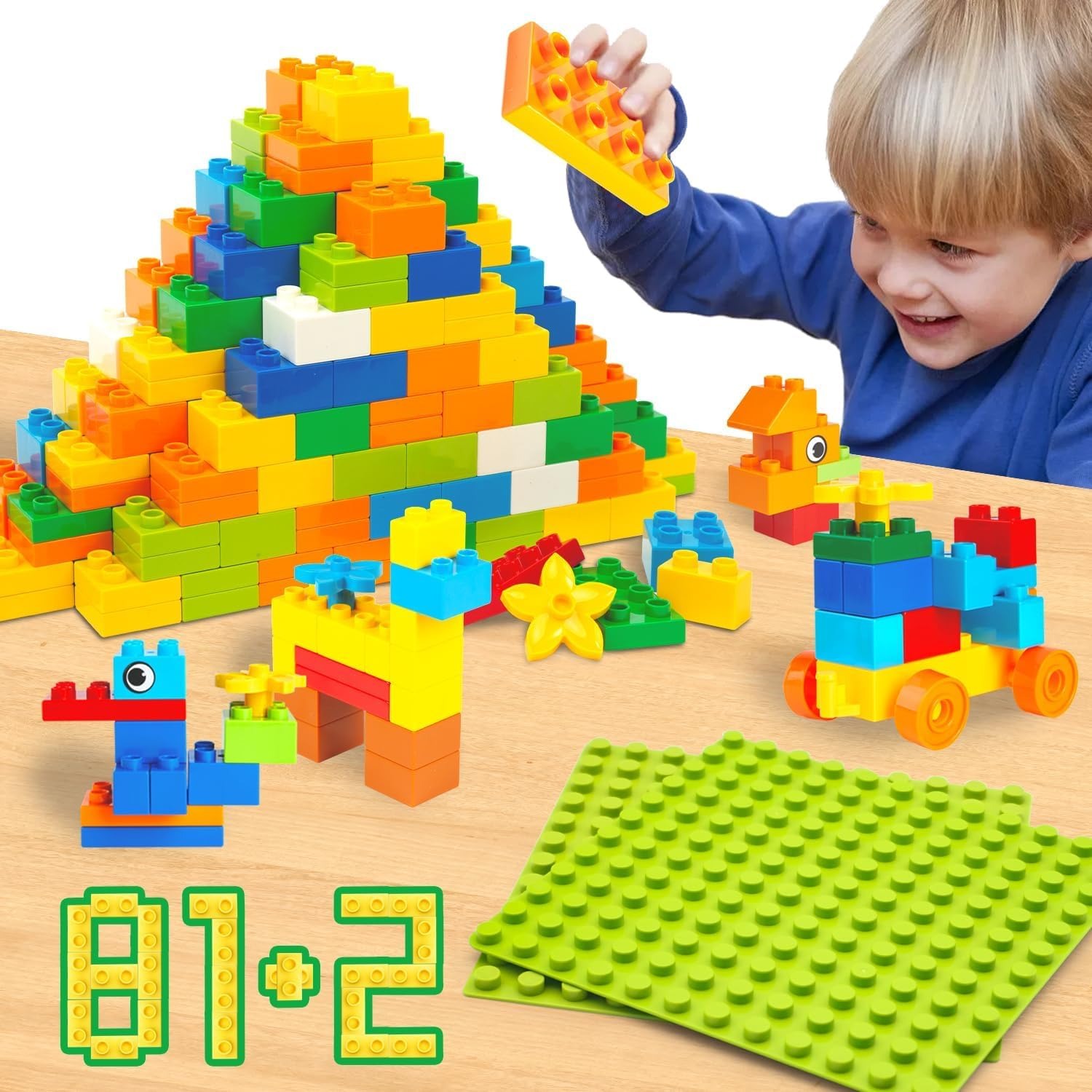
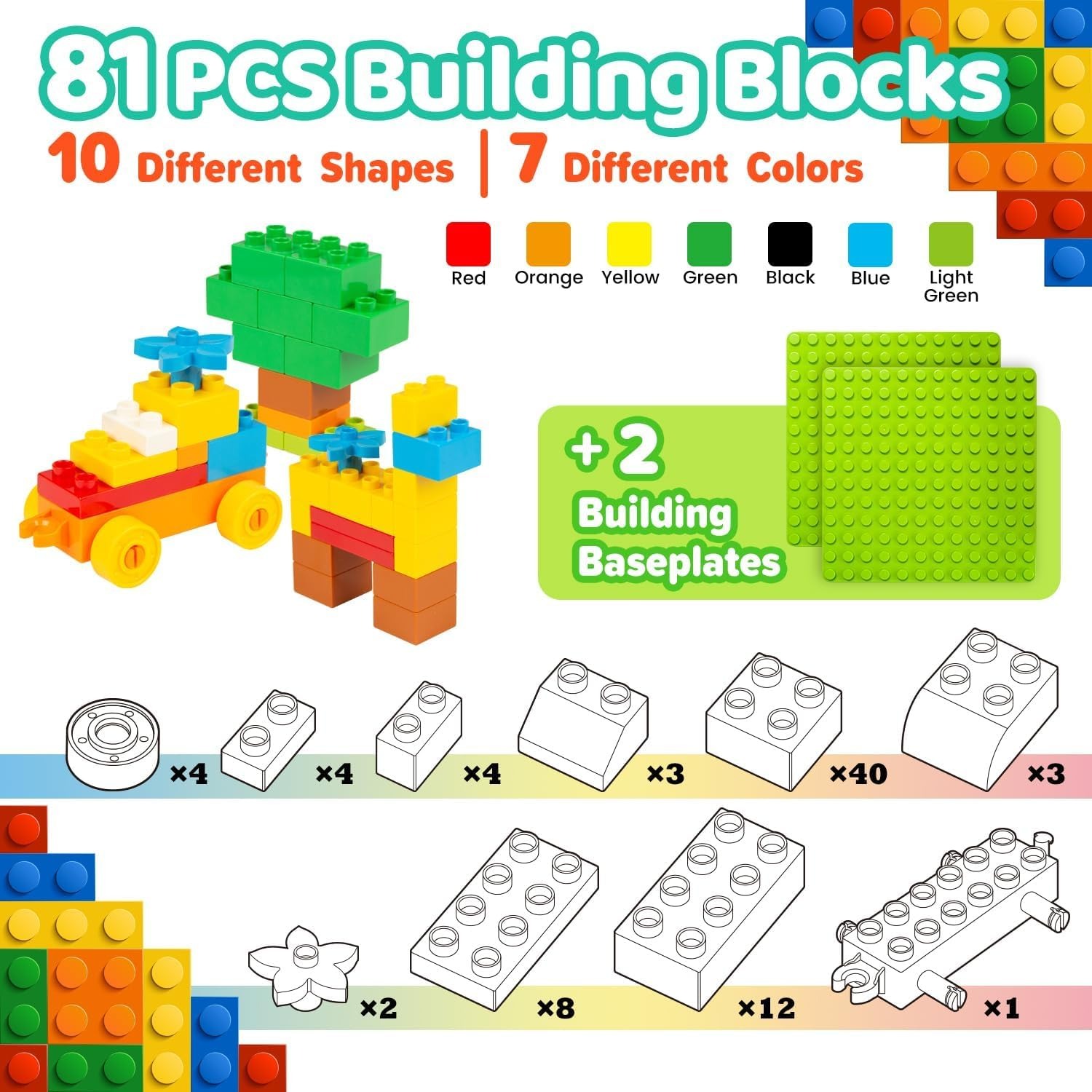
This set gives you 81 large blocks and 2 base plates. It is aimed at children aged three and up, and it is built around free play rather than one fixed model.
Why block size matters more than piece count
Parents often shop by piece count, because a bigger number feels like better value. For a three year old, brick size matters more.
A small brick asks for pincer grip, precise alignment and a fair amount of hand strength. A child who has not developed those yet gets a piece that will not click, a tower that keeps collapsing, and a short walk to giving up. A large brick forgives all of that. It is easier to pick up, easier to line up over the studs, and easier to press down with a flat palm rather than fingertips.
The large format has practical upsides too. Big pieces do not vanish under furniture as readily, they are quicker to tidy, and there is less worry about a preschooler sibling wandering past the play mat.
What ABS plastic actually means for you
The blocks are made from ABS, short for acrylonitrile butadiene styrene. It is the standard plastic for quality construction toys, and the reason is simple. ABS is rigid and resists impact, so the stud shape stays crisp.
That matters more than it sounds. The grip between two bricks comes from a tight friction fit between stud and socket. If the plastic is soft, those studs slowly round off and compress. After a year, the bricks stop holding, and a child who was building fine towers last summer suddenly cannot keep a wall standing. Rigid plastic keeps the fit consistent.
ABS also handles being dropped, stepped on and tipped out of a box onto a hard floor. It does not love heat, though, which is why the care advice avoids dishwashers and radiators.
What the base plates are for
Two base plates come with the set, separate from the 81 blocks. A lot of people underestimate them.
A base plate gives the bottom layer of a build somewhere firm to lock into. Without one, a tower built straight onto carpet wobbles from the first brick. With one, the foundation holds and the child can concentrate on the part they actually care about, which is the top.
The second benefit is portability. A finished model on a base plate can be carried from the living room floor to the kitchen table without falling apart. For a child who has spent twenty minutes on something, that is a big deal. It also helps at tidy-up time, because a build can be moved aside intact instead of being dismantled.
Compatibility and why it saves money
The set is described as compatible with other major large-brick systems. If you already own large bricks that use the same stud spacing, these should connect to them.
That is worth checking before you buy, by comparing a single brick. When it works, every set you own becomes more useful. Most households accumulate blocks from several sources over a few years, through birthdays, hand-me-downs and charity shop finds. A compatible set merges into that pile. An incompatible one sits in its own box and gets played with half as often.
If you are starting from nothing, compatibility still matters, because it means future sets have a good chance of joining in.
Who this suits, and who it does not
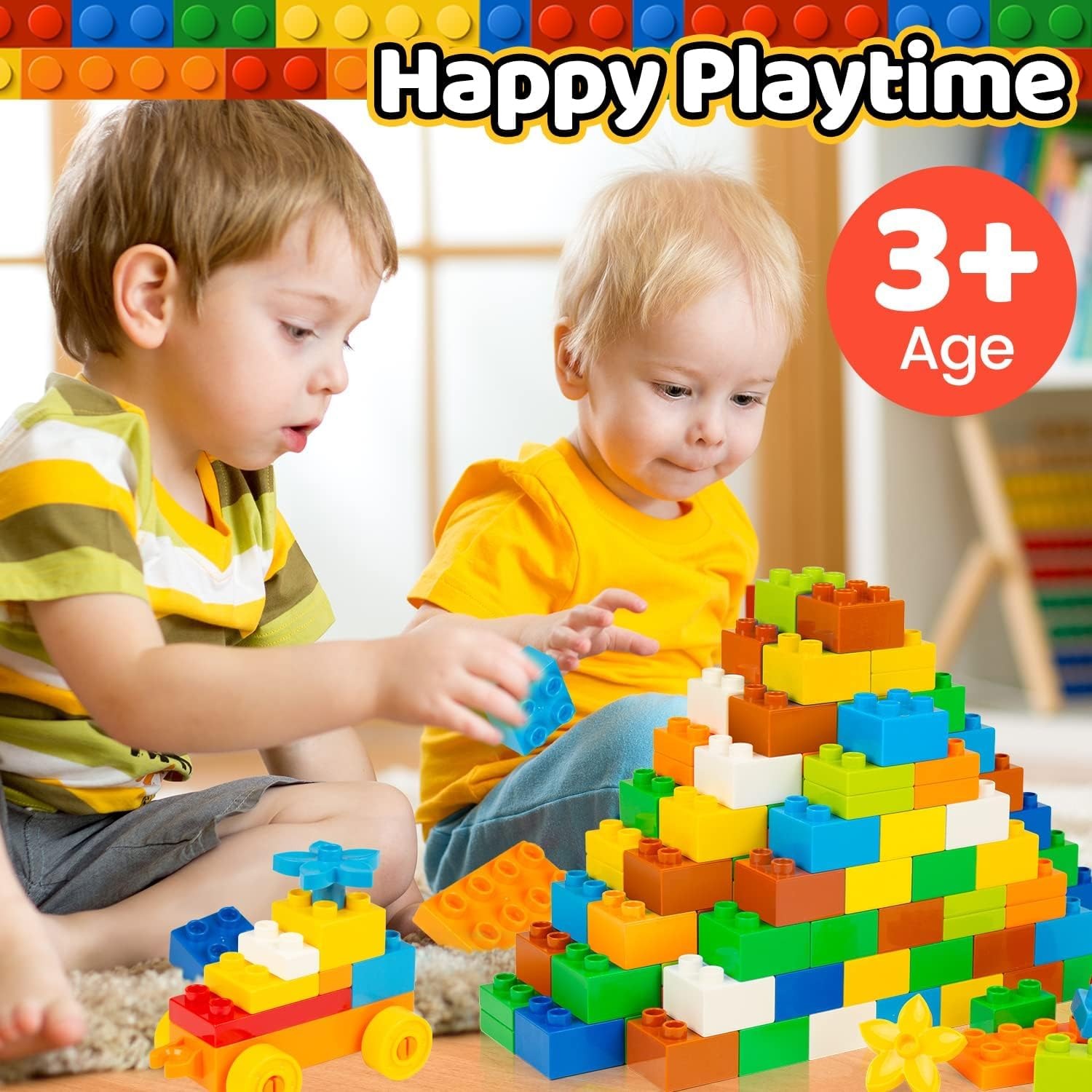
It suits a child who is around three to six and is ready for construction play. It suits a grandparent's house that needs one solid toy for visits. It suits a nursery corner, a rainy-day cupboard, or a family that wants a screen-free option within easy reach.
It is not right for a child under three. The manufacturer's minimum is 36 months, and that rating exists for safety reasons, not just skill. It is also not the best choice for an older child who has moved on to detailed small-brick models. For a seven or eight year old building complex sets, large bricks will feel basic.
If you are buying for two children who play together, be realistic. Eighty-one pieces split between two builders disappears fast. Two base plates help with sharing, but a second set or an existing collection makes a real difference.
Getting the most out of it in the first month
Children do not always know what to do with an open-ended toy on day one. A little structure early on helps, then you can step back.
Try building something simple alongside them and letting them copy it. Sort by colour into piles before building, which turns tidying into part of the game. Give a challenge with a limit, like the tallest tower using only red and blue. Ask them to build a home for a toy they already love, which gives the structure a purpose.
After a few sessions, most children stop needing prompts. That is the point where a block set earns its keep.
Care and storage
The care routine is short. Wipe the blocks with a damp cloth and mild soap when they need it, then dry them properly before they go back in the box. Skip the dishwasher, the microwave and the washing machine, since heat can distort the plastic and ruin the fit.
Store everything together in a lidded box or fabric bin so the set does not thin out over time. Keep the base plates flat rather than wedged on edge under a pile of bricks. Have a quick look through the pieces every few months and retire anything cracked or chipped.
Keep the blocks away from direct sun and heat sources. That is the single biggest thing you can do to make them last.
The short version
This is an 81 piece set of large building blocks with 2 base plates, made from ABS, rated for ages three and up. There is nothing to charge, nothing to assemble and no screen involved. The pieces are sized for small hands, the base plates make builds stable and portable, and the system is compatible with other major large-brick ranges.
Buy it if you want a toy that lasts longer than a season and gets played with differently every month. Skip it if your child is under three, or if they have already moved on to small detailed bricks. For everyone in between, it is one of the more reliable things you can put in a cupboard.