
The complete guide
The Parent's Guide to Choosing a Kids Garden Tool Toy Set
The small person who wants a turn
Every garden job seems to attract an audience. You get the mower out and within thirty seconds there is a child beside you, hands out, asking when it is their go. You explain that the mower is sharp, that the blower is loud, that this one is for grown-ups. They hear it, they accept it, and they go and sit on the step looking a bit deflated.
That is the gap a kids garden tool toy set fills. It is not a substitute for the real thing. It is a parallel version, scaled down and made safe, so a three year old can do the job alongside you instead of watching from a distance. The difference in a child's face when they get handed their own equipment is the whole point.
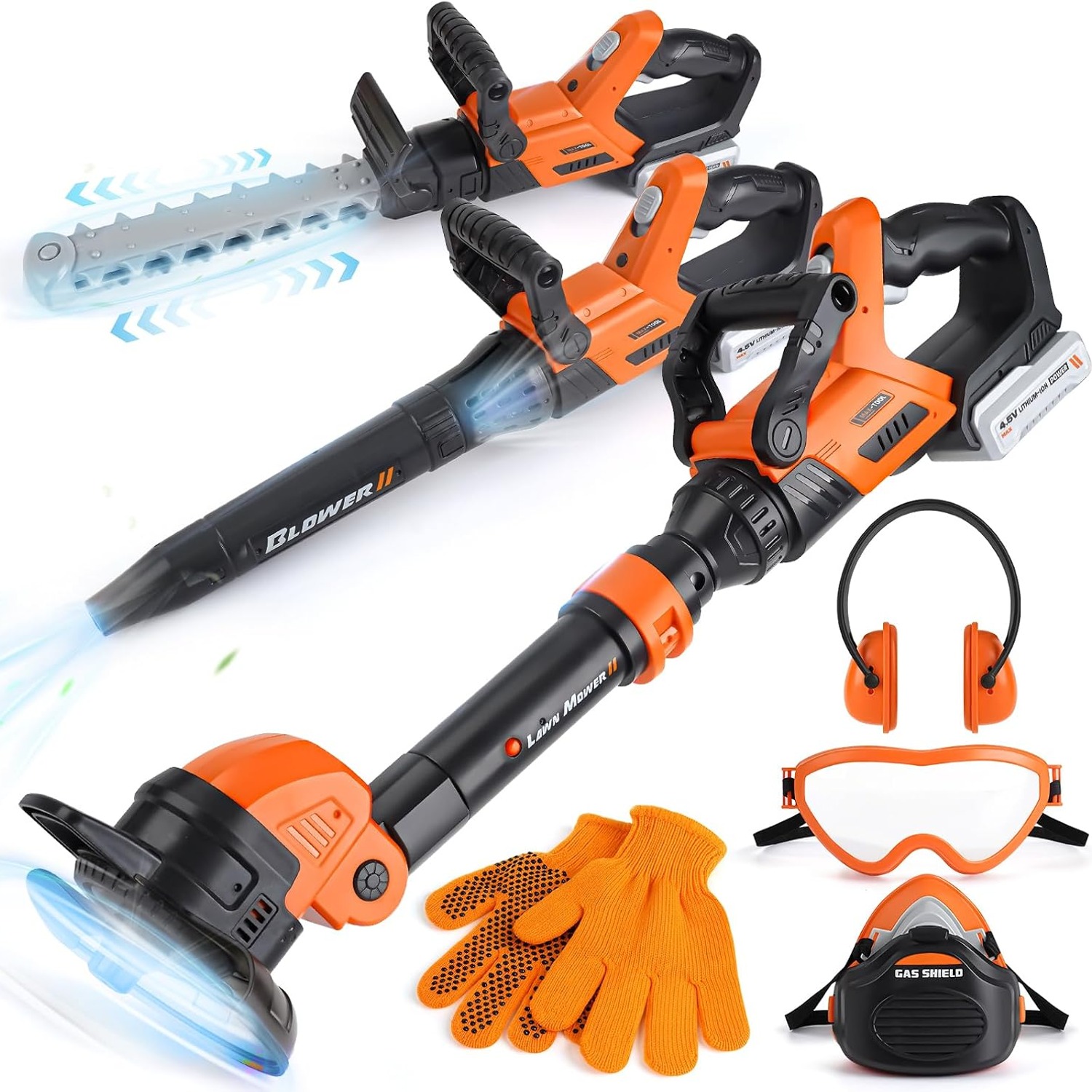
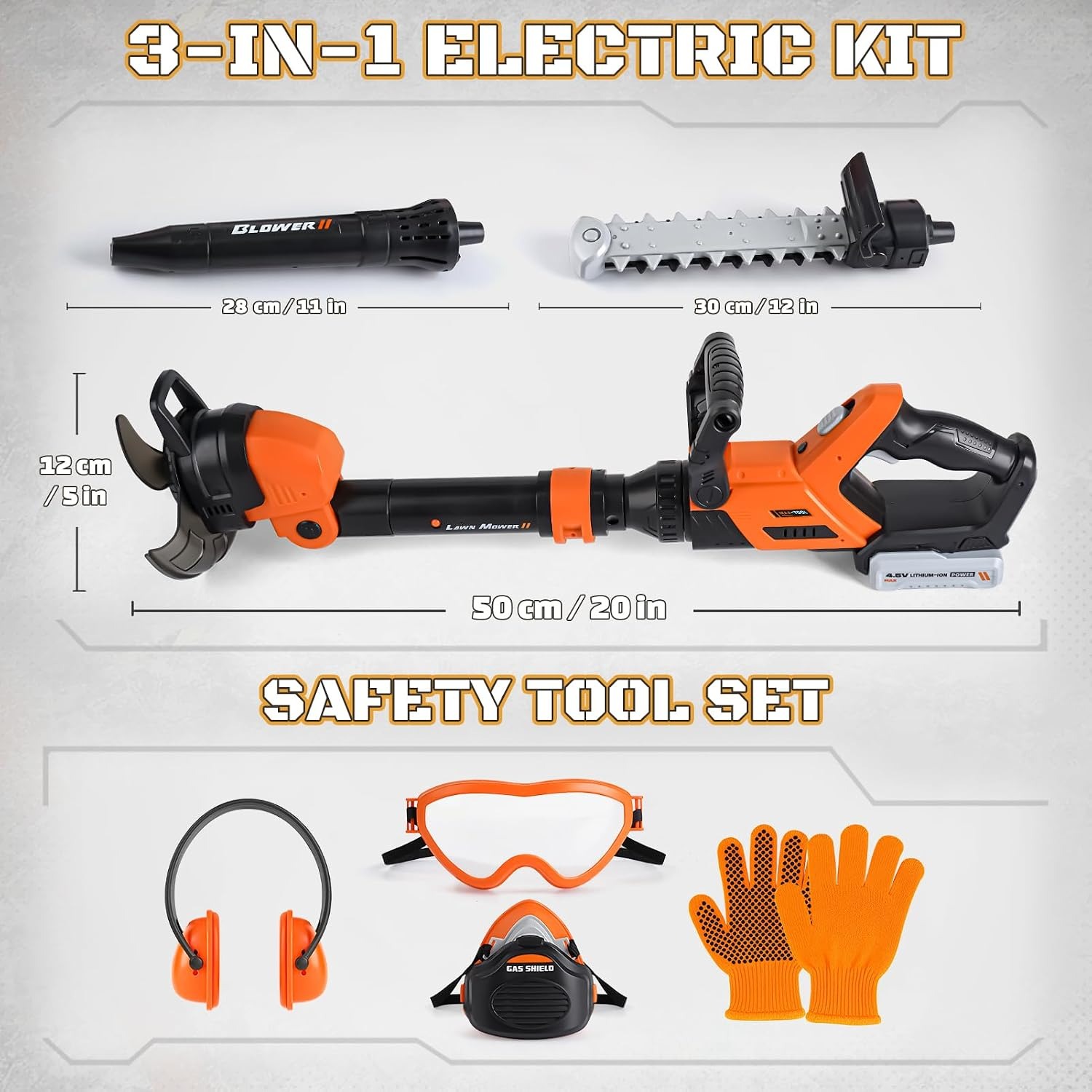
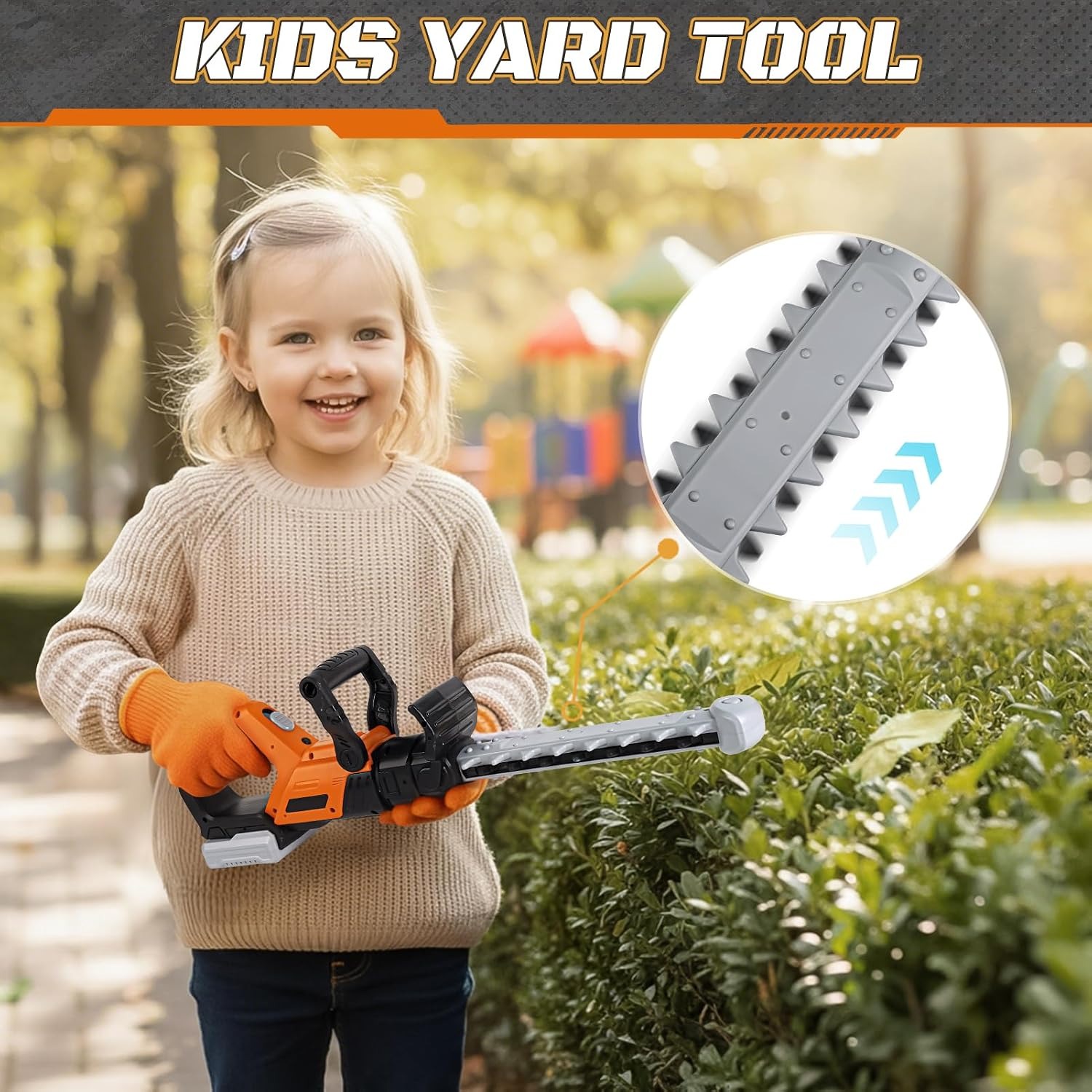
This set includes three pretend tools, built to look and behave like a lawn mower, a leaf blower and a cutting tool. It also comes with play safety gear, which is often the part children get most excited about.
How the play actually works
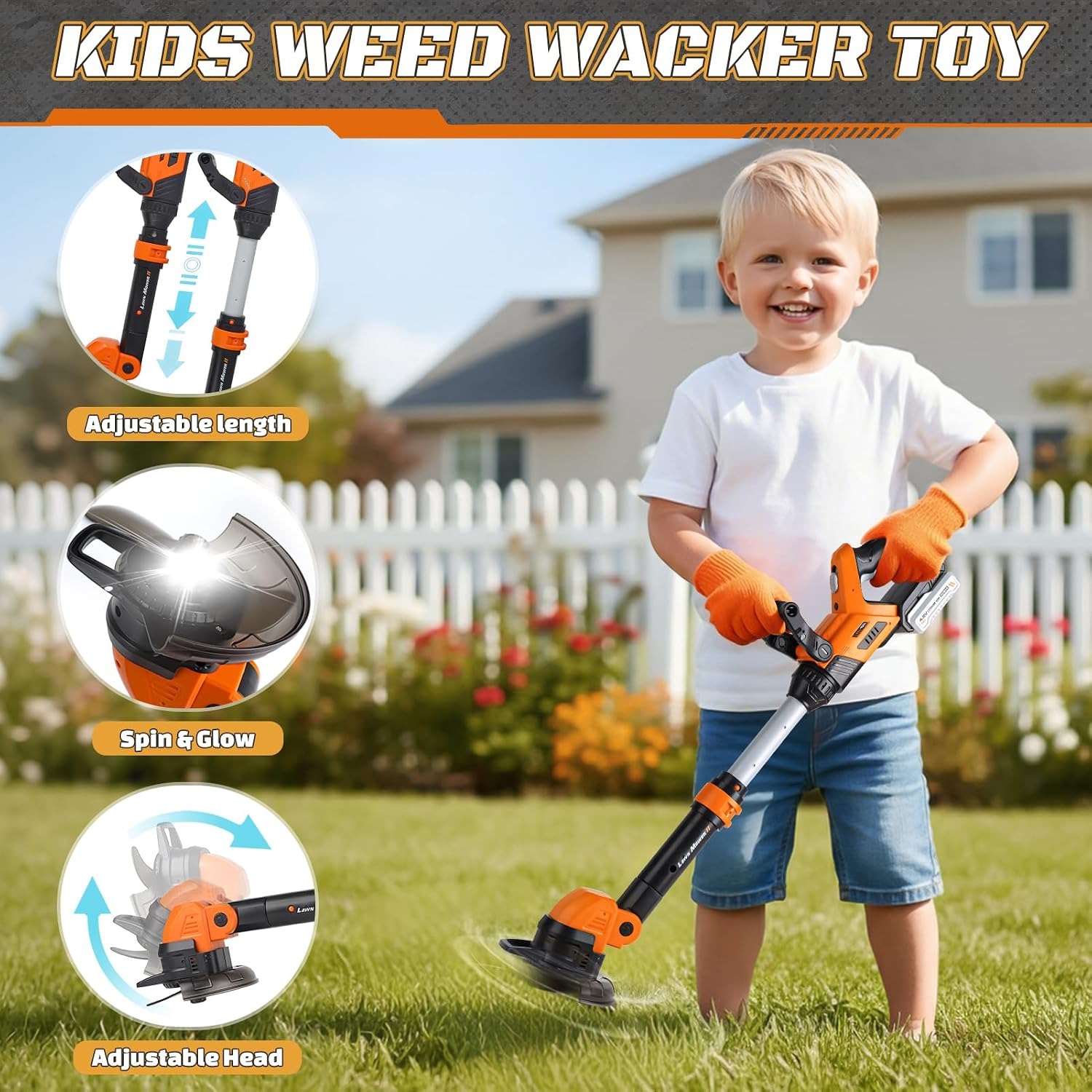
The tools are not passive plastic shapes. They come with lights and sound effects, and moving parts that respond when a child uses them. That feedback is what separates a toy that gets played with from a toy that ends up at the bottom of the box by the second week.
Think about why children like pressing buttons on a microwave. Action produces a reaction, and that loop is deeply satisfying when you are small and most of the world does not respond to you at all. A toy mower that lights up and makes a noise when it is pushed gives a child a sense of cause and effect that they control.
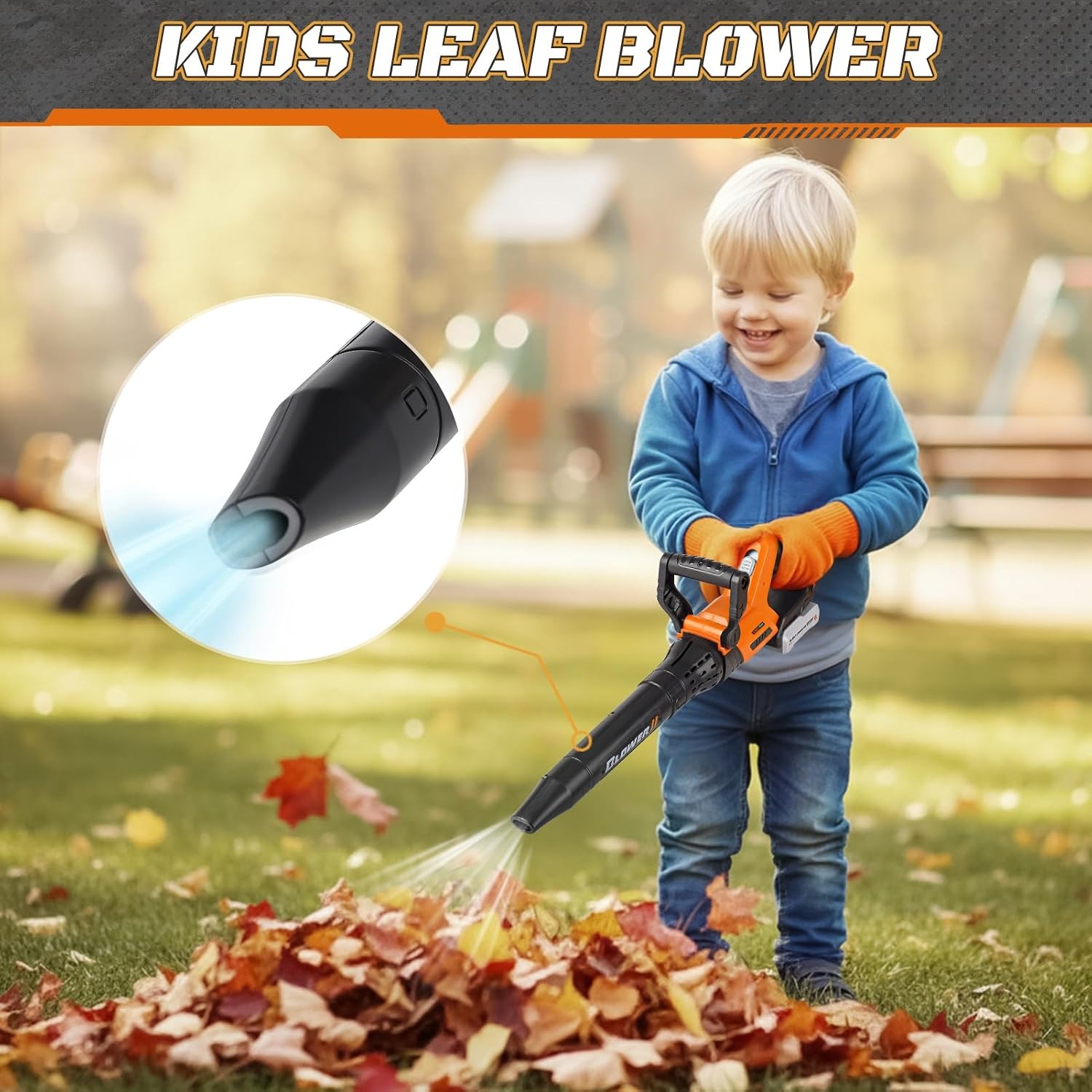
The three tools also encourage different kinds of movement. The mower gets pushed, which means walking, steering and planning a route. The blower gets carried and aimed. The cutting tool involves reaching and holding. Between them you get a decent amount of physical activity without it ever feeling like exercise.
Batteries are required for the lights and sounds, and they are not included. It is worth buying them at the same time. There is nothing sadder than a gift that cannot be switched on for two days.
The safety gear and why children love it
The set includes gloves, protective glasses, earmuffs and a mask. These are play items, not real protective equipment, and that distinction matters. They are there for dress-up and for storytelling, not for use near any real machinery.
What surprises most parents is how much children enjoy this part. Putting the gear on becomes a ritual. It signals the start of the job. A child who would get bored of a plain toy mower in ten minutes will happily spend half an hour on the full sequence of kitting up, working, and taking the gear off again.
It also gives you an easy conversation. You can point to your own ear defenders when you use the strimmer and say that is why they wear theirs. Children absorb safety habits far better from imitation than from instruction, and this set makes imitation possible.
Who it suits
The recommended age is 3 years and up. Around that age children start doing proper pretend play, where objects stand in for other objects and a story runs through the activity. Before three, a child might push the mower around with no narrative attached. After three, the mower becomes part of a job that has a beginning and an end.
It works well for a single child, and it works even better for siblings or playdates, because three separate tools mean three roles. One child mows, another blows the clippings, a third trims the hedge. Shared play that has built-in roles tends to generate far less squabbling than toys with only one of something good.
It also suits households with limited outdoor space. Because the set can be used indoors, it does not sit idle through weeks of bad weather. A hallway or a cleared patch of living room floor works perfectly well for a child who is three.
How to choose between sets like this
If you are comparing options, a few things are worth weighing up.
Start with the number of tools. Some sets give you one item, which means buying extras later to build a full kit. This one bundles three in a single box, which is usually better value and avoids the mismatched look of tools from different ranges.
Next, look at whether assembly is needed. This set requires none, so it goes from box to lawn in a minute. That matters more than you might think on a birthday morning when there are five other presents waiting.
Then check the size. The listed dimensions are 37.8 x 17 x 11.8 cm with a weight of 1.1 kg. That is small enough for a child to carry and small enough to store without surrendering a cupboard to it. Oversized toy mowers look impressive in photos and become a problem in a small house.
Finally, consider whether the set includes accessories. The safety gear here adds play value well beyond its cost, because it extends the role play rather than just adding another plastic shape to the pile.
Getting the most out of it
Give the play a structure the first few times. Walk the garden together and point out what needs doing. Let the child decide the order. Children who are handed a toy with no context often lose interest fast, while children who are given a job stay with it.
Try matching your own tasks to theirs. If you are raking, they can be blowing. If you are trimming, they can be trimming. The parallel play is the thing they want, far more than the toy itself.
Keep sessions outdoors when the weather allows, and indoors when it does not. Varying the setting keeps the set feeling fresh. A mower that has only ever been on the lawn becomes something new when it appears in the hallway.
Looking after it
Plastic toys are forgiving, but they are not immortal. A damp cloth and a dry-off after outdoor sessions will keep the set looking right for years. Avoid soaking it, and never put any part in a dishwasher.
Bring it in at the end of the day. Rain and battery compartments are a poor combination, and long periods in strong sun will fade the colours and make the plastic brittle. If the set is going to be unused for a season, take the batteries out first so they cannot leak inside.
Spare part information is not provided by the maker, so treat it as a complete unit. Keeping all the pieces together in one box is the simplest way to avoid losing the small accessories.
As a gift
This is a straightforward gift to give. It arrives assembled, it has obvious appeal, and the unboxing has a nice build to it as each tool and each piece of safety gear comes out. It is one of the better birthday gifts for little gardeners precisely because a child can use it within a minute of opening it.
The one thing to sort out in advance is batteries. Buy them with the toy and fit them before you wrap it if you can.
The short version
If you have a child who follows you around the garden, this set gives them their own version of the work. Three pretend tools, lights and sounds, and a full dress-up safety kit, suitable from three years and up, usable indoors and out, with no assembly and no fuss. Add batteries, hand it over, and prepare to have the lawn mowed about forty times in one afternoon.