
The complete guide
How to Choose a Kids Shopping Trolley Play Set
The game children invent anyway
Watch a two or three year old in a supermarket and you will see them reaching for the cart handle. They want to push. They want to put things in. They are copying something they have seen dozens of times, and copying is how small children work out what the world is for.
The problem at home is that there is nothing to push. A cardboard box does not roll. A laundry basket is too big. So the game stalls after about four minutes, and the child moves on to something louder.
A kids shopping trolley play set fixes that gap. It gives the game the two things it needs, a cart that actually moves and enough stuff to fill it. Once those exist, children will run the whole scenario themselves without an adult writing the script.
What is in this one
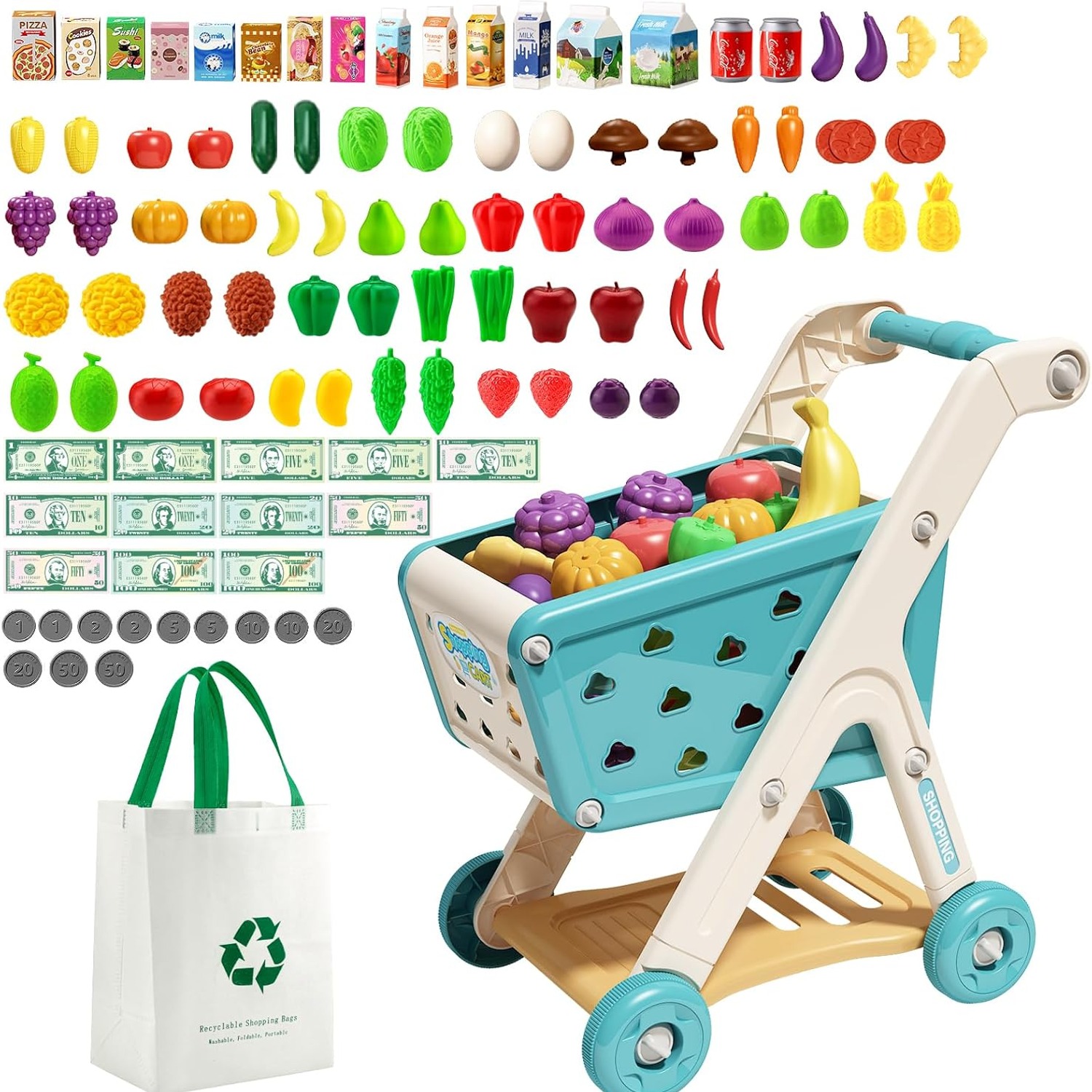
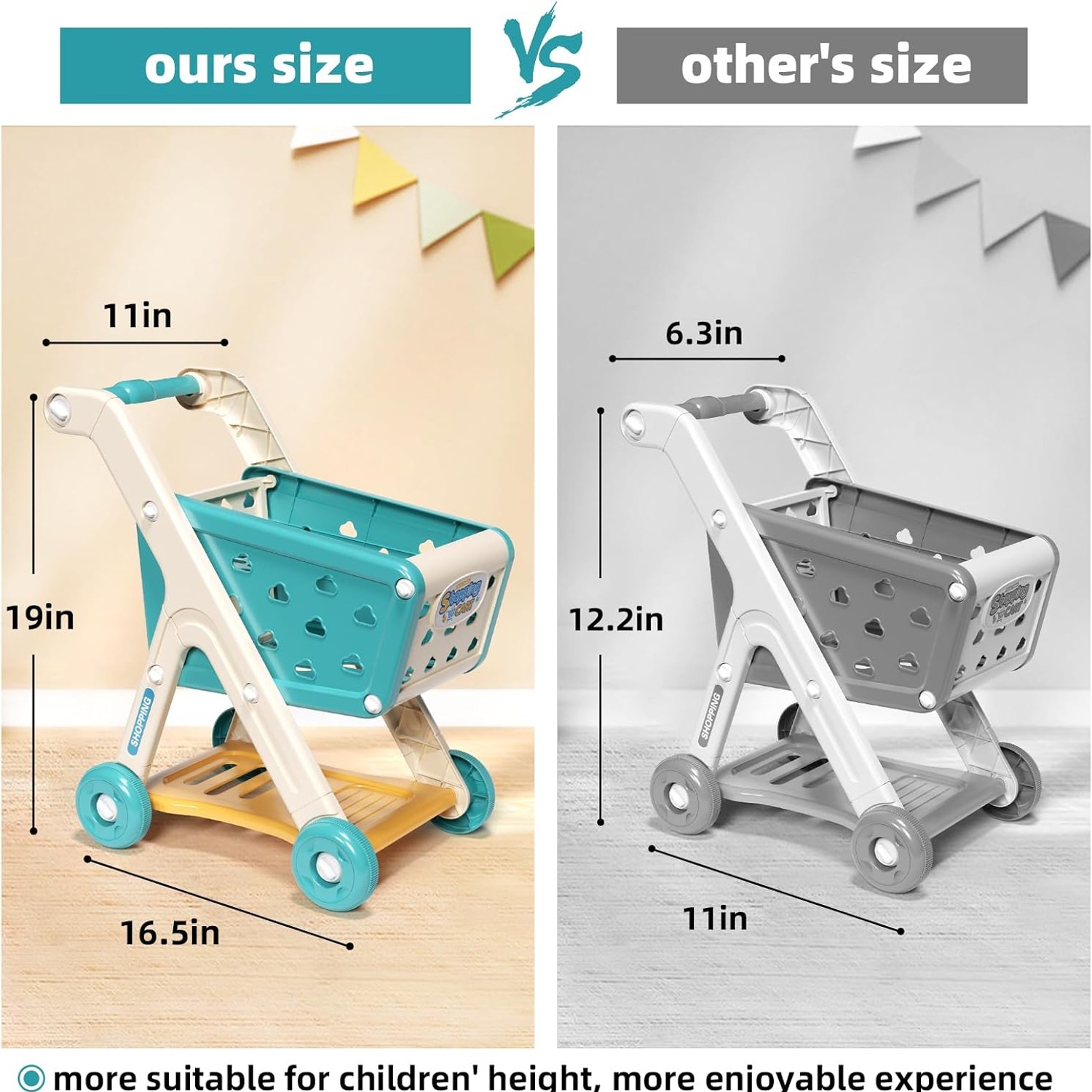
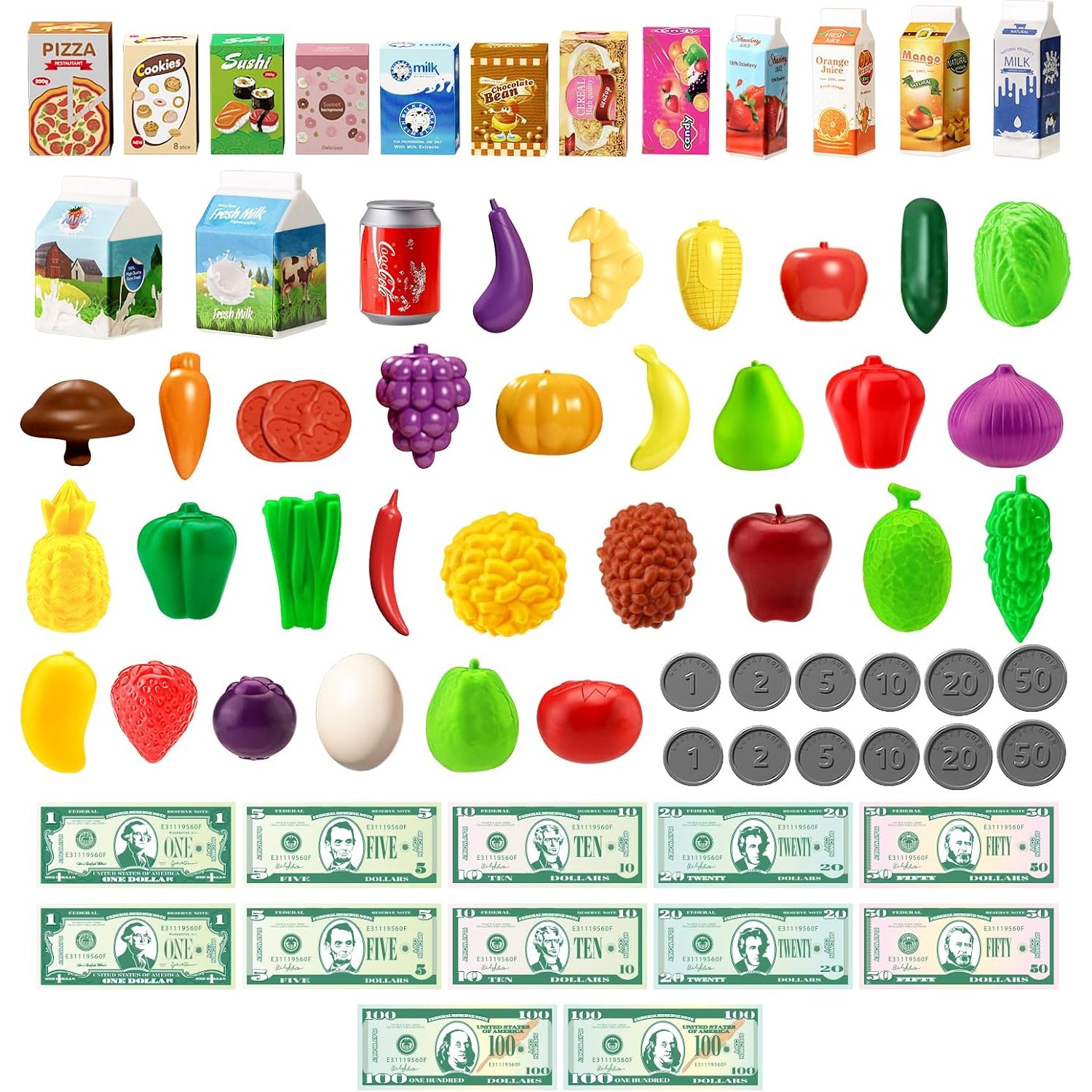
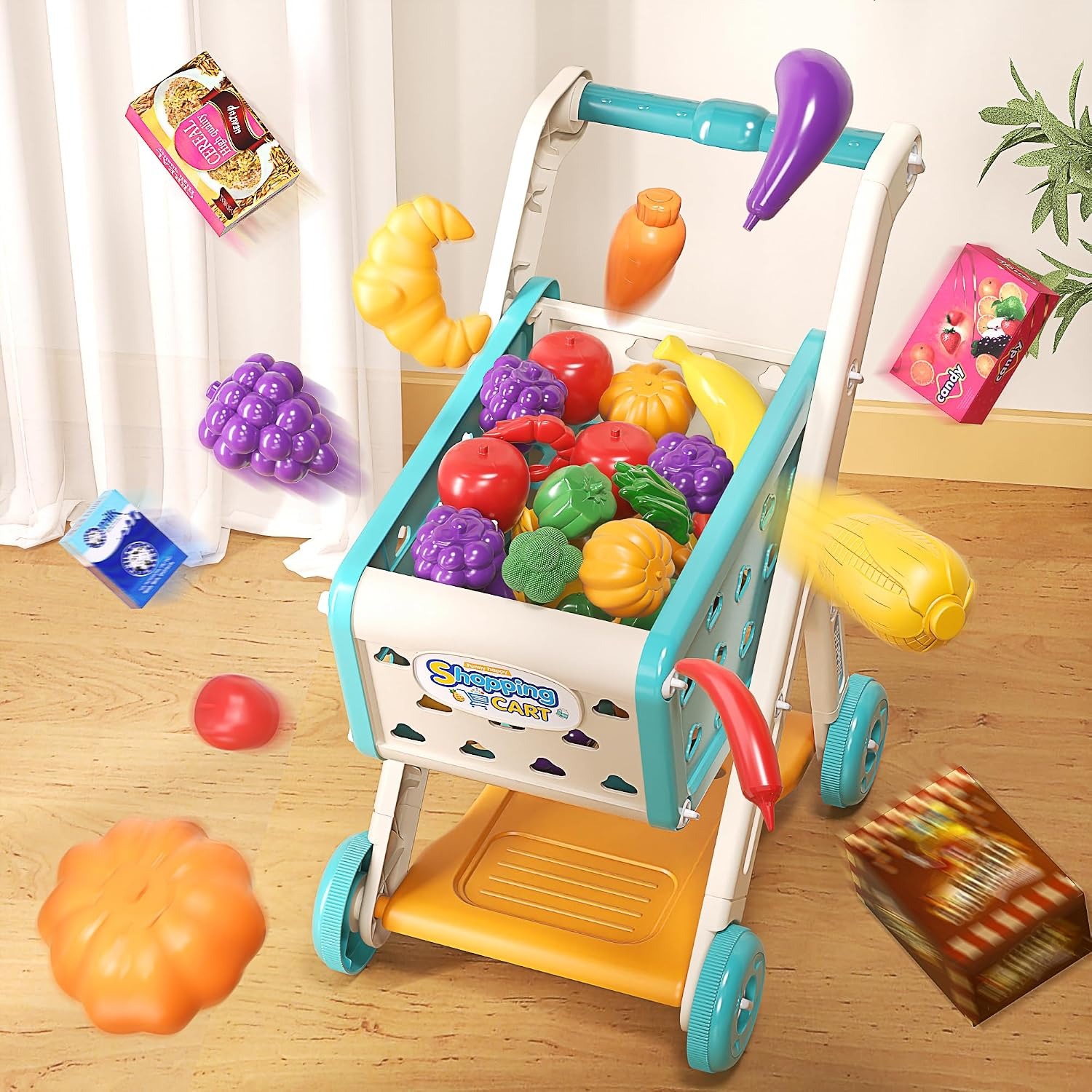
This set is built around a three-tier trolley in green, measuring 32.3 x 25.4 x 16.8 cm and weighing just over a kilo. Along with the cart you get a shopping bag, 60 fruit and vegetable pieces and 16 fast food toys. That is a lot of loose parts, which matters more than people expect.
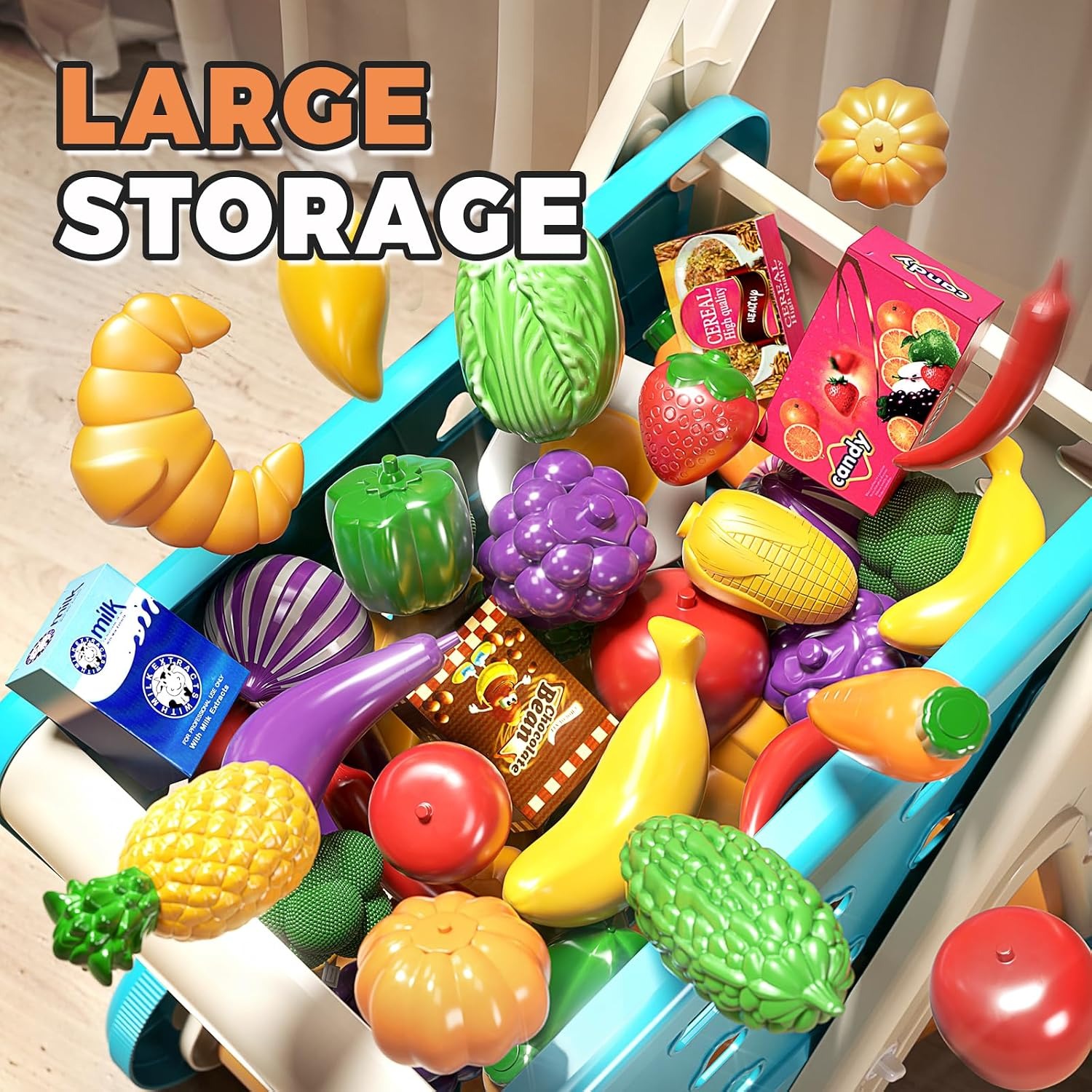
The quantity is the point. A cart with six plastic apples in it runs out of play quickly. A cart with seventy-six items supports sorting, stacking, restocking and the long slow business of unpacking everything and starting again. Children will tip the whole lot onto the floor and rebuild the shop. That is not mess, that is the activity.
The food splits into two themes. The produce pieces cover the grocery aisle, which is where most pretend grocery shopping toy play begins. The fast food pieces open a second storyline, a counter, a drive-through, a lunch order. Most children will blend the two within the first hour, selling a burger next to a bunch of bananas, and that is fine.
How the trolley is put together
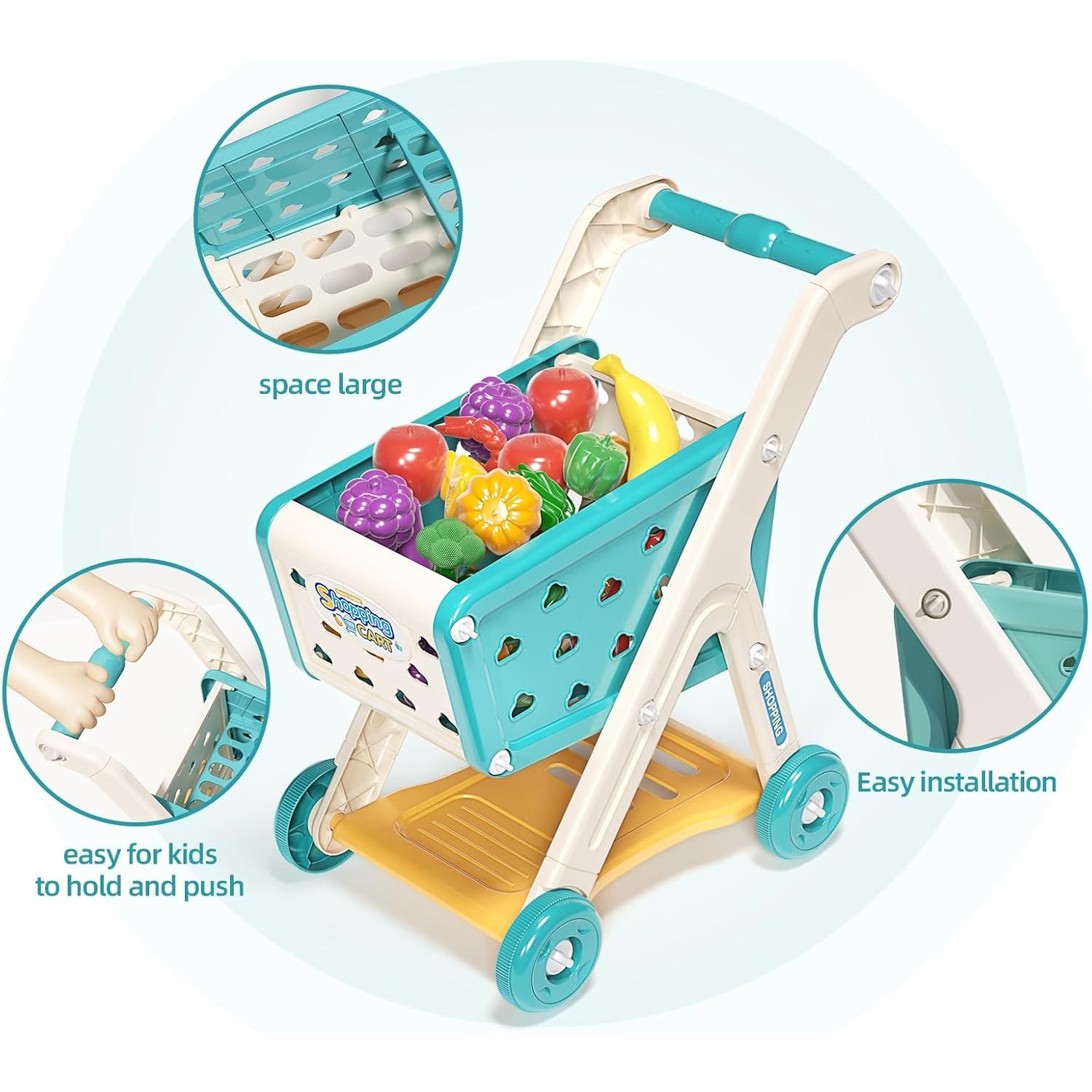
The cart arrives flat and needs simple assembly. An adult does it in a few minutes. If you are giving it as a gift, build it first. A three year old who has to wait while a grown-up reads instructions loses interest fast.
The three storage levels are more useful than they sound. Children use them to separate things, which is one of the earliest sorting skills. Fruit on top, fast food below, bag hung off the side. Nobody has to teach that. It emerges because the tiers exist.
Edges are rounded, which is standard on well-made preschooler shopping cart toys and worth checking on any cart you buy. The wheels are designed to handle different floor surfaces, so the trolley rolls on tiles, wood and short carpet rather than only one of them. They are also made not to scratch floors, though as with anything on wheels, grit tracked in from outside is the real culprit. Keep it as an indoor toy.
Who it suits
The recommended age is three and up. That is a sensible floor, mainly because of the number of small pieces. Under-threes who are still mouthing toys should not have unsupervised access.
From three to about five, play is mostly physical. Load, push, unload, repeat. There is a lot of carrying things from one room to another. From five to seven, the game gets more structured. Children start assigning roles, inventing prices, demanding payment and complaining about the service. It turns into a proper imaginative play toy for age 3 and well beyond.
It works for a single child. It works better with two. A sibling pair will argue about who gets to be the shopkeeper and then settle into taking turns, which is a quietly useful thing to practise.
For a nursery or a home with a play kitchen already set up, the trolley becomes the supply chain. Food gets bought, wheeled back, cooked, served, and then the shop reopens. That loop keeps children busy for far longer than either toy on its own.
What to look for when comparing sets
A few things separate a set that lasts from one that gets abandoned.
Piece count matters. Fewer than thirty items and the shop looks bare. Enough food means the game can grow.
Cart stability matters more than cart size. A tall narrow trolley tips when a child leans on it. A compact one with a low centre of gravity stays put. This one is on the smaller side at 32.3 cm long, which suits younger children and small living rooms.
Wheel quality is the thing people forget. Stiff wheels that will not turn kill the pushing game, which is half the appeal. Wheels that roll on carpet as well as hard floors give you more rooms to play in.
Whether the food looks like food. Vague coloured blobs do not build vocabulary. Recognisable fruit and vegetable toy set pieces do, because the child can name them and an adult can confirm it. That naming back-and-forth is where a surprising amount of early language comes from.
Material and cleaning. Plastic gets a bad press, but for play food it is the practical choice. It wipes clean after being dropped on a kitchen floor, which fabric and foam do not.
Keeping it in one piece
Cleaning is simple. A damp cloth with a little mild soap, then dry everything properly before it goes back in the cart. Skip the dishwasher, the microwave and the oven. Heat warps plastic and can leave sharp edges.
Keep the set out of long stretches of direct sunlight. Colours fade and plastic becomes brittle over months in a sunny window.
Check the wheels and fittings occasionally. Anything that gets pushed around a house for a year or two will loosen slightly. A quick tighten keeps it rolling straight.
For losing pieces, the trick is to make the bag the official home for strays. End of play, everything that is not in a tier goes in the bag. Children take to this quickly because it is part of the shop, not a tidying rule imposed from outside. A quick count now and then catches the pieces that rolled under the sofa.
Setting it up well
Give it a defined spot. A shop needs a location. A corner of the living room, the end of a hallway, next to the play kitchen. Children return to a game more often when it has a home.
Add a till if you have one, or improvise with a box and some paper money. Pricing and paying is where the maths sneaks in. It also slows the game down in a good way, because every transaction takes a few seconds of thinking.
Join in briefly, then back off. Be the customer for five minutes, ask for three carrots and a burger, pay badly, then let them take over. Most children only need an adult to start the story, not to run it.
The short version
This is a compact, well-stocked supermarket set for children from three up. You get a rolling three-tier trolley, a carry bag, 60 fruit and vegetable pieces and 16 fast food toys, all in plastic, in green, with simple assembly needed at the start.
It suits families who want one toy that supports a lot of different games, works with an existing play kitchen, and does not take up half a room. The piece count is generous enough that the play does not run dry after a week.
If your child is already pushing imaginary carts around the hallway, this gives that game something real to work with.