
The complete guide
How to Choose a Wooden Percussion Set for Kids
The problem with one-instrument music toys
Most parents have bought a toy drum or a single plastic shaker at some point. It gets maybe fifteen minutes of attention, then it lives under the sofa. The reason is simple. One instrument makes one kind of sound, and a three year old exhausts that sound quickly.
A set changes the maths. When a child can put down the maracas and pick up a triangle, the play does not stop, it just shifts. That is why a 34 piece wooden percussion set tends to last through more afternoons than a single toy costing a similar amount. The variety is doing the work.
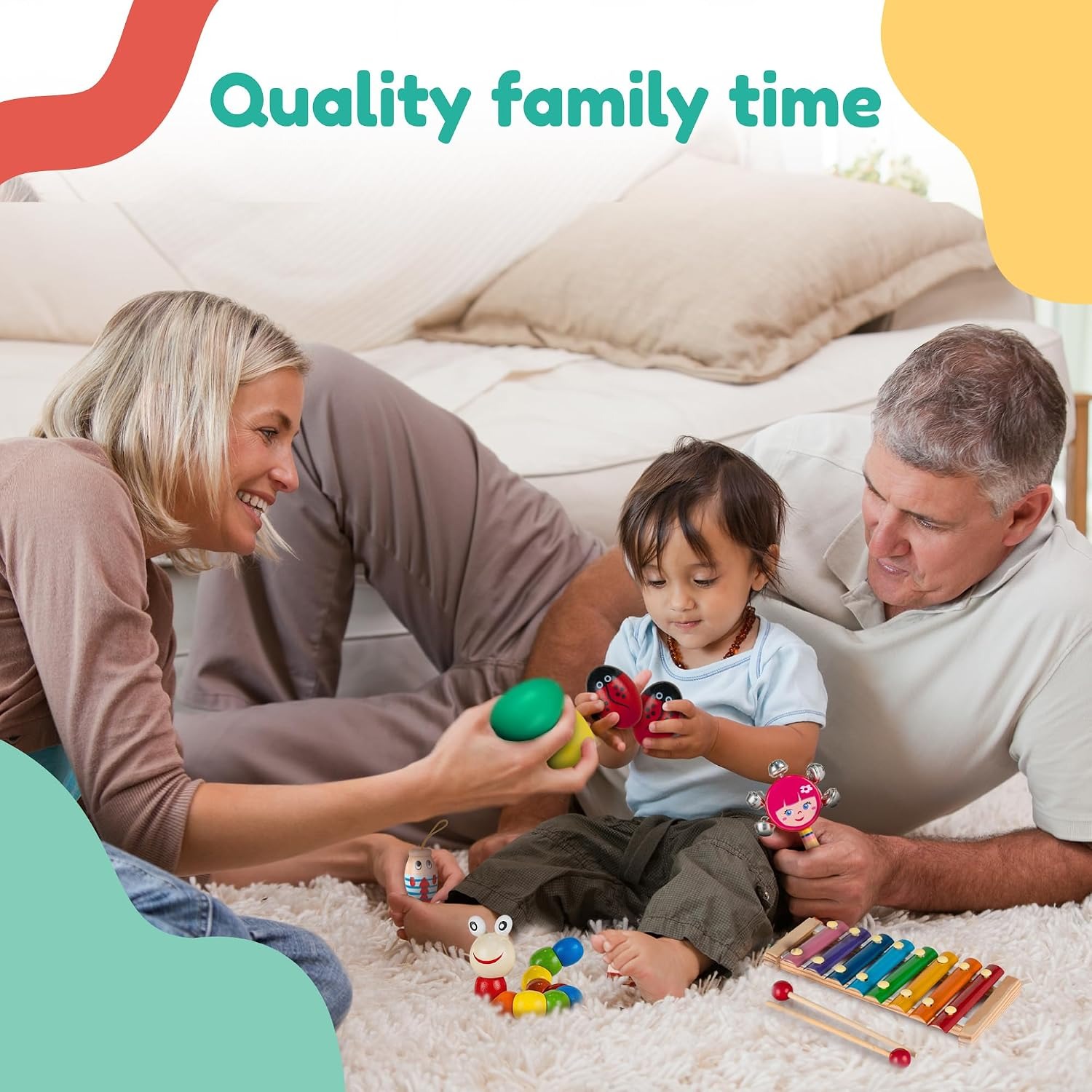
There is a second problem that sets solve, and it only shows up in households with more than one child. If there is one instrument, there is one owner and one argument. With 34 pieces there is enough to go around, and the conversation moves from "that's mine" to "you do the shaker, I'll do the drum."
What is actually in the box
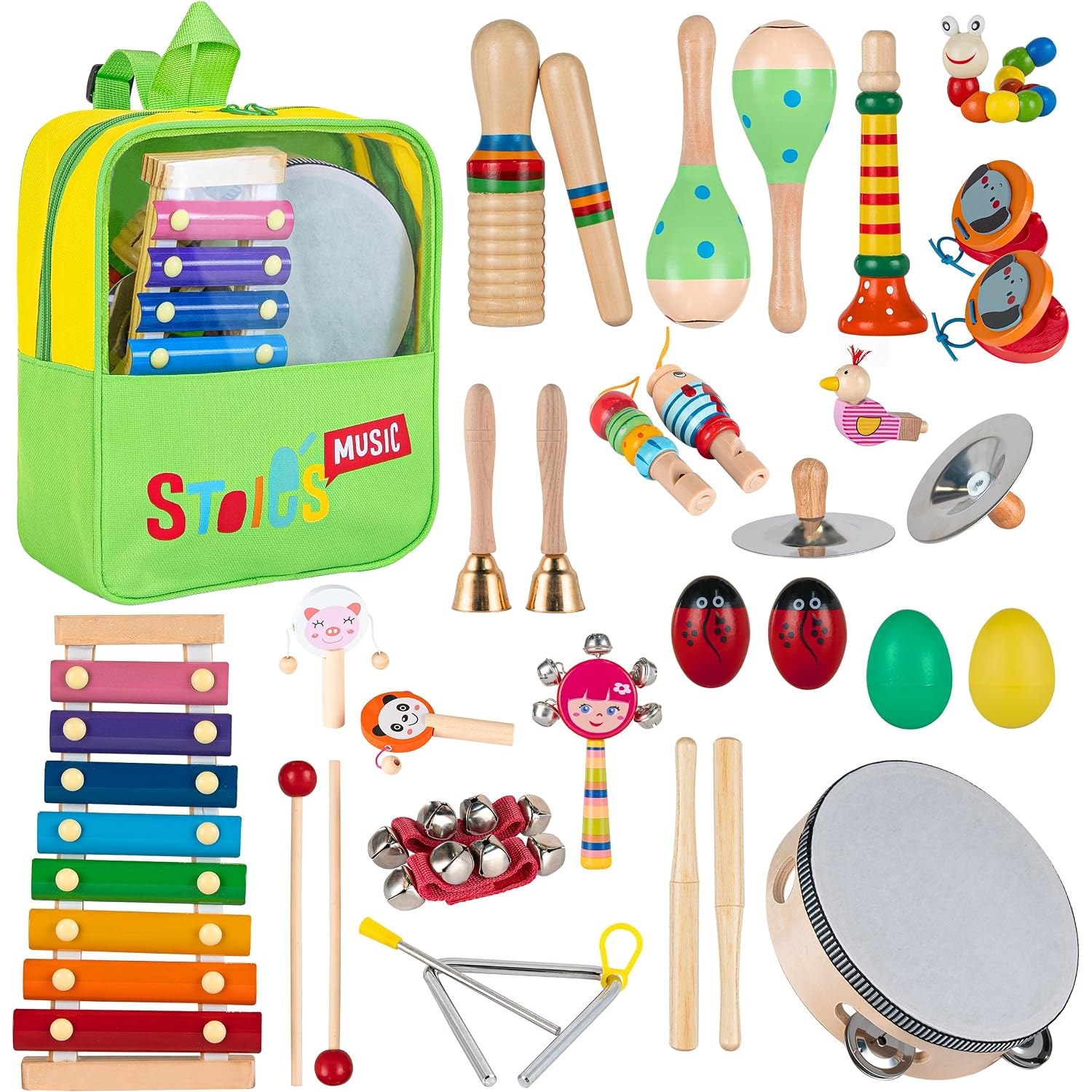
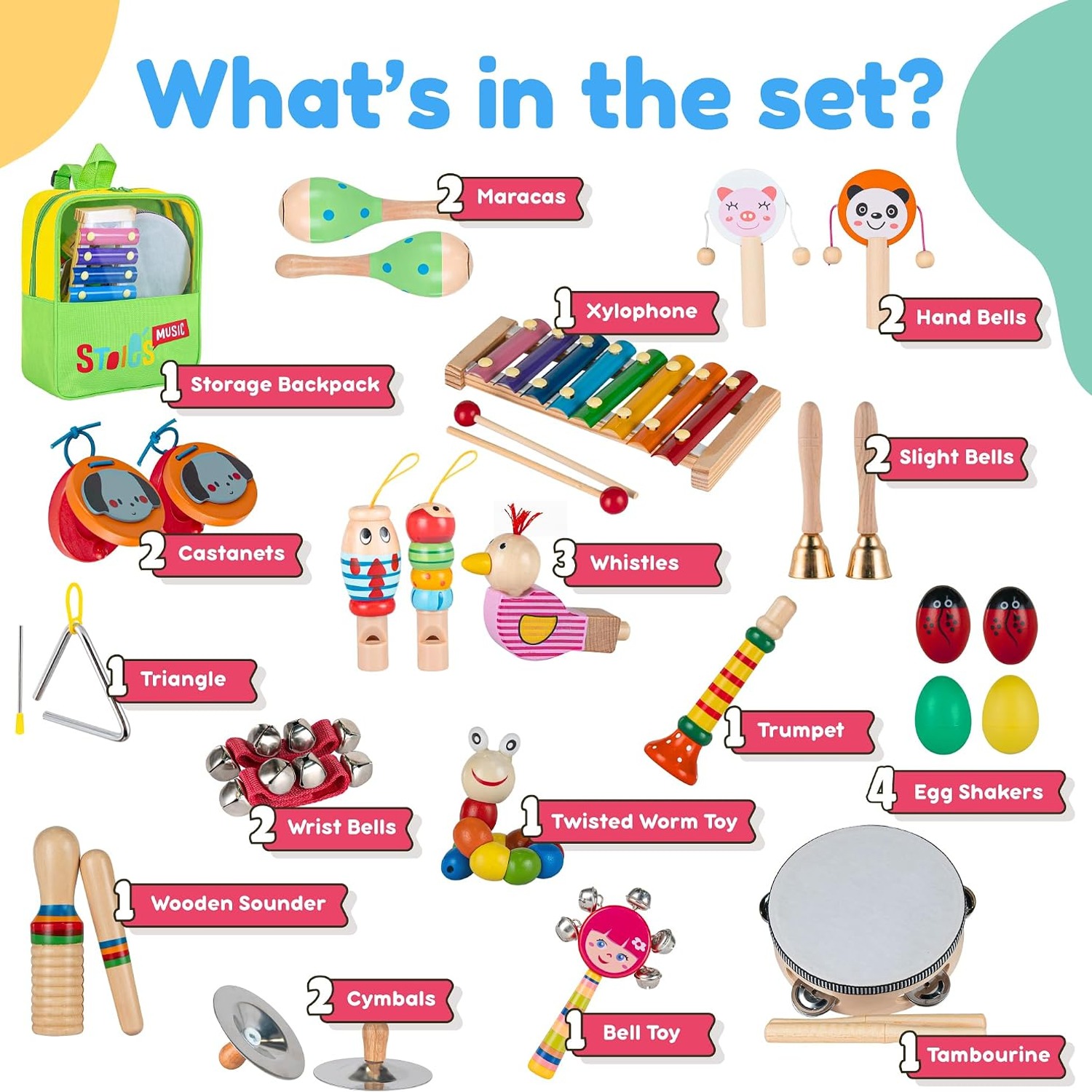
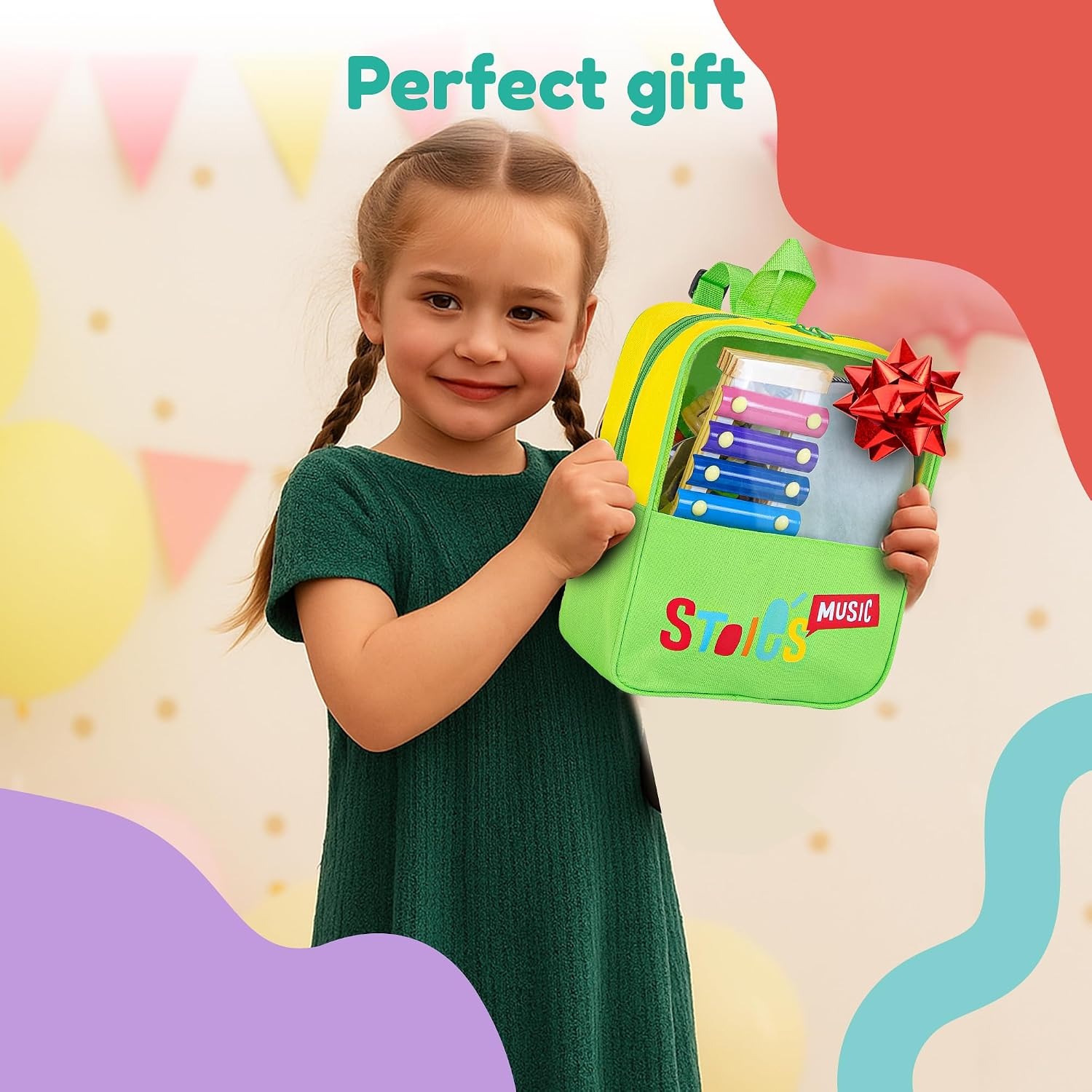
This set lists 2 maracas, 1 tambourine with drumsticks, a xylophone with mallets, 1 wooden singing stick, 2 wrist bells, 2 castanets, 2 egg shakers, 1 triangle and a green carry bag. The total count of 34 includes the sticks, mallets and bag alongside the instruments themselves.
That line-up is worth reading closely, because it covers more than one way of making sound. Maracas and egg shakers are shaken. Castanets are clicked. The tambourine and xylophone are struck. The triangle rings. The singing stick is scraped. Each of those actions uses the hands differently, and a child learns a surprising amount just by noticing that a scrape sounds nothing like a tap.
The xylophone is the only pitched instrument in the group. Everything else is rhythm. That mix is deliberate in most good percussion instruments for kids, because rhythm comes before melody in how children naturally learn music. They bang a beat long before they hum a tune.
Why wood matters here
Wooden instruments sound different from hollow plastic ones. The tone is rounder and a bit quieter, with less of that sharp rattle that makes adults leave the room. In a house where music play happens in the same space as everything else, that difference is not a small thing.
Wood also holds up. Three year olds drop things, sit on things and occasionally test whether a mallet works on the skirting board. Wooden pieces chip rather than crack, and a chipped maraca still works fine. Thin plastic tends to split along a seam and then it is bin material.
The finish here is multicolour, and that serves a practical purpose beyond looking cheerful. Young children sort by colour before they sort by name, so colour-coded pieces make instructions easier. "Find the blue one" lands long before "find the castanets" does.
Who this suits
The manufacturer recommends ages 3 and up. That is the honest starting point, and it reflects the small parts and slim sticks in the set. A two year old with an adult sitting beside them will enjoy the shakers, but the age guidance is there for a reason and it is worth respecting when a child is playing alone.
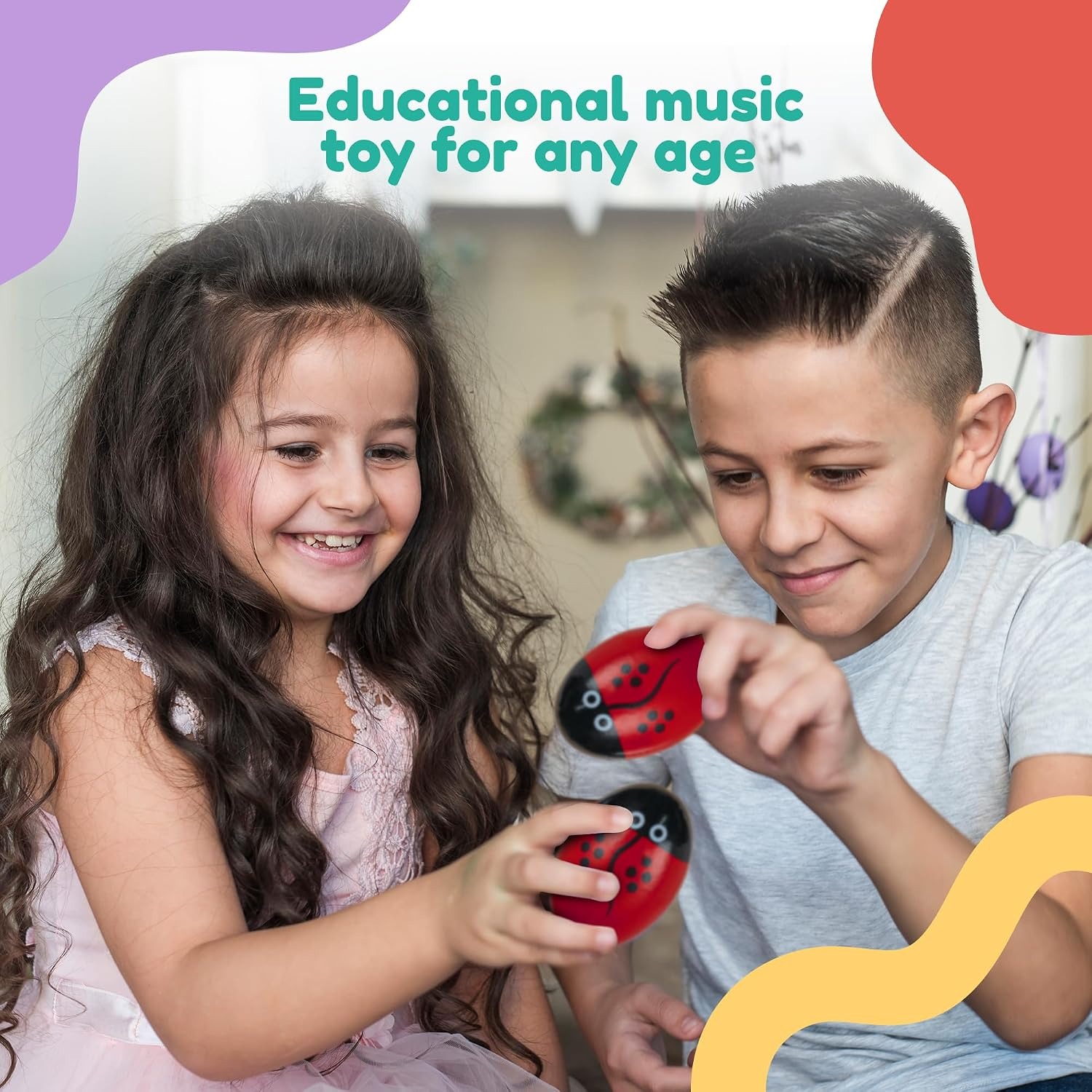
Between three and five is the sweet spot. At that age children are building hand control, copying rhythms, and starting to play alongside other children rather than just next to them. A kids musical instruments set gives all three of those things something to work with.
It also suits group settings. Nursery rooms, playgroups, childminders and home-school music corners all get use out of a set where several children can hold an instrument at once. The carry bag matters more in those settings than anywhere else, since instruments that live in a bag come back to the bag.
Grandparents are a quiet third audience. A set like this stored at a second house means there is something ready when the grandchildren arrive, and 1.2 kg packed into 30 x 24 x 10 cm is easy to keep in a spare-room cupboard.
How to choose between sets
Piece count gets quoted a lot, but it is not the only measure. Look at what the pieces actually are. A set with 30 identical small shakers is less useful than one with ten different sound types. Here the spread across shaking, striking, scraping and ringing is the real value, not the headline number.
Check whether there is any assembly. This set lists assembly as not required, which means it works as a gift that can be opened and played with immediately. That sounds minor until you have watched a child wait while an adult hunts for a screwdriver on a birthday morning.
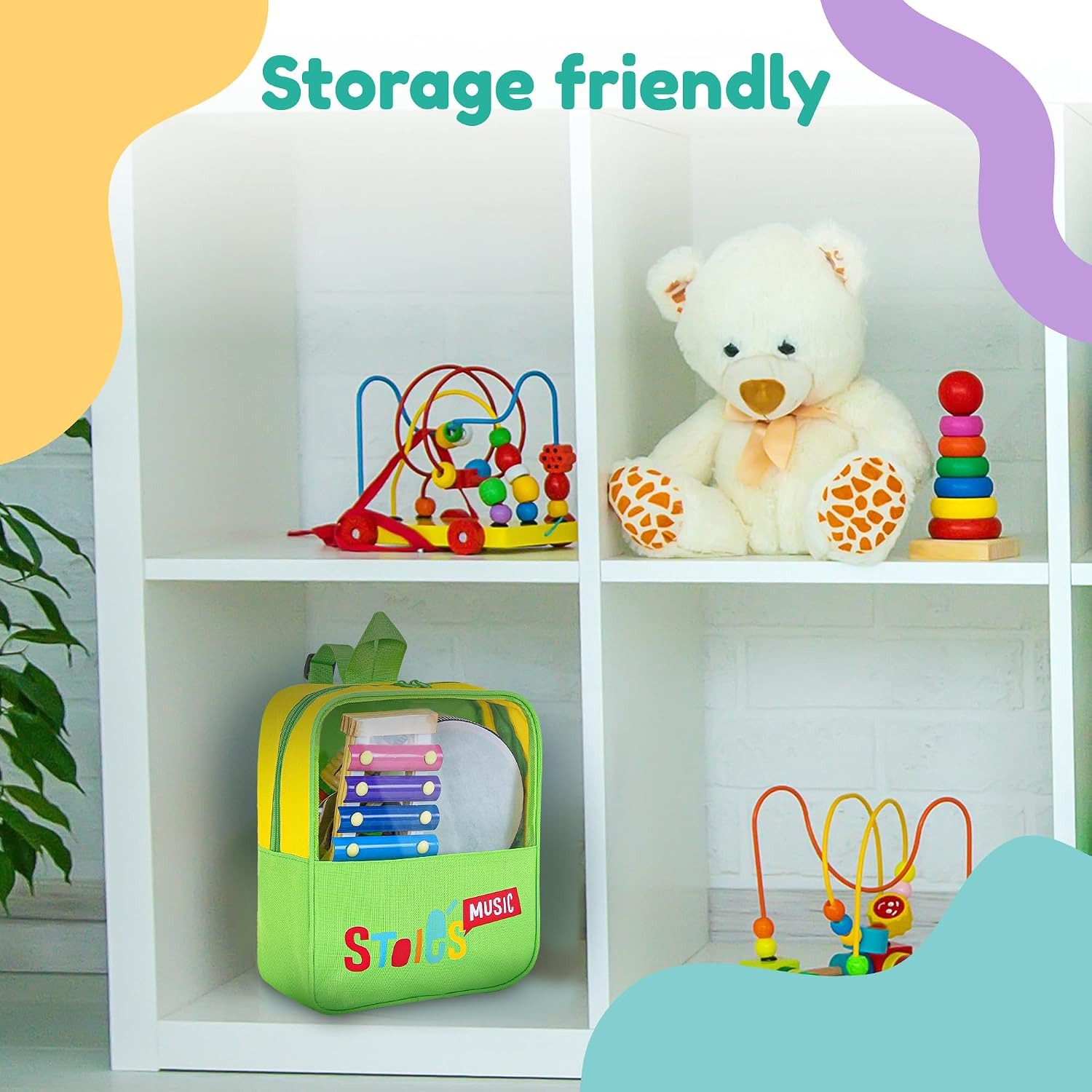
Think about storage before you buy. Small instruments scatter. A set with a bag or box included has a built-in answer; a set without one will eventually spread across a floor and lose its castanets. The green bag here is listed as part of the set.
Finally, be realistic about noise. Every percussion set makes sound, that is the entire point. Wooden pieces are gentler than electronic toys with speakers, but the triangle and wrist bells still carry. Deciding in advance which room this lives in saves a conversation later.
Looking after it
Care for wooden toys is simple and mostly about keeping water away. Wipe pieces with a lightly damp cloth, then dry them right away. Do not soak anything, do not run pieces under a tap, and keep the whole set out of the dishwasher and washing machine.
Storage does the rest. Keep the bag somewhere dry and out of direct sunlight. Damp rooms and hot cars both work against wood over time, one by swelling it and the other by drying it out. A cupboard shelf is fine.
Every few weeks it is worth a quick look over the pieces. Check for splinters along edges, loose fastenings on the wrist bells, and any splits in the sticks. Wooden toys usually give plenty of warning before a piece needs retiring, as long as somebody is looking.
Getting more out of it
A few simple games stretch the set a long way. Copy-the-rhythm is the easiest. An adult taps a short pattern, the child copies it, then they swap roles. Children find being the leader much more interesting than being the follower, so swap often.
Sound-matching works well too. Lay out four instruments, have the child close their eyes, play one, and ask which it was. That trains listening rather than just noise-making, and it is the skill that carries over if a child later takes up a real instrument.
Playing along to a song on the radio is the least structured and often the most popular. It does not need to be in time. The goal at this age is enjoyment and participation, not accuracy.
The short version
This is a 34 piece wooden percussion set for ages 3 and up, with maracas, a tambourine and drumsticks, a xylophone with mallets, a singing stick, wrist bells, castanets, egg shakers, a triangle and a green carry bag. It is made from wood in a multicolour finish, weighs 1.2 kg, measures 30 x 24 x 10 cm packed, and needs no assembly.
It suits a single preschooler, a pair of siblings, or a small group in a nursery setting. Care is a damp wipe and dry storage. If you want one purchase that covers a child's whole first encounter with rhythm, a set like this does more work than any single instrument at the same price.