

The complete guide
How to Choose and Run a Sports Day Games Kit at Home
The afternoon that needs filling
Every parent knows the gap. It is a dry Saturday, the children have been indoors since breakfast, and someone suggests going outside. Ten minutes later a ball has gone over a fence, two people are arguing about whose turn it is, and everyone wanders back in.
The problem usually is not the weather or the garden. It is that one toy only supports one game, and one game only holds attention for so long. Once it gets boring there is nothing to switch to.
A sports day games kit fixes that by giving you several events in one bag. When the egg and spoon race runs out of steam you move to ring toss. When ring toss gets predictable you set the cones further apart and turn it into a throwing contest. The pieces are the same, the game changes, and the afternoon keeps going.
What you actually get
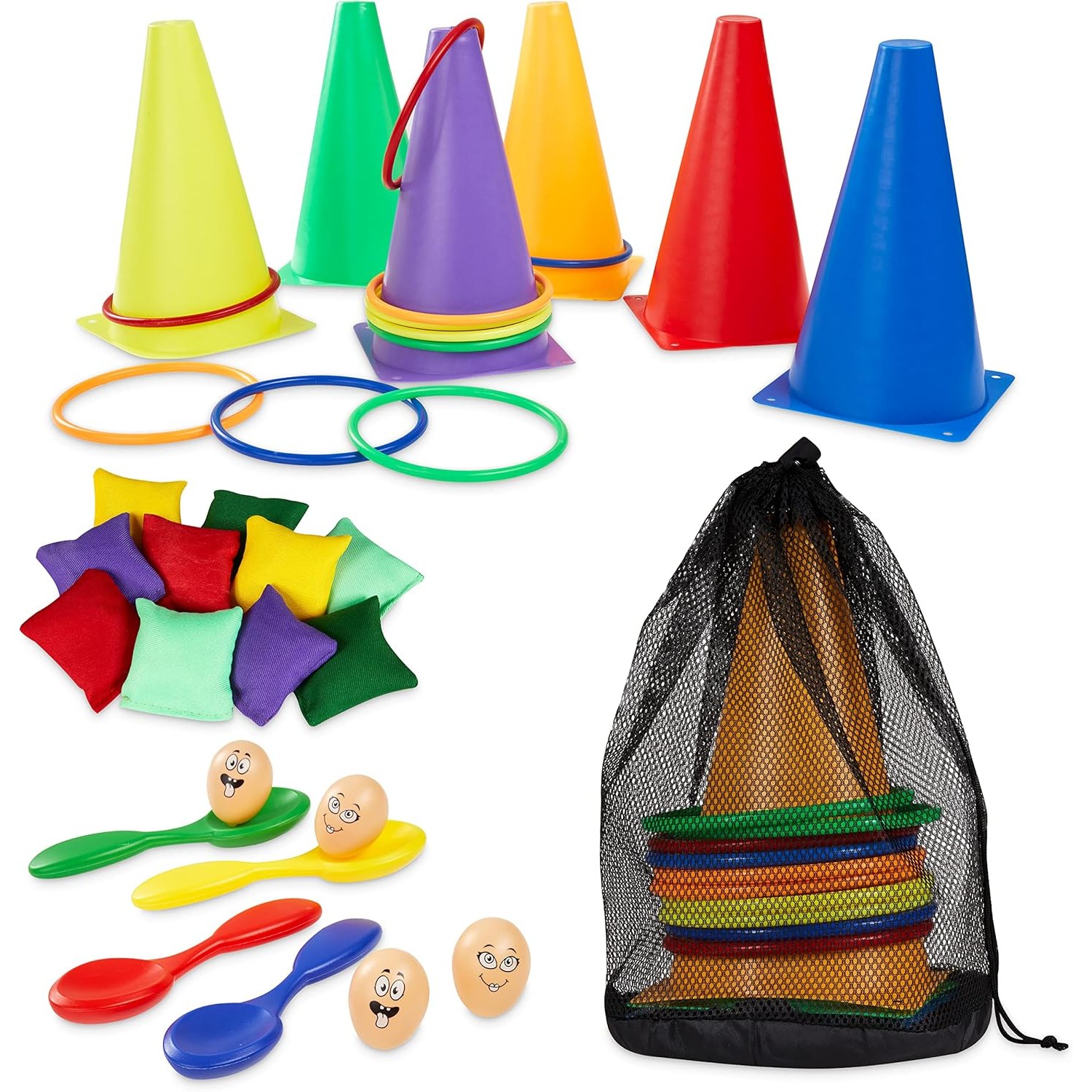
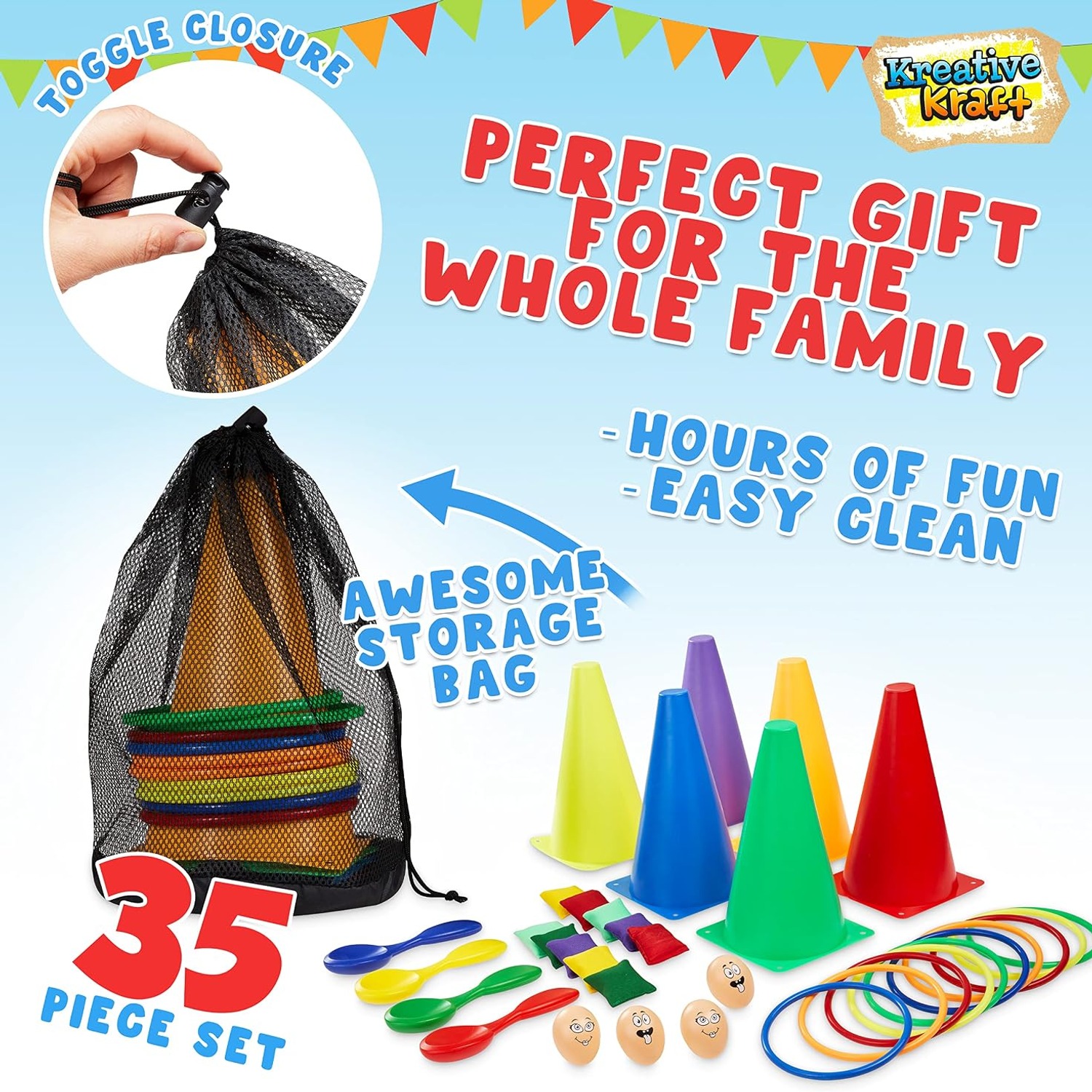
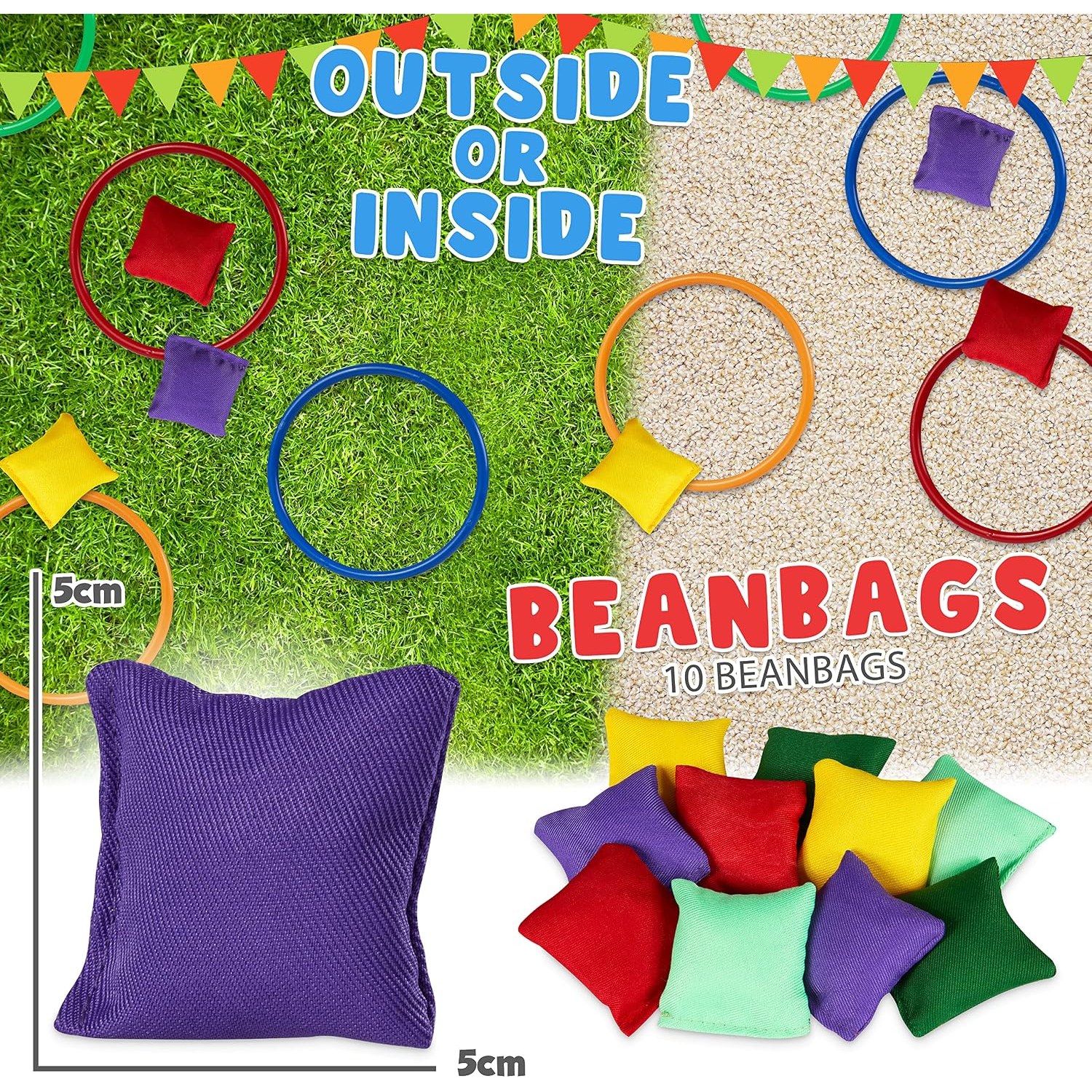
This set holds 35 pieces. There are 10 bean bags, 10 rings, 6 safety cones, 4 eggs, 4 spoons and a storage bag to keep everything together.
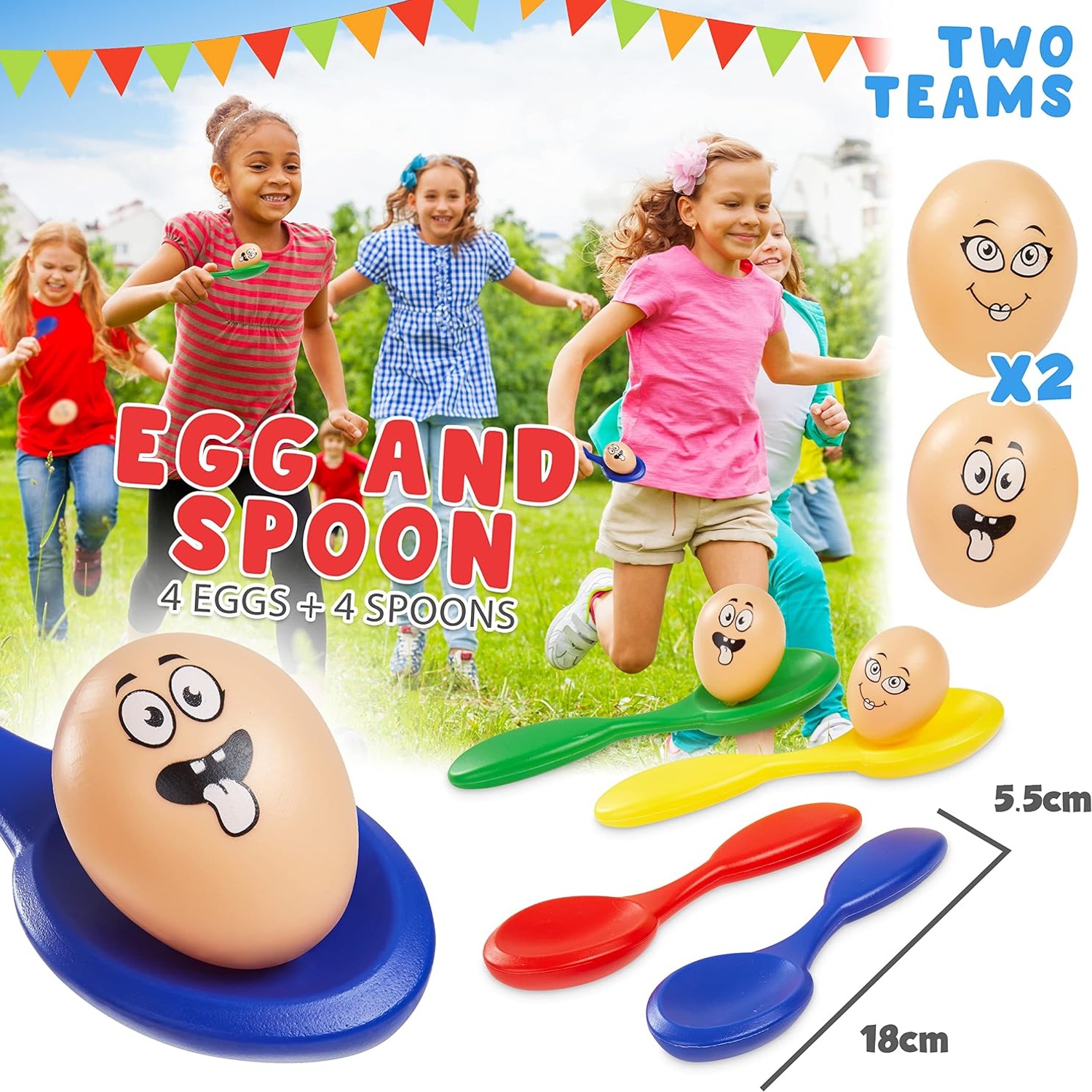
That list matters more than any marketing claim. Ten bean bags is enough for two teams of five. Six cones is enough to mark a start line, a turning point and two or three targets. Four eggs and spoons lets you run heats rather than making everyone wait for one racer at a time.
The storage bag sounds like a small detail and it is not. Garden game sets usually die in the same way, which is one piece going missing at a time until the set is unplayable. A bag that everything returns to at the end is the difference between a kit you use for three summers and a kit you use once.
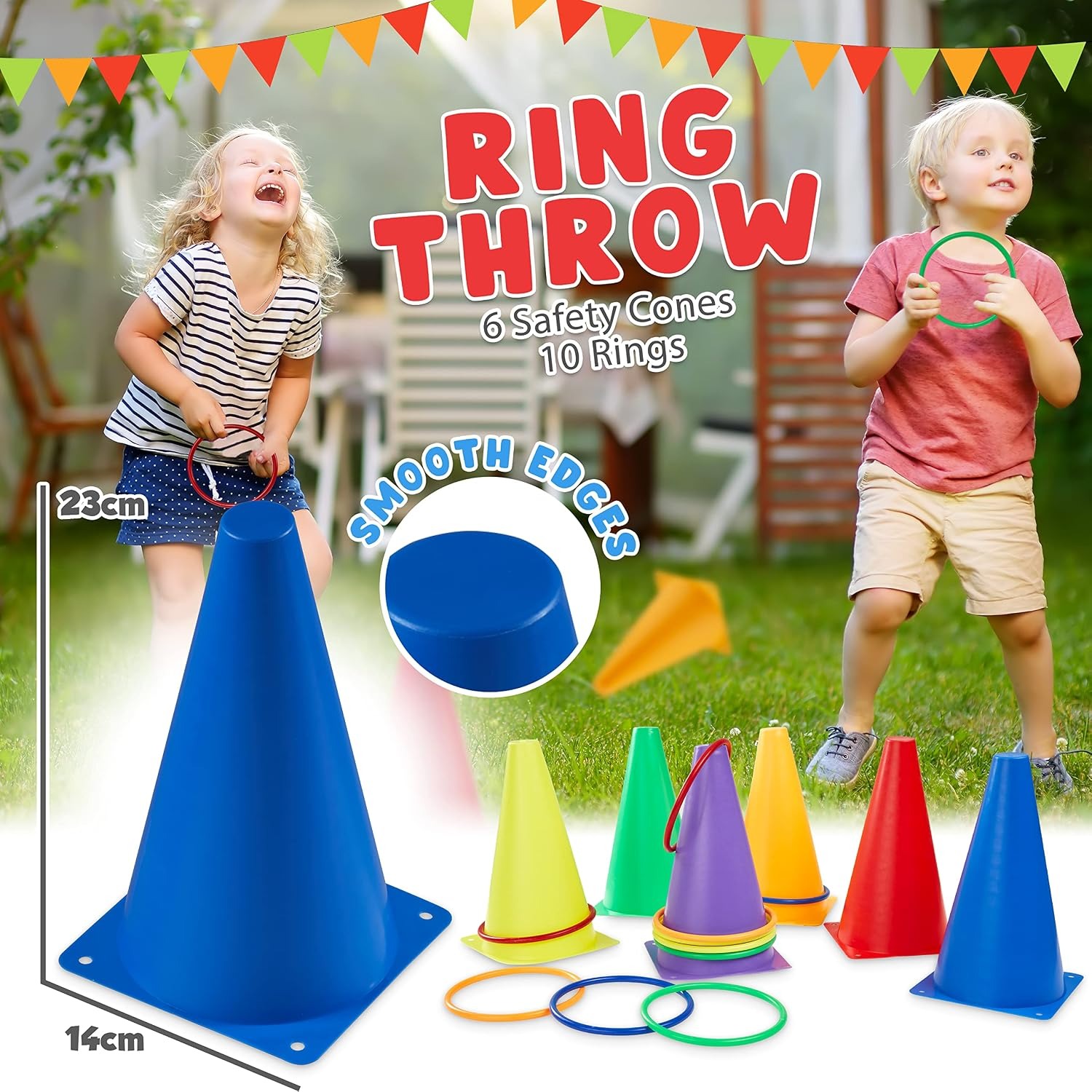
Packed size is 14 x 14 x 23 cm, so it stores easily and travels without argument. Material is listed as plastic and the colour is multicolour, which helps with sorting teams and spotting pieces in grass.
How the games work
None of these games need explaining twice, which is part of the appeal.
The egg and spoon race is a balance test. Each racer holds a spoon, sets an egg on it, and walks or runs a marked course without dropping it. Younger children do better with a short course and no running rule. Older kids can run, turn at a cone, and come back.
Ring toss is aim and judgement. Stand the cones up at a set distance, hand each player rings, and score by how many land. Move the cones back to raise the difficulty.
Bean bags open up the most variations. Throw for distance, throw at a target cone, pass along a line against the clock, or balance one on your head while walking a lane. The best bean bag toss set is simply the one with enough bags that nobody is standing around waiting, and ten is plenty for a family group.
Cones are the quiet workhorse. They are the start line, the finish line, the slalom course and the target, depending on what you need in that moment.
Who this suits
Families with children roughly between five and twelve get the most direct use. The games are easy enough that a five-year-old can take part and competitive enough that a twelve-year-old still cares about winning.
Party hosts are the second group. Fifteen minutes of structured games breaks up the chaos of a birthday party better than almost anything else, and it costs nothing to run once you own the kit.
Teachers, scout leaders and holiday club staff use sets like this because one bag covers several activity stations. For a class-sized group you would want more than one kit so children are not queueing.
Adults join in more than they admit. A garden party where the grown-ups run an egg and spoon race is a different kind of garden party, and people remember it.
Choosing the right set
A few things are worth weighing before you buy any garden games set.
Piece count comes first. Count how many people will realistically play at once, then check whether there are enough items to keep them all busy. A set with two bean bags and one cone leaves most of the group watching.
Surface matters next. Lightweight plastic cones work well on grass, hard courts and indoor halls. On sand or in strong wind you may need to weigh them down, which a bean bag does neatly.
Then think about storage. Anything without a bag ends up scattered. Anything in a bulky box ends up at the back of a shed. A compact bag you can grab on the way out of the door is the version that gets used.
Age range is the last check. Simple games with adjustable distances stretch across more ages than games with fixed rules. This kit scales by changing distances, lane widths and whether running is allowed.
Running a proper sports day at home
If you want more than a casual kickabout, a bit of structure helps.
Pick three or four events and write them on a scrap of paper where everyone can see. Knowing what comes next stops the drift that kills outdoor play.
Set the course with cones before you call anyone outside. Two minutes of prep saves ten minutes of standing around.
Mix individual and team events. Egg and spoon is individual and personal. Bean bag relay is a team event, and it pulls in children who do not enjoy racing on their own.
Score loosely. Points per event, a rough tally, and a winner at the end is enough. Over-complicated scoring turns a game into admin.
Finish while people still want more. Ending on a high means they ask to play again next weekend, which is the whole point.
Looking after it
Care is straightforward. Wipe the plastic pieces with a damp cloth and dry them before packing away. Spot clean the bean bags and the storage bag by hand and let them air dry fully, because damp fabric packed in a bag will go musty.
Keep the kit indoors or in a dry shed between uses. Plastic left in direct sun for months can fade and turn brittle, and rain does the fabric no favours.
Do a quick count when you pack up. Finding a missing bean bag at the end of a game is easy. Finding it three weeks later under a hedge is not.
Check for cracks or splits before each session, particularly on cones that have been stood on. Anything damaged is better retired than played with.
The short version
This is a 35-piece kit with 10 bean bags, 10 rings, 6 safety cones, 4 eggs, 4 spoons and a storage bag, packed at 14 x 14 x 23 cm. It covers egg and spoon racing, ring toss, sack race style events and bean bag games, so one bag handles a whole afternoon.
It suits back gardens, parks, campsites, birthday parties and school activity days. Setup takes a couple of minutes, nobody needs the rules explained, and everything goes back in the bag at the end.
If you have been looking for a reliable way to get children outside and moving without buying four separate toys, this is a sensible place to start.