
The complete guide
Flower Press Craft Kits, A Buyer's Guide For Parents
The problem this solves
There is a particular hour that every parent knows. School is finished, the garden is wet, dinner is not ready, and the child has run out of ideas. The tablet is sitting there being very persuasive. You want something that will hold their attention for more than four minutes, will not need you to sit beside them the whole time, and will not leave paint on the chairs.
That is the gap a flower press craft kit fills. It is a box of parts with an obvious goal built into it. The child opens it, sees petals and stems and an empty vase, and immediately understands what they are meant to do. No instructions to decode, no first step that needs an adult.
What makes this particular format work is that it is dry. Nothing is wet, nothing sets, nothing stains. Glue-based craft kits are great fun and also a commitment: you are signing up for the cleanup, the drying time and the permanently joined mistakes. A press-together kit asks for none of that.
How it actually works
The build is simple enough that a four-year-old catches on within a minute or two, which is the mark of a well-designed kids' kit.
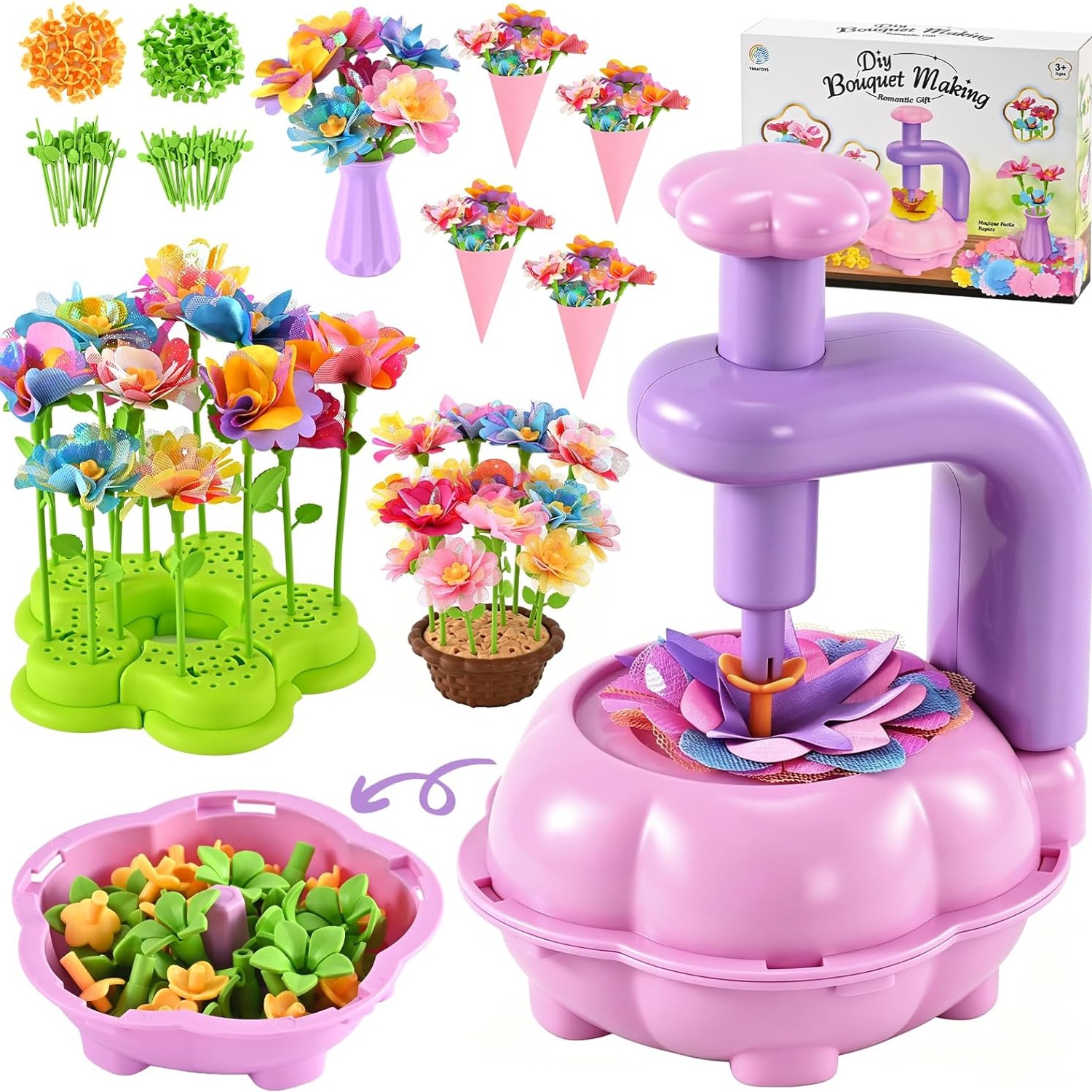
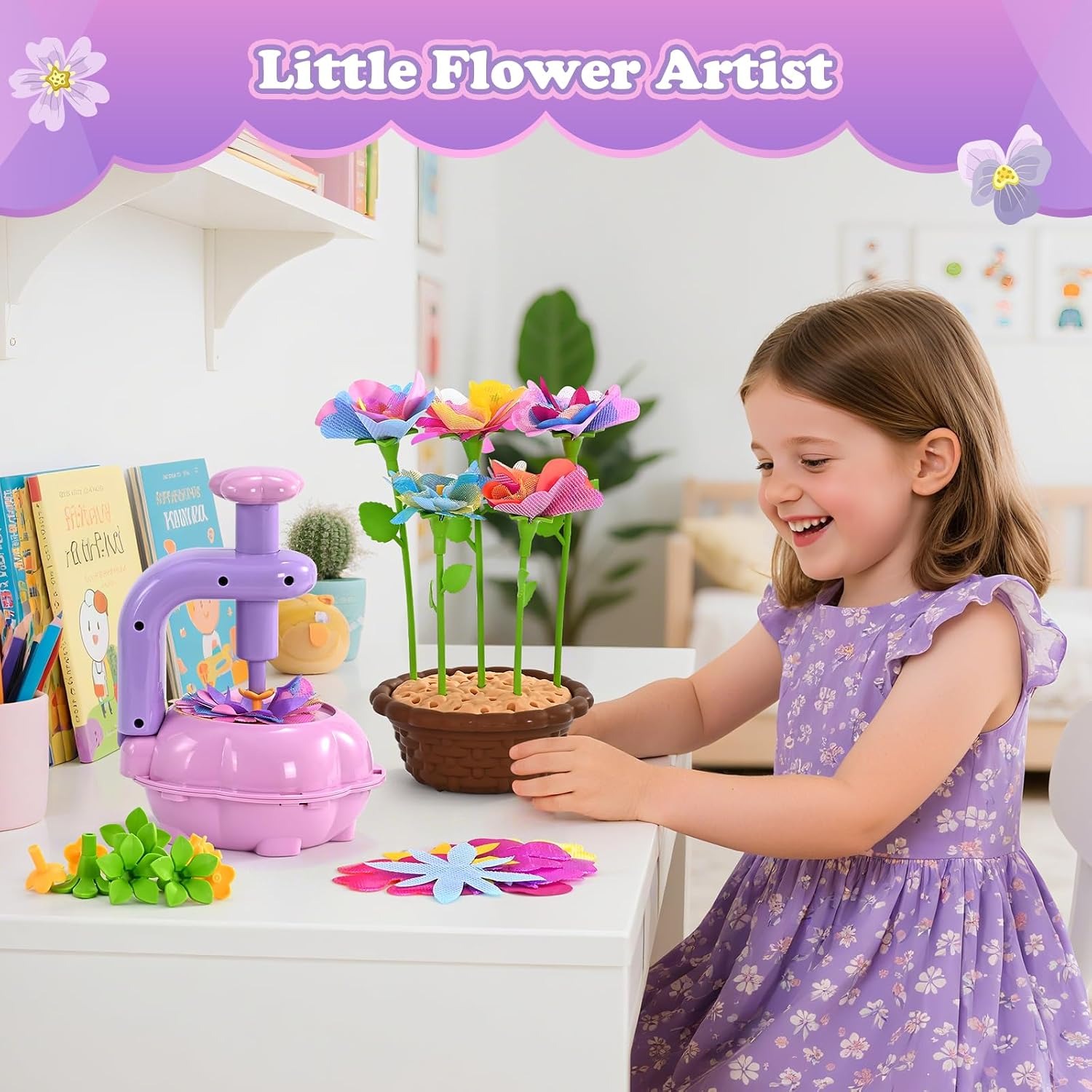
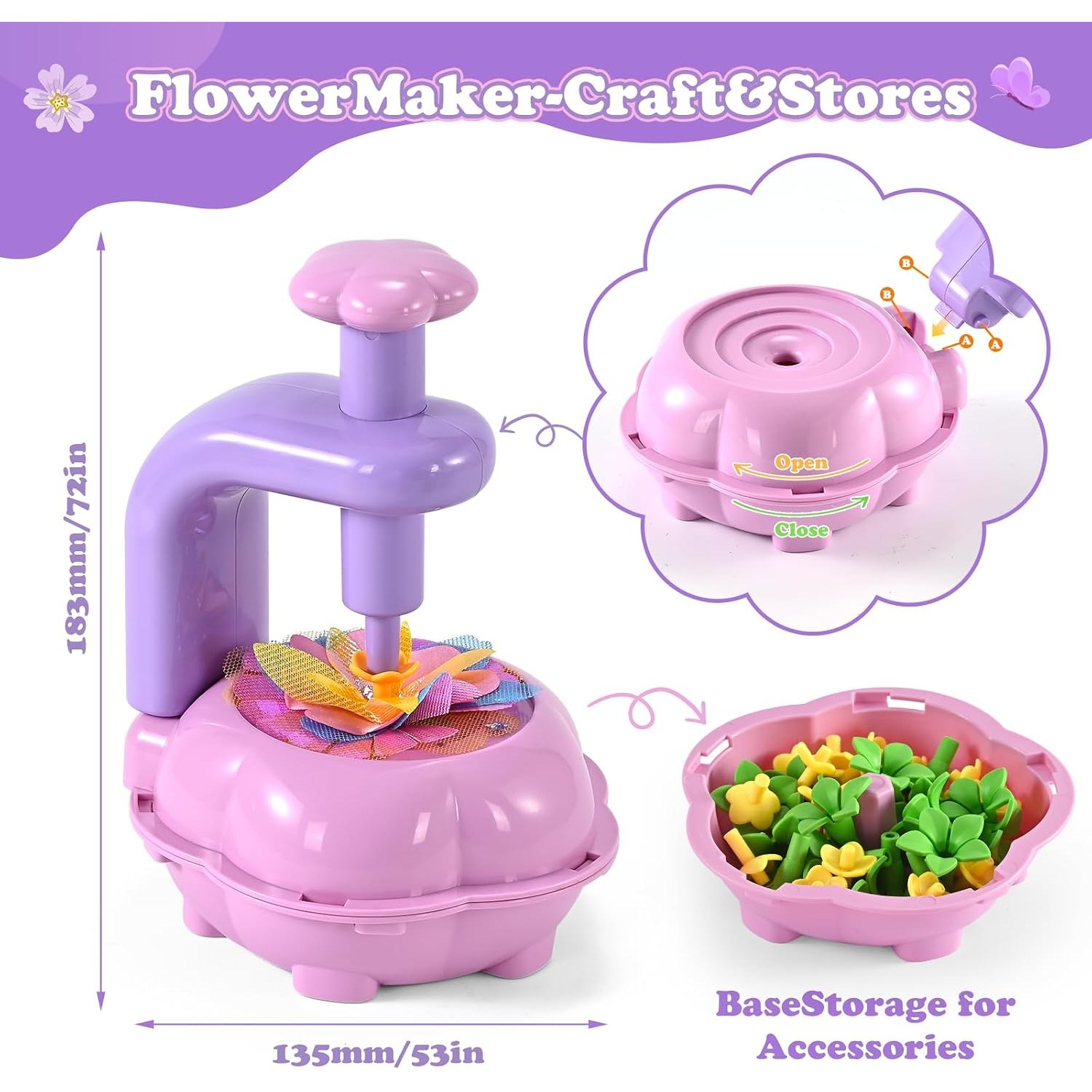
You start with a petal set. It pushes onto a flower centre. The centre then fits into a holder, and the holder joins onto a stem. There are long stems and short stems, so finished flowers can stand at different heights. Completed stems go into the vase, or sit on the display bases that come in the box.
Because nothing is glued, every step is reversible. This matters more than it looks. A child who glues the wrong petal on has made a permanent mistake and may well give up. A child who pushes the wrong petal on simply pulls it off. That small difference changes the emotional temperature of the whole activity.
This kit holds 221 pieces, covering petals, flower centres, holders, long and short stems, wrapping papers, gift cards, display bases and the vase. The piece count is the thing to pay attention to when comparing craft kits for kids. A kit with thirty pieces gives you one arrangement and then you are done. A kit with two hundred-plus gives you a bouquet, a rebuild, and another bouquet after that.
Who it suits
The stated range is ages 4 to 12, and that is a wide band for a reason. Children at either end use it quite differently.
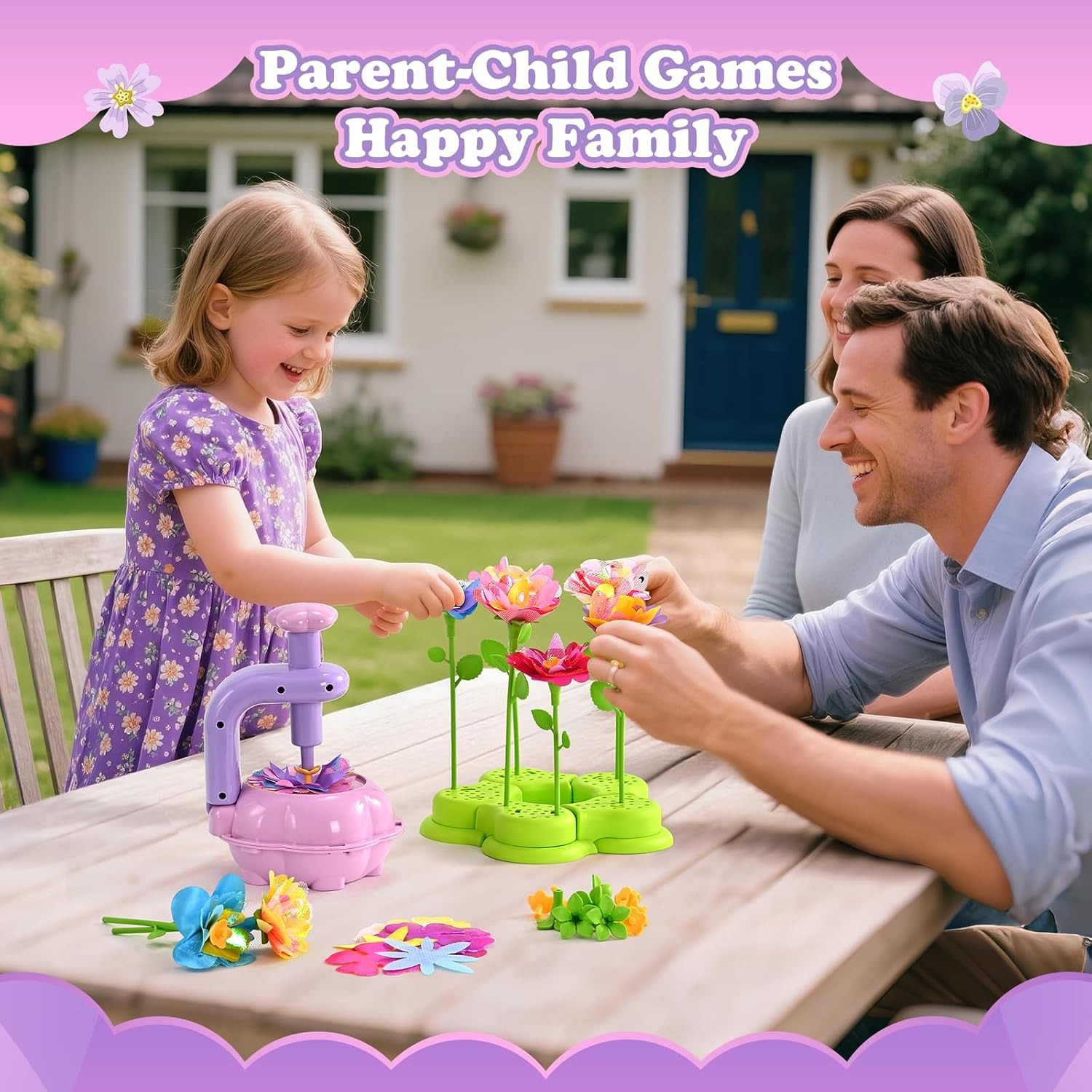
At four or five, the appeal is mechanical. They like the click of parts going together and the colours sitting side by side. They will build a flower, hold it up, and want you to look. An adult nearby helps for the first session, mostly to show how the holder joins the stem.
By seven or eight, something shifts. The child stops assembling and starts designing. They begin to care whether the purple sits next to the pink. They plan a bouquet before they build it. This is the point where a kit like this earns its keep, because the child is no longer following the kit, they are using it.
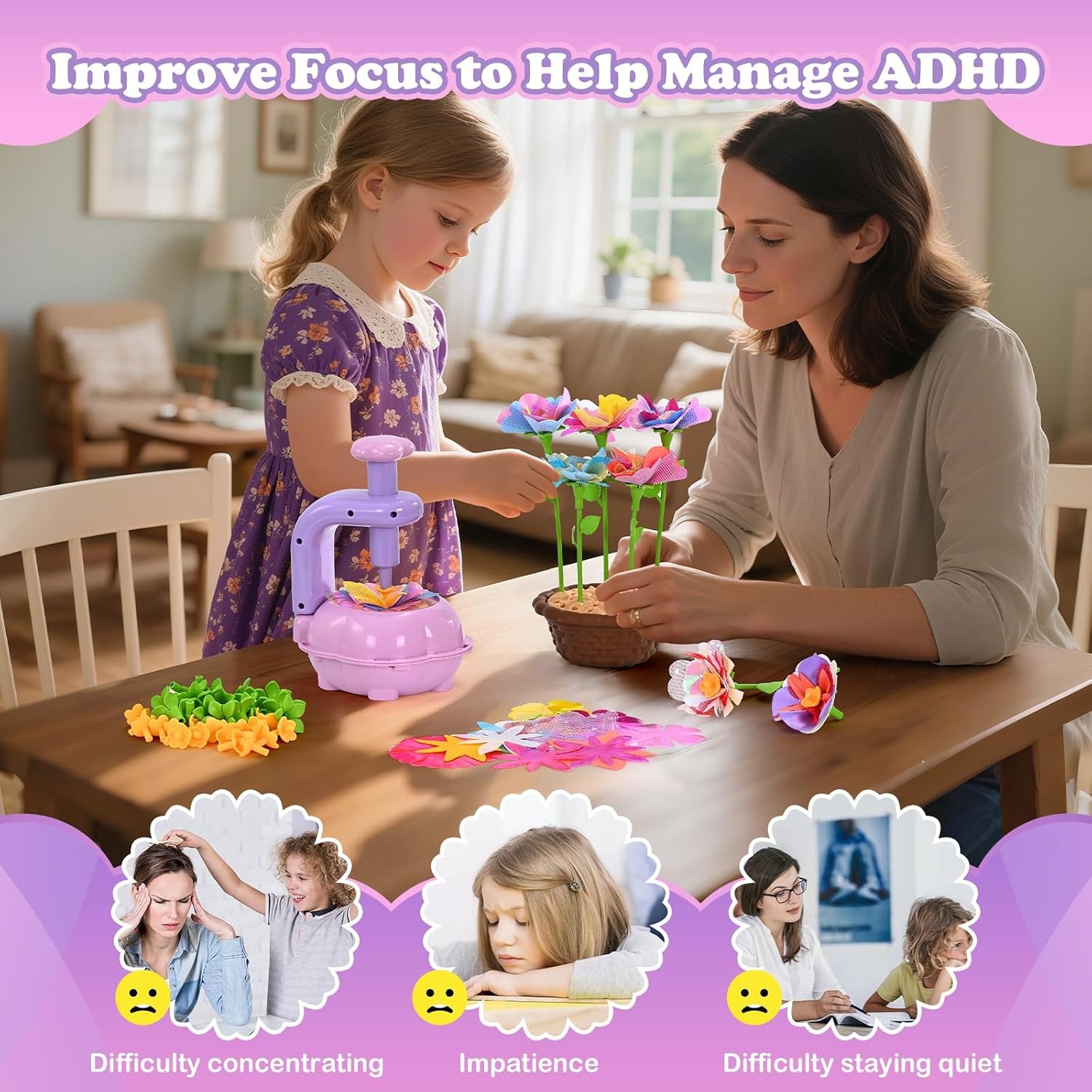
By ten or twelve, it becomes a quiet, hands-busy activity rather than a toy. Some children use it the way adults use knitting, as something to do while thinking about something else. It also works well for children who like things to be neat and finished.
It suits a child who likes building more than it suits a child who likes mess. If your child's favourite activity is covering a page in paint, this kit may feel restrained to them. If they prefer sorting, arranging and lining things up, it is a strong match.
How to choose between kits
A few things are worth checking before you buy any nature craft kit.
Piece count against price. More pieces means more rebuilds and more time. Divide the price by the piece count and you get a rough sense of value, though quality matters too.
Whether consumables are involved. Kits that use glue, paint or air-dry clay get used once. Kits that press together get used repeatedly. If you want longevity, dry kits win.
Whether the display is included. Half the pleasure for a child is showing the result. This kit includes a vase and display bases, so the finished bouquet has somewhere to live. Kits without a display option often end up as a pile of loose flowers on a shelf.
Storage. Check the box is sturdy and reclosable. Small parts that cannot be put back tidily tend to disappear into carpets within a fortnight.
Age honesty. Treat age ranges as a guide, not a rule. You know whether your seven-year-old has the patience of a five-year-old or a ten-year-old.
Setting it up well
A little preparation makes the first session go better. Clear a flat table or use a tray with a lip, which stops pieces rolling off the edge. Tip the petals into one shallow bowl and the centres into another so the child can see what they have to work with.
Build one flower yourself, slowly, while they watch. Then hand over completely. The urge to correct their colour choices is strong and worth resisting, since the choosing is the point.
If you have two children sharing, split the petals between them at the start. It saves a lot of negotiating later.
Keeping it going
The pieces do not wear out quickly, and a kit like this can stay in rotation for a long time if it is looked after. Wipe parts with a slightly damp cloth when they get dusty and let them dry completely before packing them away. Store the box somewhere dry and out of direct sun, since strong light fades bright colours over time.
The main threat to any 221-piece set is not damage, it is drift. Pieces end up under sofas and in schoolbags. Making a habit of a two-minute tidy at the end of each session keeps the set whole. Small resealable bags for each petal colour speed up the next build considerably.
As a gift
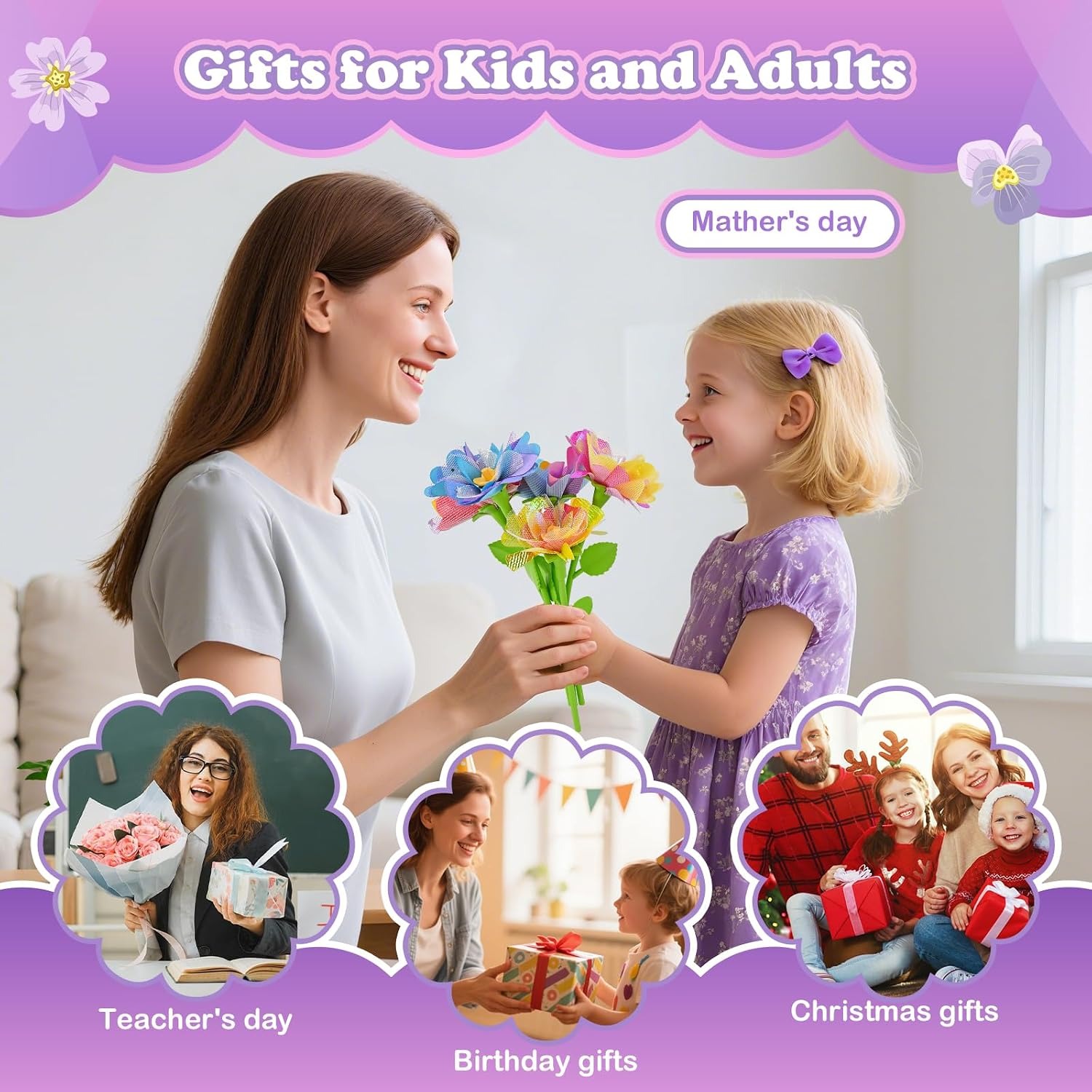
It covers a good range of occasions. It works for birthdays, Easter baskets, Christmas stockings and end-of-term teacher presents. It arrives complete in its own box measuring 31.9 by 24.6 by 8.3 cm, so there is no assembly or extra shopping for whoever is giving it.
It also has a nice second life as a gift-making tool. The kit includes wrapping papers and gift cards, so a child can build a bouquet, wrap it and write a card for a grandparent. A handmade present a child has actually made themselves tends to be kept.
The short version
A flower press craft kit is a dry, reusable, screen-free activity with a clear goal and a tidy finish. This one holds 221 pieces, including petals, centres, holders, long and short stems, wrapping papers, gift cards, display bases and a vase. Nothing needs glue or paint, so the table stays clean and mistakes can be undone.
It is listed for ages 4 to 12, in purple, with the parts described as durable, eco friendly and non-toxic. Weight, material and country of origin are not specified by the maker, so we have left those blank rather than guess at them.
If you want an activity that a child can start alone, pause halfway through and come back to tomorrow, this format does that well. If you want something messy and expressive, look at paint instead.