
The complete guide
How to Choose an All-in-One Art Set for Kids
The problem with art supplies at home
Ask most parents where the colouring pencils are and you get the same answer: some in the kitchen drawer, some in a school bag, a few under the sofa. The markers have lost their lids. The paint set from two birthdays ago has a cracked pan of yellow and nothing else. None of this stops a child wanting to draw. It just adds five minutes of hunting before anything gets made, and five minutes of hunting is usually enough for the urge to pass.
An all-in-one case solves a boring problem in a boring way, which is why it works. Everything lives in one box. The box opens, the child picks a colour, the box closes. There is no decision about which set to get out and no search for a sharpener. For a lot of households, that single change is what turns drawing from an occasional thing into a regular one.
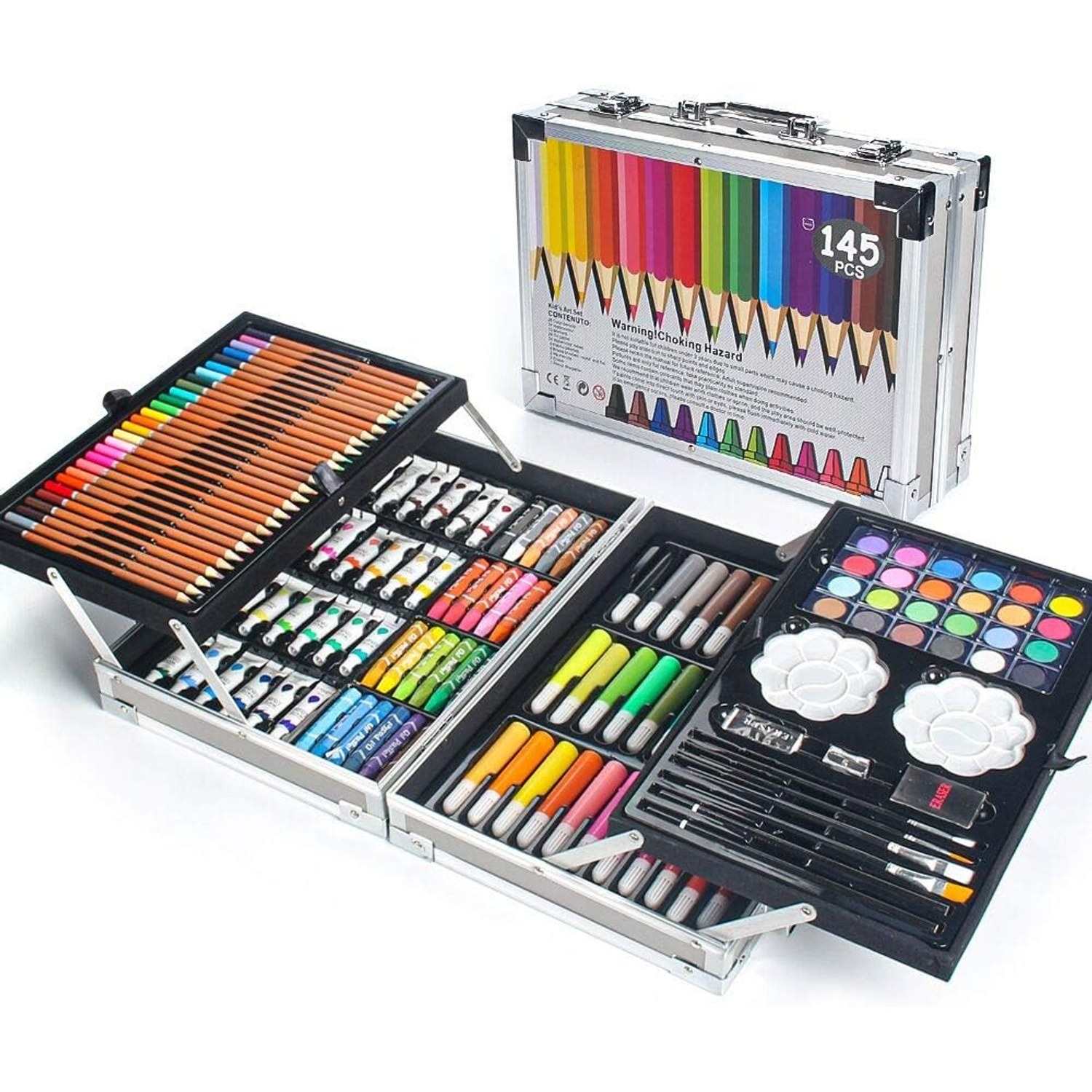
This guide covers what to look for in a kit like the 145-piece set on this page, how the different mediums inside it actually behave, who it suits, and how to keep it usable past the first month.
What a 145-piece set actually contains
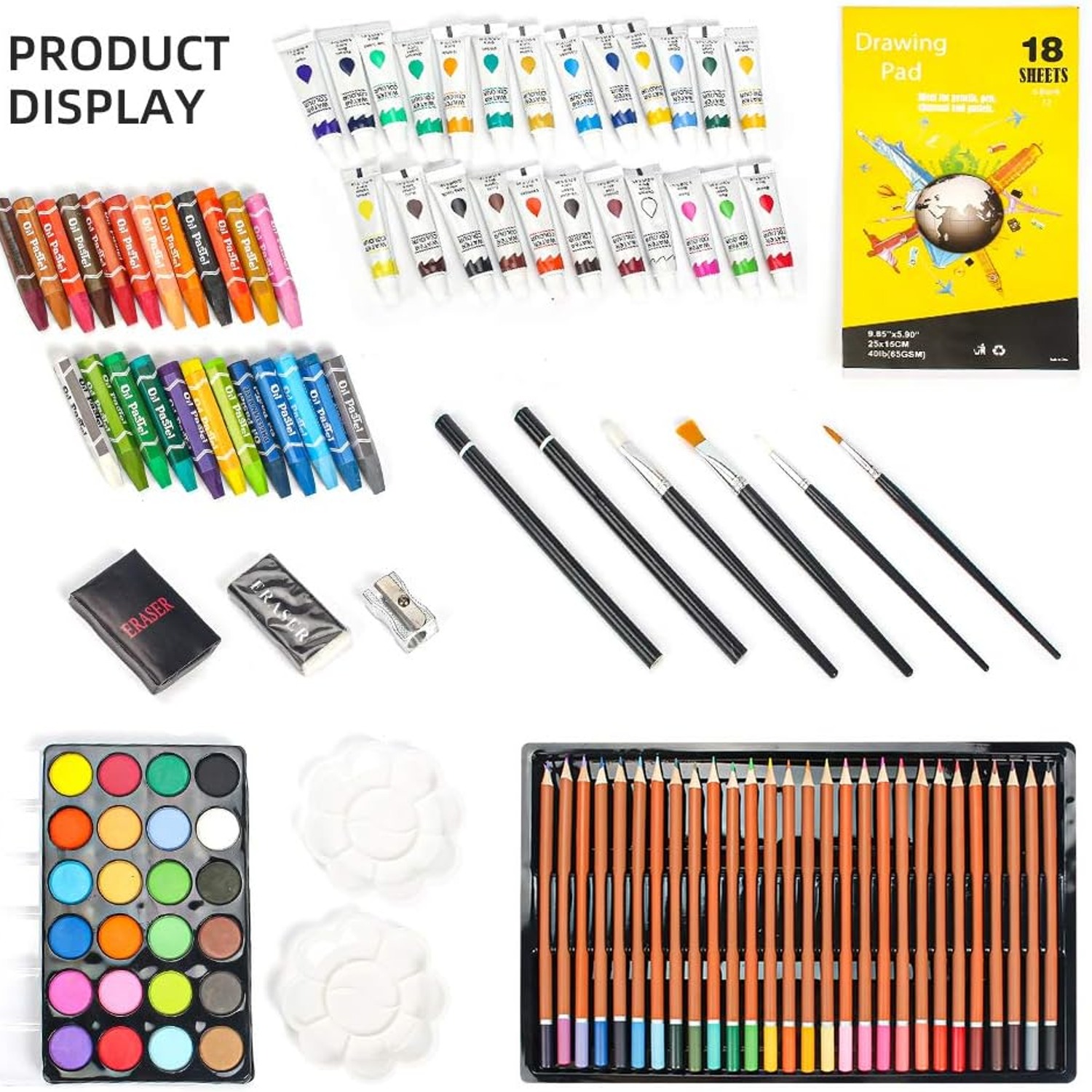
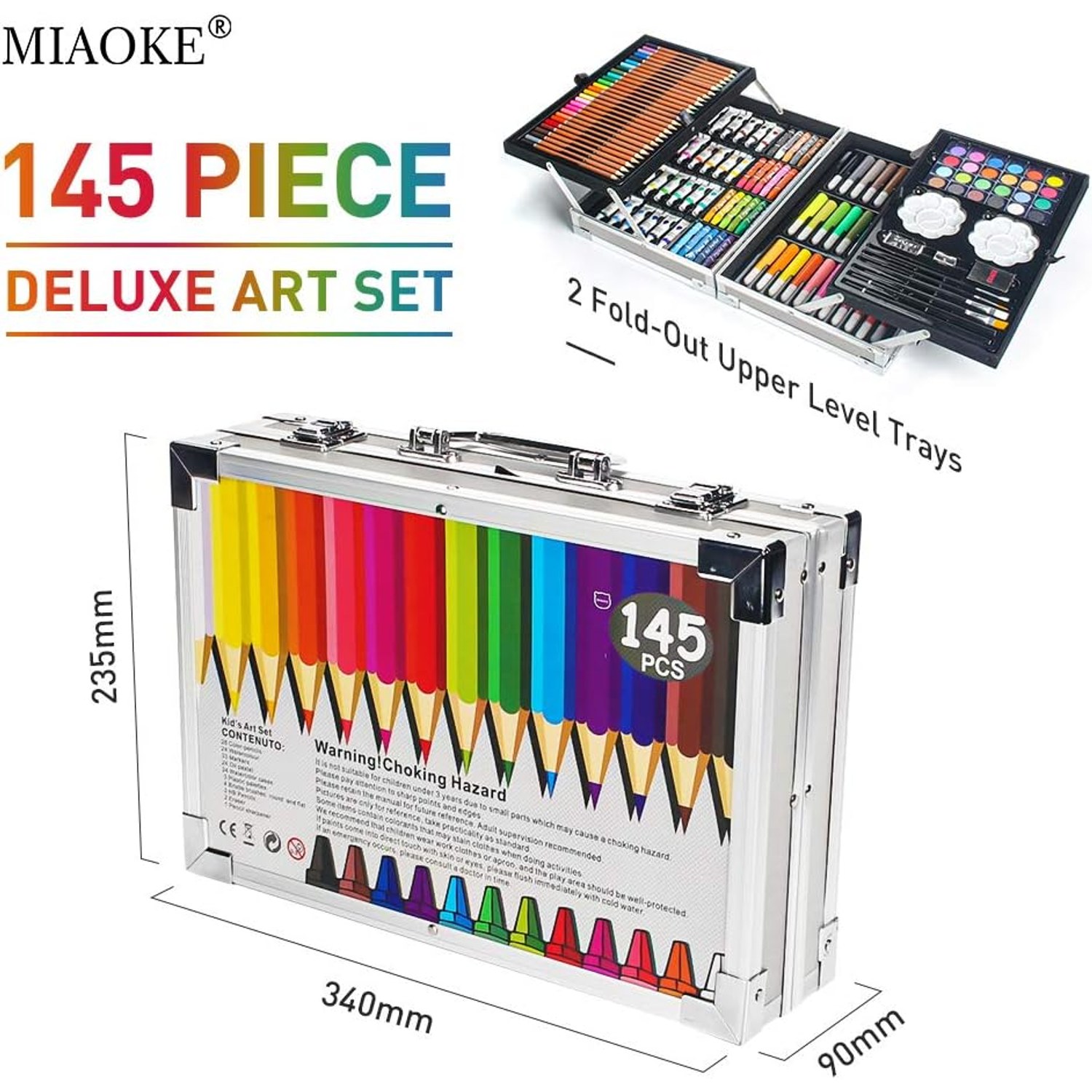
Big piece counts can be misleading, so it helps to read the breakdown. Here the 145 pieces are 28 colouring pencils, 33 markers, 24 oil pastels, 24 watercolour cakes, 24 tubes of acrylic paint at 6 ml each, 4 bristle brushes in round and flat shapes, 3 plastic palettes, 2 HB pencils, 2 erasers and a ball sharpener.
That is a genuine spread rather than a padded number. Five different colour mediums are represented, plus the tools you need to use them. The acrylics and watercolours are the ones that need brushes and water, and brushes and palettes are both in the box, so there is nothing missing on day one.
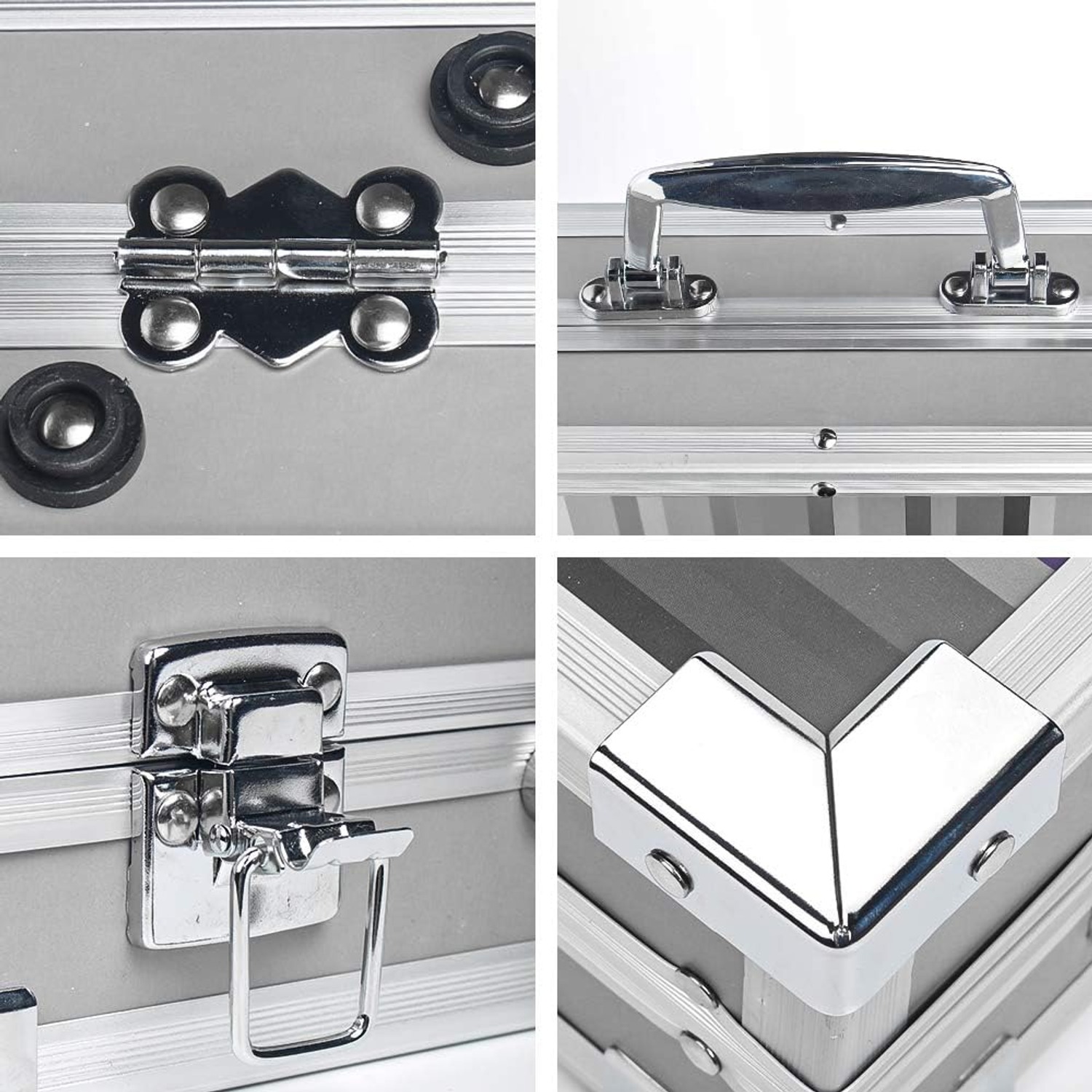
The case is metal, listed as an aluminium box, with folding trays. Closed it is 34 x 9 x 23 cm and the item weighs about 1 kg.
How each medium behaves
Colouring pencils are the workhorse. They are controllable, they do not spill, and they shade well if you teach a light touch and layering rather than pressing hard. Twenty-eight colours is plenty for anything a child will draw.
Markers give flat, strong colour fast. These have a fine 0.5 mm water-based point, which makes them better for outlining and detail than for filling in a whole page. Fine tips also suit older children doing lettering or neat comic panels.
Oil pastels are the messy favourite. They blend with a finger, layer over each other, and give that soft chalky look children associate with "real" art. Put a sheet of newspaper down first.
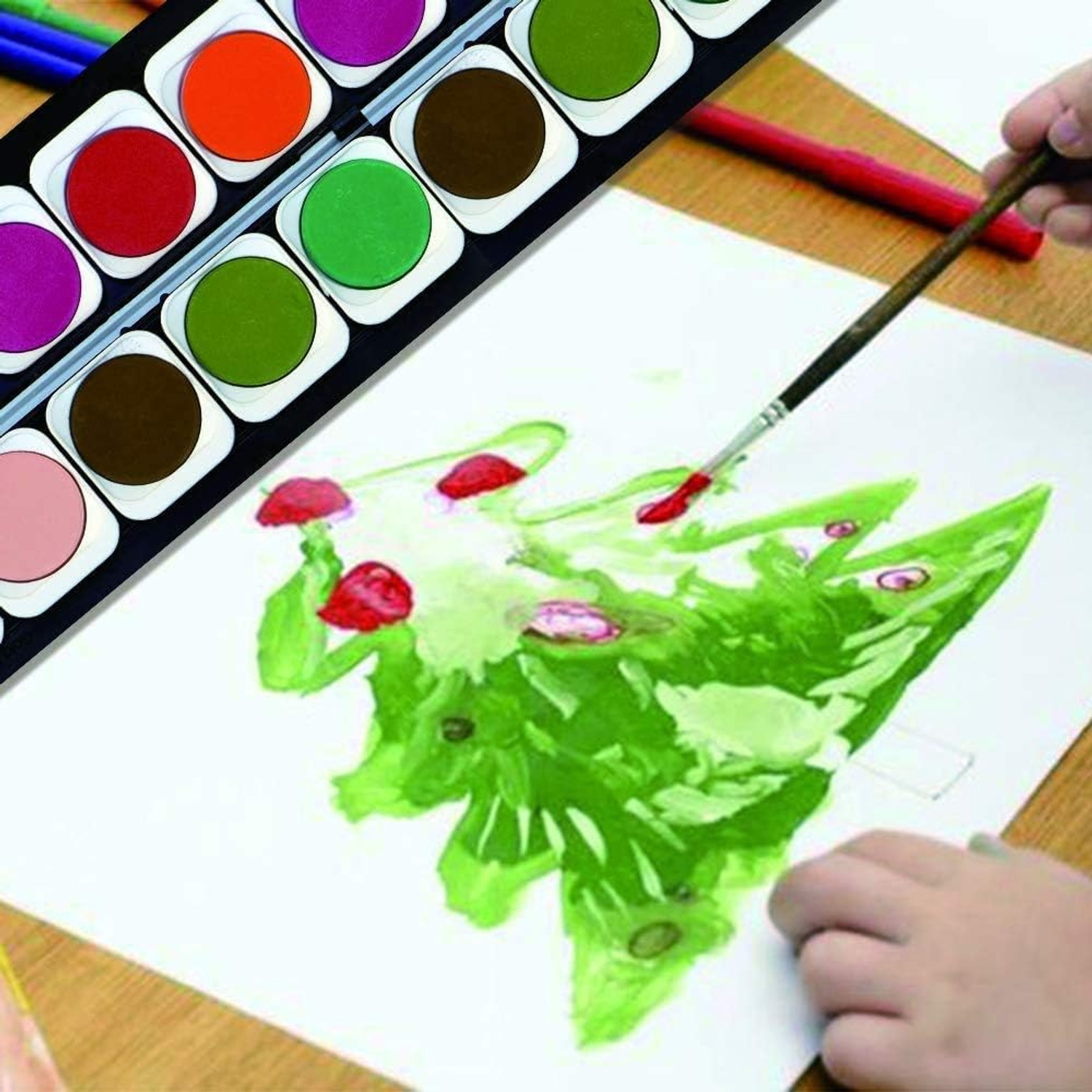
Watercolour cakes need water and patience. The paint goes on transparent, so colours build up in layers and white comes from leaving the paper bare. They teach a different way of thinking about a picture, which is useful.
Acrylics are the opposite. Thick, opaque, and they dry permanent. Six millilitres per tube is small, but acrylic goes a long way when you are painting on paper or card. Rinse the brushes before the paint dries or the bristles set solid.
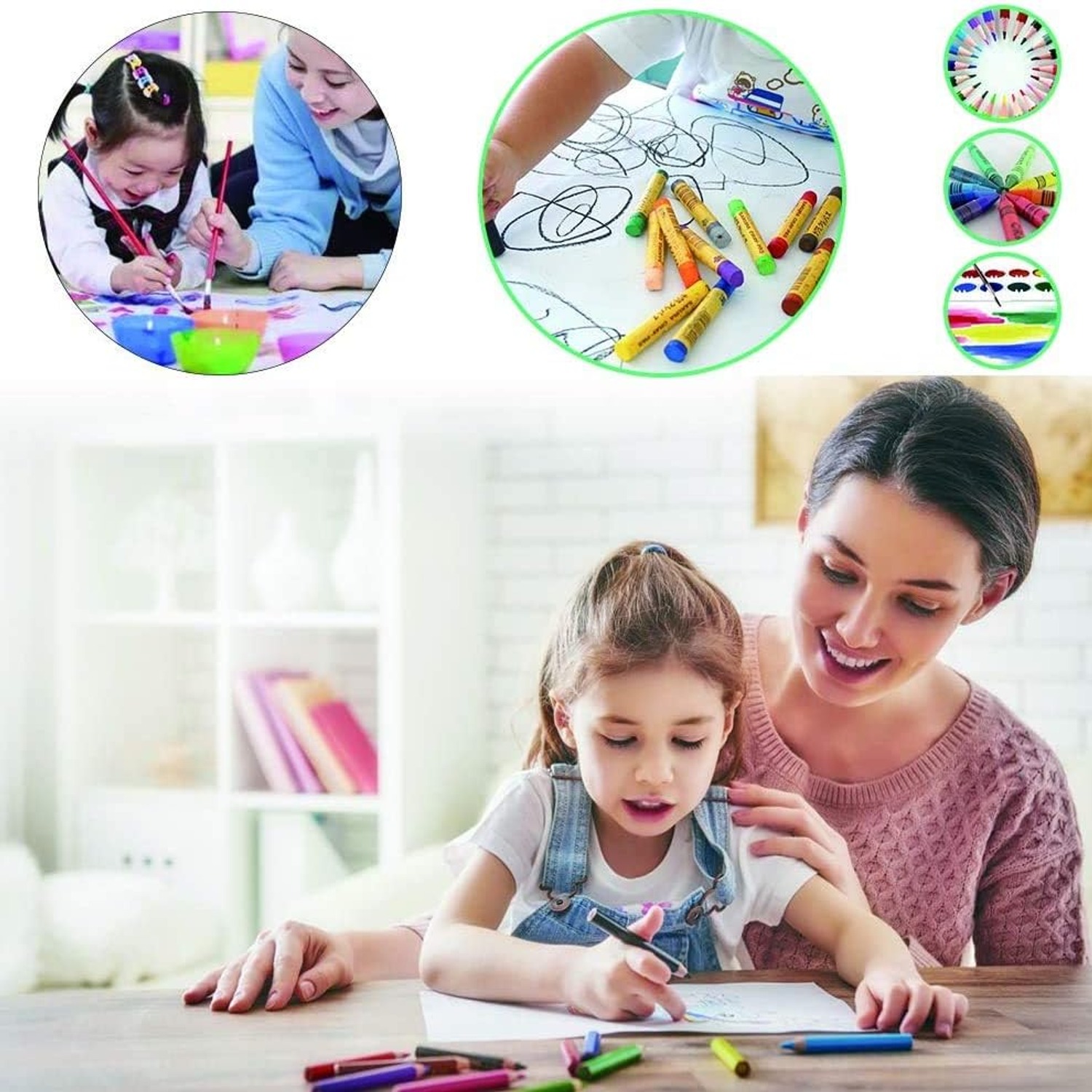
Having all five in one place means a child can find out what they like. Some children are pencil children. Some are paint children. You rarely know until they have tried both.
Who this kind of set suits
School-age children are the main audience. By then, small parts and a sharpener are not a worry, and the range of mediums gives them something to grow into rather than out of. A seven-year-old will mostly use the pencils and markers. The same child at ten may be doing watercolour washes with the same box.
It also suits households where art happens in different places. Because the case is metal and closes flat, it survives a backpack. Grandparents' houses, holiday cottages and long car journeys are all easier with one kit that comes along.
Adults who want a casual kit for sketching and colouring will get use from it too. If you are after the best travel art set for occasional hobby work rather than serious painting, an all-in-one case is a sensible buy. Anyone doing committed work in one medium will eventually want dedicated, higher-grade supplies, and that is fine. This is a starting point, not a final destination.
How to choose between sets like this
A few things separate a good all-in-one kit from a disappointing one.
Look at the case material first. Metal and rigid plastic keep their shape. Card and thin clamshells crack at the hinge within weeks, and once the hinge goes the whole organising idea is lost.
Check the tray design. Folding trays let a child see everything at once. A single deep compartment means digging, and digging means things get lost.
Read the contents list rather than the headline number. A set with 180 pieces made almost entirely of near-identical markers is worse than a 145-piece set with five real mediums. You want range, not repetition.
The maker describes this set as non-toxic.
Think about weight. At roughly 1 kg this one is carryable by a child. Much heavier and the case stays on a shelf, which defeats the point.
Keeping it good past the first month
The honest truth about art sets is that most of them degrade through neglect rather than use. Four small habits prevent nearly all of it.
Cap the markers straight away. A water-based fine tip dries out in days if it sits open, and once it is gone it is gone. Make capping part of the same movement as putting the marker back in the tray.
Rinse brushes while the paint is wet. Acrylic is the one that punishes you for forgetting. Reshape the bristles with your fingers and dry them lying flat or pointing up, never standing in water.
Store the case flat and closed. On its end, trays can shift and loose pencils migrate. Flat and closed keeps the layout intact.
Wipe the case with a slightly damp cloth when paint gets on it, then dry it off. The set is not water resistant, so do not soak anything and do not leave it somewhere damp.
Five minutes of tidying at the end of each session is the whole maintenance plan. Do that and the box still looks organised a year later.
Setting up a drawing spot
One extra thing that makes a difference: give the set a home and give drawing a place. A tray or a mat on the kitchen table, a stack of paper nearby, a jar for water. When the materials and the surface are both ready, children start without being prompted.
Thicker paper is worth the small cost. Printer paper buckles under watercolour and shows marker bleed. A cheap pad of card or watercolour paper alongside the case removes the most common source of frustration, which is a picture going soggy halfway through.
The short version
This is a 145-piece kids drawing set in a folding aluminium case, holding colouring pencils, fine-tip markers, oil pastels, watercolour cakes, small acrylic tubes, brushes, palettes, HB pencils, erasers and a sharpener. The maker lists the supplies as non-toxic. The case measures 34 x 9 x 23 cm closed and the item weighs around 1 kg.
It suits school-age children, travels well, and covers five mediums for the price of one shopping trip. Cap the markers, rinse the brushes, store it flat, and it will still be the first thing your child reaches for next year.