
The complete guide
How To Choose The Right 100 Piece Animal Jigsaw Puzzle Set
The gap nobody warns you about
There is an awkward stretch in a child's puzzle life. They have worn out the chunky 24 piece board with the tractor on it. They can do a 50 piece set in ten minutes and then wander off looking for something else. But put a 500 piece box in front of them and you will watch the enthusiasm drain out of their face within about four minutes.
A hundred pieces is the bridge. It is enough to take real effort, enough that they cannot do it on autopilot, and short enough that they will actually reach the end. That last part matters more than people realise. A child who finishes a puzzle learns that sticking with something works. A child who abandons one halfway learns the opposite lesson.
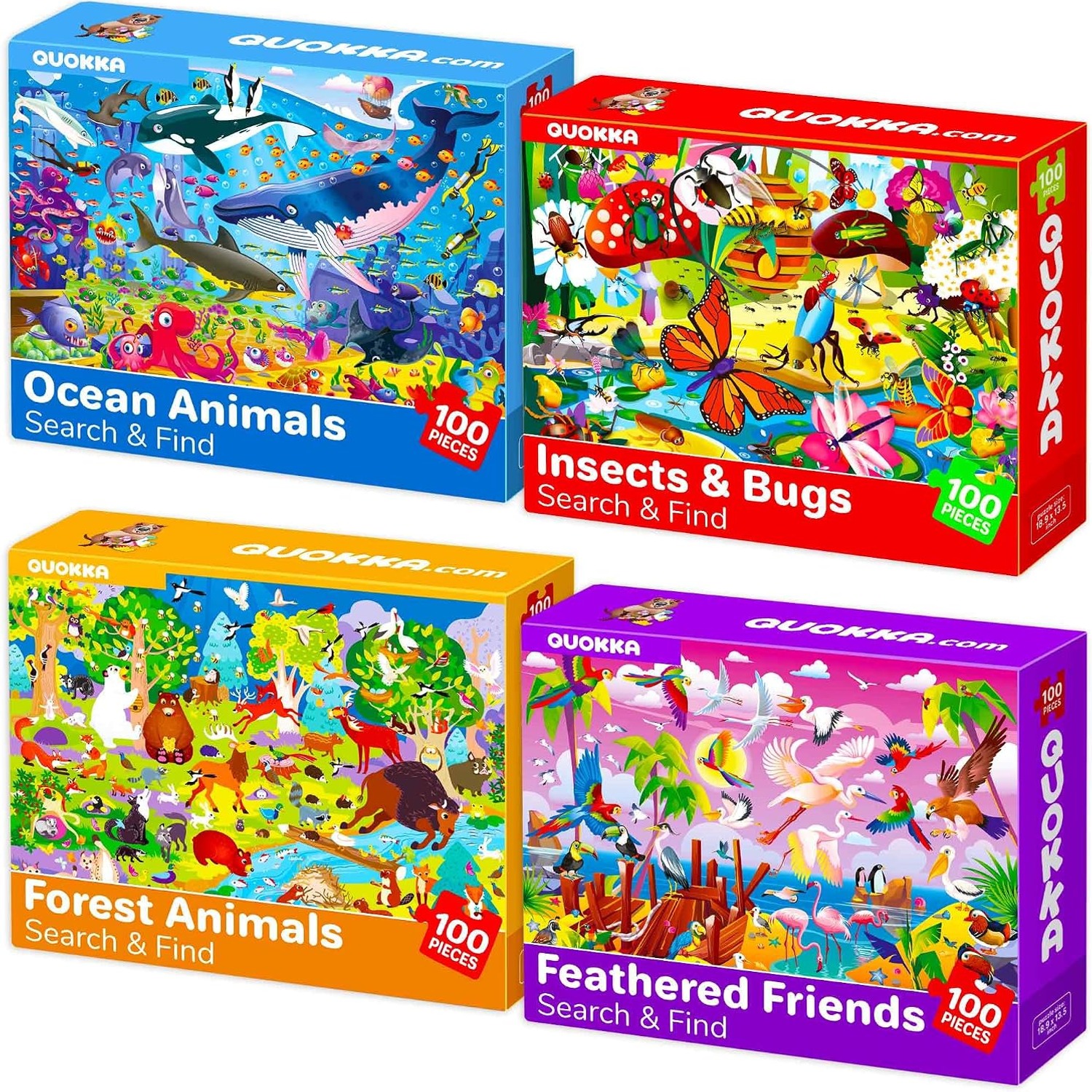
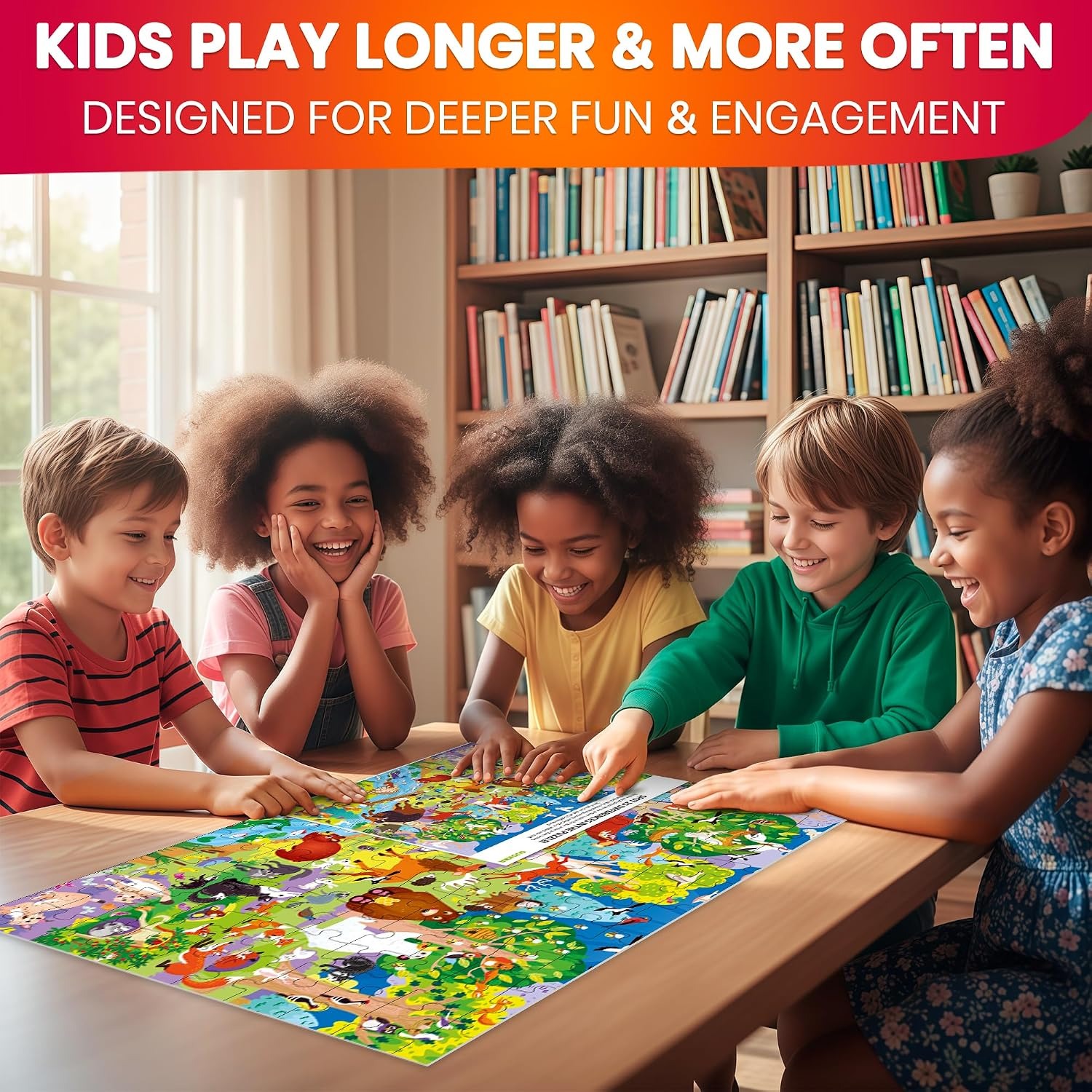
This Quokka set gives you three of those bridges in one purchase. Three boxes, 100 pieces each, all built around animals.
What you actually get
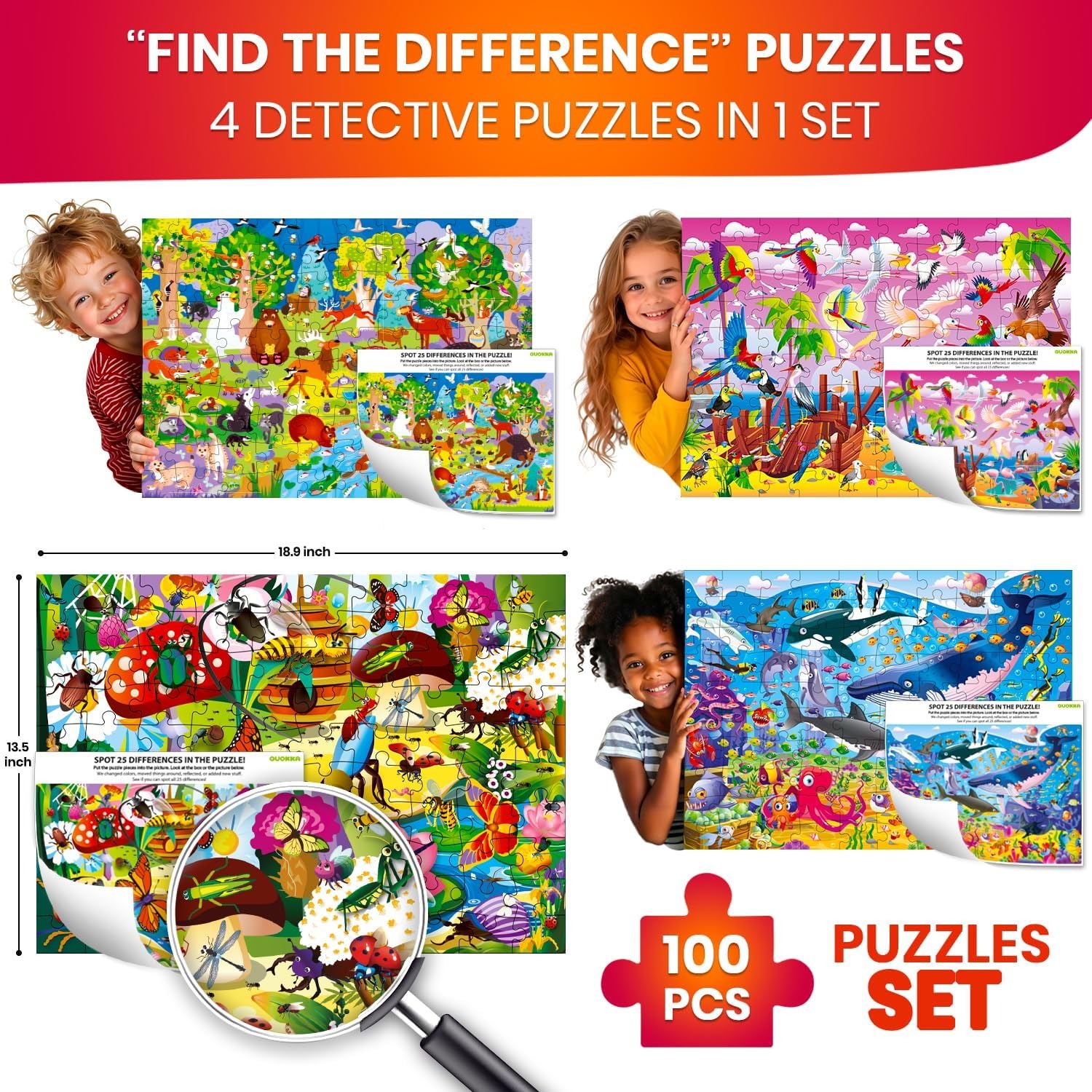
Three separate floor puzzles, each with its own box. Every completed puzzle measures 48 cm long by 34 cm wide. The whole set together weighs 1.01 kg and the package is 70 x 50 x 0.3 cm, so it is slim enough to post easily and light enough to take on holiday.
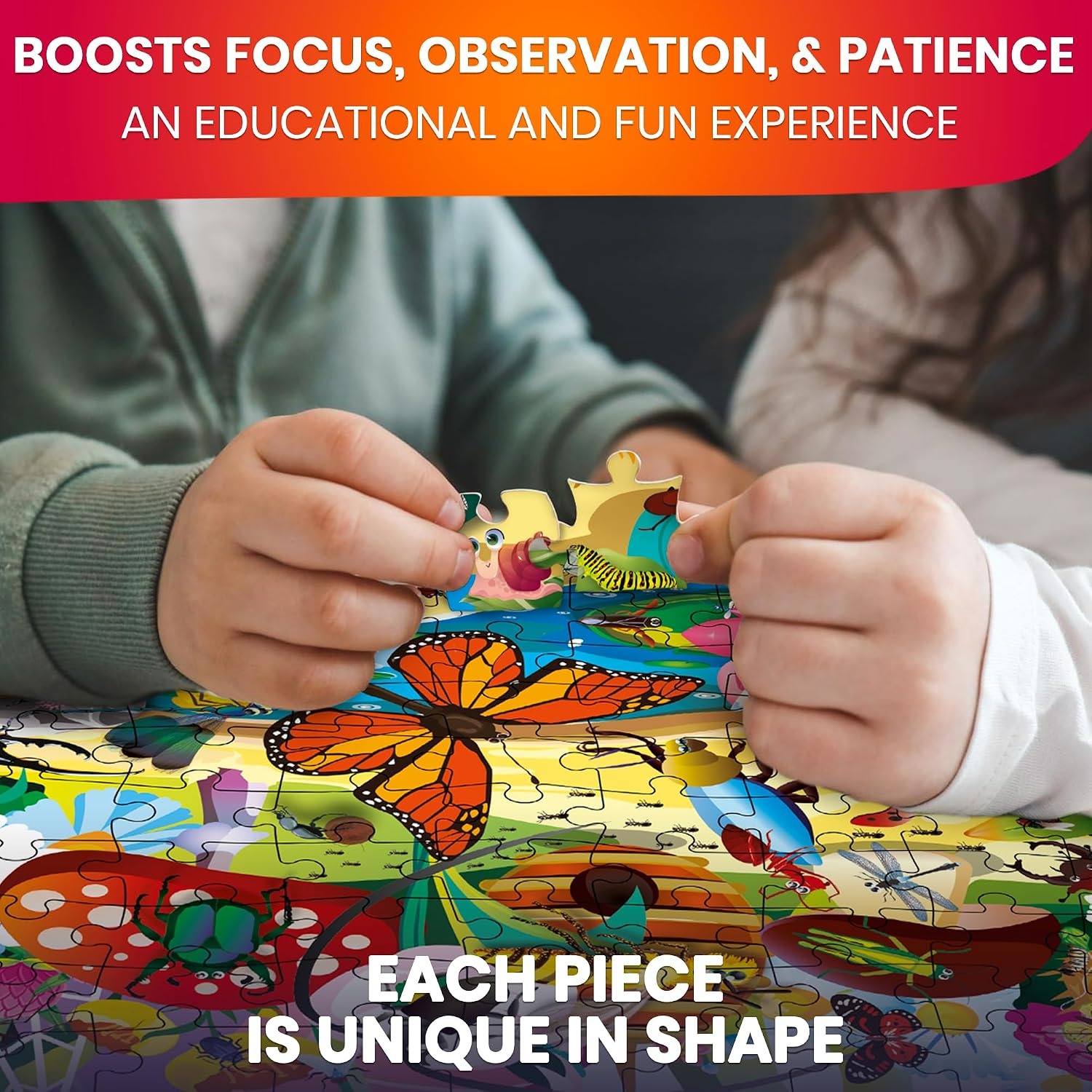
The theme is animals, specifically ocean and forest wildlife. That covers fish and sea creatures on one side and forest animals, butterflies and bugs on the other. Three different pictures, not three versions of the same one, which is the difference between a set that gets built three times and a set that gets built once.
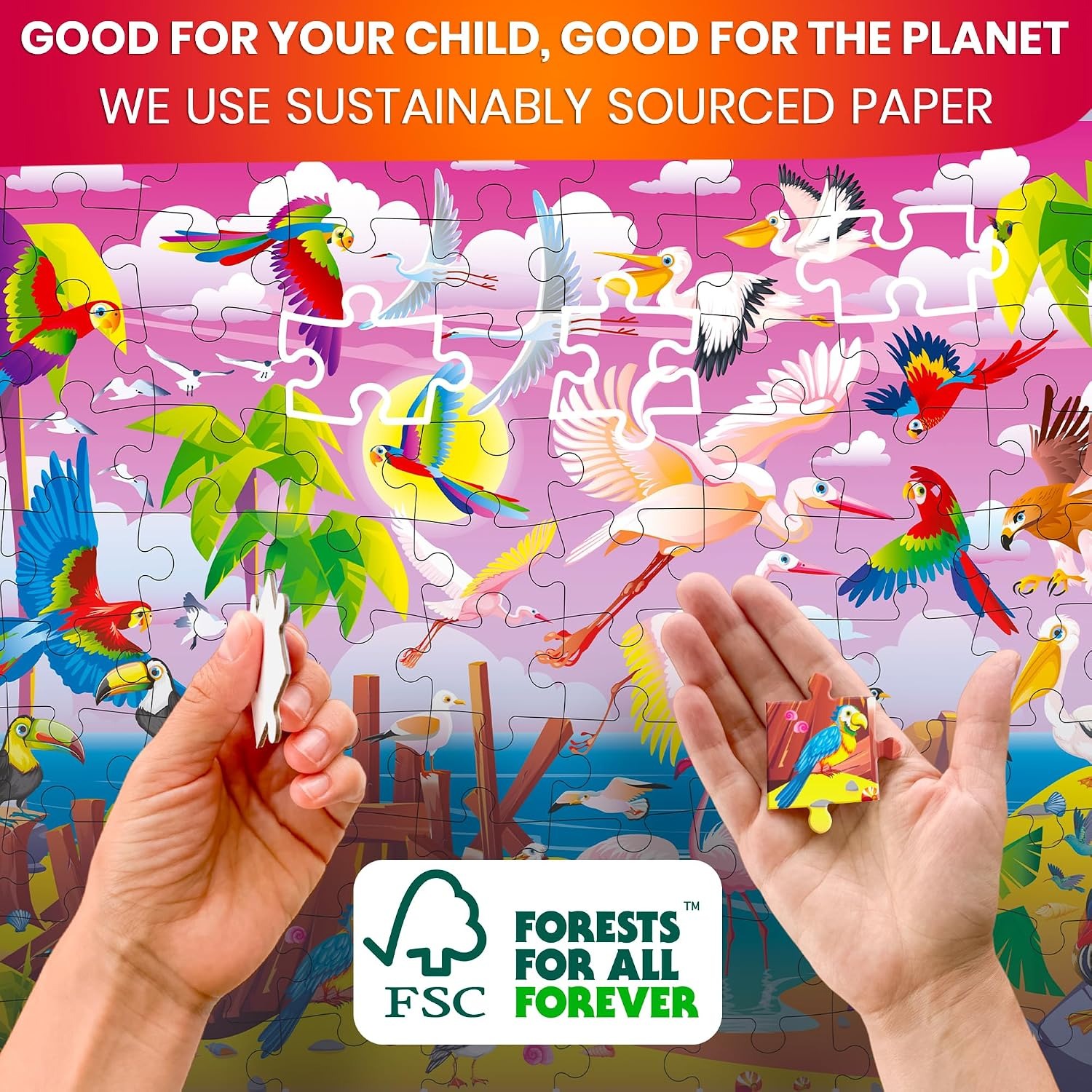
Material is cardboard. The maker states the product is free from plastic, latex, lead, BPA, phthalates and PVC. No batteries, no app, no assembly. Operation mode and power source are both listed as manual, which is a slightly formal way of saying it is a jigsaw puzzle and your hands do the work.
Who this suits
The manufacturer recommended age runs from 36 months to 10 years, and the skill level is beginner. That is a deliberately wide window, and in practice it splits into three groups.
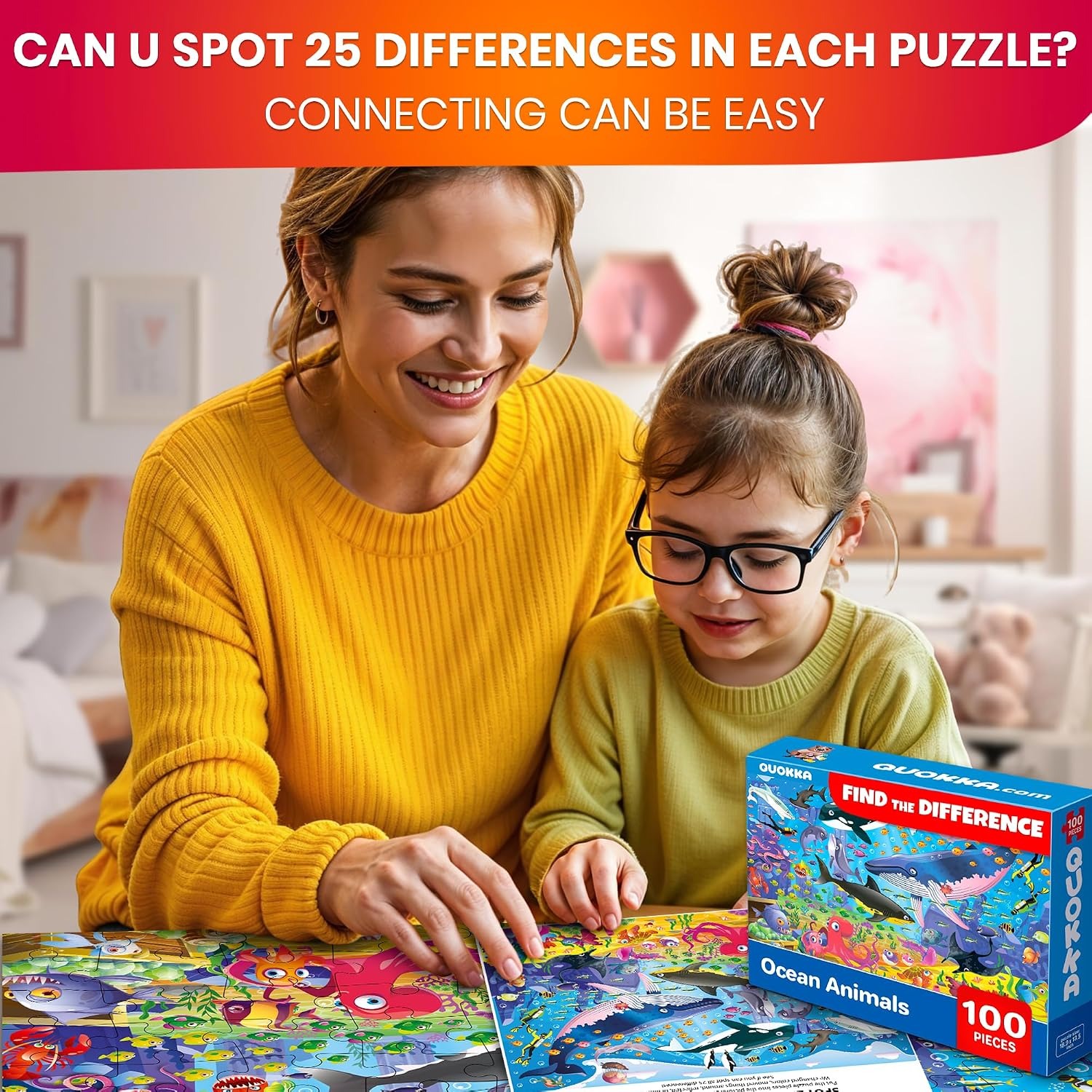
At three and four, a child will need you sitting beside them. They will do the edges with help, find a few obvious pieces, and lose interest for twenty minutes before coming back. That is completely normal and still valuable. Buy it now and it will come into its own next year.
At five to eight, this is the target. A child in that band can usually work through one puzzle in a single sitting with light guidance. They will start to develop their own method, usually edges first, then the big colour blocks. This is where the best 100 piece puzzle for kids does its real job, building a working system rather than just finding matches by trial and error.
At nine and ten, it becomes a fast, relaxing activity rather than a challenge. Good for winding down, good for building with a younger sibling, less good as a stretch. If your child is nine and already fluent with 100 pieces, look at a higher count.
How to judge whether the piece count is right
Forget the age printed on the box for a moment and look at what your child did last. If their most recent completed puzzle was 50 pieces and they got there without frustration, 100 is the correct next step. If they are still struggling with 50, wait. If they rip through 100 piece puzzles at a friend's house, go higher.
The other signal is attention span. A hundred pieces takes most children in the 5 to 8 range somewhere between half an hour and an hour. If your child cannot sit with an activity for 20 minutes yet, a 100 piece puzzle will be abandoned, and the set will sit in a cupboard. That is not a fault of the puzzle.
One more thing worth checking is interest in the subject. Animals are a fairly safe bet, but a child who is deeply into dinosaurs or vehicles may be lukewarm about fish. The artwork is doing half the motivational work, so pick a theme they already care about.
Making the most of the box lids
Each puzzle's box carries the finished artwork on it. That sounds minor and it is not. A child building without a reference picture is working blind, matching shapes rather than reading the image, and that is far harder than it needs to be.
Stand the lid upright at the top of the table where they can see it without turning their head. For a younger builder, point at the section they are working on so they connect the pieces in front of them with the area on the picture. Over time they stop needing the prompt and start checking the lid themselves, which is the moment the skill clicks.
The lids also solve the mixing problem. Three boxes of 100 pieces becomes 300 unsorted pieces the moment someone tips two out at once. Keep one puzzle on the go at a time and the issue never arises.
Setting up a build that actually finishes
A few practical things make a noticeable difference.
Pick a surface that can stay undisturbed. A puzzle swept off the kitchen table before dinner on day one rarely gets rebuilt. If your table is in constant use, build on a large tray or a sheet of stiff card so the whole thing can be lifted and parked.
Start with the edges. It is a cliché because it works, and it gives a young builder an early win and a frame to work inside. After that, sort by colour rather than by shape. On an ocean scene, that might mean a blue pile, a sandy pile, and a pile of bright fish. On a forest scene, greens and browns separate quickly.
Light matters more than you would think. Cardboard puzzle artwork can look flat under a dim overhead bulb, and small colour differences are exactly what a child needs to see. A lamp or a seat near a window helps.
Finally, do not finish it for them. The temptation to slot in the last few pieces while they are out of the room is strong. Resist it.
Looking after a cardboard set
Cardboard is durable enough for years of normal use and completely unforgiving about two things, moisture and force.
Keep food and drinks off the building surface. A spilled glass will swell the board and leave pieces that never sit flat again. If a piece picks up a mark, a barely damp cloth and a proper dry before it goes back in the box is all you should do.
On force, teach the gentle press. Children sometimes decide a piece belongs somewhere and apply pressure to prove it. That is how tabs bend and how pieces stop gripping. A piece that needs real pressure is in the wrong place.
Store the boxes flat in a dry cupboard rather than standing them on edge, where pieces slide and press against one corner. The listing specifies indoor use, and damp sheds or garages are not the place for these.
When something goes wrong
There is a 30 day warranty against manufacturer defects. That covers a piece arriving torn, bent, badly cut, or misprinted. It is worth counting the pieces on the first build so any shortfall gets picked up inside the window.
What the warranty does not cover is the puzzle that got rained on or the piece the dog ate. For those, the honest answer is that cardboard jigsaws are consumables with a long but finite life.
If the set turns out to be the wrong level entirely, contact us. We would rather help you swap to something that fits than have three boxes gathering dust.
As a gift
This is one of the easier presents to get right. It arrives as three boxes, so it has presence under a tree or on a birthday table without being an expensive gift. The age range is broad enough that you do not need to know the child precisely. And animals have a very high hit rate with the 5 to 8 group.
It also travels well. At just over a kilo and 0.3 cm deep, it slides into a suitcase for a holiday or lives in the activity drawer at a grandparent's house. For long wet weekends and journeys without screens, a puzzle set earns its space.
The short version
Three 100 piece cardboard puzzles, each finishing at 48 cm by 34 cm, themed on ocean and forest animals. Beginner skill level, recommended for 36 months to 10 years, best suited to roughly 5 to 8. Finished artwork printed on every box. Indoor, manual, no assembly, no batteries. The maker lists it as free from plastic, latex, lead, BPA, phthalates and PVC, with a 30 day warranty against manufacturer defects.
If your child has outgrown 50 pieces and likes animals, this is the right next step and you get three goes at it.