Toy Warehouse
Company
Shop By Category
T&Cs
Shop Online
  • Box contents listed
  • Free tracked delivery across Ireland over €90
  • 14-day returns

25 Note Glockenspiel | Chromatic glockenspiel with case | Kids glockenspiel

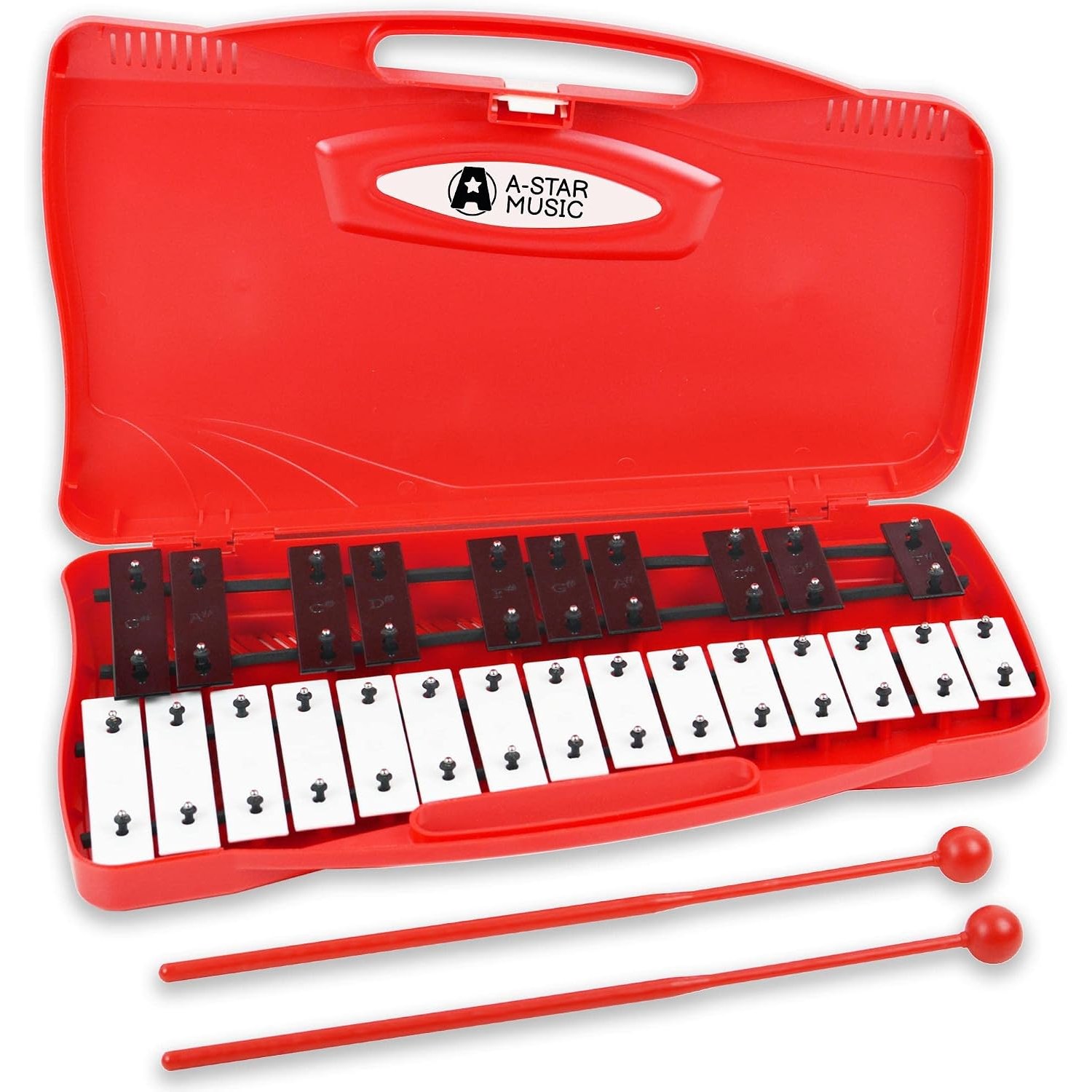
25 Note Chromatic Glockenspiel with Carry Case and Beaters

€62.99
  • Two Full Octaves
  • Labelled Keys
  • Hard Carry Case
  • Light To Carry

Price: €62.99

  • Free tracked delivery across Ireland on orders €90+, otherwise a flat €12
  • Pay by card or PayPal, handled by the payment provider
  • 14 days to change your mind, plus your statutory rights
Product specifications
BrandA-Star
Model NameAP7111
Part NumberAP7111
Item TypeGlockenspiel
Number Of Notes25 chromatic notes
Included Components1 x 25 Note Glockenspiel in Carry Case
Beaters Included2 red plastic beaters
ColourRed
Finish TypeMetal
Body MaterialPlastic
Connector TypeScrew
Sound ProfileHigh-frequency emphasised, clear and distinct tone
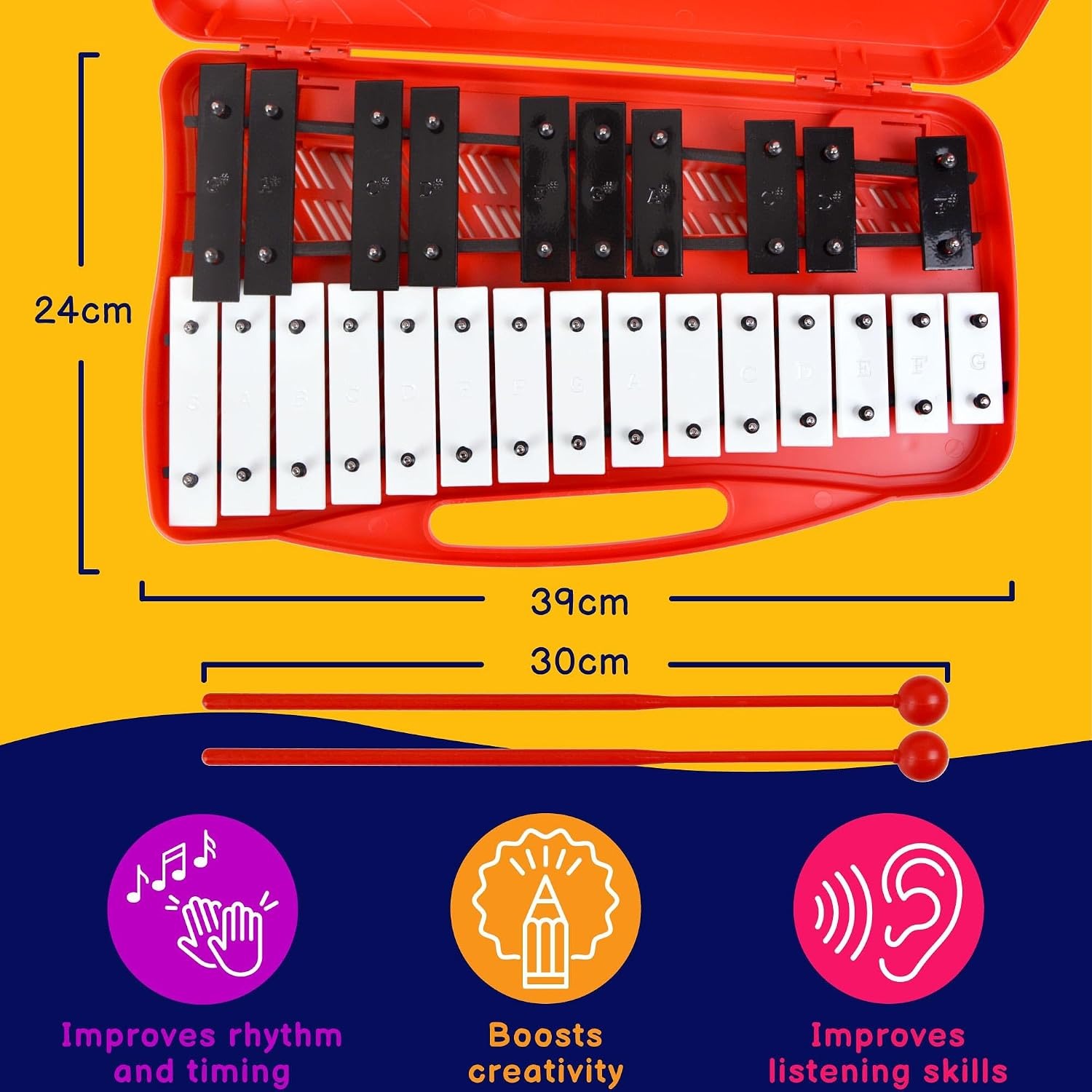
Item Dimensions38.5 x 23.5 x 4.5 cm
Item Weight0.98 kg
Number Of Items1
Country Of OriginChina
Weight0.98 kg
Shipping & returns

Tracked delivery anywhere in Ireland. It is free on orders of €90 or more, and a flat €12 below that.

Under the Consumer Rights Act 2022 you have 14 days from delivery to cancel for any reason, and a further 14 days to send it back in resaleable condition. We refund the price you paid, including standard delivery. You cover the cost of returning it unless the item is faulty.

If it arrives faulty, damaged or not as described, we put it right at no cost to you under the Consumer Rights Act 2022 and the EU Sale of Goods Directive 2019/771, return postage included.

Shipping details · Refunds and returns

Two Full Octaves25 chromatic bars spanning G5 to G7 for real tunes, not just a few notes.
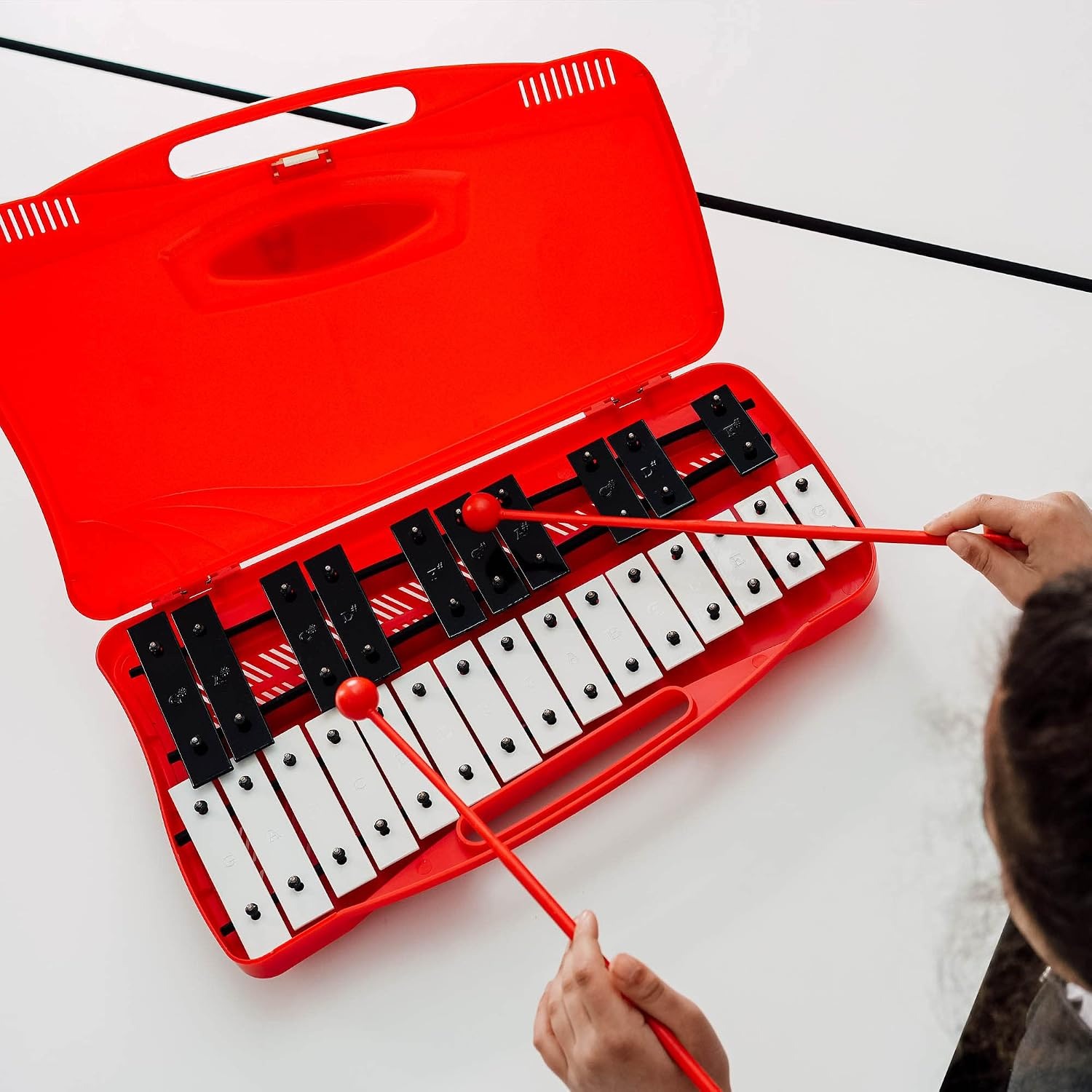
Labelled KeysEach bar is marked with its note name and laid out like a piano keyboard.
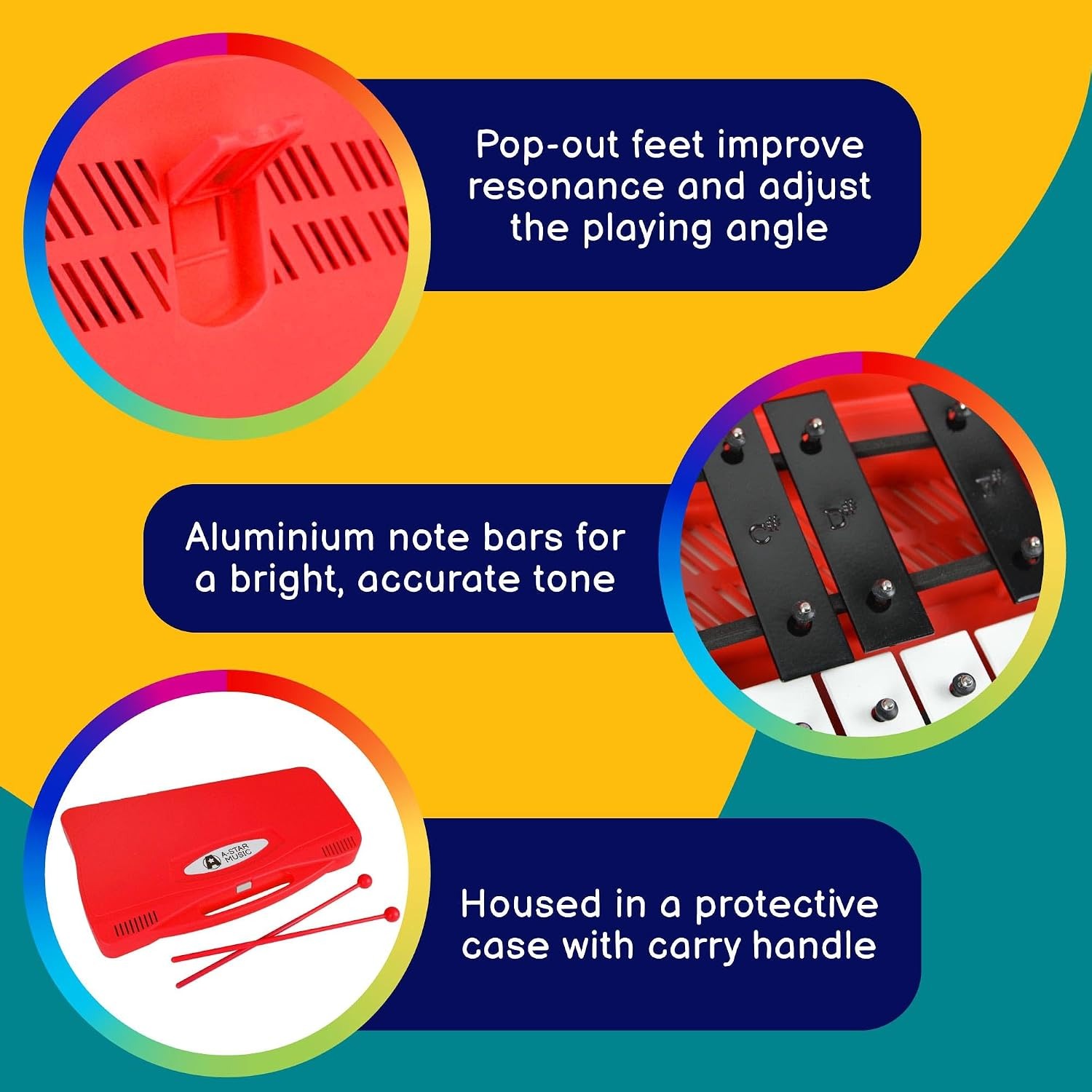
Hard Carry CaseThe red plastic case protects the bars and doubles as the playing frame.
Light To CarryJust 0.98 kg, so it moves between home, school and rehearsal easily.

A 25 note glockenspiel that turns a kitchen table into a first music lesson, with bright metal bars and every note clearly marked.

Two full octaves of labelled chromatic keys sit in a hard red case with two beaters, so lessons pack away in seconds and travel wherever the player goes.

A 25 note chromatic glockenspiel that covers two octaves from G5 to G7, enough range for most beginner pieces and school songbooks.

Every metal bar is labelled with its note name and arranged in the same pattern as a piano, which makes reading music far less guesswork.

The sturdy red plastic case keeps the bars protected between lessons and packs down to 38.5 x 23.5 x 4.5 cm.

Two red plastic beaters are included, so there is nothing extra to buy before the first play.

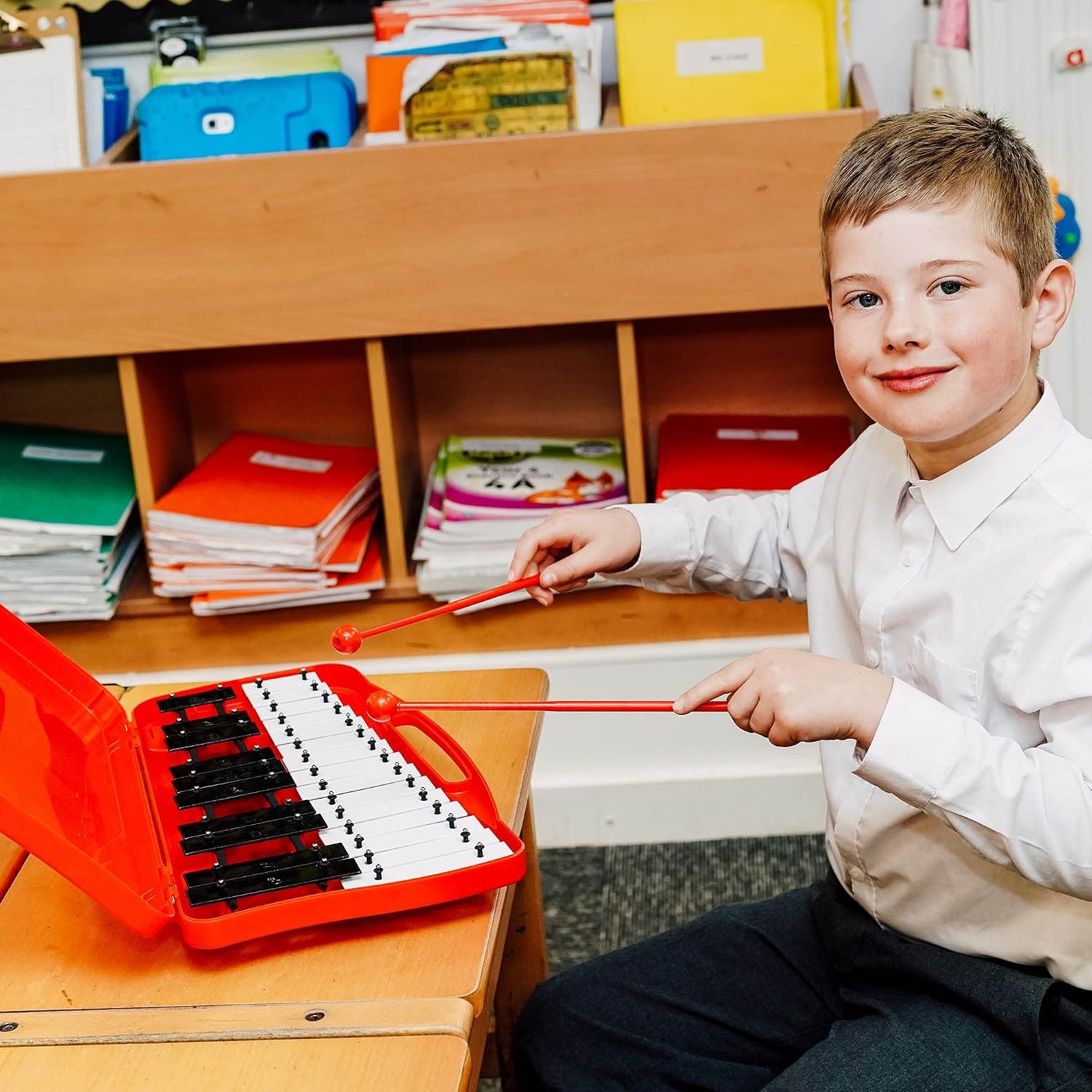
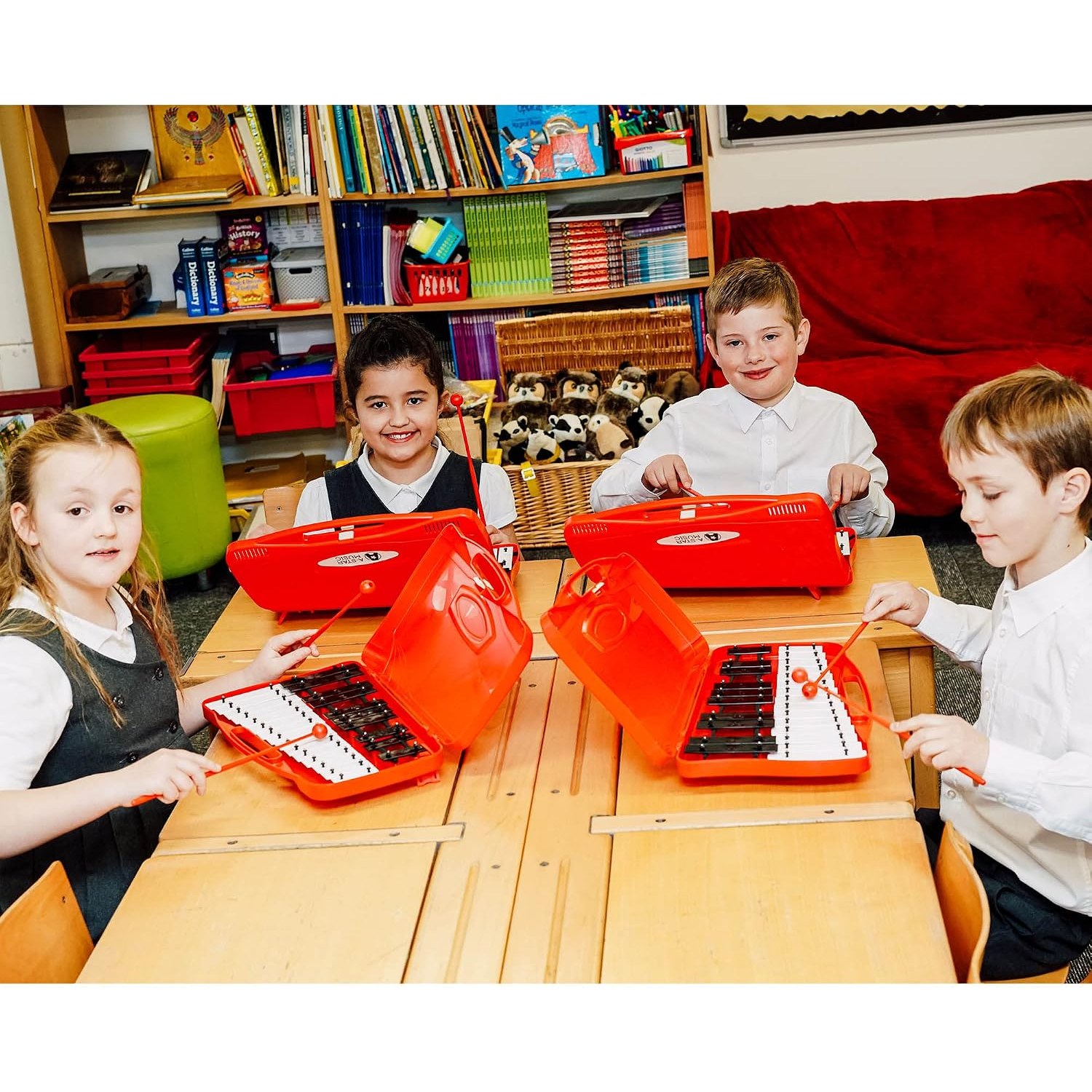
At 0.98 kg it is light enough for a child to carry to school in a bag alongside books.

25 Note Chromatic Glockenspiel with Carry Case and Beaters

A glockenspiel is one of the easiest ways into music because the notes are laid out in front of you. There is no fingering to learn, no reed to control and no tuning to worry about. You see a bar, you hit it, and the note comes out the same every time. That instant feedback is why so many primary schools reach for one when they start a class on pitch and melody.

25 Note Chromatic Glockenspiel with Carry Case and Beaters

This A-Star model carries 25 chromatic bars covering G5 up to G7, which is two full octaves. The naturals sit along the front row and the sharps and flats sit raised behind them, exactly the way a piano keyboard is built. Each bar carries its note name, so a child can follow simple notation without an adult translating every line. The range covers most of what appears in beginner tutor books and school song sheets.

25 Note Chromatic Glockenspiel with Carry Case and Beaters

The bars are metal and the frame is a moulded plastic case finished in red. That case matters more than it sounds. It holds the bars at the right spacing, keeps them from rattling loose in a bag, and gives you a flat base that sits steady on a table or a lap. The whole thing closes up, so the instrument and the two included beaters travel together rather than scattering through a schoolbag.

25 Note Chromatic Glockenspiel with Carry Case and Beaters

Weight is 0.98 kg and the closed size is 38.5 x 23.5 x 4.5 cm, which is roughly the footprint of a large hardback book. A seven year old can carry it without complaint. For a teacher running a peripatetic timetable, a stack of these fits in a car boot without any thought. For a parent, it tucks on a shelf when practice is over instead of taking over the living room.

25 Note Chromatic Glockenspiel with Carry Case and Beaters

Sound sits in the bright, high end of the register, clear and easy to pick out against a piano or a guitar. That makes it useful for group playing, where a soft instrument would vanish. It also means it carries, so a quiet room is a kinder place to practise than an open-plan kitchen with other people trying to talk.

Not sure yet? That is fine.

A toy has to suit the child it is for, and you cannot always judge that from a photograph. Under the Consumer Rights Act 2022 you have 14 days from delivery to cancel for any reason, and a further 14 days to send it back in resaleable condition. We refund the price you paid, including standard delivery.

If it turns up faulty, damaged or not as described, that is on us. The Consumer Rights Act 2022 and the EU Sale of Goods Directive 2019/771 covers you, and we pay the return postage. Read the full detail on our refunds and returns page, or ask us anything before you order.

Frequently Asked Questions

What exactly is included in the box?

You get one 25 note glockenspiel mounted in its red plastic carry case, plus two red plastic beaters. That is everything needed to start playing. No stand, music book or spare beaters are listed as part of the package.

How many notes does it have and what is the range?

There are 25 chromatic notes covering G5 to G7, which is two complete octaves. Chromatic means every semitone is present, so the sharps and flats are there as well as the natural notes. That range handles most beginner and intermediate school material.

What does chromatic mean on a glockenspiel?

Chromatic means the instrument includes all twelve semitones in each octave, not just the seven white-note pitches. The extra bars sit in a raised back row, like the black keys on a piano. A diatonic model would leave those out and limit which keys you can play in.

Are the notes labelled?

Yes, each bar is marked with its note name. That removes a lot of early frustration, because a beginner can match a letter on the page to a letter on the bar. It is one of the reasons this style is a popular pick for the best glockenspiel for beginners.

Is the layout the same as a piano?

It is. The natural notes run along the front row and the sharps and flats sit raised behind them in the same grouping pattern as piano black keys. Anyone who has touched a keyboard will recognise it immediately, and the skill transfers both ways.

What age is this suitable for?

The maker does not state an age grading, so treat that as unconfirmed. In practice a chromatic glockenspiel of this type is commonly used from around primary school age upward, once a child can hold a beater and follow simple instructions. Younger children should be supervised because the beaters are small loose parts.

Is it loud?

Metal bars produce a bright, carrying tone with emphasis on the higher frequencies. It is noticeably louder than a wooden xylophone of the same size. That is useful in a group, but worth knowing before you set a practice spot next to a home office.

Can I make it quieter for practice at home?

Playing with a lighter stroke makes a big difference, and resting the instrument on a folded towel absorbs some of the ring through the table. Some players wrap the beater tips in a little tape for a softer attack. Do not place anything on top of the bars themselves, as that will damage the tone.

What are the beaters made of?

The two included beaters are red plastic. Plastic tips give a crisp, clear attack which suits this instrument's bright character. Softer mallets are available separately if you want a rounder sound, though they are not part of this package.

What happens if I lose a beater?

Replacement percussion beaters are widely sold and most general-purpose glockenspiel mallets will work. Keeping both beaters inside the closed case between sessions is the simplest way to avoid the problem. Many people buying the best beginner percussion kit for a classroom order a spare pair from the start.

How big is it when closed?

The closed dimensions are 38.5 x 23.5 x 4.5 cm. That is about the size of a large hardback book, so it slides into most backpacks and sits flat on a shelf. The depth of 4.5 cm means it does not take up much room in a cupboard.

How much does it weigh?

It weighs 0.98 kg, just under a kilogram. A child of school age can carry it alongside their books without much trouble. For teachers moving between rooms, several of them stack easily in a crate.

Does the case protect the instrument properly?

The red plastic case holds the bars in position and closes over them, which protects the playing surface from knocks and dust in transit. It is a hard shell rather than a padded bag. For anyone searching for the best glockenspiel with carry case for school runs, that integrated design is the main appeal.

Is the case separate from the instrument?

No, the case is the frame. The bars are mounted inside it, so the case is both the housing and the playing body. You open it, play, and close it again, with nothing to assemble.

What is the body made from?

The body material is listed as plastic with a metal finish on the sounding bars. Plastic keeps the weight down and survives the knocks that come with classroom use. The maker does not specify which metal alloy the bars use.

Does it need tuning?

Tuned percussion like this is set at the factory and is not user-tunable in normal use. The bars hold their pitch as long as they are not bent or damaged. If a note sounds wrong, check the bar is seated correctly and that nothing is pressed against it.

Can it be used in a school orchestra?

Yes. The bright tone cuts through a mixed ensemble, and two octaves cover most glockenspiel parts written for school groups. The portability also helps when a group rehearses in one room and performs in another, which is why it is often shortlisted as the best classroom percussion instrument for small budgets.

Is this suitable for an adult learner?

Absolutely. Adults often start on a glockenspiel to learn to read music or to pick up a second instrument for composing. The labelled bars are just as helpful at forty as they are at seven, and the two octave span handles plenty of real repertoire.

Will it help with learning music theory?

It is a good tool for it. Seeing whole tones and semitones laid out physically makes scales, intervals and key signatures much easier to grasp than reading about them. Teachers often reach for the best glockenspiel for music theory precisely because the layout is visual.

Can I play chords on it?

You can play two notes at once using both beaters, which covers intervals and simple two-note harmony. Full three or four note chords are not practical with two mallets. Most written glockenspiel parts are single-line melodies anyway.

How do I clean it?

Wipe the bars and case with a soft dry cloth after playing to remove fingerprints and dust. Avoid soaking any part of it or using harsh cleaners on the metal. If the bars look dull, a slightly damp cloth followed by an immediate dry wipe is enough.

How should I store it?

Close the case with the beaters inside and keep it somewhere dry at normal room temperature. Damp cupboards, car boots over winter and radiators are all best avoided. Stored flat on a shelf, it takes up very little space.

Are any parts user-serviceable?

The connector type is listed as screw, so fixings can be checked and gently tightened if something works loose with use. Do not over-tighten, as the bars need a little freedom to ring properly. Beyond that, there are no serviceable parts.

Does it come with sheet music or a tutor book?

No printed music is listed as included. Plenty of free beginner glockenspiel sheets and school songbooks are available, and the labelled bars mean letter-notation tunes work straight away. That makes the first session possible within minutes of unboxing.

Would this make a good gift?

It works well as a birthday or Christmas gift for a child showing interest in music, or for an adult curious about learning to read notation. It arrives ready to play with beaters included, which is always better than a present that needs extra purchases. Many shoppers rank it among the best glockenspiel gift for children options in this price band.

What is the difference between this and a xylophone?

A xylophone has wooden bars and a warmer, shorter sound. A glockenspiel has metal bars and a brighter, ringing tone that sustains longer. This model uses metal bars, so it belongs in the glockenspiel family even though some listings call it a metal xylophone.

Can it be used for travel or holiday practice?

Yes, and that is one of its strengths. At 0.98 kg in a hard closing case, it fits in hand luggage sized bags and survives being moved about. Anyone hunting for the best portable glockenspiel will find the integrated case does most of the work.

Where is it made?

Country of origin is China. The brand is A-Star and the model and part number are both AP7111. The GTIN on the packaging is 610074837602.

How long does delivery take?

We deliver to addresses across Ireland with a tracked courier. Most orders arrive within 4 to 8 working days of the order date, including one working day of handling. Delivery is free on orders of €90 or more and a flat €12 under that.

What if it is not right when it arrives?

Keep the carry case and original packaging and contact us within 14 days of delivery stated at checkout. If anything arrives damaged or a bar does not sound as it should, send a photo or a short video and we will sort a replacement or a refund. We would rather fix it than have an instrument sit unused in a cupboard.

Choosing a 25 Note Glockenspiel - A Practical Buyer's Guide

6 min read Toy Warehouse

The problem with starting an instrument

Most instruments punish you for the first three months. A recorder squeaks. A violin groans. A guitar hurts your fingertips before it makes a chord. For a child who is curious but not yet committed, that gap between effort and reward is where interest quietly dies.

A glockenspiel removes the gap. You hit a bar and a clean, in-tune note comes out. There is no embouchure, no bow pressure, no barre chord. The only skills in the way are which bar to hit and when to hit it, which happens to be the two skills that actually matter in music.

That is why a 25 note glockenspiel shows up in so many primary classrooms, music therapy rooms and home practice corners. It gets a beginner making real music on day one, and it keeps being useful long after the beginner stage has passed.

How a chromatic glockenspiel works

Each bar is a piece of metal cut to a length that makes it vibrate at a particular pitch. Longer bar, lower note. The bars rest on supports placed at the points where they barely move, so the vibration is not damped and the note rings out.

This model has 25 bars covering G5 to G7. Two full octaves. Chromatic means every semitone is there, so you get the sharps and flats as well as the plain notes. The naturals sit in the front row and the sharps and flats sit raised behind them, grouped in twos and threes exactly like the black keys on a piano.

That layout is doing more work than it looks. Once a child learns the shape of the black-key groups, they can find any note without counting, and the same knowledge transfers straight to a keyboard. Teachers lean on this. It is the quiet reason a chromatic glockenspiel beats a cheap diatonic toy for anyone who is serious about getting somewhere.

The bars are also labelled with their note names. That sounds like a small thing until you watch a seven year old match a letter on a page to a letter on a bar and play a tune they recognise, unaided, in their first session.

Who it suits

Primary and junior school music departments are the obvious audience. The instrument is cheap enough to buy several, light enough for children to carry, and loud enough to be heard in a group of mixed instruments.

Parents of a child who has shown interest in music but has not picked a direction are the second group. A glockenspiel is a low-commitment way to find out whether that interest is real. If it sticks, the note reading and rhythm sense carry over to whatever comes next. If it fades, nobody has spent a fortune.

Adult beginners use them too, more often than people expect. Songwriters keep one on a desk for working out melodies. People learning to read notation find the visual layout much friendlier than staring at a page. Anyone learning intervals or scales benefits from seeing the distances physically.

Then there is the travel case. At 0.98 kg and 38.5 x 23.5 x 4.5 cm closed, this goes in a backpack. For a peripatetic teacher doing three schools a week, or a family who wants practice to continue on holiday, that matters as much as the sound does.

How to choose between models

Note count and range. Twelve or fifteen note toys are fine for preschoolers but you hit the ceiling fast. Twenty-five chromatic notes, two octaves, is the point where most beginner tutor books and school arrangements fit without rewriting parts. If you are buying for anyone past the preschooler stage, start here.

Chromatic or diatonic. Diatonic instruments leave out the sharps and flats. They are cheaper and simpler, and they lock you into a single key. Chromatic costs a little more and opens everything. For school use, where song sheets arrive in whatever key the arranger fancied, chromatic saves arguments.

Labelled or unlabelled. Labels help enormously at the start. Some purists worry they become a crutch, but in practice children stop reading them once the layout is in their hands. The labels are still there months later when they want to work out an unfamiliar piece.

Bar material. Metal bars give the bright, ringing sound a glockenspiel is known for. Wooden bars make it a xylophone, warmer and shorter in sustain. Both are valid, but if a listing calls something a metal xylophone, it is a glockenspiel. This one has metal bars and a plastic body.

Case design. Some glockenspiels come as a bare frame in a cardboard box. Those get bent bars within a term. A moulded case that holds the bars and closes over them, like this one, survives the real life of being thrown in a bag and sat on by accident.

What comes with it. Beaters are easy to forget and annoying to be without. Two red plastic beaters are included here, so the first session can happen immediately.

Getting the best sound out of it

Hold the beater loosely between thumb and first finger and let it bounce off the bar rather than pressing into it. A pressed stroke kills the ring; a bounced stroke lets the note sing. This is the single biggest difference between a glockenspiel that sounds lovely and one that sounds like a tin tray.

Aim for the middle of each bar. The edges and the ends near the supports give a thinner, duller sound.

Play on a hard, flat surface. A table lets the instrument resonate. A sofa cushion swallows it. If the sound is too bright for the room, a folded tea towel underneath tames it without muffling it entirely.

Alternate hands on fast passages. Beginners tend to hammer away with their dominant hand and run out of speed. Left, right, left, right doubles what is possible and builds coordination at the same time.

Looking after it

The care list is short. Wipe the bars and the case with a soft dry cloth after use to lift fingerprints and dust. Avoid soaking any part of it, and keep harsh cleaners away from the metal.

Store it closed with both beaters inside. Damp sheds, cold car boots and spots next to radiators all shorten its life. A shelf indoors is all it needs.

The fixings use screws, so if a bar starts to feel loose, a gentle tighten sorts it. Do not over-tighten. The bars need a little freedom to vibrate, and clamping them down flattens the tone.

If a bar ever sounds dead, check nothing is trapped underneath it and that the bar is sitting on its supports properly. Nine times out of ten that is the problem.

The short version

A 25 note chromatic glockenspiel is one of the few instruments that rewards a complete beginner in the first five minutes while still being genuinely useful two years later. This A-Star model gives you two octaves from G5 to G7, labelled piano-style bars, a hard red case that doubles as the frame, and two beaters in the box.

It weighs just under a kilogram and closes down to the size of a large hardback. For a school department, a music teacher on the road, or a parent testing whether the interest is real, that combination of range, durability and portability is hard to beat at this price.

Open it, hit a bar, and you are already playing.

Browse the shop

Ready to hear the first tune?

Order the A-Star 25 note glockenspiel today and it arrives with two beaters and a protective case, ready to play straight out of the box.

Ask us a question

Page summary

The A-Star 25 Note Chromatic Glockenspiel (model AP7111, GTIN 610074837602) is a two octave metal-bar instrument covering G5 to G7, supplied in a red plastic carry case with two red plastic beaters. The bars are labelled with note names and arranged in a piano-style layout with naturals in front and sharps and flats behind, which suits school music lessons and home beginners. The body material is plastic with a metal finish on the bars, and the connector type is screw. Closed dimensions are 38.5 x 23.5 x 4.5 cm and the weight is 0.98 kg. Country of origin is China. Bar colour, exact tuning tolerance and age grading are not specified by the maker.