
The complete guide
Choosing a Kids Tool Box with Vest, A Parent's Buying Guide
The problem this solves
There is a moment in most homes where a child spots an adult doing something practical and immediately wants in. A shelf goes up, a bike seat gets adjusted, a battery cover gets unscrewed, and suddenly there is a small person at your elbow asking to hold the screwdriver. You cannot hand over the real one. You also do not want to spend the next ten minutes saying no.
A kids tool box with vest answers that neatly. It gives the child their own version of the job, with their own gear, in their own case. The copying still happens, which is what they actually want, but nothing sharp or electrical is involved. For a lot of families, that one swap turns a frustrating scene into a shared activity.
It also solves a second, quieter problem. Children who are three or four are at the point where they can concentrate for longer stretches, but only when a toy gives them something to do rather than just something to look at. Tools do that well. There is always a next step.
How a set like this actually works
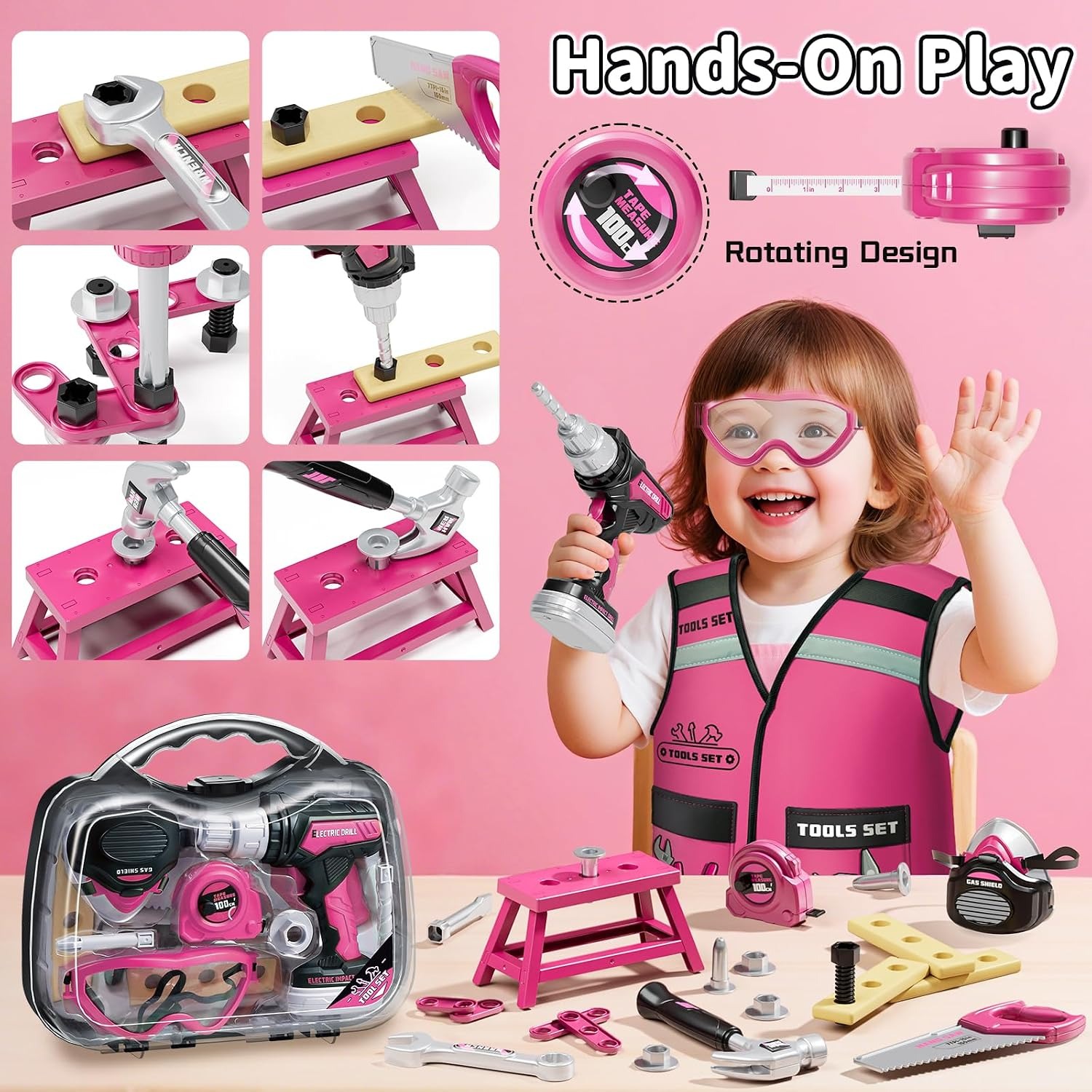
The appeal of a toy tool set is not complicated. Each tool has a clear job and a clear matching action. A screwdriver twists. A hammer taps. A wrench grips and turns. A tape measure pulls out and snaps back, which is its own entertainment for a while.
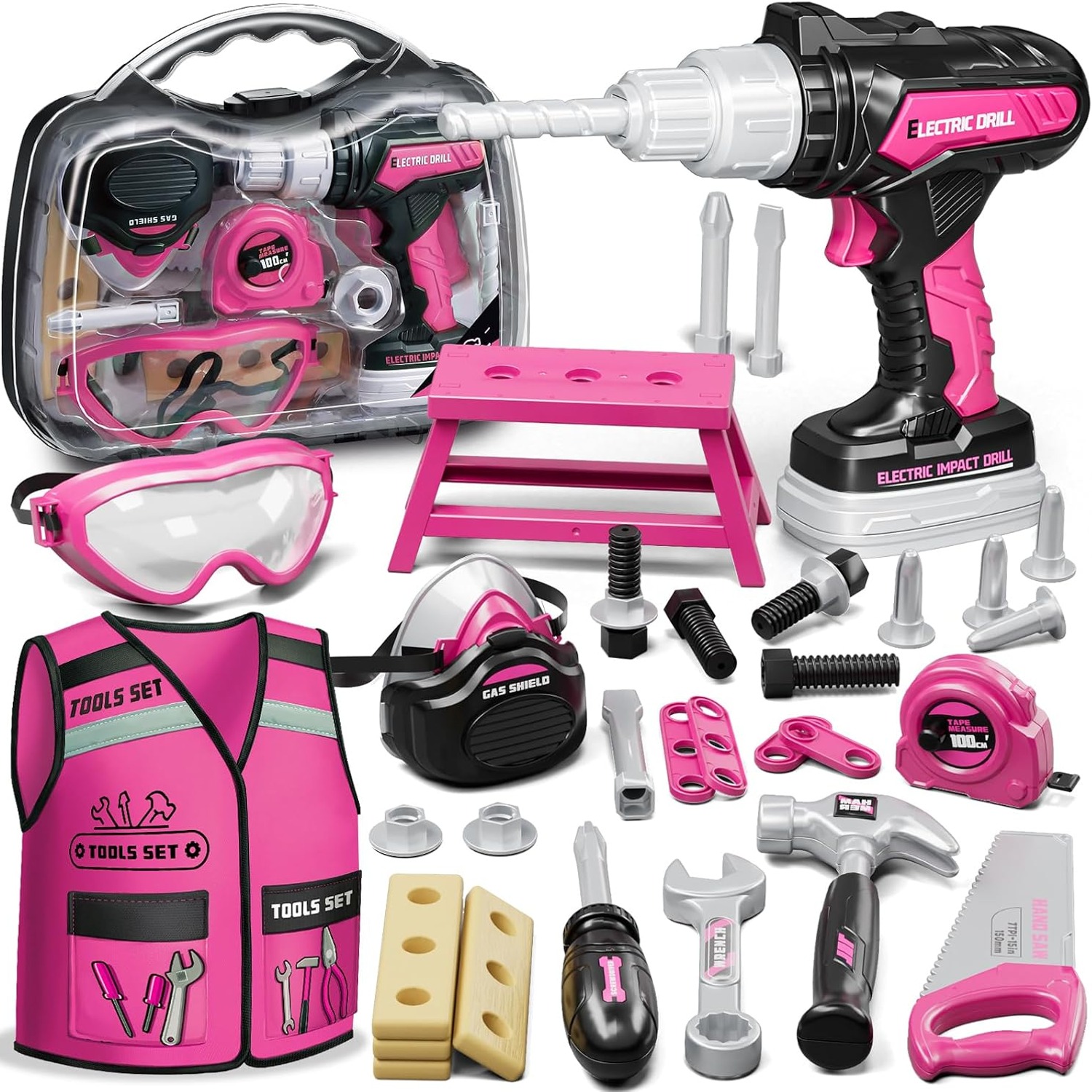
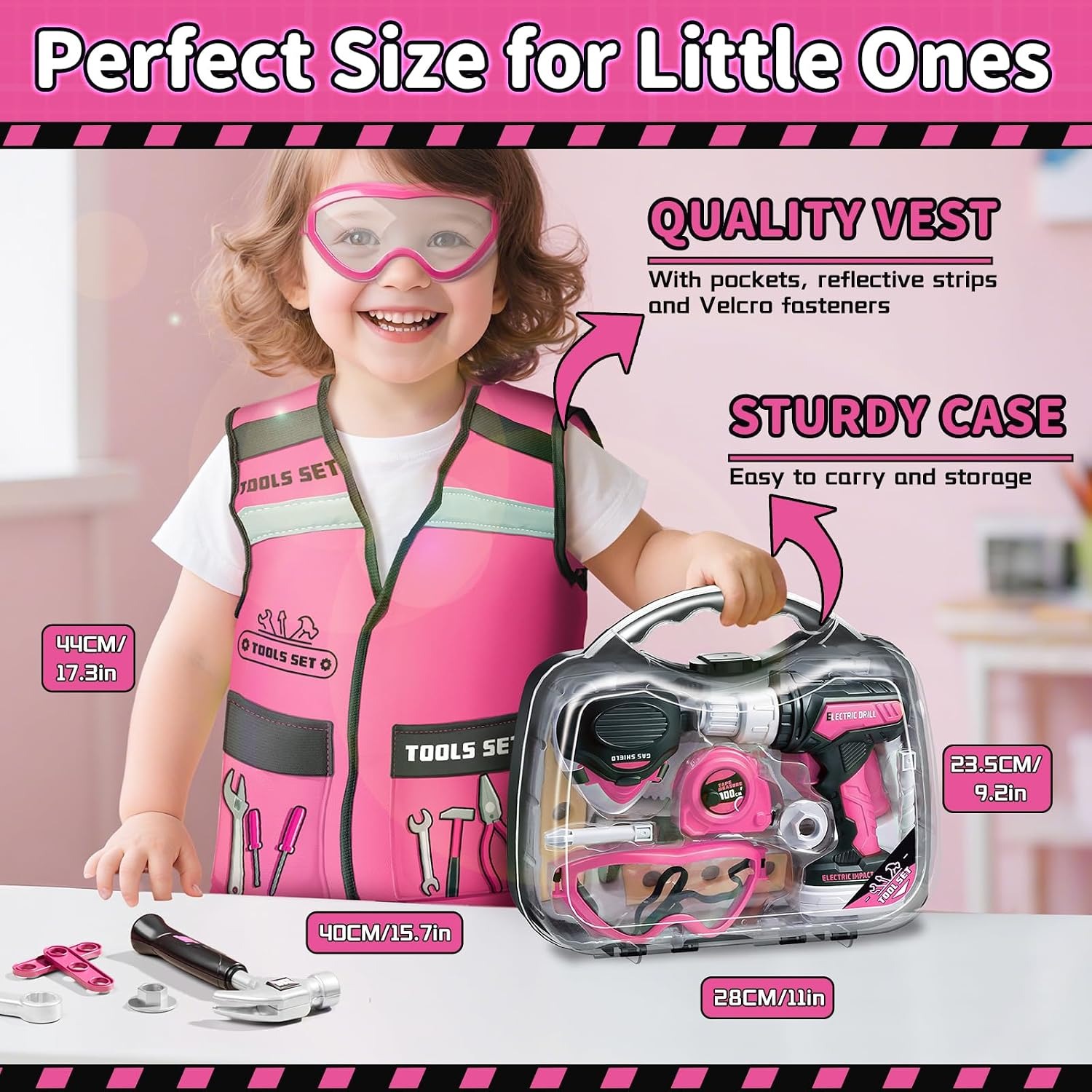
This set includes a toy electric drill, a hammer, a handsaw, a screwdriver, a wrench and a tape measure, plus screws, bolts, nails and DIY accessories to work on. Those extras matter. A tool with nothing to use it on gets put down quickly, but a tool plus a bolt to tighten becomes a small task with a visible result.
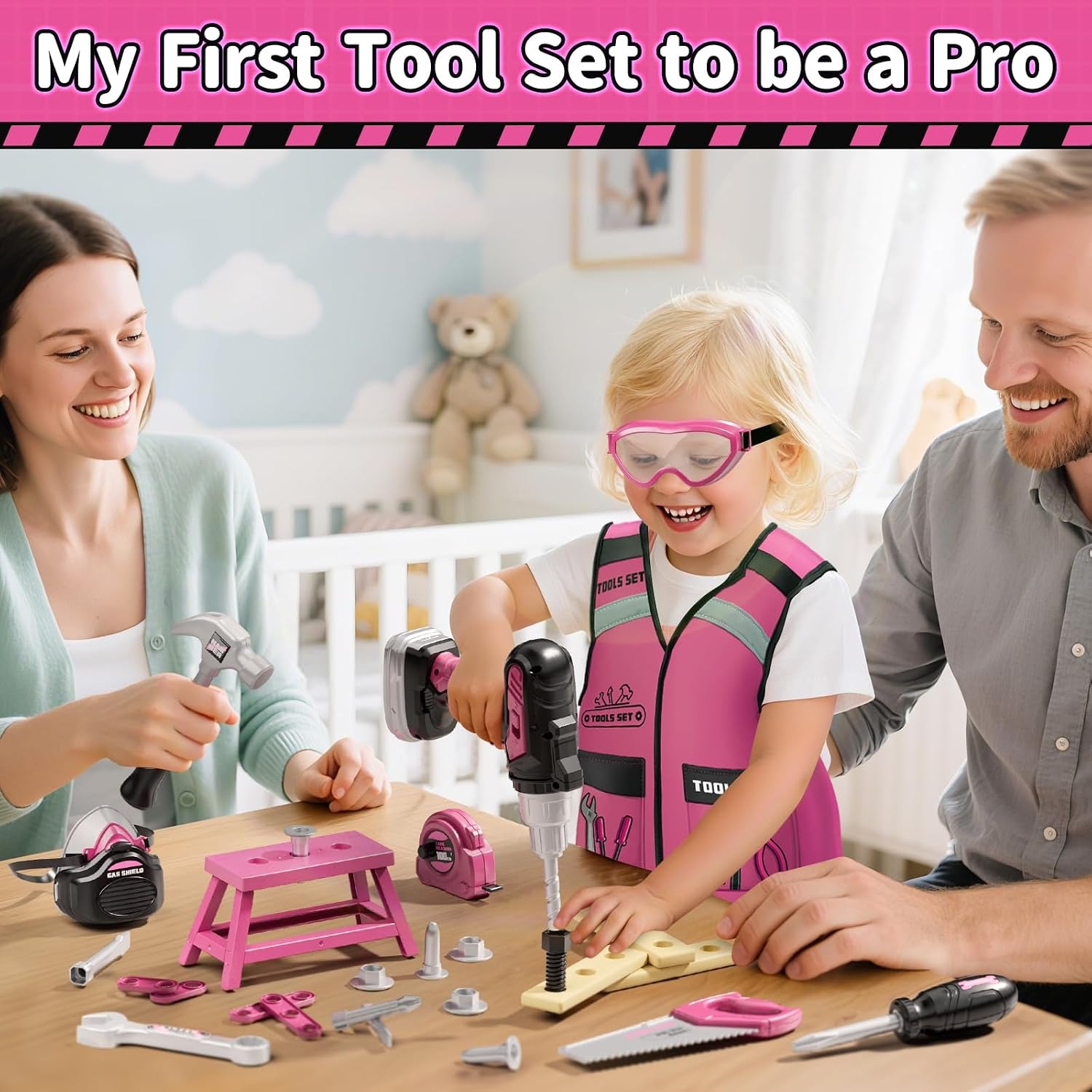
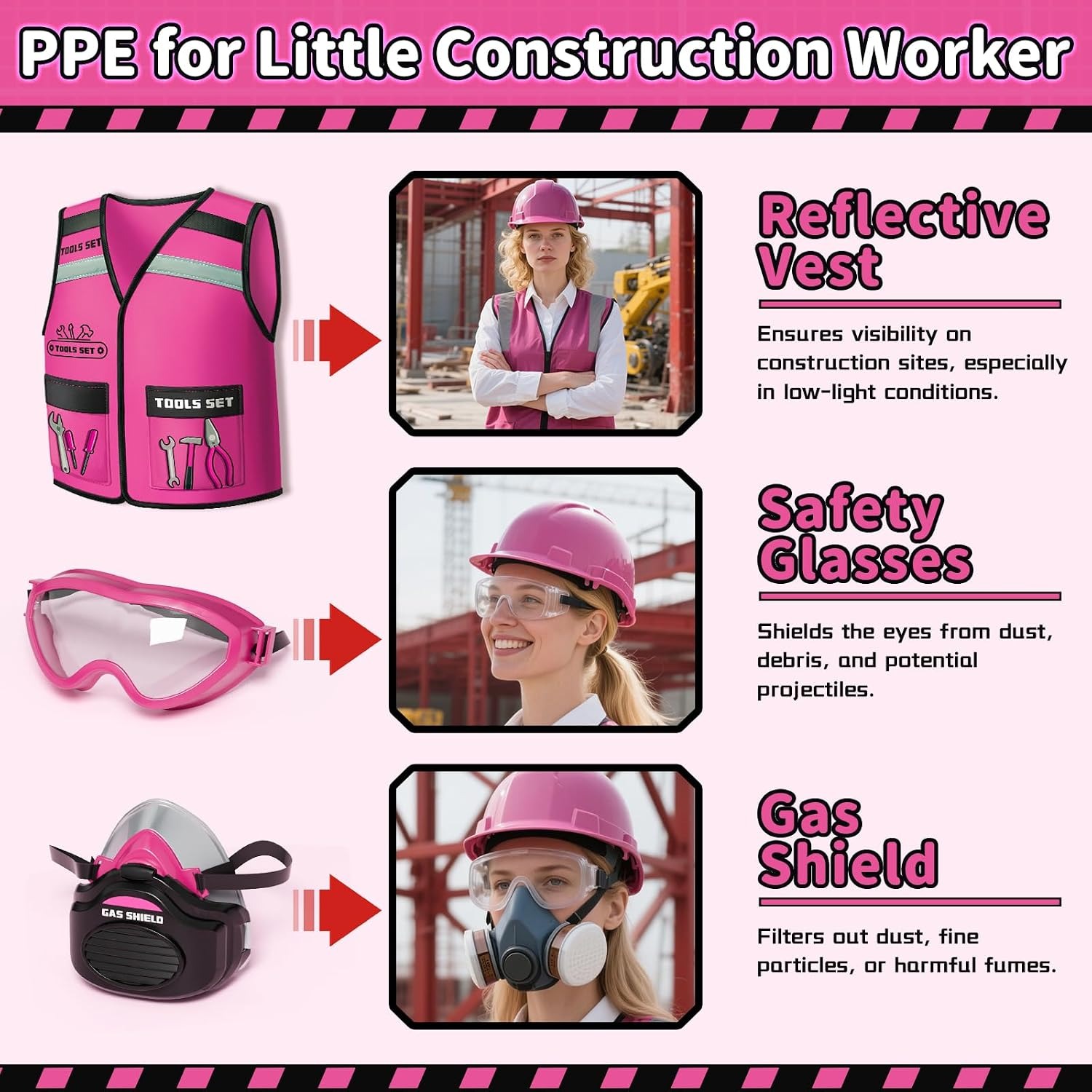
Then there is the gear. A vest, goggles and face protection come with the kit. Adults sometimes see these as packaging filler. Children do not. Putting on a vest is the signal that play has started, and it tends to stretch how long a child stays in the game. Role play works better when the child feels like they have become someone else for a while.
The toolbox itself does double duty. It is the carrying case and it is also part of the story, because real workers arrive with a box. Practically, it means the set has a home, and a set with a home survives longer than one that lives in the bottom of a toy bin.
Who it suits
The manufacturer recommends ages three and up, and that is a sensible line. By three, most children have the grip strength and control to twist a bolt without getting frustrated, and they have usually stopped putting small objects in their mouths. Below that age, the screws and nails make it unsuitable.
It fits children who like making things, obviously, but it also suits children who like pretending. Some will build carefully. Others will spend forty minutes "fixing" the sofa and never fasten a single bolt. Both are using the toy properly. If your child is drawn to role play construction toys, dress-up, or copying household jobs, this lands well.
It is also a good set for shared play with an adult. The parts are easy to describe and hand over, which makes conversation natural. You can measure a cushion, pretend a chair leg is loose, or set up a repair job with a clear beginning and end. That kind of structured pretend play is genuinely useful for language and sequencing.
A note on colour. The set is pink and the theme is construction. The play value does not change with the colour, and plenty of families buy it for exactly that mix. If your child has strong colour preferences, factor that in before ordering.
How to choose between tool sets
A few things separate the sets that get used from the ones that get abandoned.
Storage is the first. If a kit arrives in a cardboard box, the pieces will be everywhere within a fortnight and the set will feel incomplete long before it is. A built-in case solves that. This one holds the whole kit, so packing up is a thirty second job.
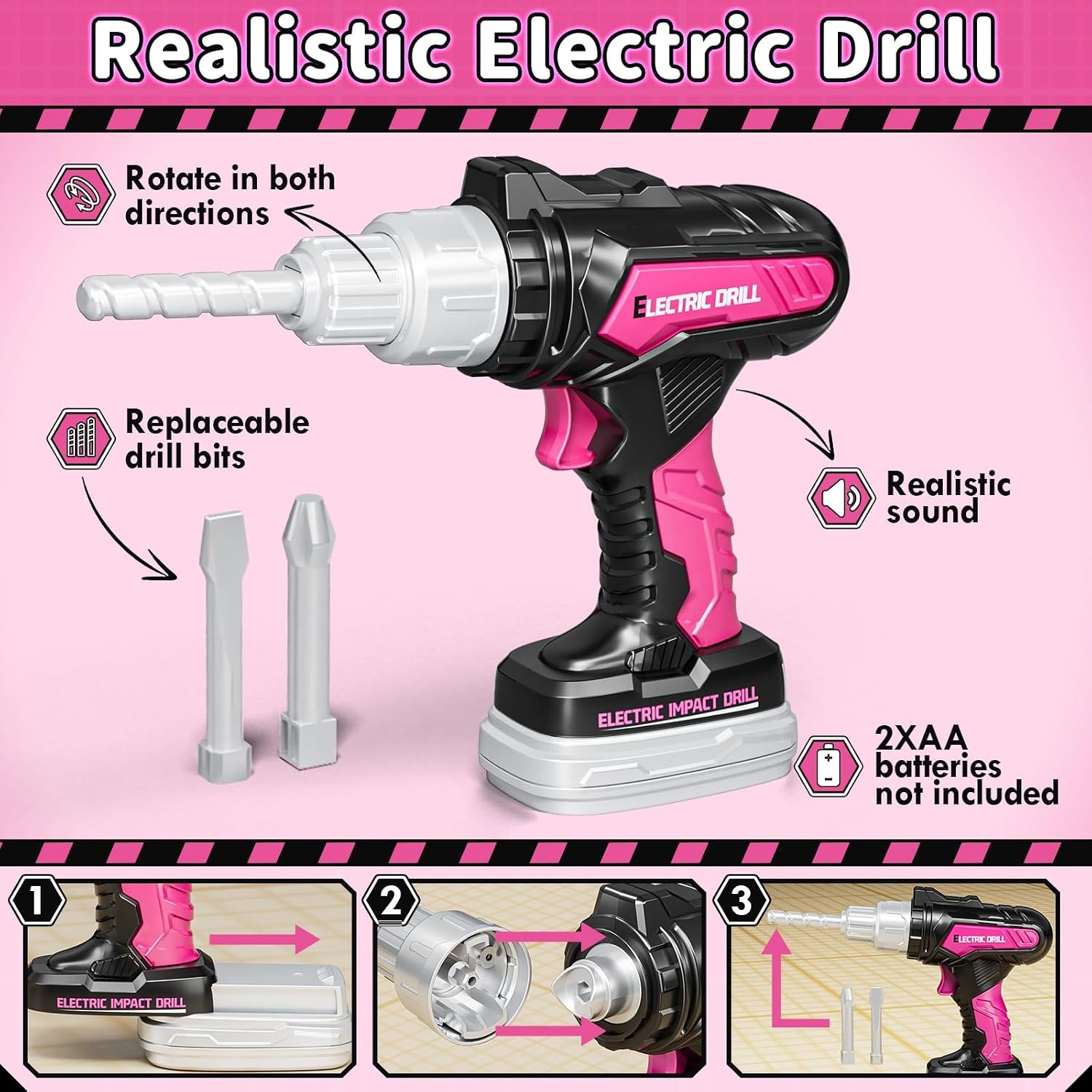
Second, look at whether the tools do anything. A toy drill that spins and makes sound holds attention far longer than a solid lump of plastic shaped like a drill. Children notice the difference immediately.
Third, check the fasteners. Screws, bolts and nails give the tools a purpose. Without them you have props rather than a workshop. This set includes all three plus assorted DIY accessories.
Fourth, think about size and weight. The case here is 27.5 x 8.5 x 23.5 cm and the whole set is about 400 g. That is light enough for a three year old to carry around the house, which matters more than it sounds. Toys that travel with a child get played with more.
Finally, consider the dress-up gear. Not every kit includes it. The vest, goggles and face protection in this set are a real part of the value, not an afterthought, because they are what pushes the activity from fiddling into full role play.
Setting it up for the first time
Open the box somewhere with a clear floor so nothing rolls away. Lay out the tools and name each one as you go, which helps a child map the shape to the word. Check whether the drill needs batteries before you hand it over, since battery requirements are not confirmed by the maker and a dead drill on a birthday morning is a disappointment.
Give the first session a simple job. "This bolt is loose, can you tighten it" works better than "here, play". Once the child has done one task from start to finish, they usually invent the next five themselves.
Agree the pack-up rule early. Everything goes back in the box when play ends. Children take to this surprisingly well when the box is part of the game rather than a chore bolted on afterwards.
Looking after it
Plastic tools are easy to maintain. A damp cloth with a little mild soap handles most marks, and everything should be dried before it goes back in the case. Nothing from this set should go in a dishwasher or washing machine, since heat can warp plastic and loosen printed details.
If the drill takes batteries and the set is going into storage for a season, take them out. Leaking cells are the usual way toys like this die.
Give the pieces a quick look over now and then. Any part with a crack or a sharp broken edge should be taken out of circulation. Keep the case closed between sessions and the set will stay complete much longer.
For the vest and any fabric parts, check the item itself for a care label before washing. Spot cleaning is usually enough.
The short version
This is a complete pretend play tool kit for children aged three and up. You get a toy electric drill, hammer, handsaw, screwdriver, wrench and tape measure, along with screws, bolts, nails and DIY accessories, plus a vest, goggles and face protection, all packed into a 27.5 x 8.5 x 23.5 cm carry case weighing around 400 g.
It suits a child who wants to copy the grown-ups, and it gives them a safe way to do it. The dress-up gear keeps them in the role for longer, the fasteners give the tools something to actually do, and the case means clean-up is quick. Check the battery situation before gifting, keep the small parts away from under-threes, and it should hold up to a lot of enthusiastic repair work.