
The complete guide
Choosing Wooden Jigsaw Puzzles For Young Children
The problem with buying one puzzle
Most parents learn this the hard way. You buy a jigsaw, your child loves it, and by the end of the second week they can build it with their eyes half closed. The puzzle goes on a shelf. Three months later it goes in a charity bag.
The issue is not the puzzle. It is that a single picture has a fixed amount of interest in it, and children work through that interest fast. Once a child knows the picture, the problem solving part disappears and only the muscle memory is left.
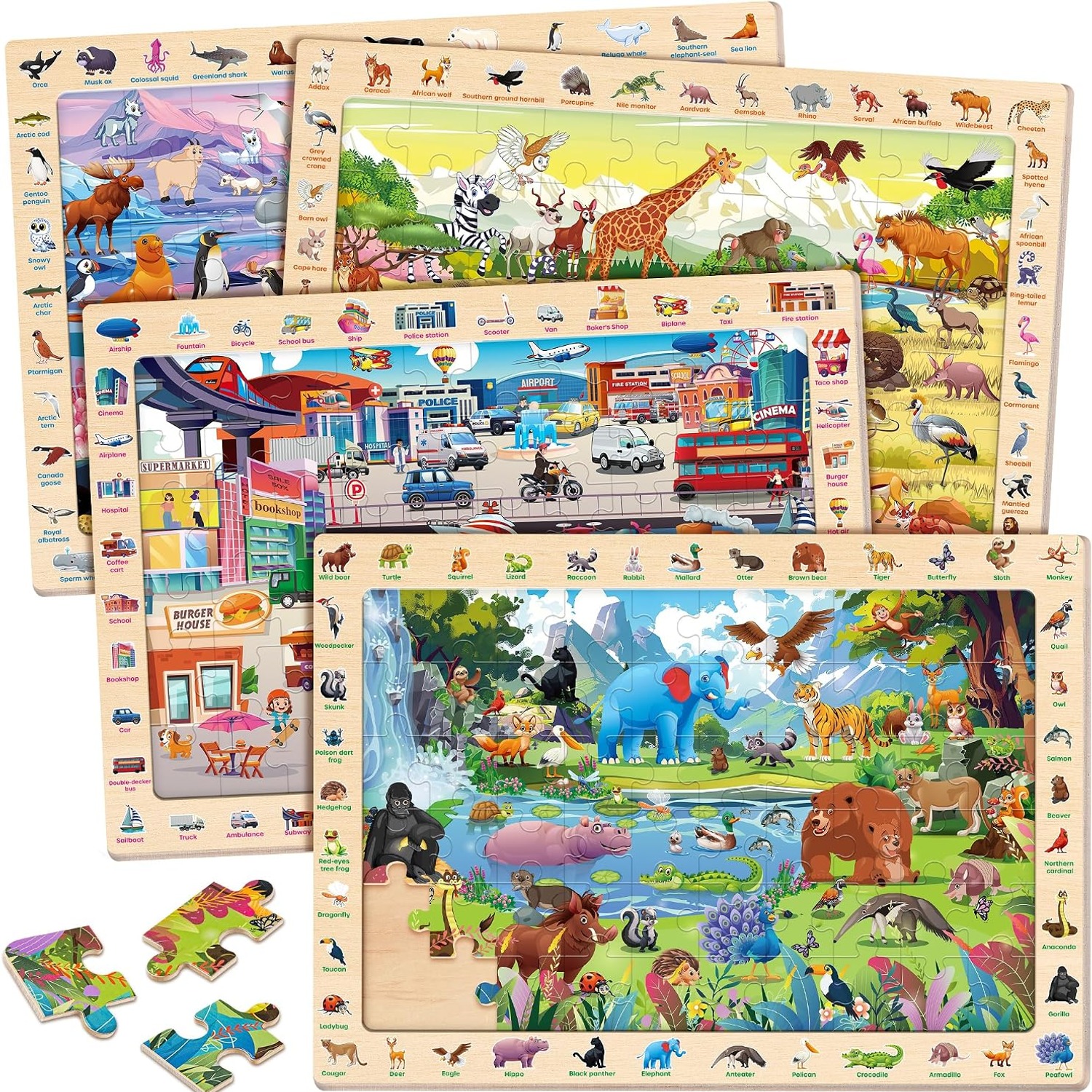
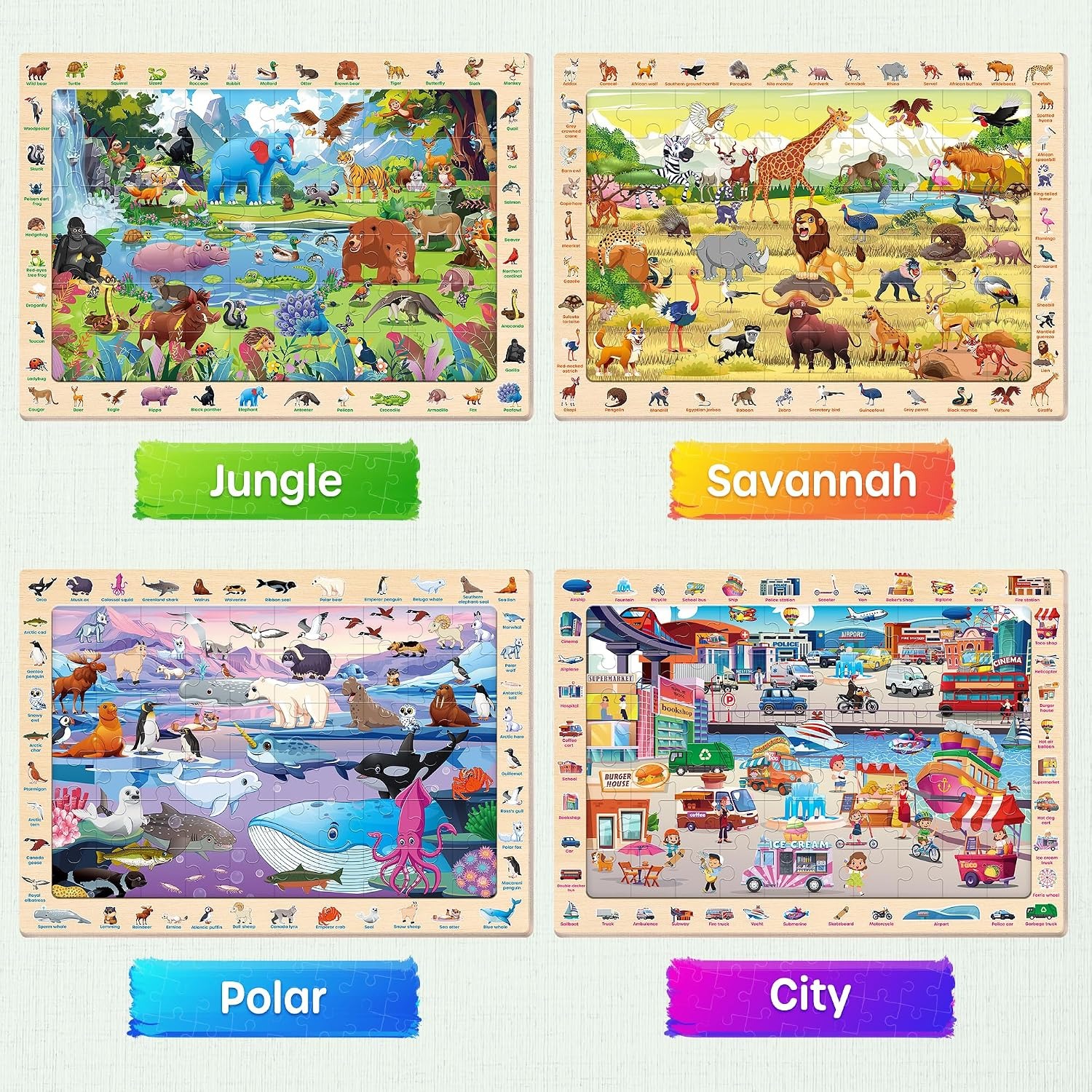
A multi-board set changes the maths. Four puzzles means four separate pictures, four moments of "I have not done this one yet", and a rotation you can run over months rather than weeks. Put one away for a fortnight and it feels close to new when it comes back out.
How this set is put together
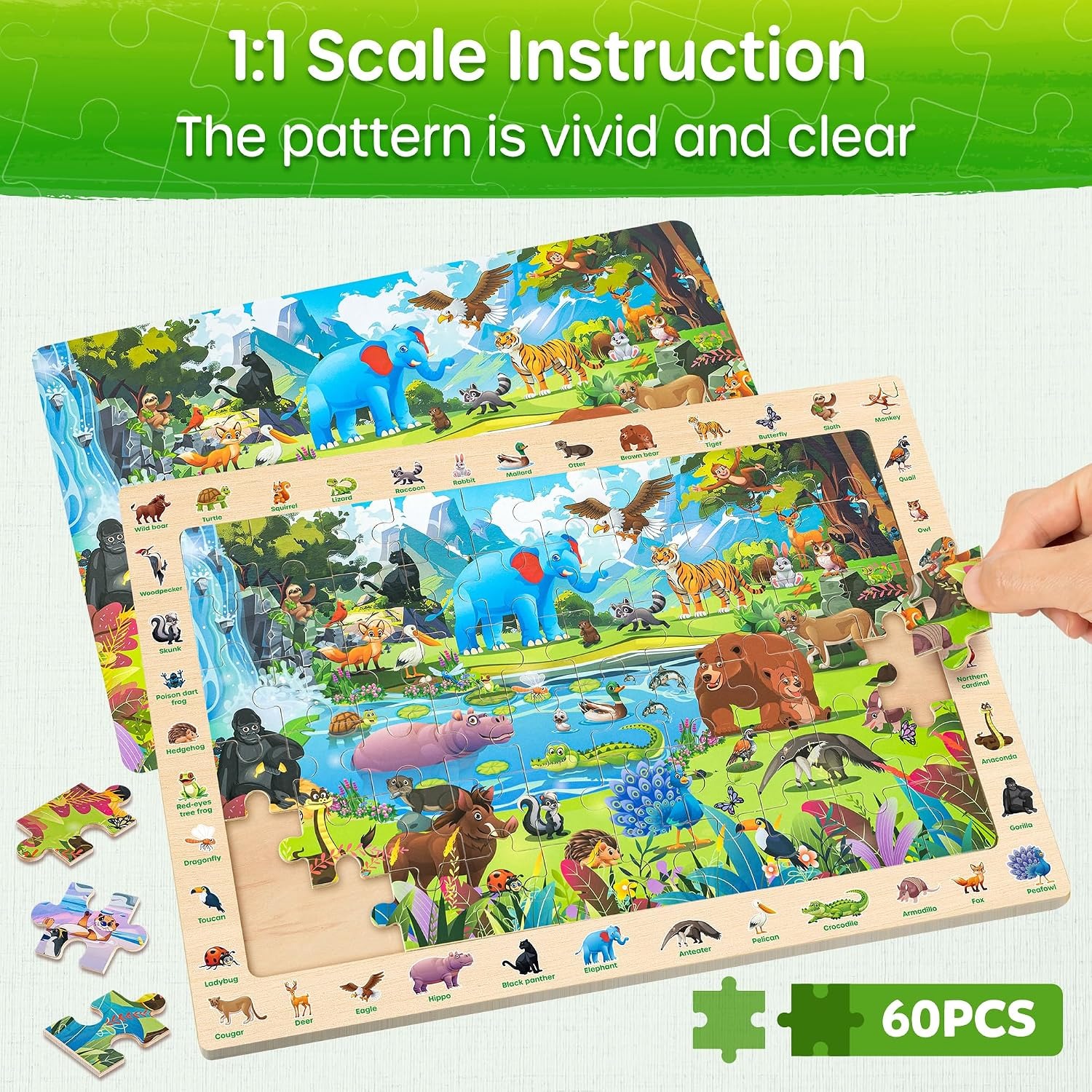
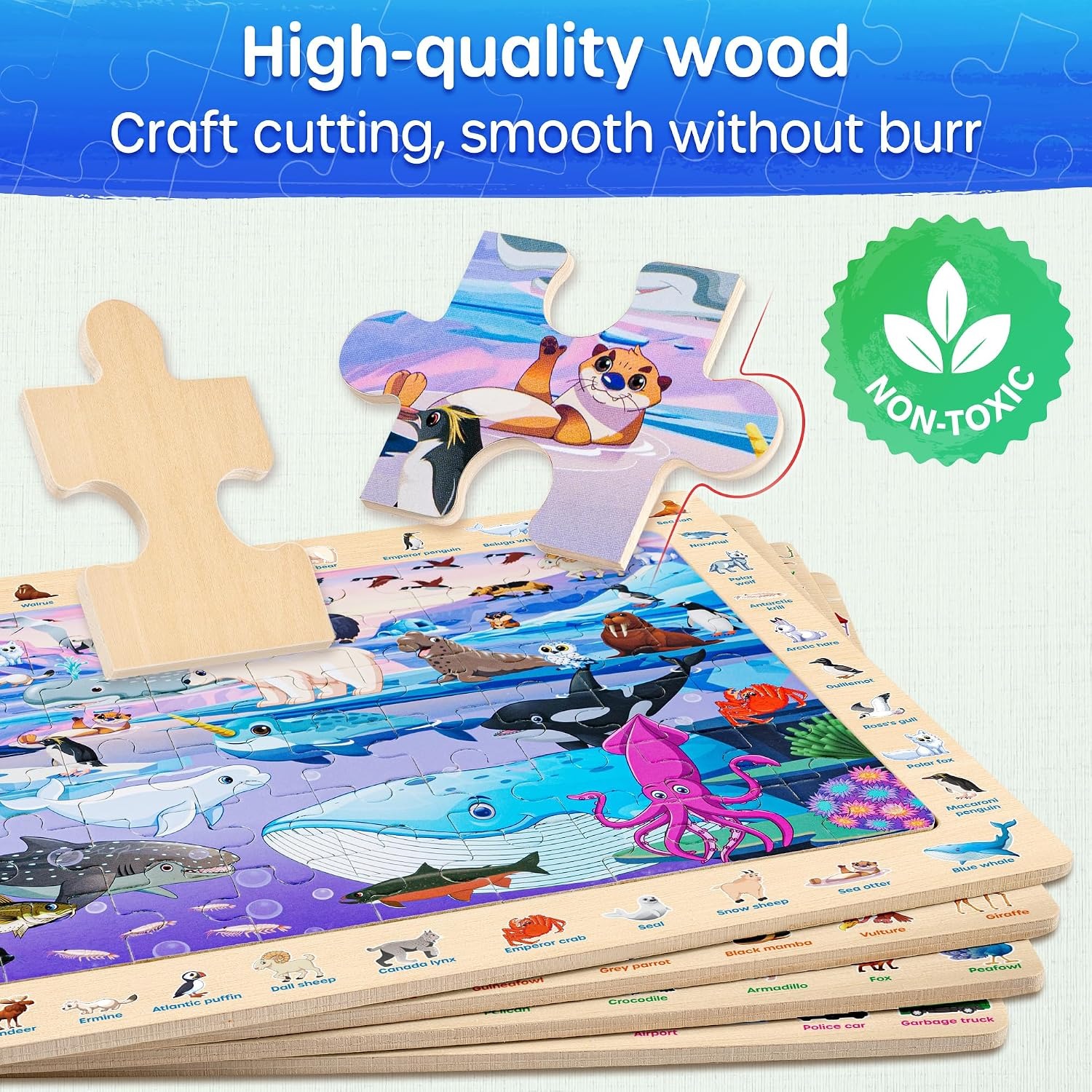
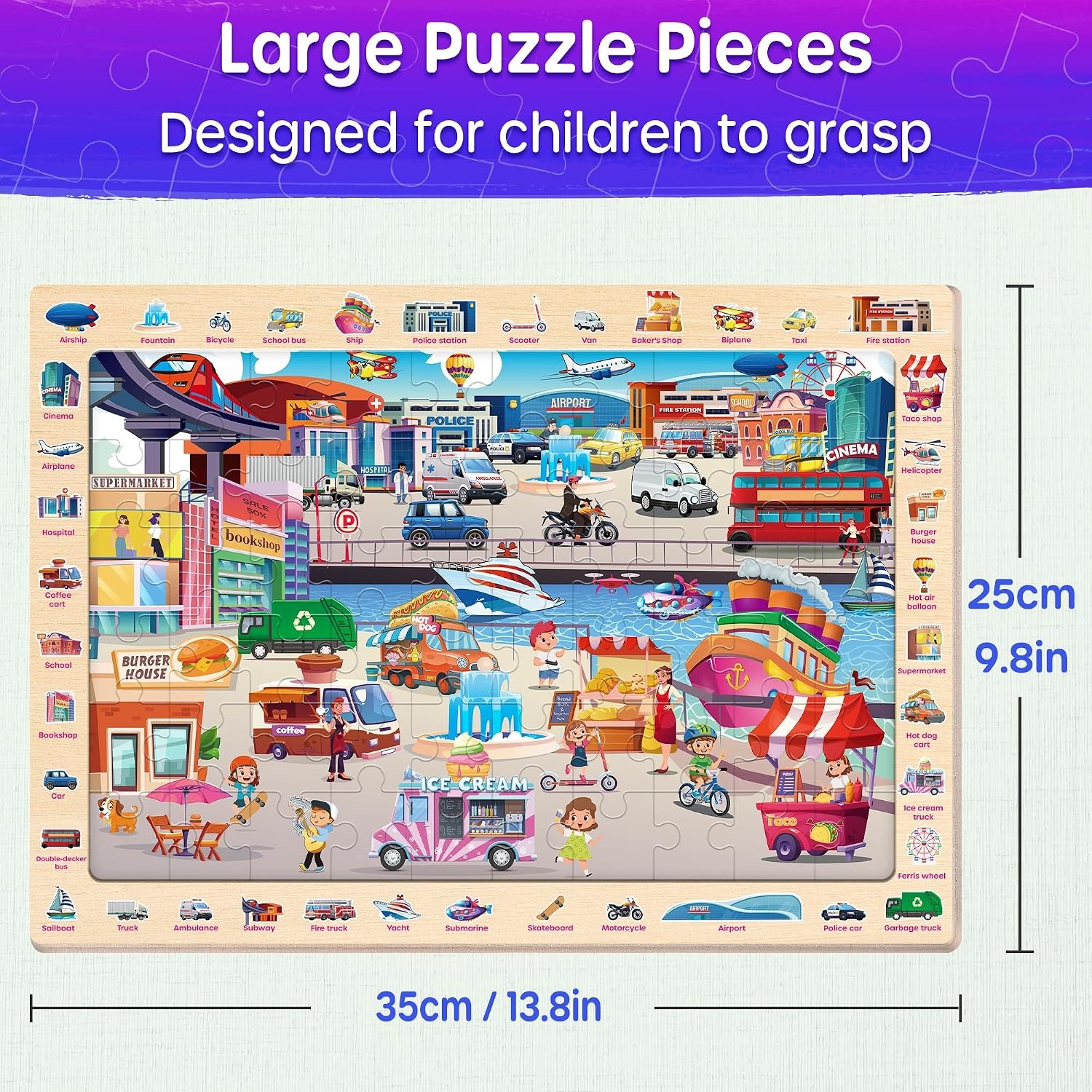
There are four wooden boards here, each measuring 35.5 by 26 cm, with 60 pieces in total across the set. That works out at roughly fifteen pieces per picture, which SYNARRY rates as beginner level. The themes are animals and transportation.
Fifteen pieces sounds small if you are used to adult jigsaws. For a three or four year old it is close to ideal. There are enough pieces to require real looking and testing, but not so many that the child runs out of patience before the picture appears. Finishing matters at that age. A child who completes a puzzle wants to do another one. A child who gives up halfway through a 100 piece board often decides puzzles are not for them.
The boards are listed at 0.1 cm thick and are rectangular, so they stack flat. No assembly is needed and there is nothing electronic involved. You tip the pieces out, your child builds, you tip them back in.
Why wood over cardboard
Cardboard puzzles are cheap for a reason. The tabs soften after a few dozen builds, the printed layer starts to lift at the edges, and one spilled drink ends the whole thing. They also lie flat against the table, which makes them genuinely hard for small fingers to pick up.
Wooden pieces have depth. A child can pinch one between thumb and finger, rotate it and feel how it sits. That tactile feedback is a real part of how young children learn shape and orientation, and it is why so many people searching for the best wooden puzzles for preschoolers end up here rather than in the cardboard aisle.
Wood also tolerates the reality of children. Pieces get stood on, dropped, posted under the sofa and recovered six weeks later. A wooden piece usually survives all of that. The trade-off is moisture. Keep the set dry and it will last for years. Leave it somewhere damp and the wood will eventually swell.
Who this suits
The recommended range is 36 months to 8 years, and that spread is wide on purpose.
At three, this is a first real jigsaw. Expect to sit alongside your child, turn pieces the right way up for them and point at the gap rather than hand them the answer. Progress is slow and that is fine.
At four and five, most children can build a board solo. This is the stage where you see the concentration kick in, where a child will refuse help and insist on finding the piece themselves. That stubbornness is exactly what you want.
At six to eight, a single board is quick. Older children get more out of mixing all four puzzles into one pile and sorting them back out, or racing a timer. If you are shopping specifically for a seven or eight year old who already does jigsaws confidently, a higher piece count will hold them longer. This set works best for that age as a shared activity with a younger sibling.
In a nursery or classroom, four boards means four children working at once without territorial disputes. That alone is worth the format.
What the themes actually do
Animals and vehicles are not random choices. They are two of the first categories children build real vocabulary around. A two year old knows "dog" and "car" long before they know abstract shapes.
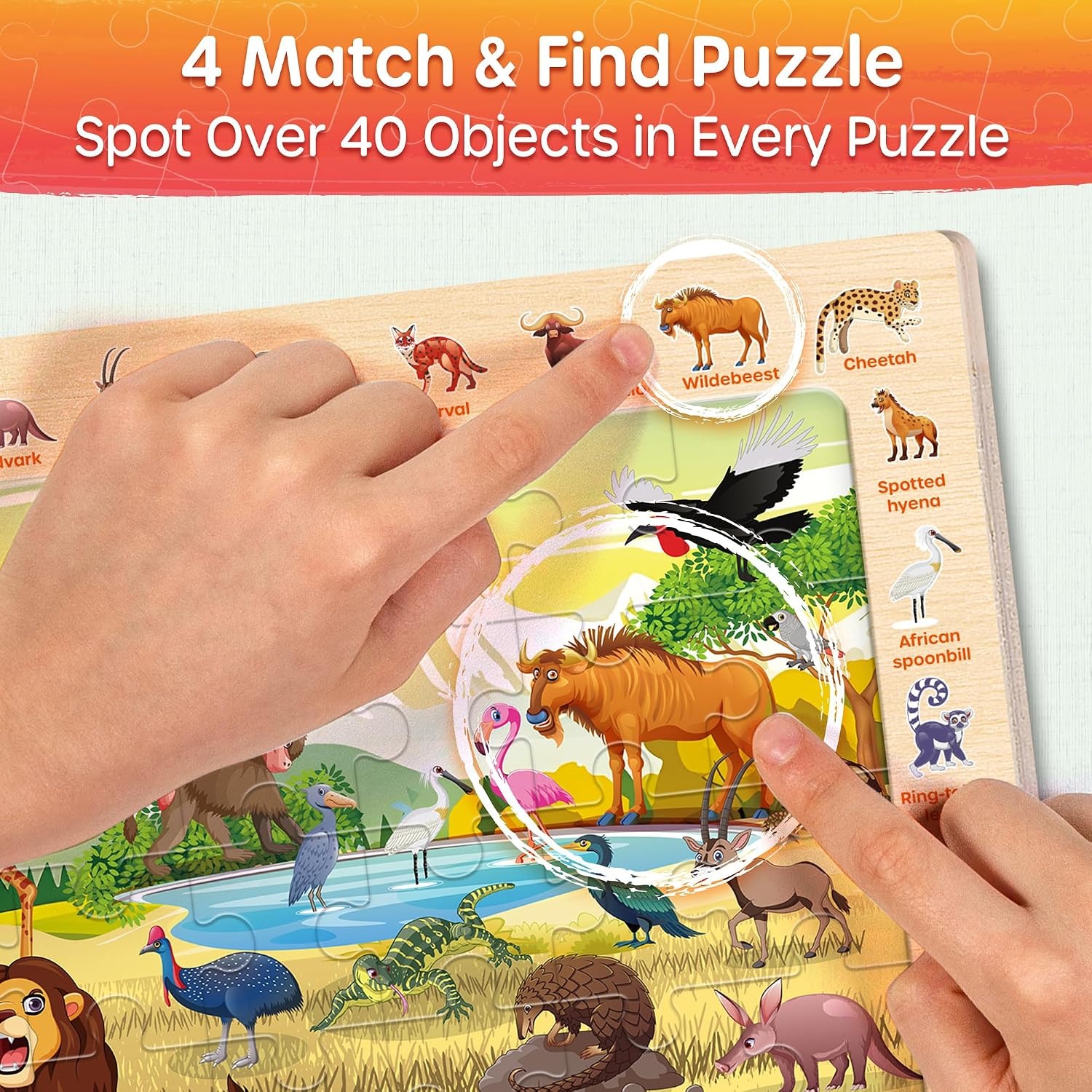
That matters during the build. When the picture is recognisable, a child can use the image to guide them, not just the piece shapes. They spot a wheel and look for the rest of the vehicle. They find an ear and hunt for the matching head. That is logical thinking in its earliest form, and it is more useful than simple trial and error.
It also makes the activity social. You can ask what sound the animal makes, where the bus is going, which animal is biggest. A transport puzzle for children becomes a talking point rather than a silent task, and the talking is where a lot of the value sits.
The manufacturer lists animal recognition, concentration, hand-eye coordination, logical thinking, matching, observation and patience as the educational objectives. Those are not marketing abstractions. You can watch each one happen at the table.
How to choose piece counts in general
A rough guide helps when you are buying puzzles over several years.
Around three years old, somewhere between twelve and twenty pieces per picture is sensible. By five, most children handle thirty to fifty. By seven or eight, a hundred pieces is reasonable for a child who has had regular practice, and far too much for one who has not.
Practice matters more than age. A four year old who does jigsaws most weeks will outpace a six year old who has barely touched one. If you are unsure, go slightly easier rather than harder. A puzzle finished quickly can be done again. A puzzle abandoned in frustration tends to stay abandoned.
Also think about how the set will be used. Beginner jigsaw puzzles with fewer pieces per board suit short attention spans, waiting rooms and car journeys. A single large puzzle suits a child who wants one long project.
Looking after them
Wipe the pieces with a dry cloth, or a barely damp one if something sticky has happened. Never soak wooden pieces and never put them in a dishwasher. Let them dry fully before storing.
Store flat, in a dry place, away from radiators and sunny windowsills. The two enemies of wooden toys are damp and heat cycling, and avoiding both takes almost no effort.
Keep each puzzle's pieces separate if you can, in a bag or small tub. If they do get mixed together, treat it as part of the game. Sorting by picture is a genuine activity in itself and many children enjoy it.
Give the pieces a quick look every few months for chips or rough edges, and keep the set out of reach of children under 3 who still put things in their mouths.
The short version
Four wooden boards, 60 pieces between them, animals and transport, each board 35.5 by 26 cm, recommended for ages three to eight. No batteries, no screen, no assembly.
The reason to buy a four pack rather than a single puzzle is simple. One picture gets solved and forgotten. Four pictures give you a rotation, let siblings play side by side, and stretch across a few years of a child's development rather than a single season.
If your child is at the very start of their jigsaw journey, this is a sensible place to begin. If they are already building hundred piece boards, look higher up the range. And if you are not sure where they sit, ask us.