
The complete guide
Wooden Dinosaur Puzzles, A Practical Buyer's Guide
The problem with most first puzzles
Buy a cheap jigsaw for a four year old and you can usually predict what happens. The box is opened on the living room floor. Pieces go everywhere. The thin cardboard bends at the tabs within a week. A few pieces disappear under furniture, and by the time anyone wants to do the puzzle again, it is no longer finishable. The child loses interest, not because puzzles are boring, but because this one stopped working.
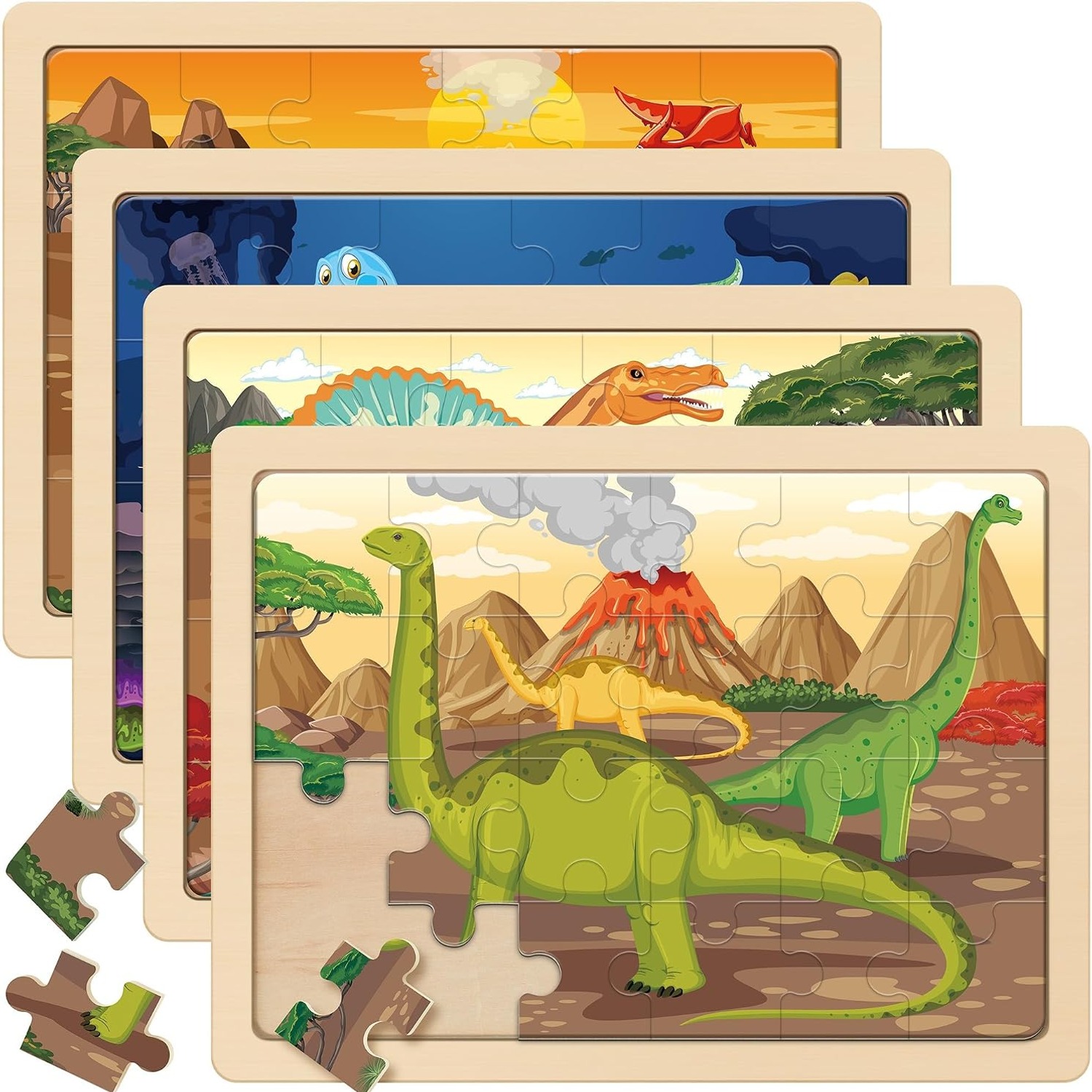
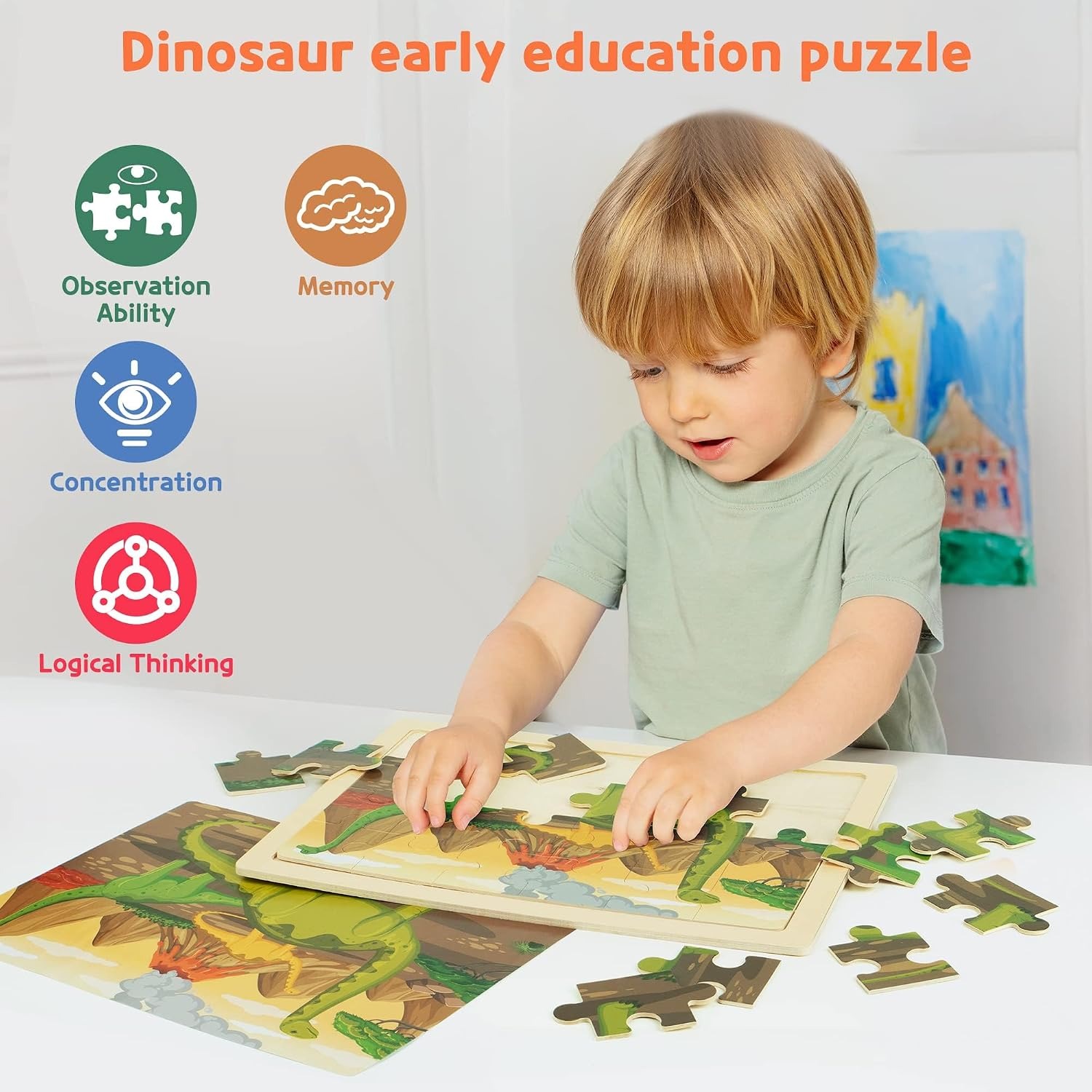
A wooden jigsaw puzzle set solves most of that in a fairly blunt way. The pieces are thicker, so they do not fold. They have weight, so they stay where they are put. And in this set, each of the four puzzles sits in its own wooden tray with a frame around the edge, which is the single most useful feature for young children. The frame gives a fixed border to build towards and keeps 24 pieces from migrating across a table.
What you actually get
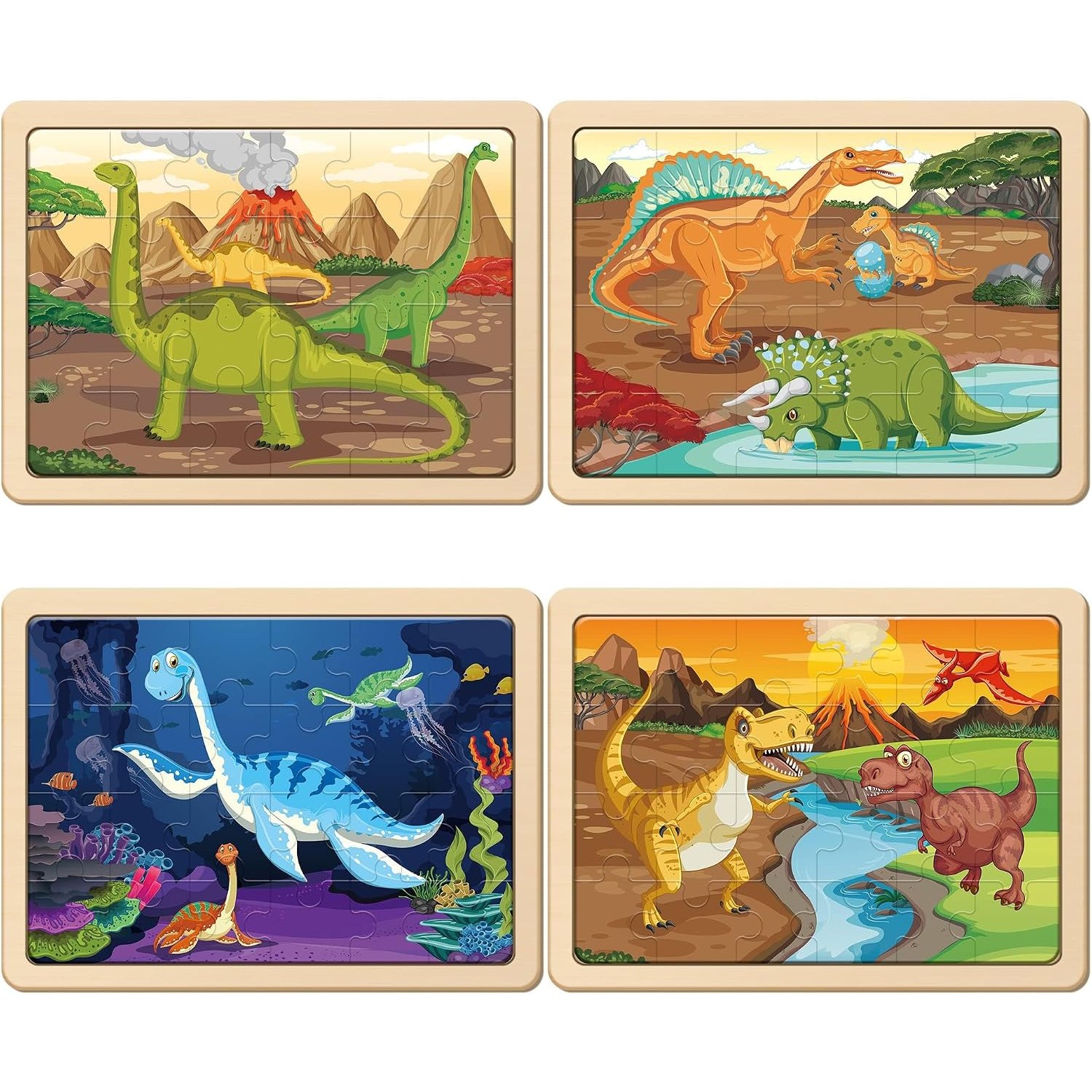
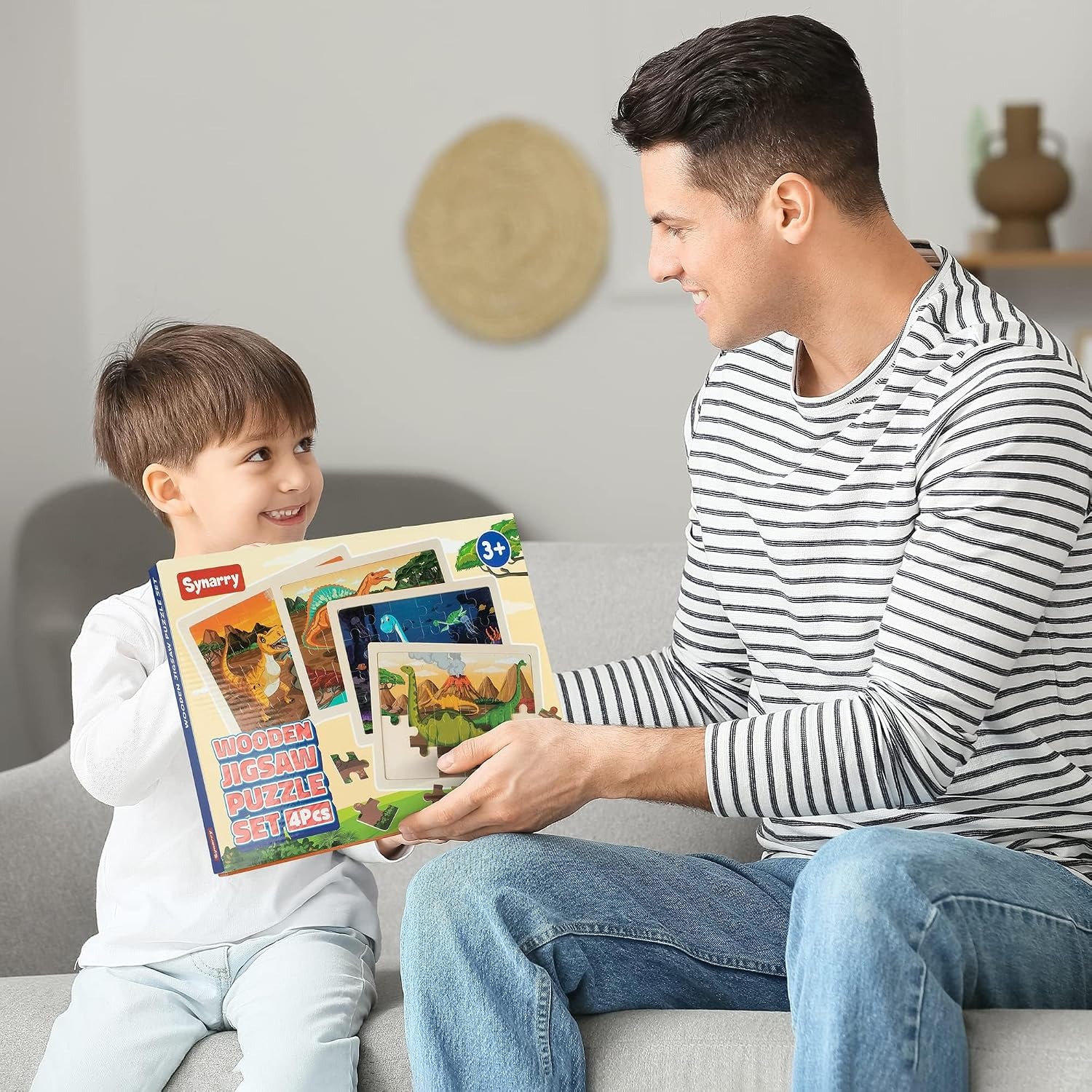
There are four separate puzzles in the box, each with 24 pieces, so 96 pieces in total. Each one shows a different dinosaur scene, and the themes cover creatures from land, sea and air rather than repeating the same style four times. Total weight is 0.74 kg and the box measures 31 x 23.8 x 2.5 cm, which is flat enough to slide into a shelf or a bag.
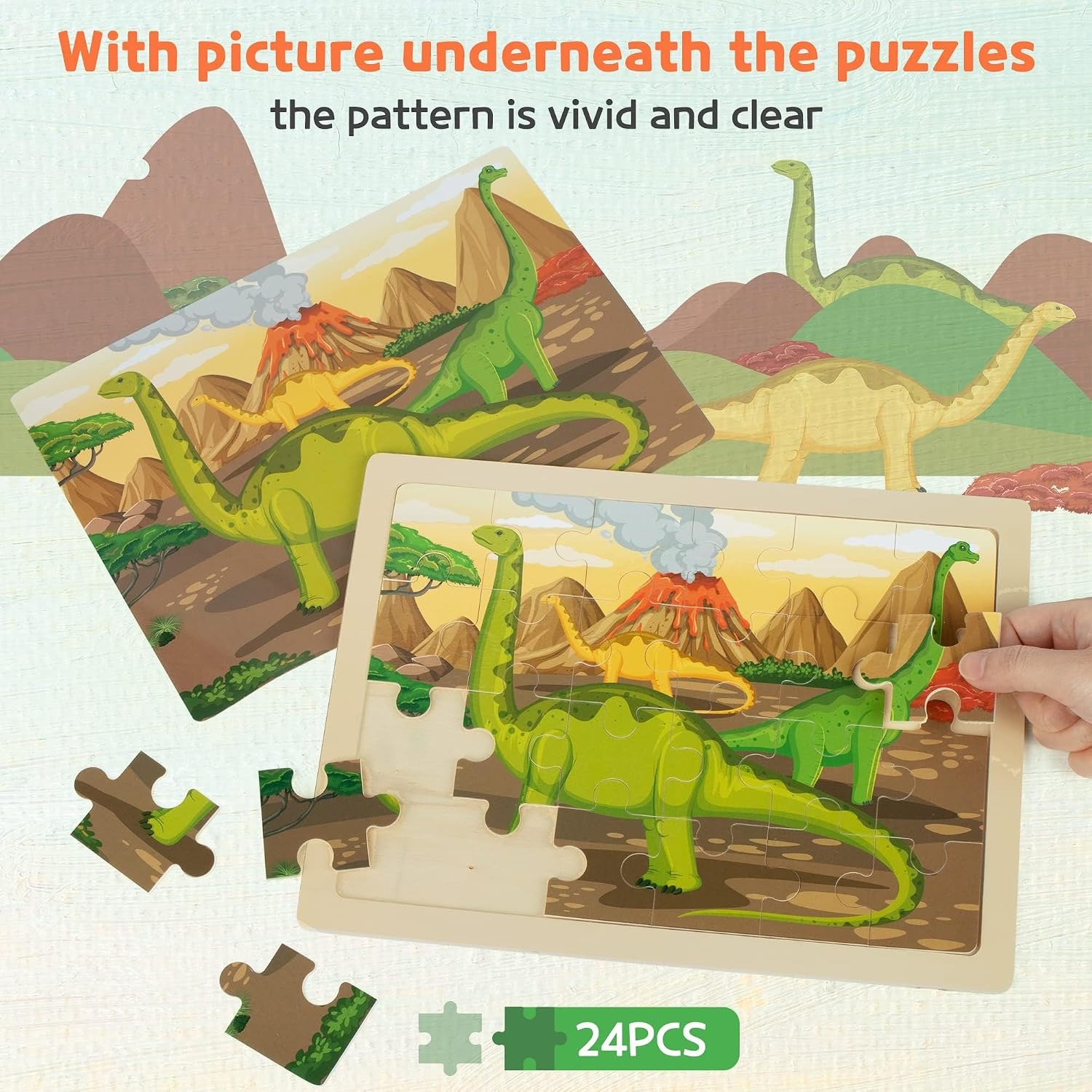
Under the pieces of each puzzle there is a removable paper illustration of the finished picture. It is a small thing that changes how the toy behaves. A child who is stuck can lift a couple of pieces and check the answer themselves, instead of giving up or calling for an adult every thirty seconds. Later, when they have built each one a few times, you take the paper out and the puzzle gets genuinely harder.
How 24 pieces fits the age range
The manufacturer recommends ages 36 months to 8 years, with a beginner skill level. That sounds broad, and it is, but 24 pieces is a sensible middle ground. It is enough that a three year old has to think about shape and colour, and few enough that they can finish in one sitting without losing heart. Finishing matters. A child who completes a puzzle wants to do another one. A child who gives up halfway usually does not come back to it.
For a five or six year old, 24 pieces is comfortable rather than demanding. That is not a flaw. Comfortable puzzles get repeated, and repetition is where the hand-eye coordination and shape reading actually develop. For a seven or eight year old, you will want to add the challenges mentioned above, removing the guide picture or mixing two puzzles together before sorting.
Wood versus cardboard, honestly
Wood costs more. It is worth being straight about that. What you get for the extra is durability and grip. A wooden piece survives being dropped, stepped on and jammed into a tray at the wrong angle. It is also easier for small fingers to pick up and rotate, because there is something to hold. Cardboard pieces with thin edges are fiddly for a three year old in a way adults forget.
The trade-off is weight and bulk. Four wooden trays take up more room than four cardboard boxes, and you would not post this in an envelope. For home use, a classroom, or grandparents' house, that is a non-issue. For hand luggage on a short flight, take one tray rather than the whole set.
Who this suits
This works best for a child who likes dinosaurs and is either new to jigsaws or has done a few simple ones. It is a good step up from chunky peg puzzles and a good step before 50 and 100 piece cardboard sets. Parents looking for screen free toys for kids tend to like that there is nothing to charge and nothing that makes noise.
It also works well where two children share. Four trays means two kids can each take one and work in parallel. Nobody has to wait, and because the pieces live in separate trays, the sets do not get hopelessly mixed. Playgroups and reception classrooms get good value from that arrangement.
Where it suits less well: a child under three who still mouths toys, or a confident older puzzler who is already building 100-piece scenes. In the first case, follow the age guidance. In the second, you want a larger piece count rather than more puzzles.
Choosing the right puzzle for a child's stage
A quick way to judge difficulty is to look at how many pieces of plain background there are. Lots of similar-looking sky or sea makes a puzzle much harder than the piece count suggests. Bright, busy dinosaur artwork with strong colour blocks, as in this set, reads as easier because children can sort by colour before they worry about shape.
The second thing to check is whether the puzzle has a frame. Framed tray puzzles are a different experience from loose jigsaws. The frame does part of the work by fixing the outer boundary, which is the hardest part for beginners. If you are buying for a child who has never completed a jigsaw alone, a framed set is the safer bet.
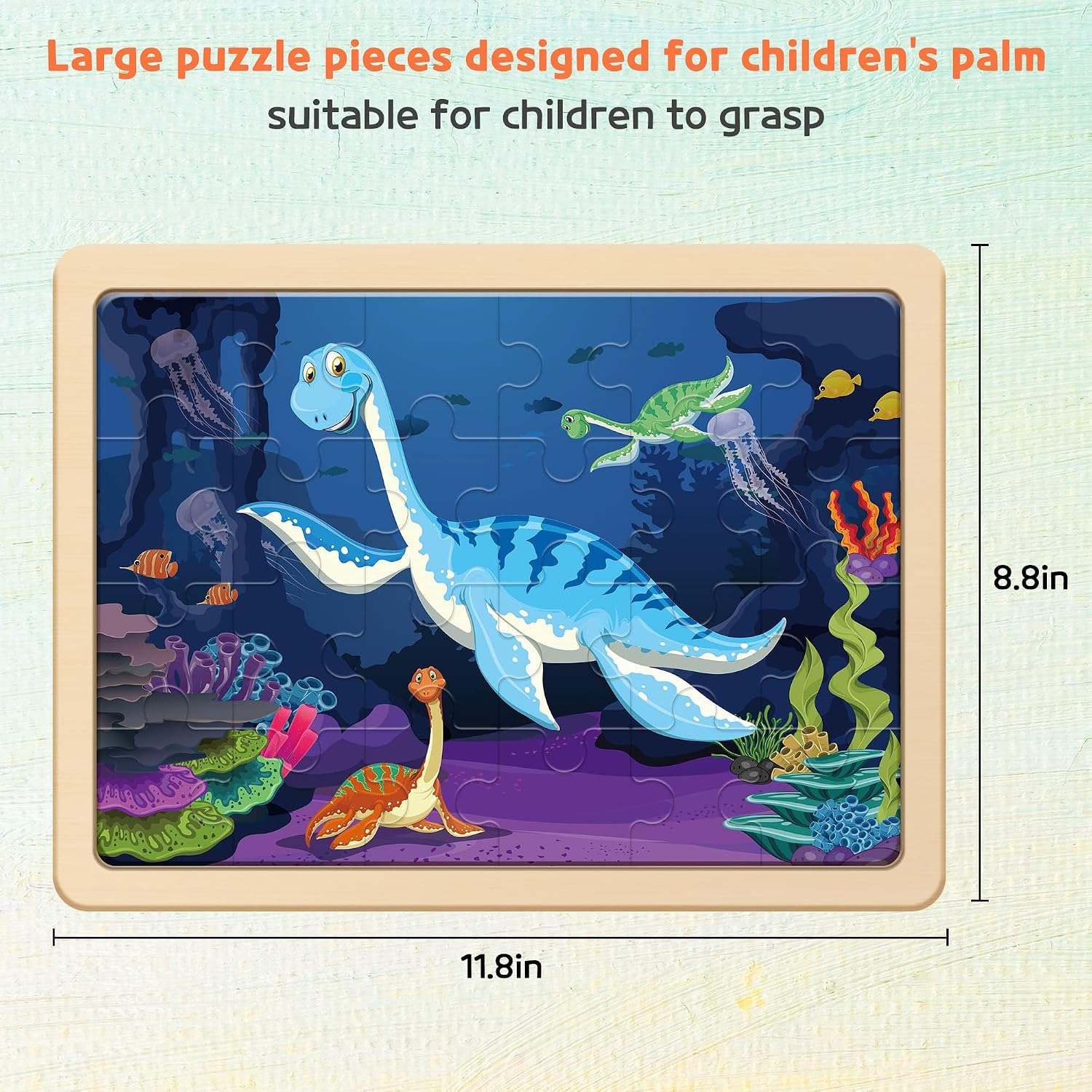
Third, think about piece size. Bigger pieces are better for younger hands, but bigger pieces in a 24-piece puzzle also mean a larger finished size, so check the puzzle fits your table. At 31 x 23.8 cm for the box, this one is a standard tabletop size that works on a kitchen table or a small play desk.
Looking after wooden puzzles
Wood and water do not get along. Wipe pieces with a barely damp cloth and dry them immediately. Never soak them, never put them near a dishwasher, and do not leave a tray on a windowsill where condensation collects. Damp wood swells, and a swollen piece stops fitting its slot.
Store them flat, in their trays, ideally back in the original box. Flat storage stops pieces tipping out and protects the printed faces. A dry indoor cupboard is fine. A garage or garden shed is not, because of the humidity swings.
If the printed surface gets scuffed over time, that is normal wear on a toy that is being used. It does not affect the fit. What does affect fit is a piece left outside in the rain, so the main rule is simple, keep them indoors and keep them dry.
Getting more out of the set
A few things stretch the life of these puzzles. Name the dinosaurs as you build. Ask your child to describe the scene before they start, then check how close they were at the end. Time the builds and keep a scorecard on the fridge. Hide one piece and let them notice which one is missing.
For slightly older children, try building a puzzle face down, using only the shapes. It sounds mean but kids find it funny, and it shifts the focus from picture matching to pure spatial thinking. That is the same skill the educational objective list is pointing at when it mentions logical thinking.
The short version
Four wooden dinosaur puzzles, 24 pieces each, 96 in total. Each one has its own wooden tray and frame, plus a removable picture guide underneath. Made from wood with smoothed edges, recommended for ages 36 months to 8 years, no batteries, no assembly, 0.74 kg in a 31 x 23.8 x 2.5 cm box.
If you want a first jigsaw that survives real use and keeps a dinosaur-obsessed child busy for more than one afternoon, this is a sensible place to start. If your child is already building hundred-piece scenes, go bigger instead.