
The complete guide
Choosing a Kids Keyboard Piano That Actually Gets Played
The toy that gets ignored by February
Every parent knows the pattern. A big, noisy musical toy arrives at Christmas, gets hammered for a fortnight, then drifts under the bed. The reason is almost always the same. The toy plays songs at the child rather than letting the child make sound themselves. Once the novelty of the pre-set tunes wears off, there is nothing left to discover.
A keyboard works differently. Thirty-seven keys is thirty-seven different things a child can do, in any order, at any speed, as loudly or as gently as they like. That is a very deep well for a small person. A four-year-old will spend twenty minutes just working out that the keys on the right sound higher than the keys on the left, and they will be genuinely pleased with themselves when they figure it out.
This is the honest case for a toy piano keyboard over most other musical toys. It does not run out of content, because the content is whatever the child decides to play.
How a kids keyboard piano actually works
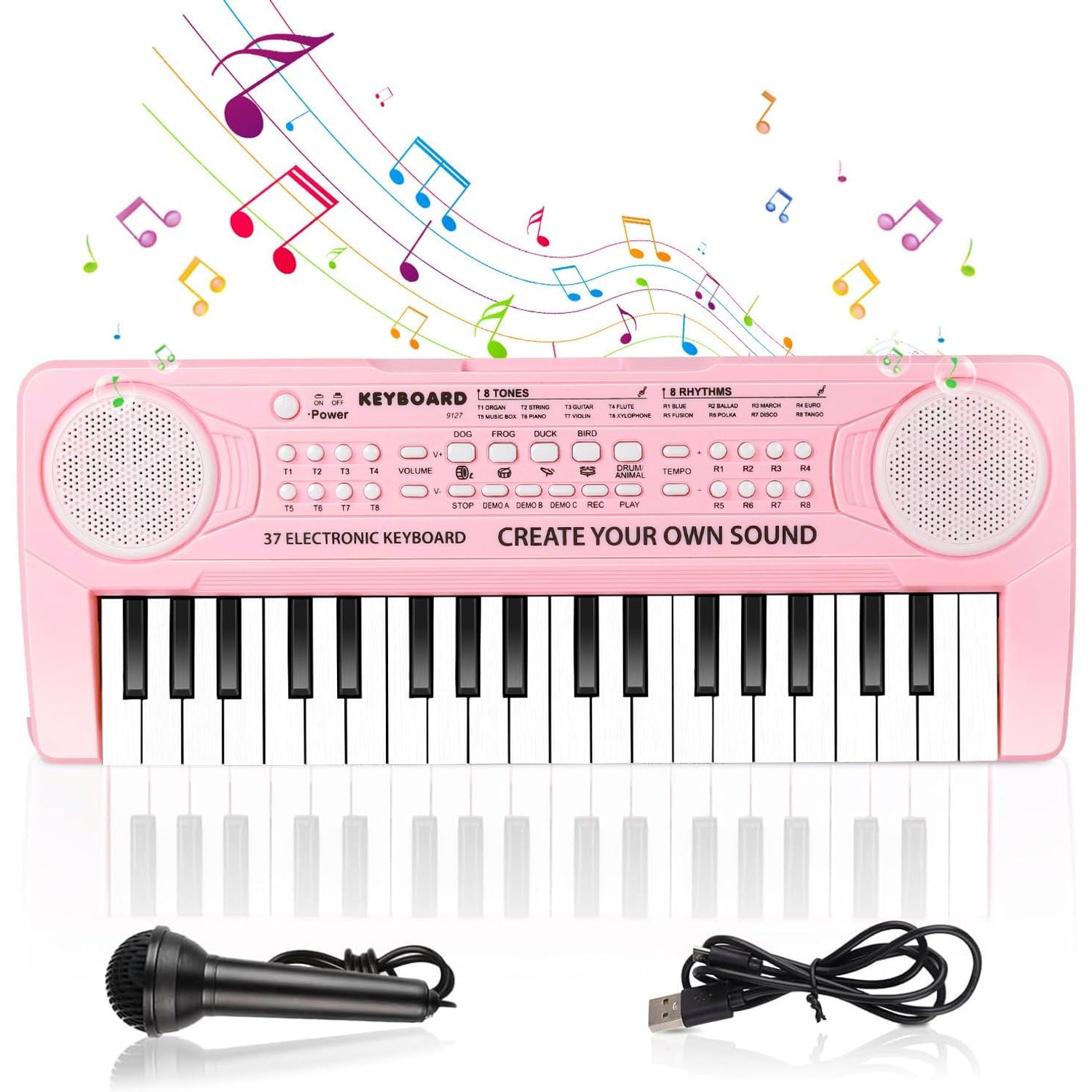
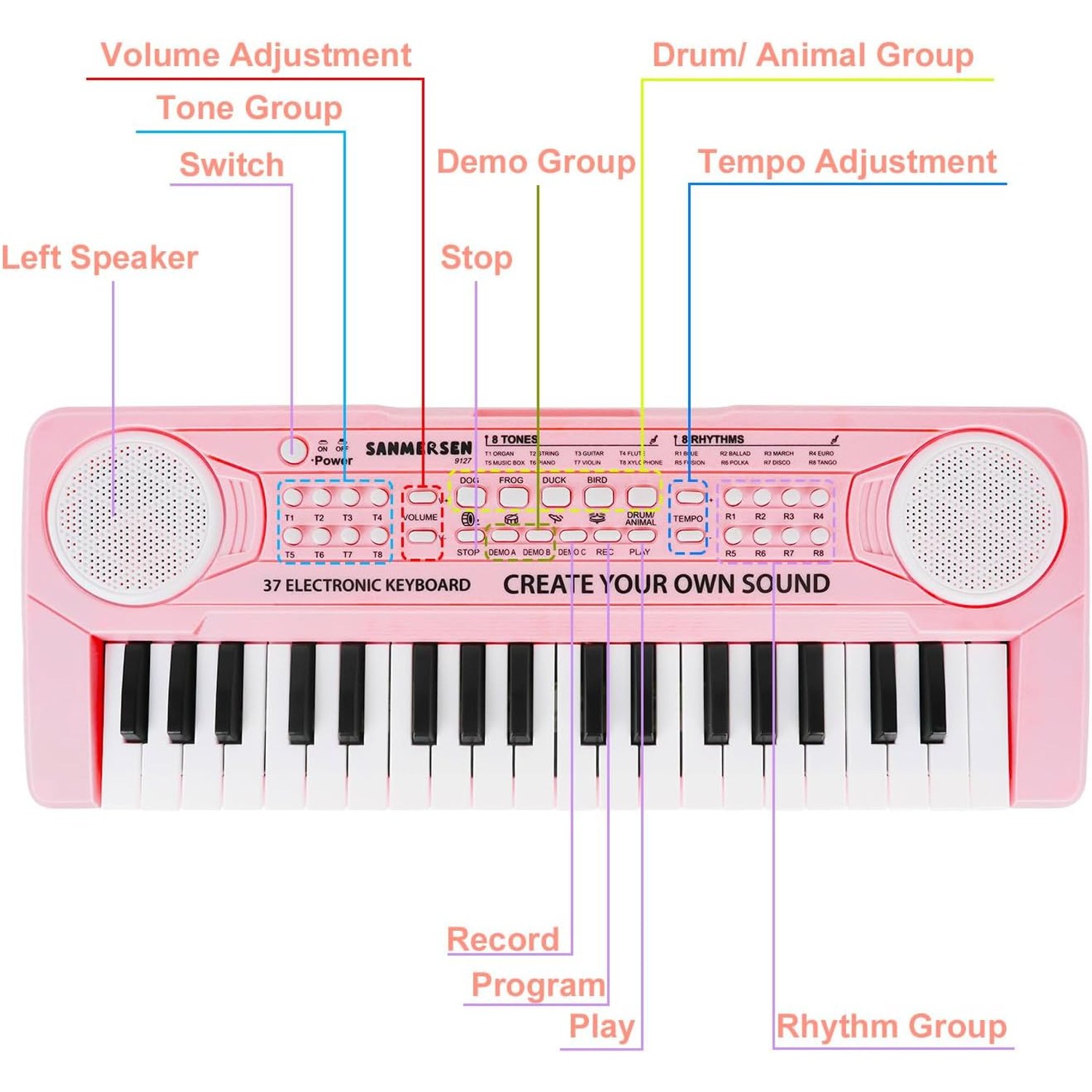
Inside, there is a sound chip and a speaker. Each key triggers a note, and the settings on the control panel change what that note sounds like and what plays alongside it.
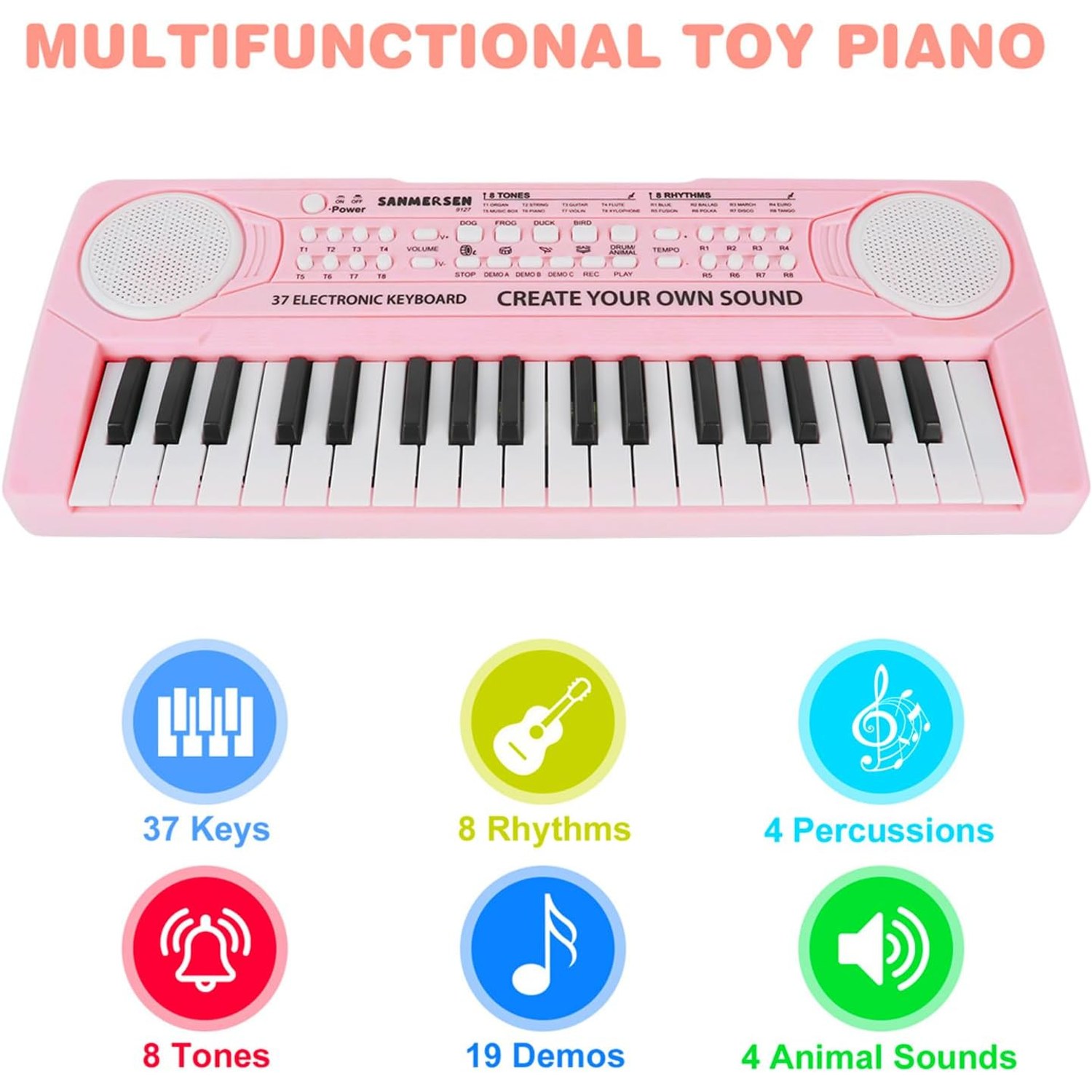
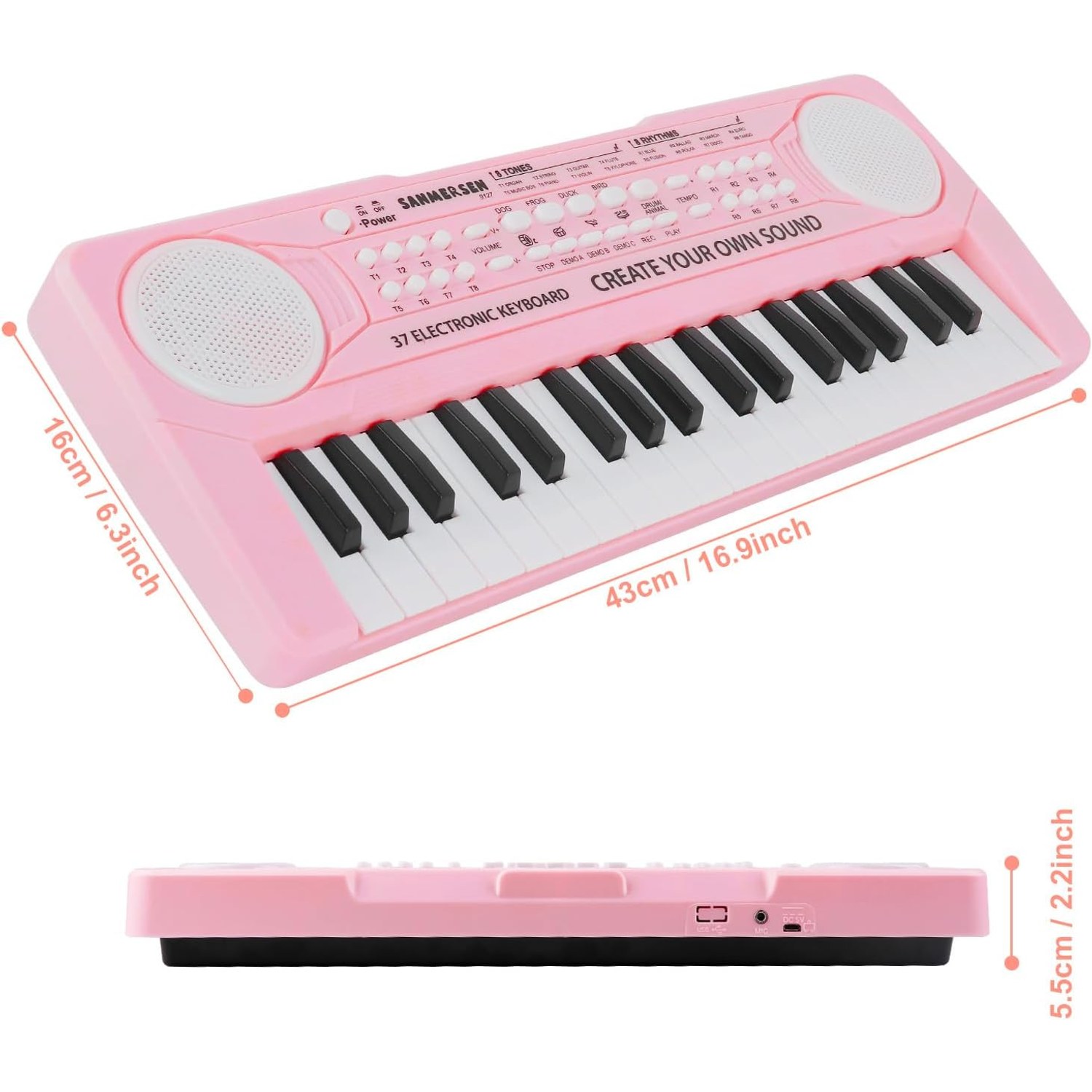
On this model there are 43 settings in total. They break down into a handful of categories. Rhythms give a backing beat, so a child can play along to something rather than into silence. Tones change the character of the keys, turning a piano sound into something else entirely. Demo songs play a complete tune so your child can hear where they might be heading. Then there are percussion sounds and animal sounds, which exist to be funny, and work very well at that job.
Underneath all of it sits a record and playback function. This is the part that surprises parents. Children who will not practise when asked will happily record themselves four times in a row trying to get a short melody right. They are doing the same work, but it feels like playing with a gadget instead of doing homework.
The microphone stores in a slot behind the keyboard and clips in when wanted. Singing and playing at the same time is a real skill. It splits attention between two tasks and forces a child to keep steady time. Most kids find this hilarious before they find it difficult, which is exactly the right order.
Who it suits
The recommended age range is 36 months to 12 years, which is wide, and the way a child uses it changes a lot across that span.
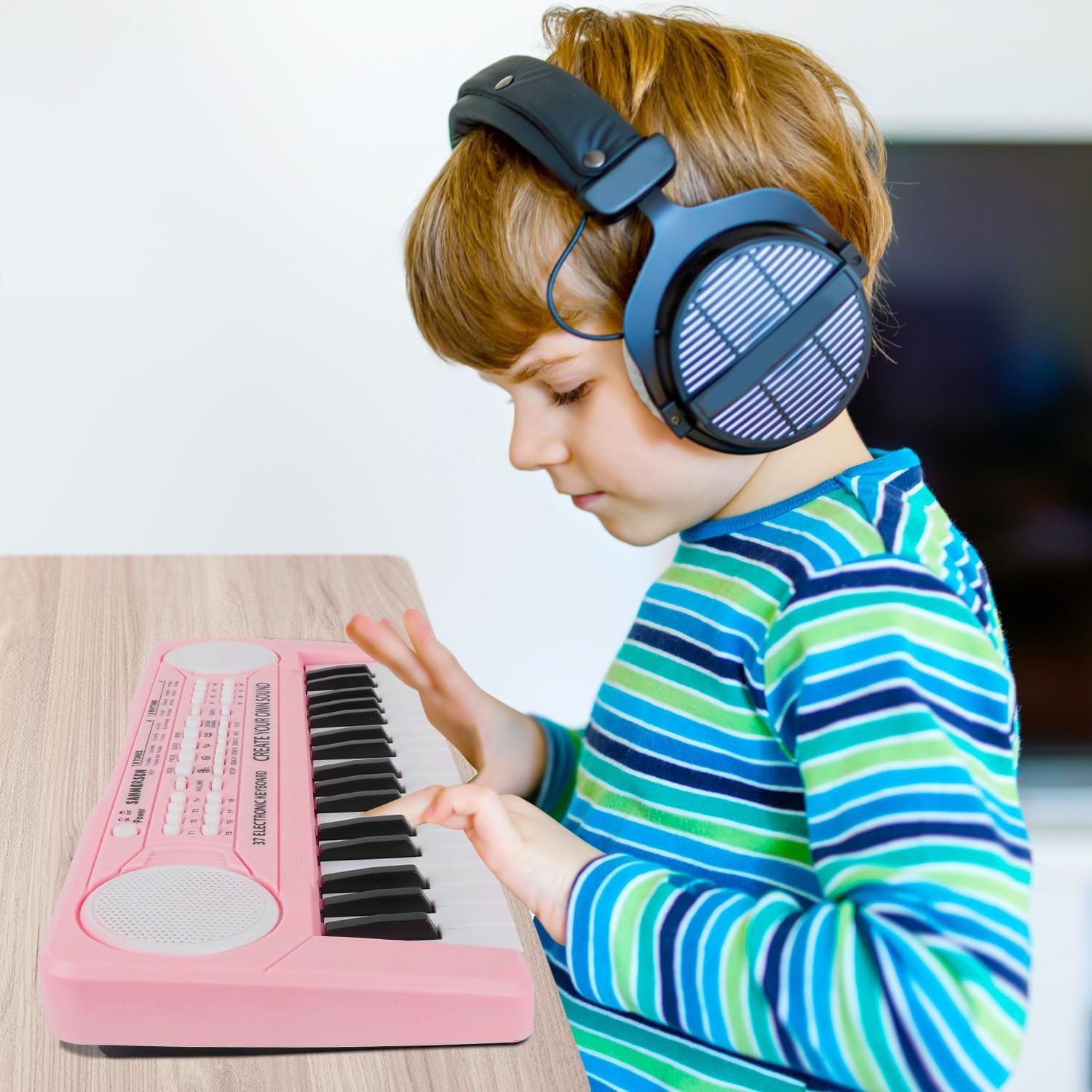
At three, it is a cause-and-effect machine. Press here, hear that. There is no melody, no structure, just exploration, and that is fine. The important thing is that they associate the instrument with fun rather than correction.
Between five and seven, children start picking out tunes by ear. They will work at a nursery rhyme or a theme from a film they love. This is the sweet spot for a best beginner keyboard for children, because they have enough patience to repeat something and enough curiosity to keep trying.
From eight upward, the recording function and the rhythm tracks start doing heavier lifting. Older kids build little arrangements, record them, play them back and critique their own work. Some will outgrow 37 keys and want something full-sized. That is a good problem, and it means the keyboard did its job.
It also suits households where space is tight. At 43 x 20 x 6.3 cm it fits on a shelf, a windowsill or in a drawer. A full upright piano is a piece of furniture. This is not.
How to choose between keyboards
A few things actually matter when you compare models.
Key count. Fewer than 30 keys is very limiting past the preschooler stage. Full-size 61-key boards are wide, heavy and genuinely intimidating for a small child. Thirty-seven is a sensible middle: enough range for real melodies, narrow enough that a child can reach both ends without shuffling along the bench.
Key feel and size. Keys built for adult hands force small fingers to stretch, and that builds bad habits. Keys spaced for children let a child rest their hand naturally and press one note at a time on purpose.
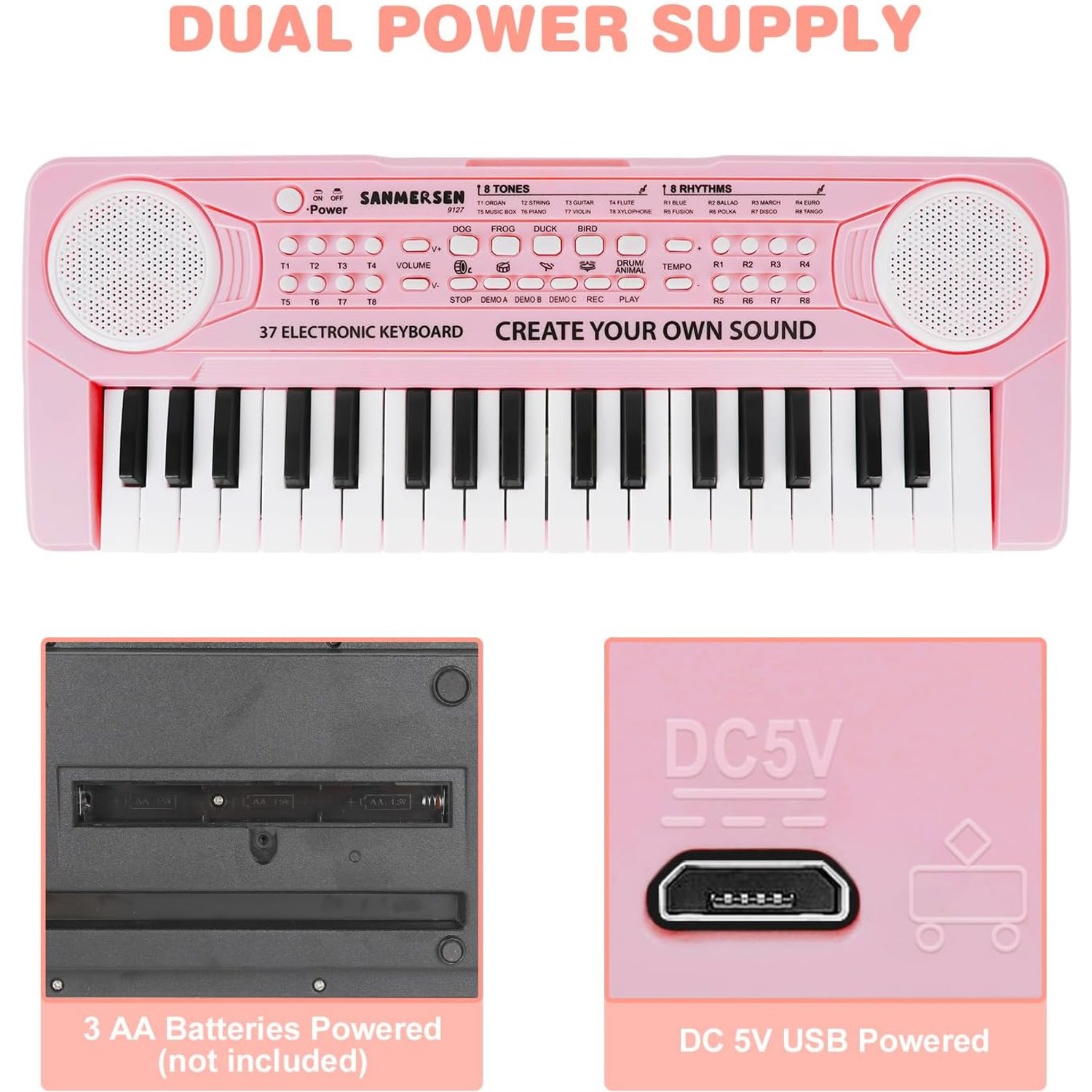
Power options. This is underrated. A keyboard that only works plugged in only gets used in one room. Dual USB and AA battery power means it travels, which in practice means it gets played more often. This one takes 3 x 1.5V AA alkaline batteries, though they are not supplied, so add a pack to your basket somewhere.
Weight. 0.64 kg means a child can carry it themselves. Toys that need an adult to move them get moved less.
Extras that earn their place. A microphone and a recording function are worth having because they change how a child plays, not just what noise comes out. Twenty near-identical demo songs are not worth paying extra for.
Getting started on day one
Take it out of the box and check nothing is loose. Nothing needs assembling.
Decide on power. Plug in the USB cable for the first session so you are not caught out by flat batteries halfway through the excitement. Fit AA batteries later for portable use.
Put it on a stable, flat surface at a height where your child's forearms sit roughly level. A dining table is usually too high for a small child on a normal chair, so a coffee table or the floor often works better.
Then step back. The temptation is to immediately teach them something. Resist it for the first day or two. Let them press everything, find the animal sounds, laugh at the drums and work out the volume for themselves. Structure can come later and it lands much better once they already like the instrument.
When you do start guiding, keep it tiny. Three notes. One rhythm. Five minutes. Then stop while they still want more.
Looking after it
Keyboards die from two things: liquid and grit. Keep drinks and snacks off the table during play, and brush away sand or crumbs before they work their way under the keys.
Wipe the keys and casing with a soft cloth that is barely damp, then dry it straight away. Never spray cleaner directly at it, and never let water near the speaker grille.
If the keyboard is going unused for a few weeks, take the batteries out. Leaking cells ruin more toys than rough handling ever does. Store it flat, out of direct sunlight, somewhere dry.
Odd behaviour, like keys that cut out or sounds that stutter, is nearly always low battery power. Swap the batteries before assuming anything is broken.
The short version
A kids keyboard piano earns its shelf space because the child drives it, not the toy. Thirty-seven child-sized keys give enough range for real tunes without overwhelming small hands. The 43 settings keep it interesting, the microphone turns practice into performance, and the record function quietly tricks children into repetition, which is the whole secret of learning an instrument.
Add in USB or battery power, 0.64 kg of weight and no assembly, and you have something that travels to grandparents' houses and holiday cottages instead of gathering dust. For a child between three and twelve, it is a genuinely useful first instrument rather than another plastic noise maker.
If it turns out not to suit your child, send it back. But most of the time, a keyboard like this is the toy that is still out on the table in March.