

The complete guide
Choosing a Wooden Doctor Play Set, A Parent's Buying Guide
The problem with pretend play that has no props
Watch a child play doctor with nothing to work with and you will see the same pattern. There is a burst of enthusiasm, a teddy gets laid on the sofa, and then the game stalls because there is nothing to actually do. A pen stands in for a thermometer until someone needs the pen. A tea towel becomes a bandage and gets taken away for the dishes. Within a few minutes the whole thing has drifted somewhere else.
Props fix that. Not because children lack imagination, but because imagination needs something to push against. Give a four-year-old a stethoscope and a bag, and the game suddenly has rules, a sequence and a reason to keep going. That is the whole argument for a kids doctors set. It is not about teaching medicine. It is about giving a story enough structure to last longer than a cup of tea.
What this set actually gives you
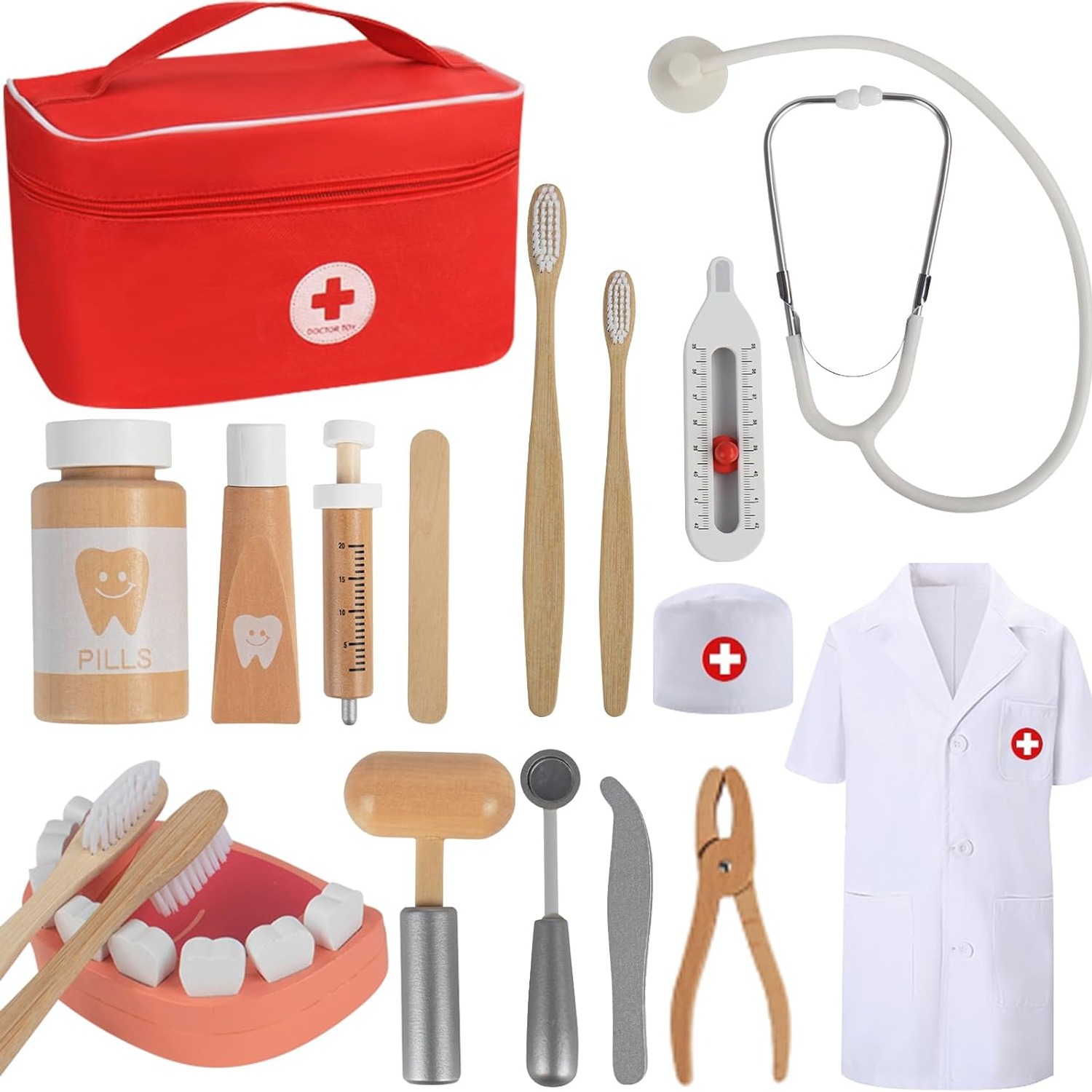
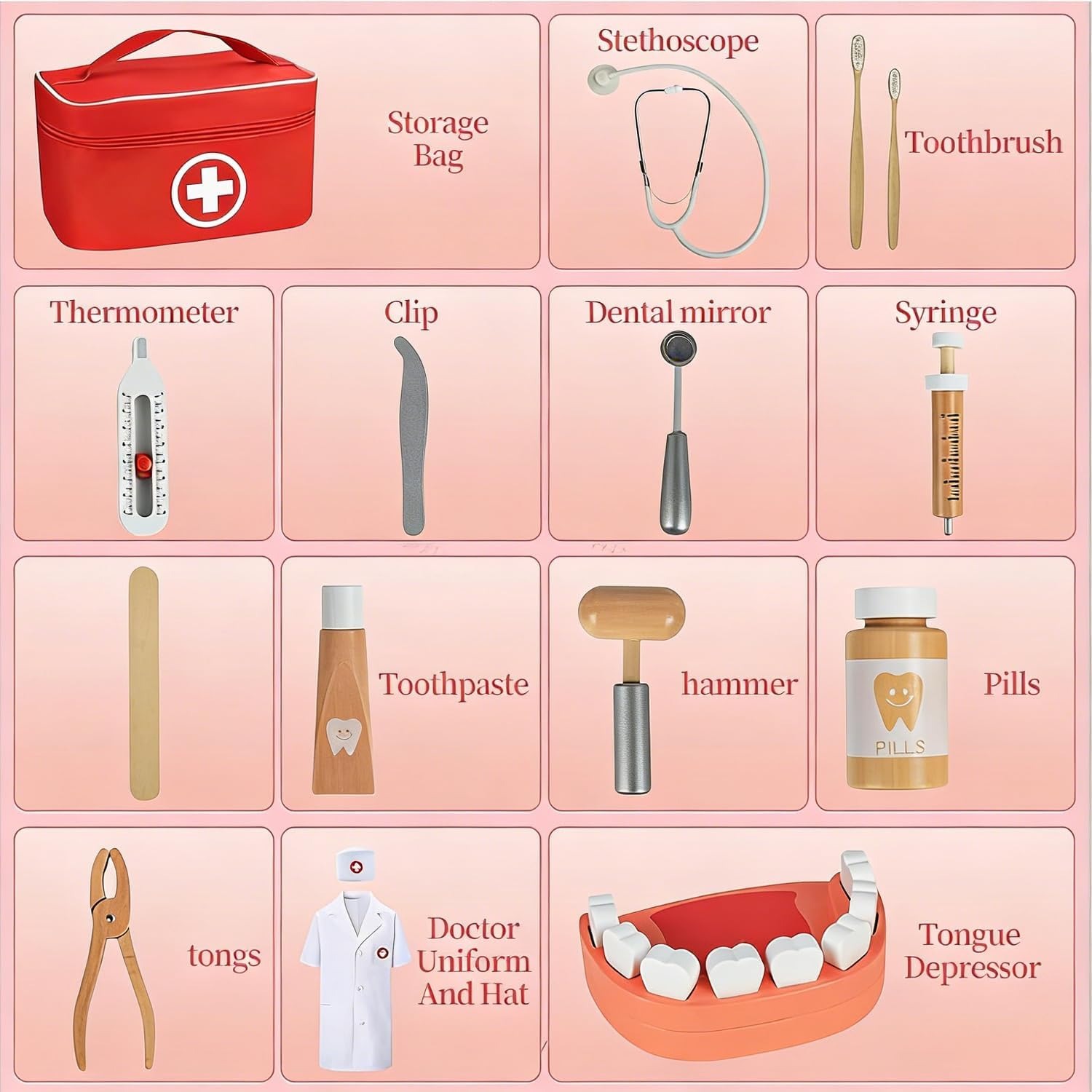
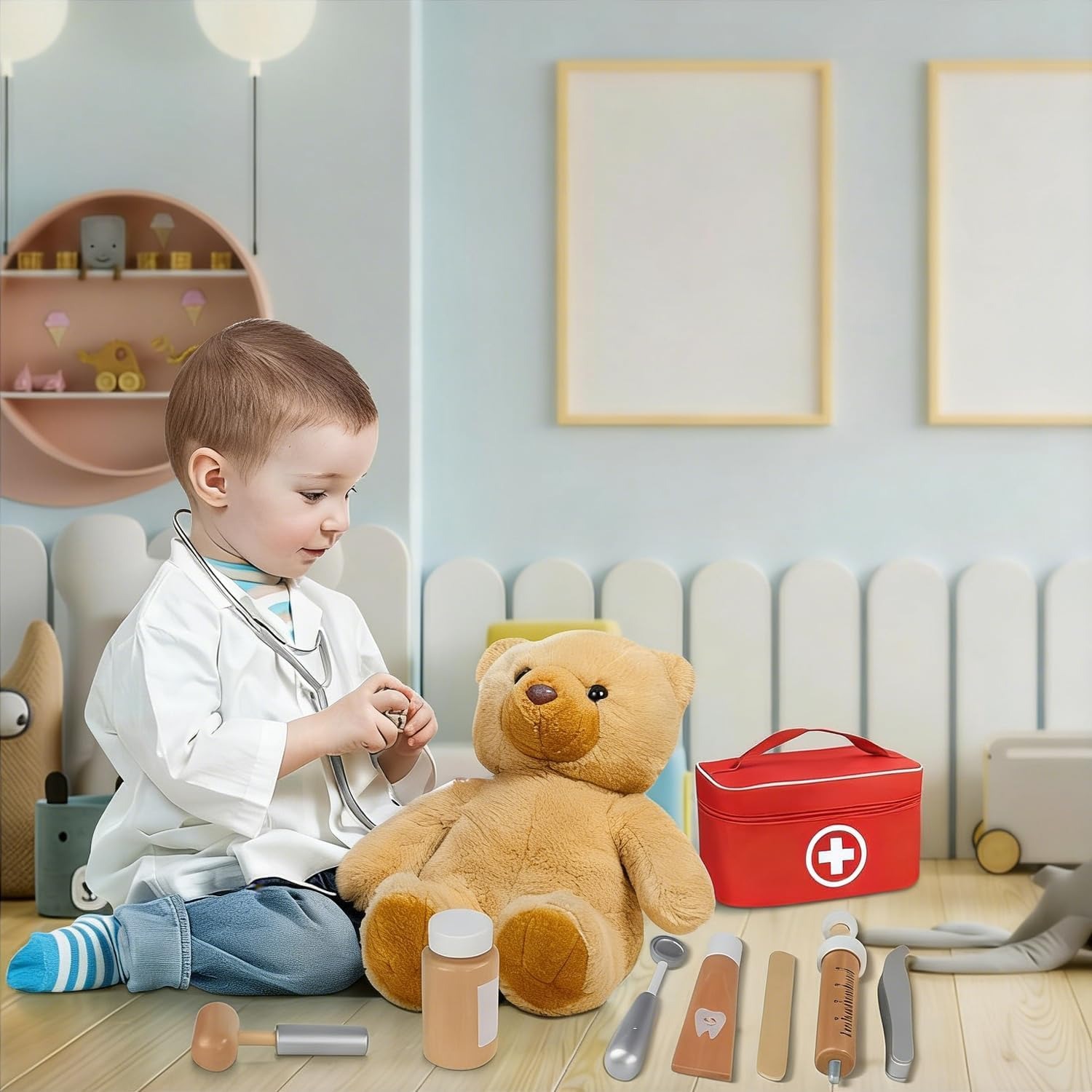
The TGTT wooden doctor play set is built around three confirmed pieces. There is a genuine stethoscope, a doctor's coat and a red doctor bag. Beyond those, the set includes other doctor's utensils, with the exact selection varying by model. The whole thing measures 24 x 8 x 19 cm and the material type is listed as wood, with the coat and bag being fabric.
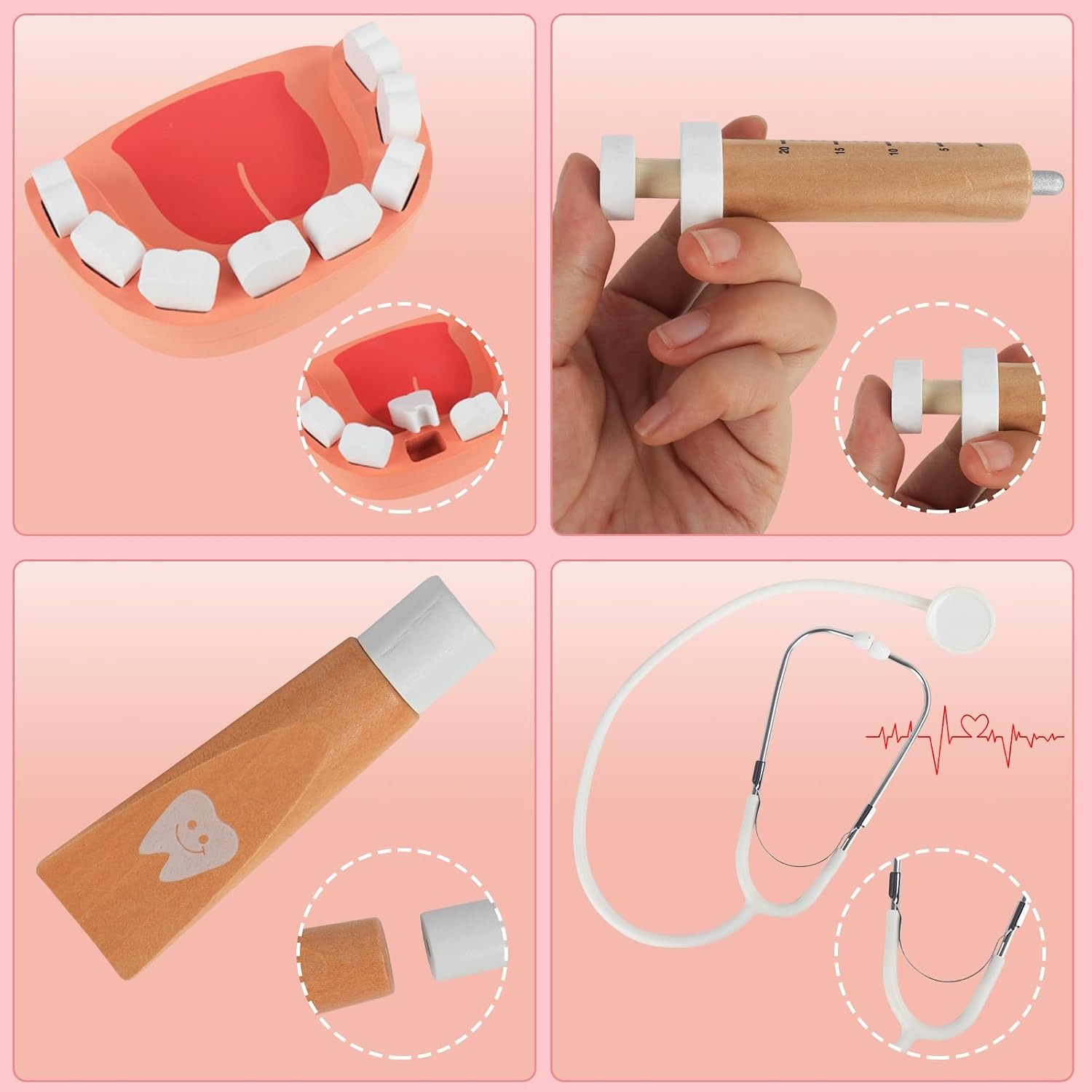
The stethoscope deserves a note. It is described as genuine rather than decorative, so a child can hear a heartbeat through it. That single detail does a lot of work. Most toy stethoscopes are a lump of moulded plastic on a string, and children work out the fakery in about four seconds. A working one holds attention and turns a game into a small experiment.
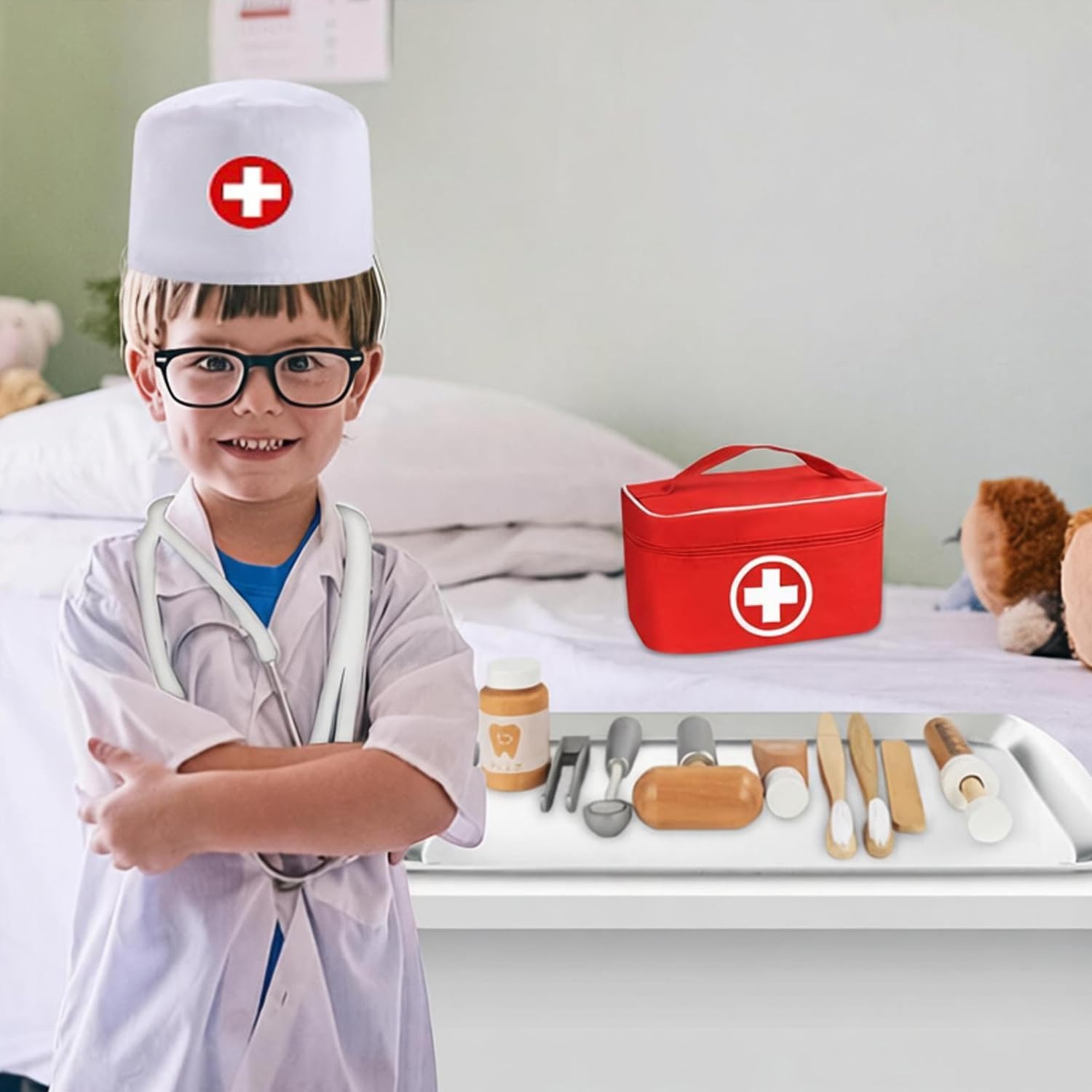
The coat matters for a different reason. Dressing up is a switch. Once it is on, the child is not themselves pretending, they are the doctor. That shift is where the longer, more detailed play tends to come from.
Why wood over plastic
Plastic kits are cheap and they come with a lot of pieces. That is a genuine advantage if you want volume. The trade-off shows up a few months in, when the thin parts have cracked and the broken edges are sharp enough that you quietly bin them.
Wood behaves differently. It has weight, which small hands notice. It takes a drop without shattering. When it does wear, it wears gradually, going slightly rough rather than failing all at once. A wooden toy doctor kit is the sort of thing that gets handed to a younger sibling three years later and still works.
There is also the matter of how it feels. Wooden toys have a quieter, less shouty quality, no batteries and no sound effects. Some children need that. Others do not care either way. But if your home is already full of noise, a set that stays silent is worth something.
Who it suits
The recommended age runs from 36 months to 12 years. That is a long band, and it works because the toy does not prescribe how it should be used.
At three, play is repetitive and simple. The child listens to a teddy's chest, announces that the teddy is poorly, and does the whole thing again. That repetition is not boredom, it is how young children practise.
By five or six, storylines appear. There is a waiting room. The patient has a name and a history. Someone has to be called in from another room. This is where communication really starts to stretch, because the child is explaining, instructing and negotiating all at once.
Older children, seven and up, often use the set less often but more elaborately. Whole hospitals get built out of cushions. The set becomes one part of a bigger game rather than the game itself. It also doubles as a dentist play set for children without needing anything added, which extends the range further.
What it does for development
The stated educational objectives are communication, hand-eye coordination and problem solving, and those are reasonable claims for this kind of toy.
Hand-eye coordination comes from the physical handling. Fitting the earpieces in, placing the chest piece in the right spot, packing instruments back into the bag in a way that closes. These are small precise movements and children repeat them constantly.
Communication comes from the role itself. A doctor has to ask questions, listen and explain. A child playing doctor does all three, usually out loud, often at length. If the patient is a real sibling rather than a teddy, there is negotiation on top.
Problem solving is the quietest of the three. The patient has an imaginary issue and the child decides what happens next. There is no right answer, which is exactly what makes it useful.
None of this requires an adult to run it. The best fine motor skill toys get out of the way and let the child work.
How to choose between sets
If you are comparing options, a few things separate a set that gets used from one that gets ignored.
Check whether the stethoscope works. This is the single biggest difference in play value and it costs almost nothing to include, so sets that skip it are telling you something about the rest of the build.
Look for a carry case or bag. Loose pieces in a toy box disappear within weeks. A set with its own container survives because packing up is part of the game rather than a chore imposed afterwards.
Think about dress-up. A coat or badge roughly doubles how seriously a child takes the role. Sets without one tend to get picked up and put down faster.
Finally, consider the age span. A set aimed narrowly at three-year-olds will be shelved by four. One that covers a wider band, like this one at 3 to 12, earns its place for longer.
Looking after it
Wooden toys are low maintenance but not no maintenance. Wipe the wooden pieces with a slightly damp cloth and dry them immediately. Water left sitting on wood causes swelling, and swelling leads to splitting. Never put any part through a dishwasher.
Keep the set away from radiators and out of direct sun. Both dry wood out over time and can cause warping. A shelf in a normal room is fine.
The coat and bag can be spot-cleaned with mild soap and cool water, then air dried. Skip the hot wash.
Every few months, run your hands over the wooden pieces and check for roughness, loose joints or chips. Set aside anything that no longer feels right. That quick check takes a minute and is the main thing that keeps a wooden set safe over the years.
A note on gifting
Role play toys make good gifts because they are useful without being prescriptive. You are not guessing whether a child already owns one specific thing. The set arrives in supplier packaging sized around the 24 x 8 x 19 cm item dimensions, and the red bag presents well on its own if you would rather not wrap a box.
It also works as a shared gift between siblings, since the game genuinely needs two people. That is rarer than it sounds.
The short version
This is a wooden doctor play set for ages 3 to 12 with a genuine stethoscope, a doctor's coat and a red carry bag, plus additional instruments depending on model. It measures 24 x 8 x 19 cm, the material is listed as wood, and the colour is red. The brand is TGTT and the model number is 1032B.
Wood means it lasts. The working stethoscope means it holds attention. The bag means the pieces are still together next year. And the wide age range means you are buying something that grows with the child rather than something they outgrow by their next birthday.
If your child has started laying teddies out on the rug and announcing diagnoses, this is the kit that keeps that game going.